
Apple or banana: which is the healthier choice?
Apples and bananas offer fibre, carbohydrate and a range of vitamins and minerals. Here is how they differ, what that means for your food log and when each one may suit you better.
There is no single winner
An apple is not automatically healthier than a banana, or the other way round. Both are whole fruits that provide carbohydrate, fibre and useful nutrients. The better choice depends on what you enjoy, what else you are eating and what you need at that moment.
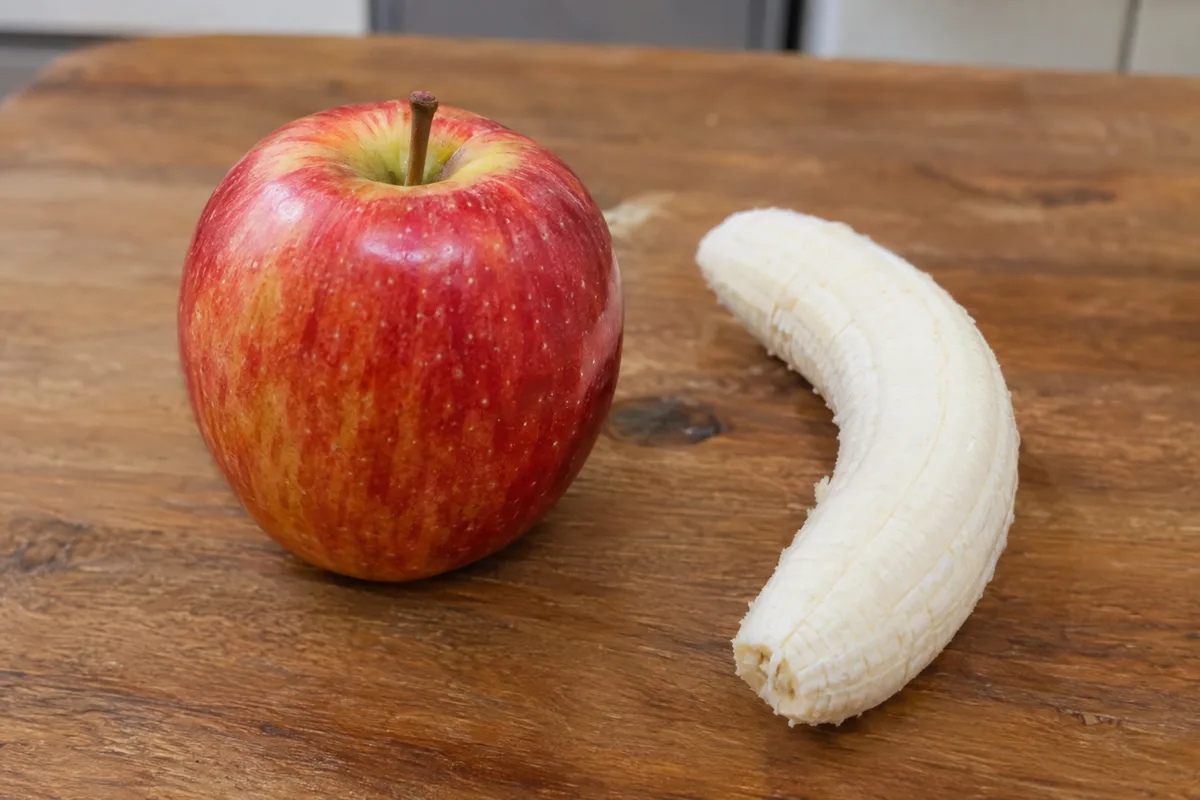
Your overall pattern of eating matters more than choosing the supposed perfect fruit. Variety can be useful because different fruits bring different mixes of nutrients. If you like both, there is no need to pick one permanently.
- Choose an apple when you want something crisp and refreshing.
- Choose a banana when you want something soft, filling and easy to add to a meal.
- Alternate between them if you enjoy both.
- Pick the fruit you are more likely to eat rather than leave behind.
How their nutrients differ
Bananas are known for providing potassium and vitamin B6, while apples contain a mixture of plant compounds, especially in the skin. Both fruits provide vitamin C, although the amount varies with variety, size, ripeness and storage. Neither fruit supplies every nutrient you need.
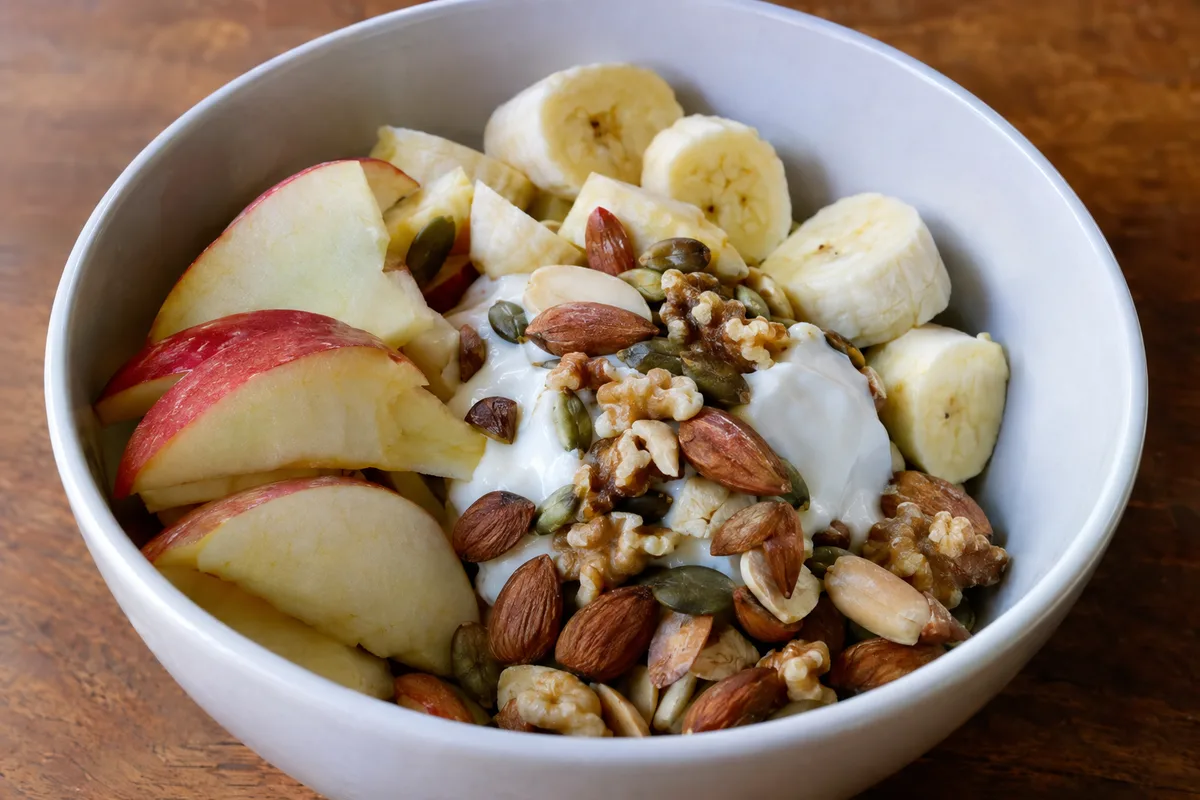
Both also contain fibre, but the exact amount depends on the portion and whether the apple skin is eaten. Fibre adds bulk to food and can help a snack feel more satisfying. Eating whole fruit generally provides more fibre than drinking its juice.
- Keep the apple skin on if you enjoy it, washing the fruit first.
- Pair either fruit with yoghurt, nuts or another protein-rich food for a more substantial snack.
- Include other fruit colours across the week for a wider nutrient mix.
Calories, portions and your food log
A banana may appear higher in calories than an apple in some tracking apps, but this often reflects the portion selected. A large piece of fruit naturally contains more flesh than a small one. The most accurate entry is the one that best matches the size or edible weight of the fruit you ate.
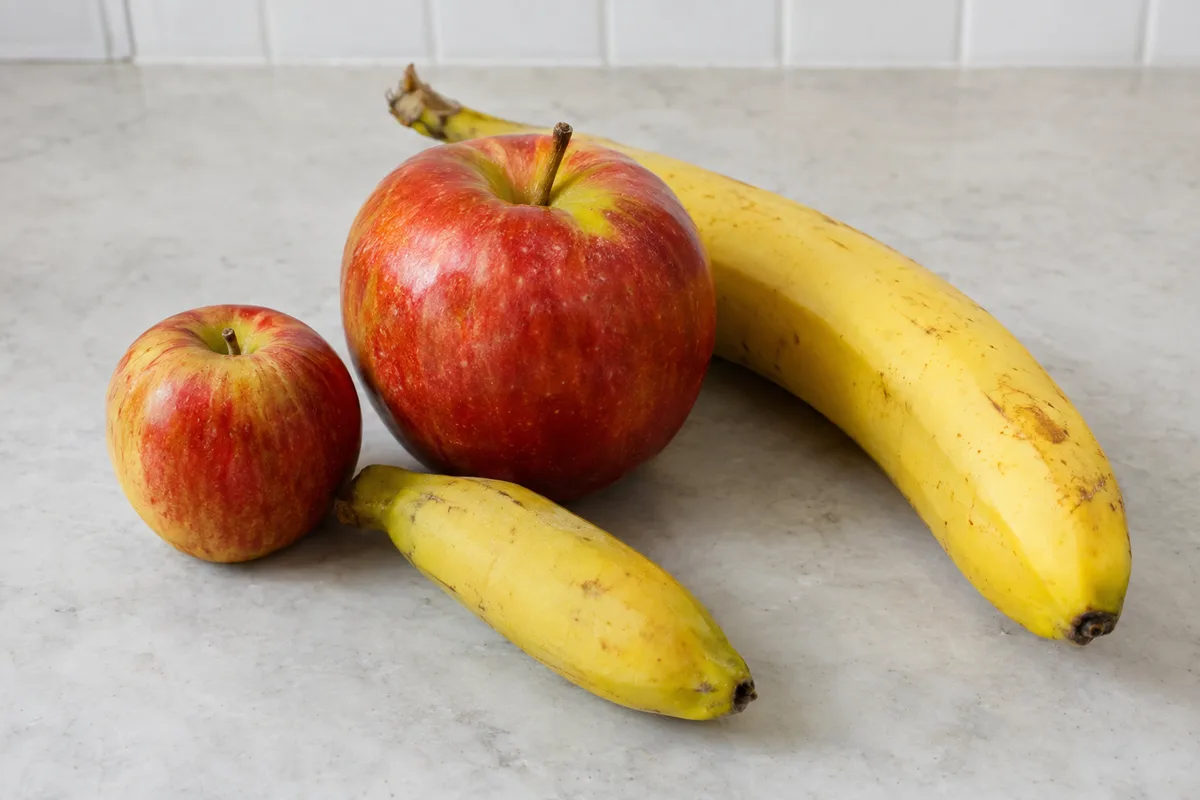
Check whether your app lists a small, medium or large fruit, and whether the entry includes inedible parts. For a banana, the peel is not part of the portion eaten. For an apple, the core may be excluded, while the skin is usually included if you eat it.
- Match the database entry to the fruit size as closely as you can.
- Use edible weight when you already have a reliable measurement.
- Avoid comparing two entries that use different portion descriptions.
- Save a regular entry if you often eat fruit of a similar size.
Ripeness changes the experience
As a banana ripens, some of its starch changes into sugars. This makes the fruit taste sweeter and gives it a softer texture. A greener banana is firmer and less sweet, while a spotted banana is softer and often easier to mash.
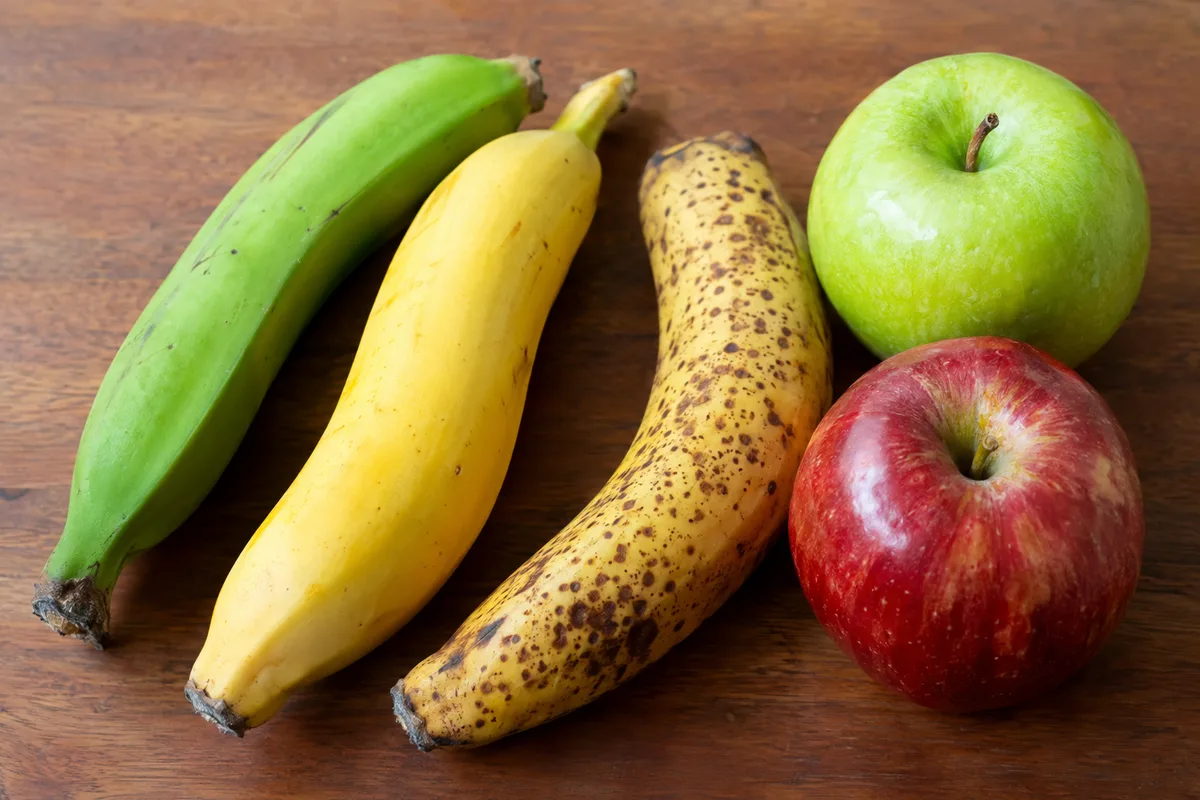
Apples also vary widely in sweetness, sharpness and texture. A crisp, tart variety may feel very different from a soft, sweet one even though both are apples. Choose ripeness and variety by taste rather than assuming one stage is always healthier.
- Use a firmer banana when you prefer a less sweet taste.
- Mash a ripe banana into porridge or yoghurt.
- Choose a crisp apple for a snack that takes longer to chew.
- Use softer apples in cooked dishes where texture matters less.
Choose according to the job
The most useful comparison is often practical rather than nutritional. A banana works well stirred into breakfast, blended into a thick mixture or eaten before or after movement when you want familiar carbohydrate. An apple travels well, stays firm and offers a crisp snack that can take more time to eat.
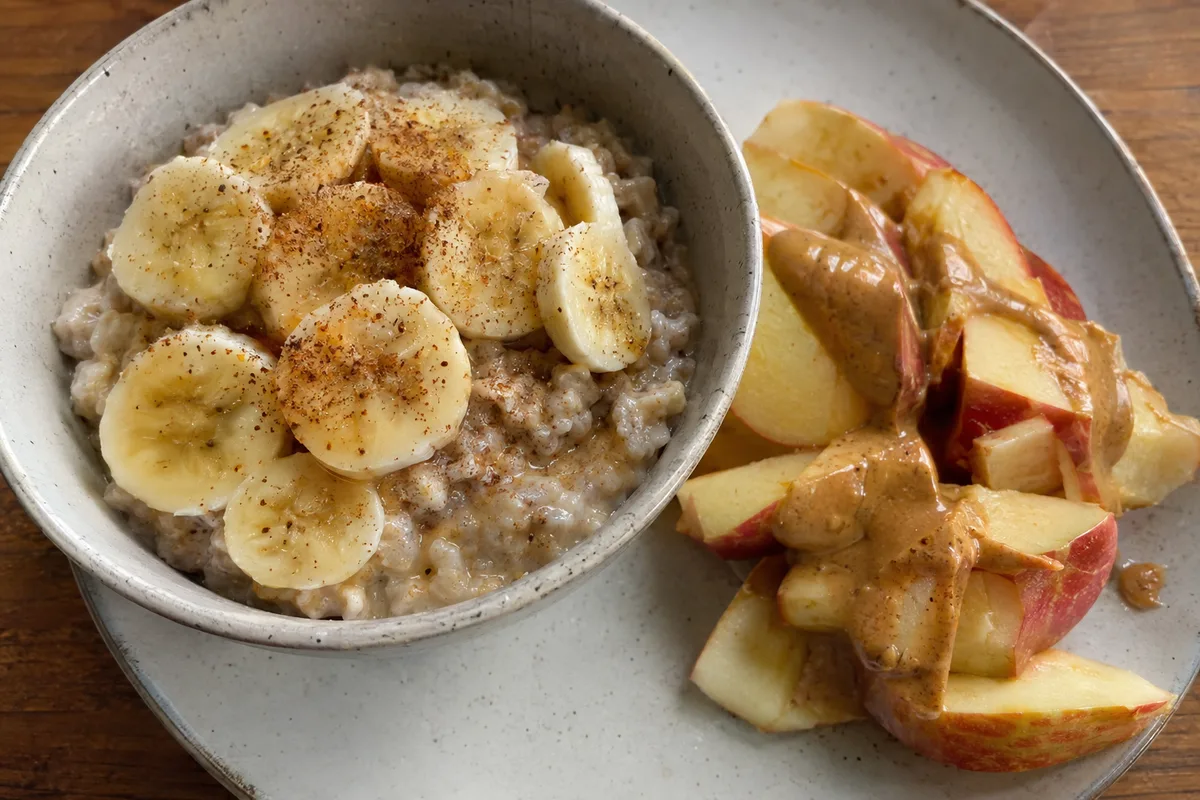
Either fruit can be part of a balanced meal or snack. If fruit alone does not keep you satisfied, add a source of protein or fat rather than blaming the fruit choice. Your favourite option is often the healthier practical choice because it is the one you will actually eat.
- For breakfast: sliced banana with porridge and yoghurt.
- For a crisp snack: apple wedges with nut butter.
- For a packed lunch: a whole apple or a firm banana protected from bruising.
- For cooking: apple pieces in oats or ripe banana mashed into a batter.
- For variety: keep both in rotation alongside other fruits.