
How to Use a Chest Fly Machine with Good Form
The chest fly machine trains the chest through a controlled closing movement. This guide covers the set-up, technique, common mistakes and ways to progress.
What the chest fly machine does
A chest fly machine asks you to bring your upper arms towards each other in front of your body. Your chest muscles do most of the work, while your shoulders and arms help to control the movement. Unlike a chest press, the aim is not to straighten your elbows and push forwards.
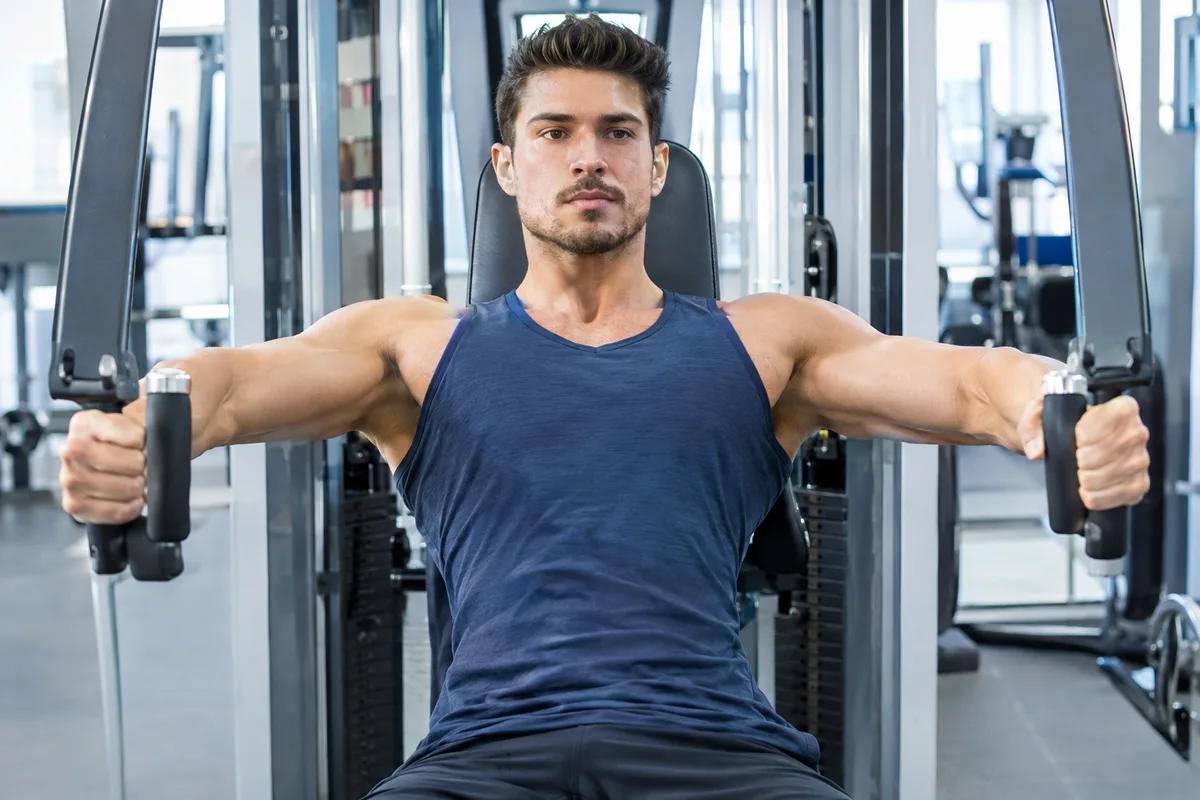
Machines vary, but most have either handles to hold or pads for your forearms. Some models are also used for reverse flies, so check that the arms are positioned for a forward chest fly. The movement should finish with your hands or forearms coming close together in front of your chest.
- Keep your chest gently lifted against the backrest.
- Move both arms at the same speed.
- Maintain a small, comfortable bend in your elbows.
- Use a smooth range that you can control.
Set the seat and handles
Adjust the seat so that the handles or arm pads are roughly level with the middle of your chest. Sit with your back supported, your feet flat and your head in a relaxed position. Your shoulders should not be forced upwards towards your ears.
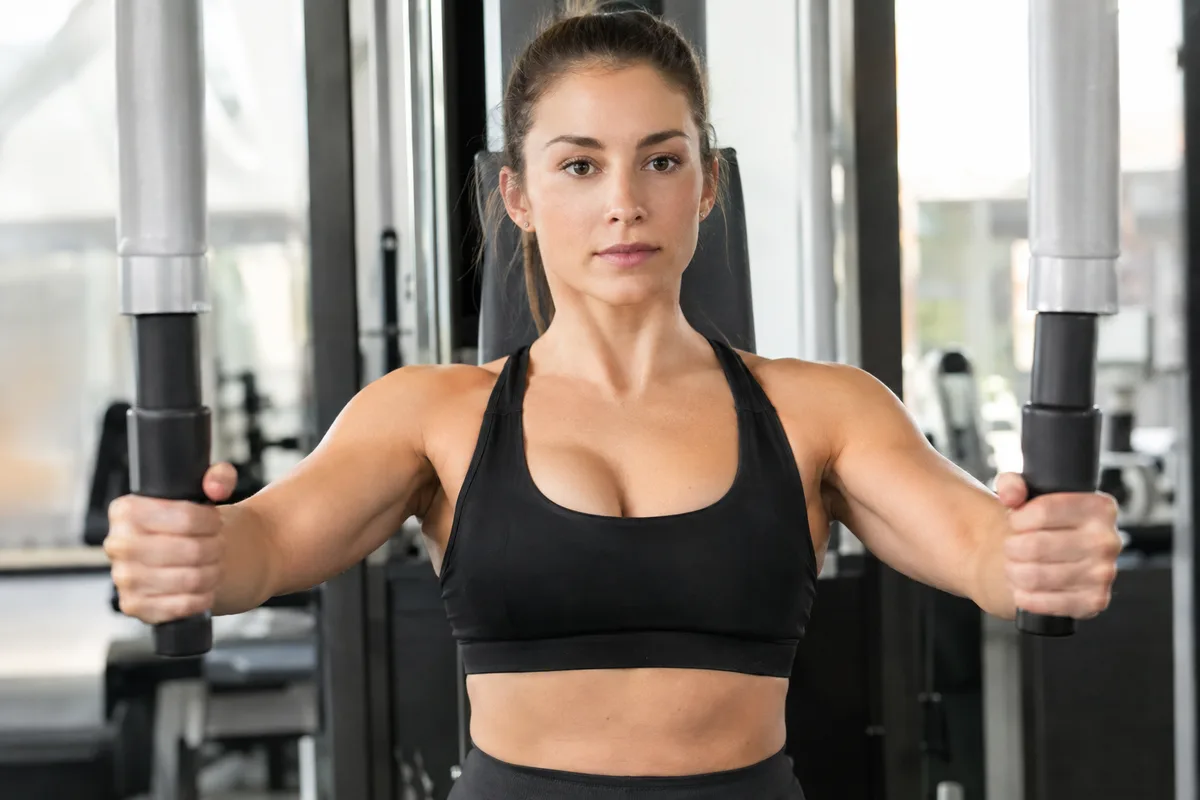
Choose a starting position that gives your chest a mild stretch without pulling your arms far behind your body. The correct setting depends on your shoulder comfort, arm length and the design of the machine. If the starting position feels strained before you move, bring the machine arms slightly further forwards.
Select a light resistance while learning the set-up. You should be able to move the handles without twisting, bouncing or losing contact with the backrest. Increase the resistance only after the movement feels steady.
- Place both feet firmly on the floor.
- Keep your back and hips against the pads.
- Line the handles or pads up with your chest.
- Set a comfortable starting range.
- Test the resistance before beginning the full set.
Perform each repetition
Grip the handles without squeezing harder than necessary, or place your forearms securely against the pads. Take a breath in and brace your middle gently. As you breathe out, bring your arms forwards and inwards in a wide arc.
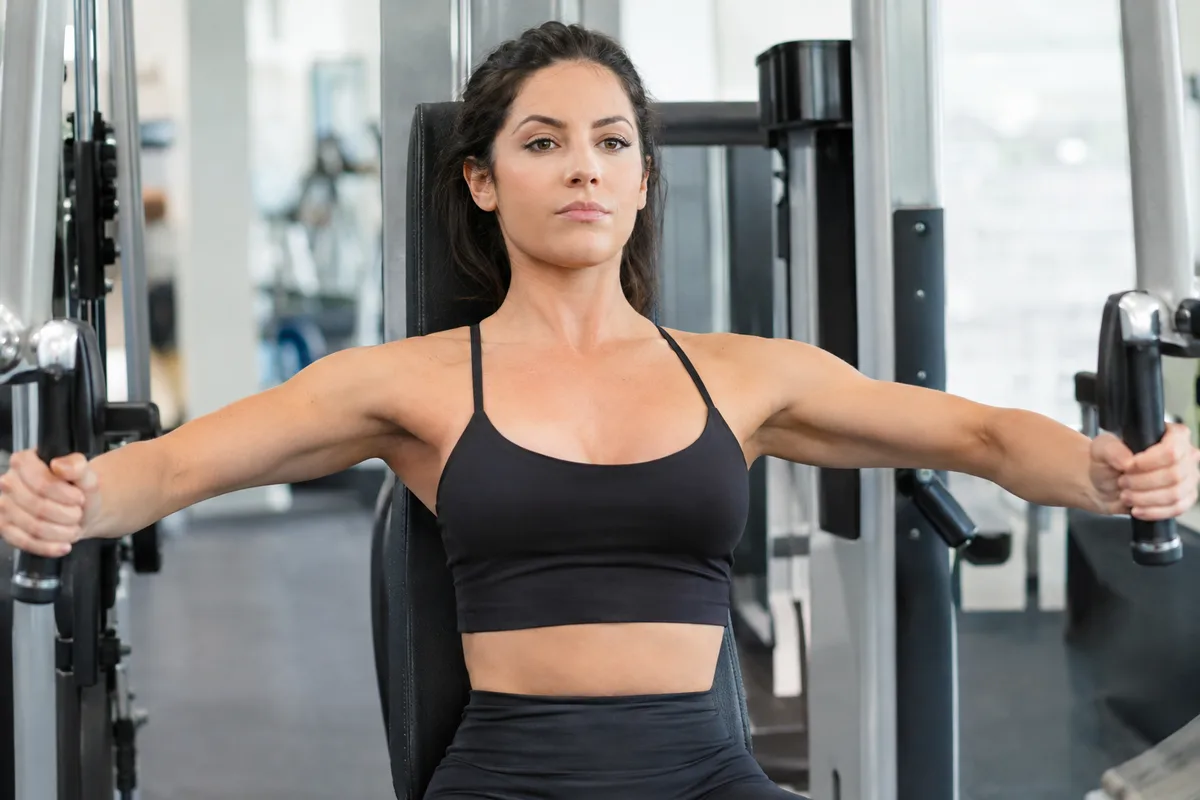
Stop when your hands or forearms are close together, according to the machine's design. Pause briefly and tighten your chest without letting your shoulders roll forwards. Return slowly until you reach a comfortable stretch, then begin the next repetition.
Keep the bend in your elbows nearly unchanged throughout. Think of moving your upper arms rather than pushing with your hands. The return matters as much as the closing phase, so do not let the machine pull your arms back suddenly.
- Start with the arms open in a comfortable position.
- Bring the upper arms together in a controlled arc.
- Pause without knocking the handles together.
- Return slowly to the starting position.
- Repeat while your posture remains steady.
Avoid the most common form mistakes
Using too much resistance often turns the exercise into a short, jerky movement. If you need to lean forwards, shrug or throw the handles together, reduce the resistance. A lighter setting can make it easier to keep the effort in your chest.
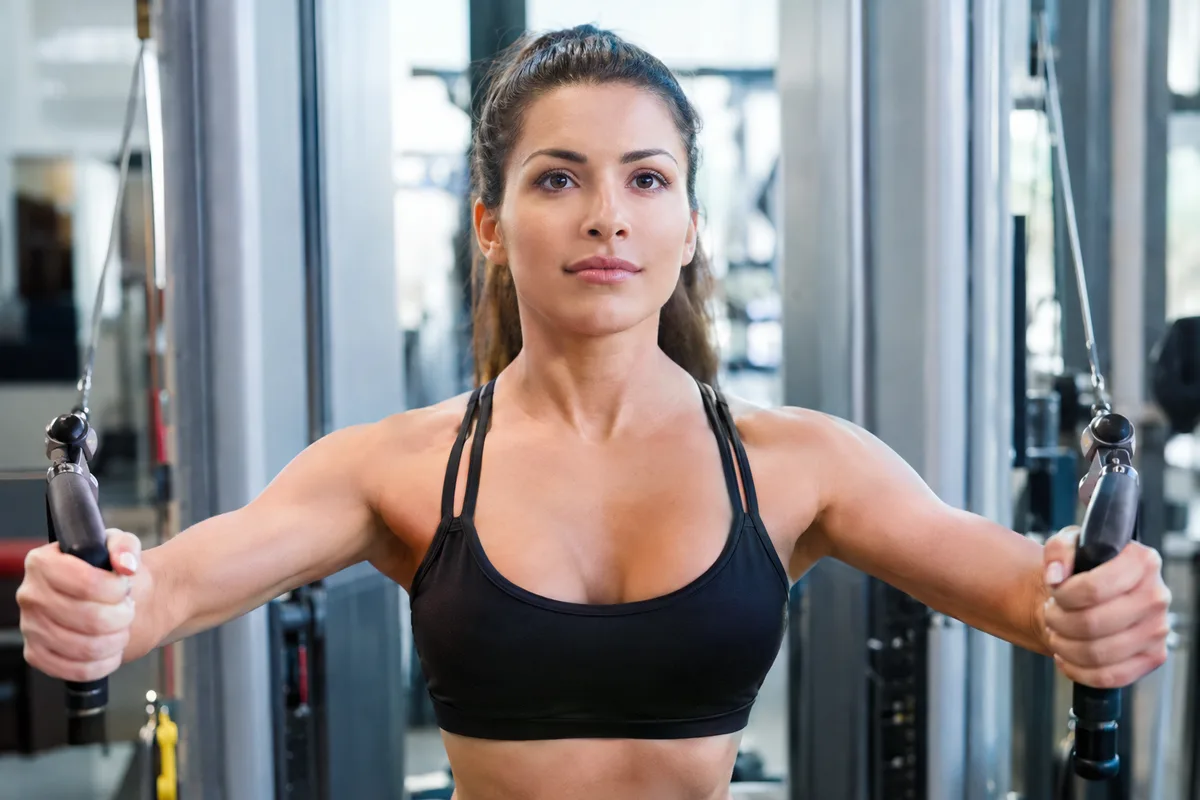
Do not force your arms as far back as the machine allows. A larger range is not automatically better, and your comfortable range may differ from someone else's. Stop the return before your shoulders tip forwards or the position feels sharp or pinched.
Your wrists should stay in line with your forearms rather than bending back. Keep your head, ribs and hips settled instead of arching away from the seat. End the set when you can no longer repeat the same controlled movement.
- Do not bounce out of the open position.
- Avoid changing the elbow angle to turn the fly into a press.
- Do not lift your shoulders towards your ears.
- Avoid slamming the handles or weight stack.
- Do not chase a wider range at the expense of comfort.
Choose resistance and repetitions
There is no single correct resistance or repetition target for everyone. Your choice depends on your experience, training programme and how the exercise fits with other chest movements. Begin with a setting that lets you complete every repetition with the same range and pace.
The final repetitions can feel demanding, but they should still look like the first ones. If your range becomes much shorter or your body starts shifting, the resistance is probably too high for that set. If every repetition feels easy and controlled, you can make a small increase next time.
Rest long enough to regain steady breathing and a secure starting position. Record the machine setting, repetitions and any set-up adjustments in your training log. Machine numbers are not always comparable between different models, so treat each machine separately.
- Progress by adding a small amount of resistance.
- Add repetitions while keeping the same form.
- Use a slower, more controlled return.
- Improve your range only when it remains comfortable.
- Change one part of the exercise at a time.
Fit the machine into your training
The chest fly machine is usually one part of a wider resistance programme. It can follow pressing exercises when you want more focused chest work, or appear earlier when learning how the chest feels during a fly. Its position depends on which exercise matters most in that session.
Allow time between demanding sessions for the same muscles. Food tracking can help you notice whether your usual eating pattern supports your training routine, but exercise performance also depends on rest, hydration and general recovery. Avoid treating the calories shown by a machine as an exact measure of what you used.
Review your training log over time rather than judging one session. Progress may show up as smoother repetitions, better control, a more comfortable range or a gradual increase in resistance. Keep the movement consistent so that your notes remain useful.
- Pair chest work with exercises for the upper back.
- Include pressing and pulling movements across your programme.
- Keep notes on resistance, repetitions and seat position.
- Allow recovery before training the chest hard again.