
How to Slice Corned Beef Against the Grain
The grain is the direction in which the meat fibres run, and cutting across those fibres makes corned beef easier to chew. This guide explains how to spot that direction, position the joint and cut slices suited to your meal.
What cutting against the grain means
A corned beef joint contains bundles of long muscle fibres running in a particular direction. These fibres often look like fine lines or narrow ridges across the surface. Their direction is known as the grain.
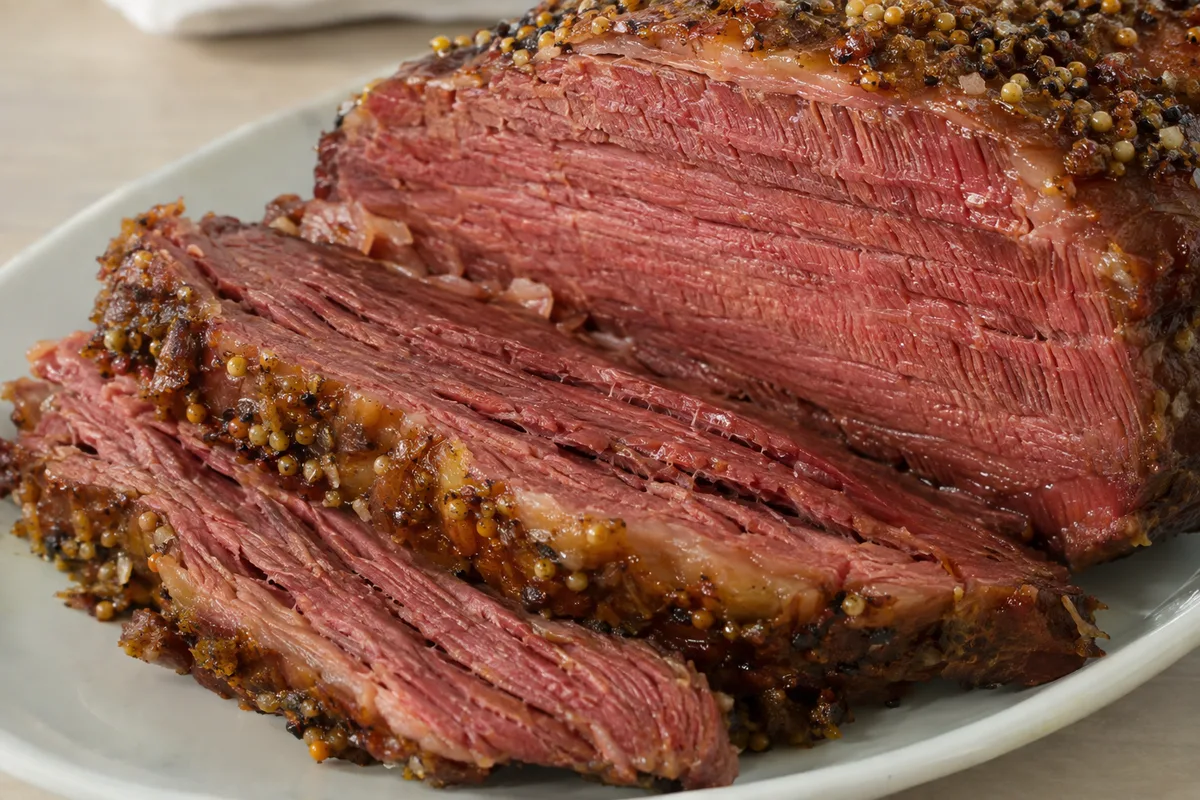
Slicing with the grain leaves those fibres long, so each mouthful can feel stringy or resistant. Cutting against the grain shortens them into small sections, making the meat feel more tender. This cutting method changes the texture, not the energy or nutrient content of the serving.
This advice applies to a cooked joint with visible meat fibres. Tinned corned beef has a much finer, compressed texture, so there may be no useful grain to follow. It can simply be cut into slices or pieces that suit the dish.
Find the grain before you start
Look at the top and sides of the joint before making the first full slice. Search for parallel lines running through the meat rather than streaks of fat on the surface. Gently pulling apart a small edge can also reveal the direction of the fibres.
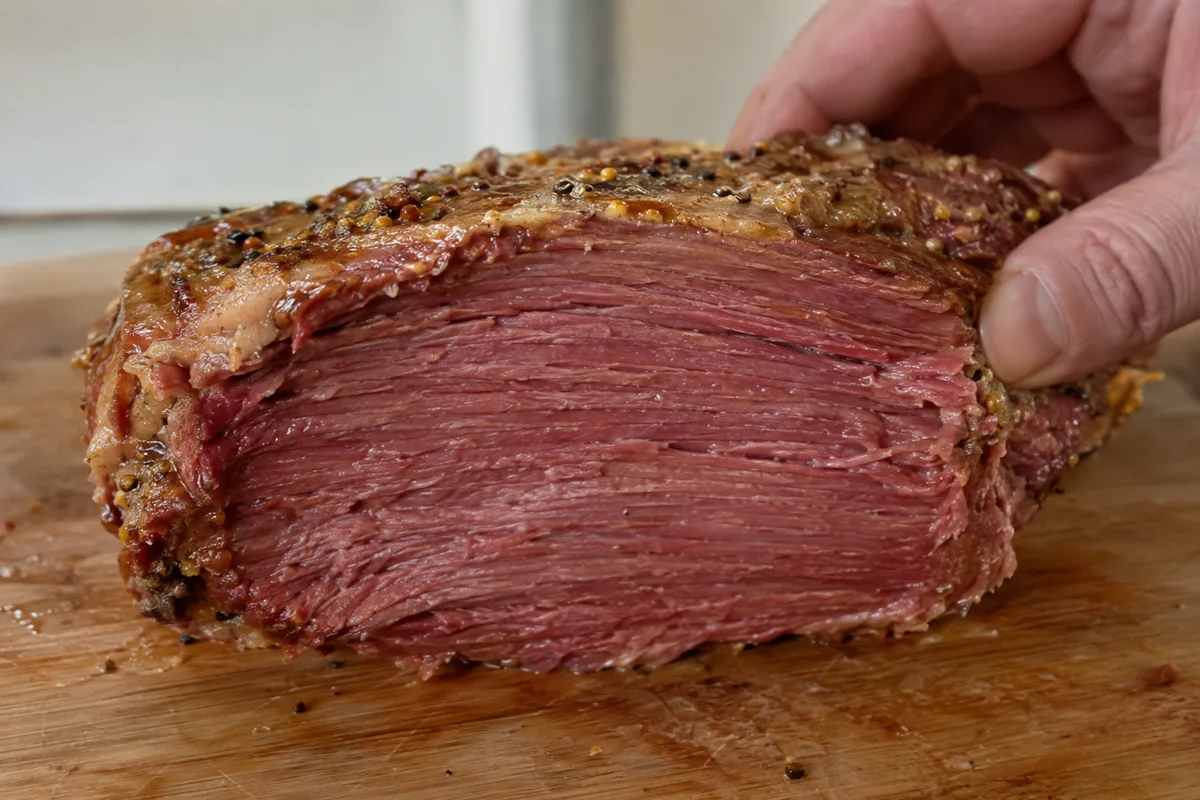
Turn the joint until those lines run from left to right in front of you. You will then cut down across them rather than following their length. If the lines point towards and away from you, rotate the meat before slicing.
The grain may change direction in a joint made from more than one section of meat. Check it again when the fibre lines begin to turn or the shape changes. Dividing the joint into smaller sections can make each grain direction easier to see.
- Look for fine, parallel meat fibres.
- Ignore broad seams or patches of fat when judging direction.
- Rotate each section so your cuts cross the visible lines.
- Recheck the grain if the fibres change direction.
Let the cooked joint settle
A joint is easier to slice neatly after it has rested for a short while. Resting allows the heat and moisture within the meat to settle, so less liquid runs out as soon as it is cut. The exact resting time depends on the joint's size and how it was cooked.
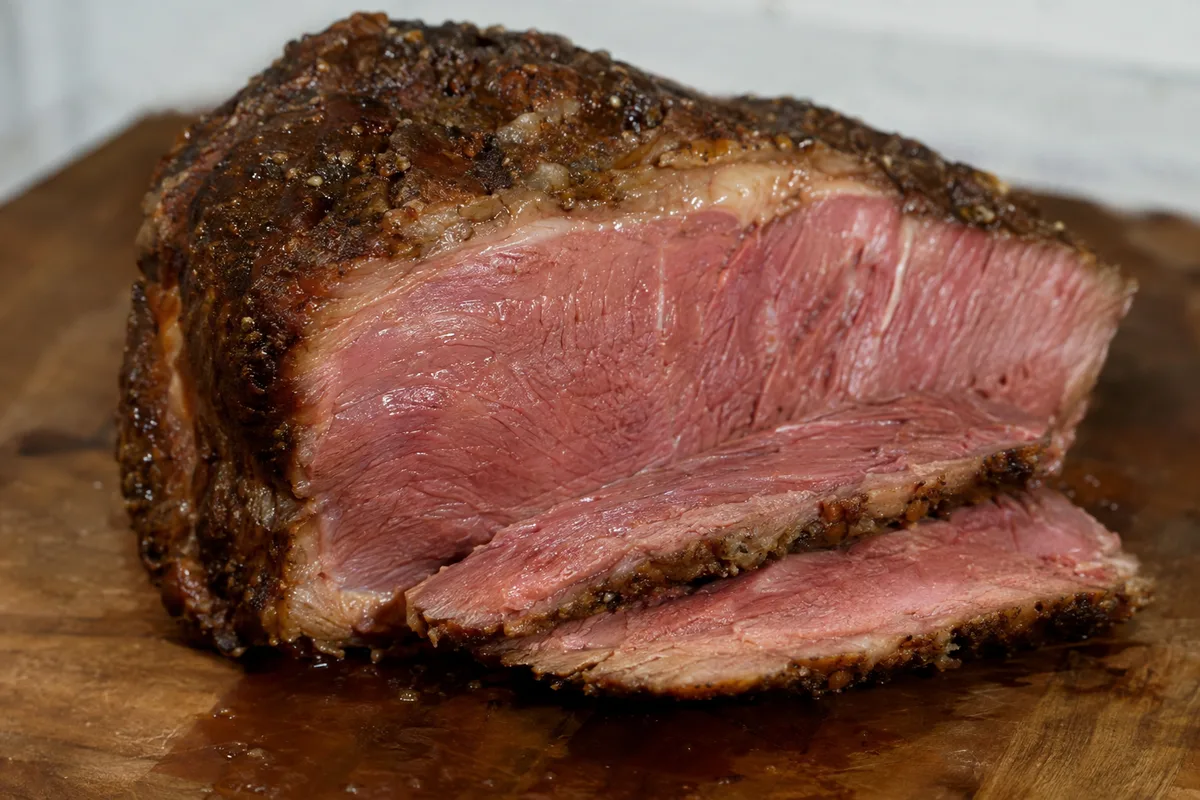
Keep the meat supported on a stable chopping surface while it rests. Once it is comfortable to handle, remove any cooking string before cutting. You can trim surface fat if you prefer, or leave it in place and account for what you eat when logging the meal.
If the corned beef has cooled completely, the fibres may feel firmer and the slices may hold together more easily. Warm meat can still be sliced against the grain, but use slow, controlled strokes. Avoid pressing down heavily, as that can squash the joint.
- Rest the joint before making full slices.
- Remove cooking string once the meat is ready to cut.
- Use a stable surface and steady the joint carefully.
- Decide whether to keep or trim visible surface fat.
Slice across the fibres
Place the joint so the grain runs sideways in front of you. Hold it steady, keeping your fingers away from the cutting line. Make each slice at a right angle to the visible fibres, using smooth strokes rather than forcing the blade straight down.
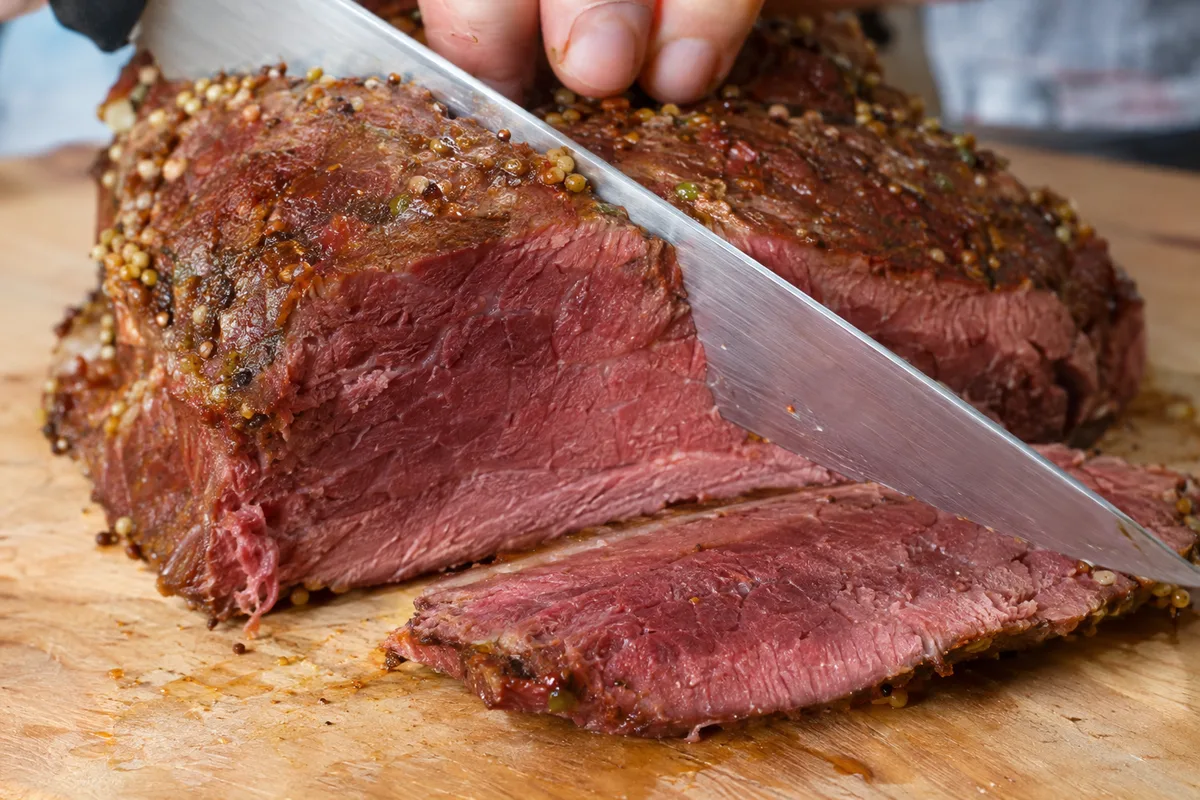
Start with one slice and inspect its cut face. You should see short fibre ends or small dots and dashes rather than long strands running across the slice. If long strands are still obvious, turn the joint and adjust the cutting angle.
Continue cutting while checking the grain as the joint changes shape. A slight diagonal cut can create broader slices, provided the blade still crosses the fibres. When the grain changes direction, stop and reposition that part of the meat before continuing.
- Position the grain from side to side.
- Cut across the lines at roughly a right angle.
- Check the first slice for short fibre ends.
- Reposition the meat whenever the grain turns.
Choose a thickness for the meal
Slice thickness depends on how you plan to serve the corned beef. Thin slices work well in sandwiches because they fold easily and spread through the filling. Slightly thicker slices are useful for a plated meal because they keep more of their shape.
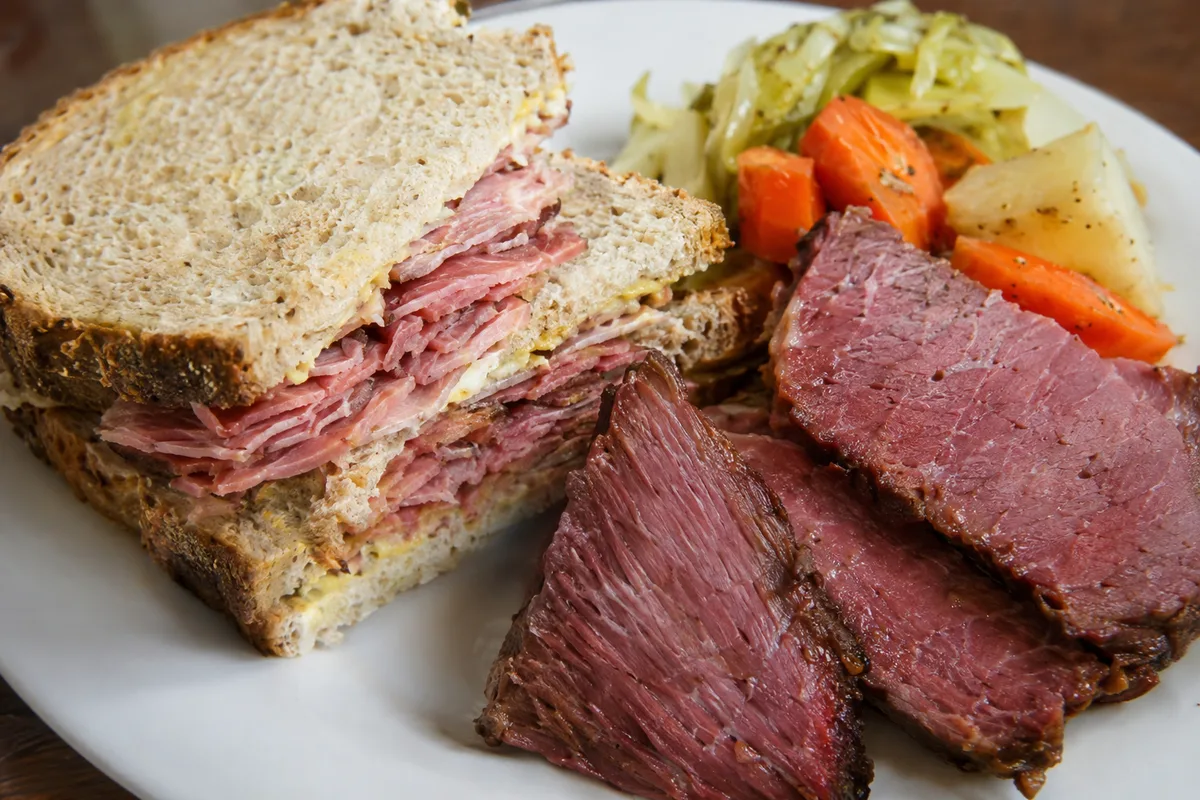
For hash, salads or mixed dishes, first cut against the grain and then divide the slices into strips or cubes. Making the first cut across the fibres still helps prevent long, chewy strands. Try to keep the final pieces similar in size so they mix and warm evenly.
Slicing does not change the total energy in the meat, but thickness can affect how easy it is to judge a serving by sight. When tracking your food, record the amount you actually eat and include any visible fat or sauce consumed with it. The suitable portion depends on the person and the rest of the meal.
- Use thin slices for sandwiches or wraps.
- Choose thicker slices for serving beside vegetables.
- Cut against the grain before making strips or cubes.
- Log the amount eaten, along with any sauce or visible fat.