
How to Toast Ciabatta for a Crisp Outside and Tender Centre
Ciabatta toasts best when its open crumb becomes crisp without the bread turning dry or hard. This guide covers preparation, four simple cooking methods and how to track any oil or toppings you add.
Prepare the ciabatta
Ciabatta has a firm crust and an airy middle, so it needs careful slicing. Place it flat on a board and use a serrated bread knife with a gentle sawing motion. Avoid pressing down, as this can squash the open crumb.
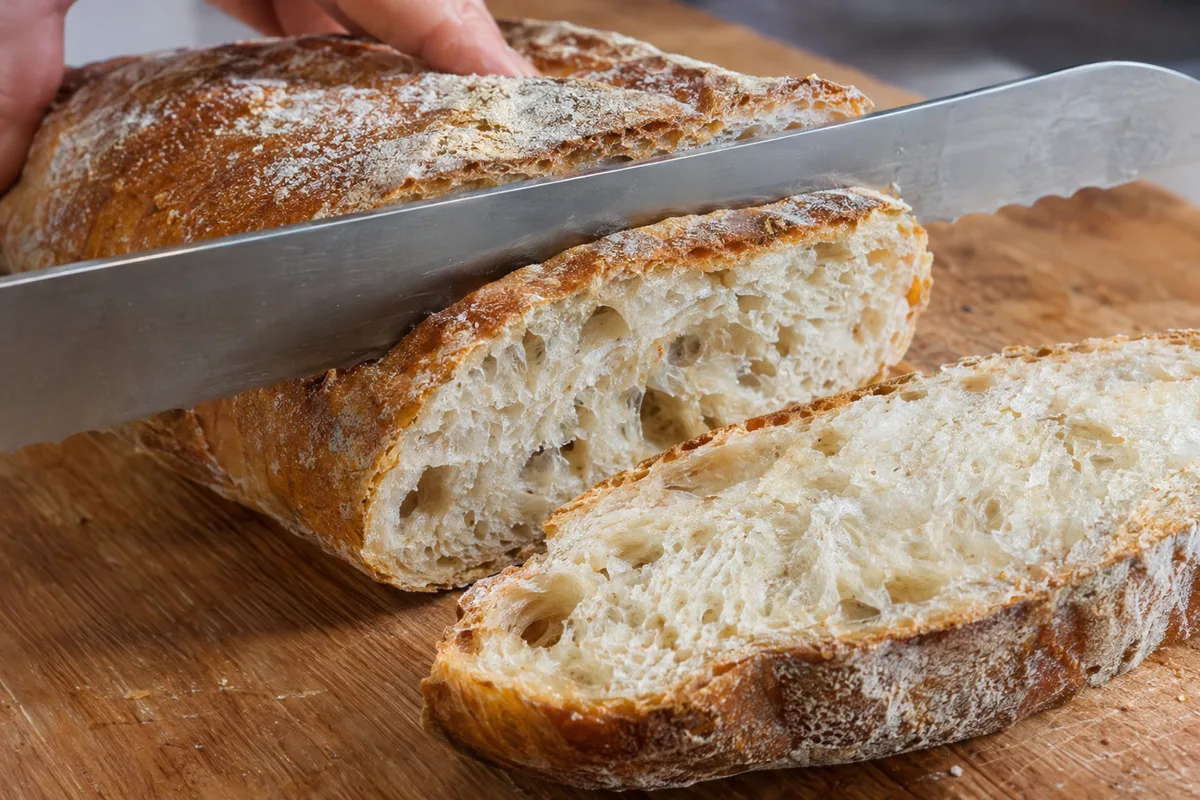
For a sandwich, split a ciabatta roll horizontally so you have a top and bottom half. A larger loaf can be cut into slices or split lengthways before being divided into portions. Thicker pieces usually keep a softer centre, while thinner ones become crisp more quickly.
- Toast slightly stale ciabatta rather than throwing it away.
- Leave the crust on to help each piece hold its shape.
- Cut pieces to a similar thickness so they toast evenly.
- Let frozen ciabatta thaw before splitting it if it is too firm to cut safely.
Toast ciabatta under the grill
The grill is useful when you want a browned surface and a softer underside. Arrange the pieces on a tray with the cut sides facing the heat. Keep the bread in a single layer so every piece has room to colour.
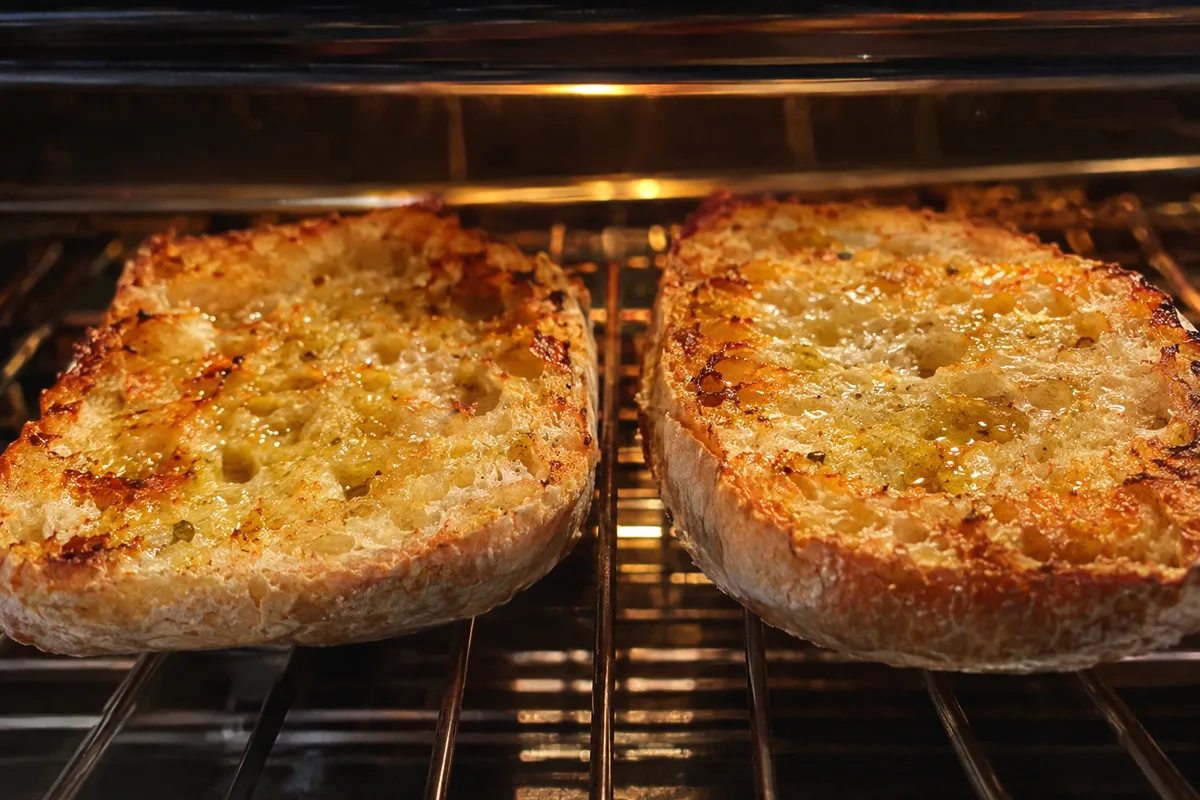
Grills vary, so stay nearby and judge the bread by its appearance rather than relying only on a timer. Remove it when the raised parts of the crumb are golden and the edges are crisp. For colour on both sides, turn each piece once and continue until it looks evenly toasted.
- Use the middle of the grill tray for steady, even browning.
- Move darker pieces away from the strongest part of the heat.
- Check frequently because the open surface can brown quickly.
- Use oven gloves when handling the hot tray.
Toast it in the oven
An oven works well when you are preparing several pieces at once. Spread the ciabatta on a baking tray without overlapping it. Turn the pieces during cooking if you want both sides to become crisp.
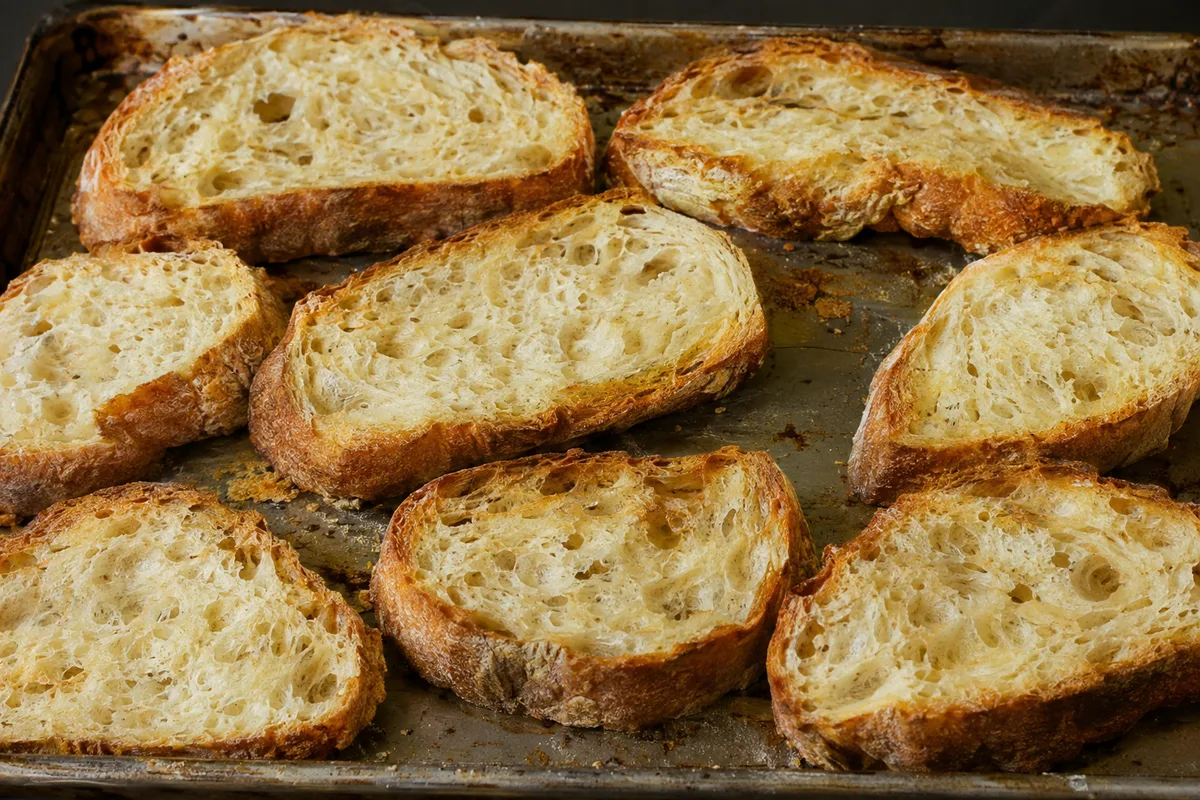
The total time depends on the thickness of the bread, its moisture and the oven. Look for dry, lightly golden surfaces and crisp edges. Take the bread out while the middle still has a little give if you do not want a hard result.
- Bake cut sides upwards for open sandwiches.
- Turn slices once for a crisper finish on both faces.
- Add toppings after toasting if they are cool or delicate.
- Return topped bread to the oven briefly only when the topping benefits from warming.
Use a frying pan for a crisp surface
A frying pan gives ciabatta close contact with the heat, creating a crisp, evenly coloured face. Warm the pan over a moderate heat and place the bread cut side down. Press very lightly with a spatula if parts of the crumb are not touching the pan.
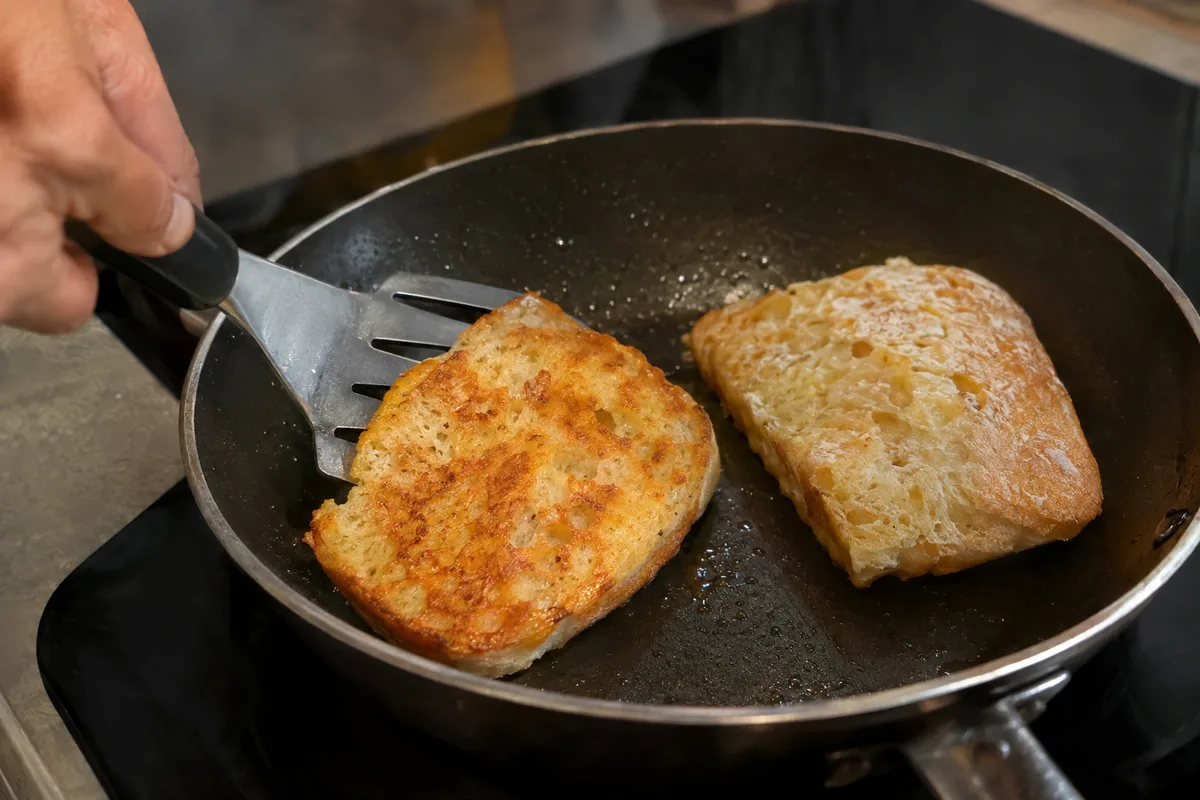
Toast until the underside is golden, then turn it if you want the crust side warmed as well. Reduce the heat if the bread darkens before it becomes crisp. A dry pan works, although a small amount of oil can add colour and richness.
- Brush oil onto the bread rather than pouring it freely into the pan.
- Rub the warm surface with a cut garlic clove for flavour.
- Use moderate heat to give the bread time to crisp.
- Cook in batches rather than crowding the pan.
When a toaster is suitable
A standard toaster can work for ciabatta slices that fit comfortably inside the slots. Do not force in thick, curved or oversized pieces, as they may become trapped or sit too close to the heating elements. Toast plain bread only, without oil, butter or toppings.
Choose a lower setting for the first cycle and check the result before toasting it again. The irregular crumb means some raised areas may colour faster than others. If the slice does not fit easily, use the grill, oven or frying pan instead.
- Trim the slice only if you can do so without crushing it.
- Keep spreads and toppings out of the toaster.
- Allow the bread to rise fully before removing it.
- Use another method for split rolls or uneven chunks.
Add flavour and track what changes
Plain toasted ciabatta contains the same ingredients as the bread before toasting because heat mainly changes its texture and moisture. Oil, butter, cheese and other toppings add to what you eat, so record them separately if you track your intake. The amount depends on how much you apply rather than the toasting method itself.
For accurate logging, measure a spread or oil before adding it and use the entry that matches the food. You can also keep the toast plain and add flavour with tomatoes, herbs, garlic or a squeeze of lemon. Serve it soon after cooking, as the crisp surface softens while it stands.
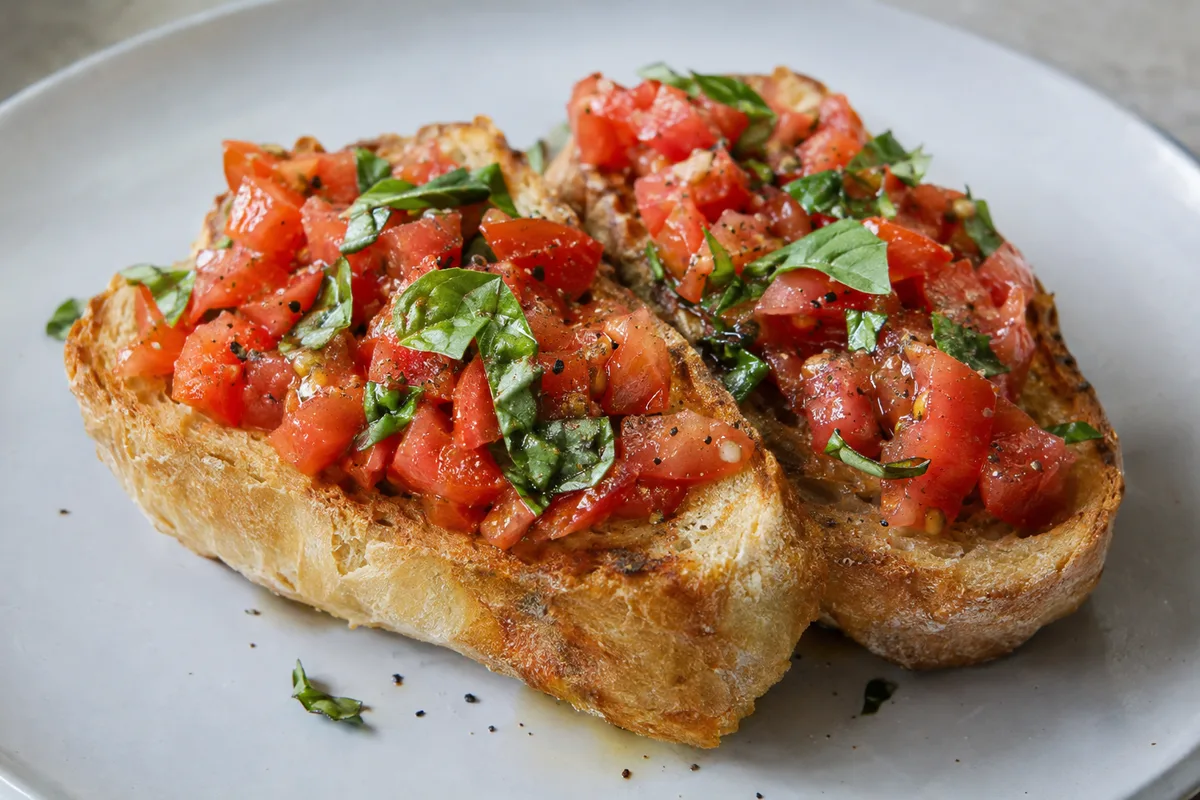
- Tomato, basil and black pepper
- Garlic rubbed over the warm crumb
- Soft cheese with sliced cucumber
- Mashed beans with lemon and herbs
- Egg with wilted spinach