
How to Use a Stationary Bike to Reduce Body Fat
A stationary bike can help you use more energy, but it cannot make fat disappear from one chosen area. The most useful approach combines regular rides with an eating pattern that supports gradual overall fat loss.
Understand what the bike can do
Cycling uses energy and can contribute to an overall calorie deficit, which means using more energy than you take in. As your body loses stored fat, your waist may become smaller, but where fat comes off first depends on the person.
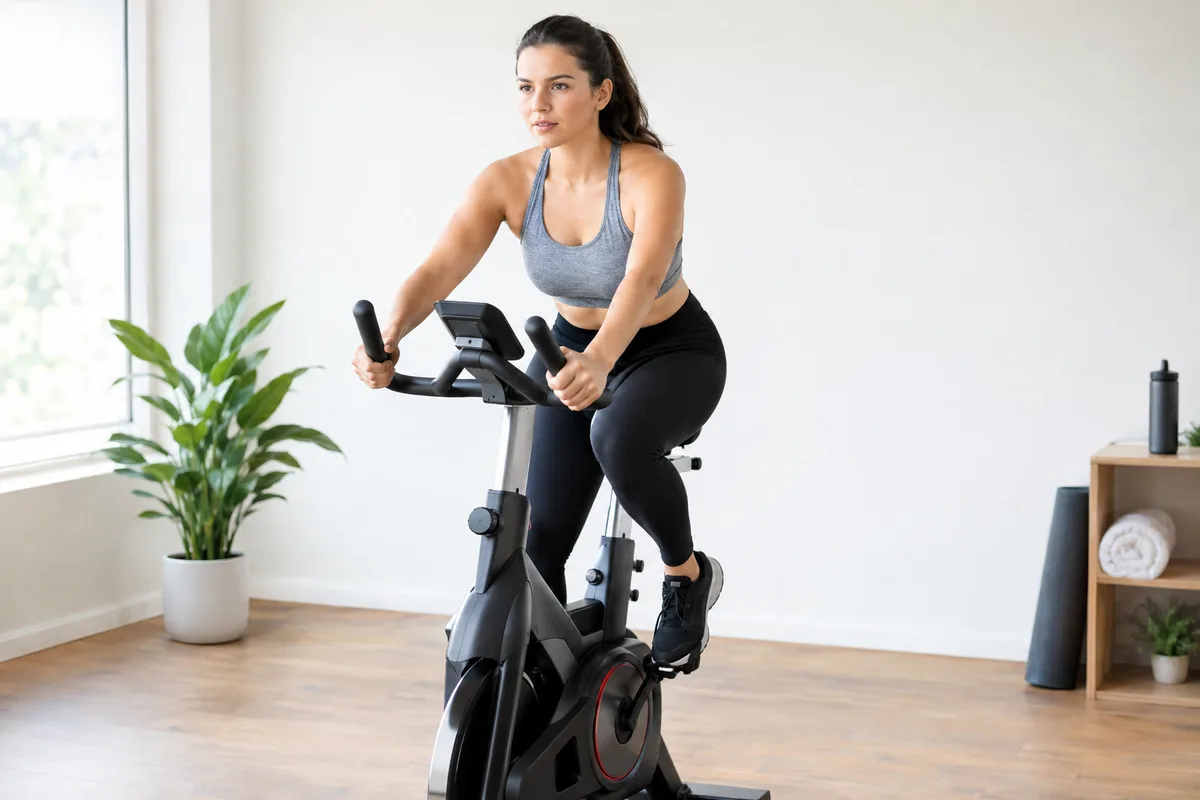
Abdominal exercises can strengthen the muscles beneath your belly, but they do not direct fat loss to that area. Treat the bike as one part of a broader routine rather than a targeted belly-fat tool.
Choose a pace you can repeat
Start each ride gently, then increase the resistance or pedalling speed until the effort feels purposeful but controlled. You should feel warmer and breathe more deeply without losing a smooth, steady pedalling rhythm.
The right ride length and difficulty depend on your fitness, schedule and recovery. A manageable session you repeat regularly is usually more useful than an exhausting ride that leaves you reluctant to get back on the bike.
Mix steady rides with harder efforts
Steady cycling means holding a sustainable pace for most of the session. Harder intervals alternate stronger efforts with easier pedalling, allowing you to raise the intensity without trying to maintain it throughout the whole ride.
Both styles can increase energy use, so choose the mix that suits you. Progress gradually by changing one element at a time, such as resistance, pace or ride length, and ease back if your form becomes awkward or you feel pain.
Connect your rides with food tracking
Because you already track what you eat, compare your entries with your riding routine and look for patterns over time. Bike displays can estimate energy use, but their figures are not exact, so avoid treating them as permission to automatically add the same amount back to your food target.
Keep meals satisfying by including sources of protein, fibre and a range of everyday foods. Consistent cycling, realistic food choices, sleep and recovery work together, while the rate and location of visible fat loss will vary from person to person.