
Are Protein Shakes Healthy, and Can They Help with Weight Loss?
Protein shakes offer a convenient way to add protein, but they are not automatically healthier than food. This guide explains what to track, how shakes may fit a weight-loss goal and when an ordinary meal could be more satisfying.
What counts as a protein shake?
A protein shake is a drink made with a concentrated source of protein. It may use dairy protein, egg protein or a plant source such as peas, soya, rice or hemp. Some are simple mixtures of powder and water, while others include milk, fruit, oats, nut butter or yoghurt.
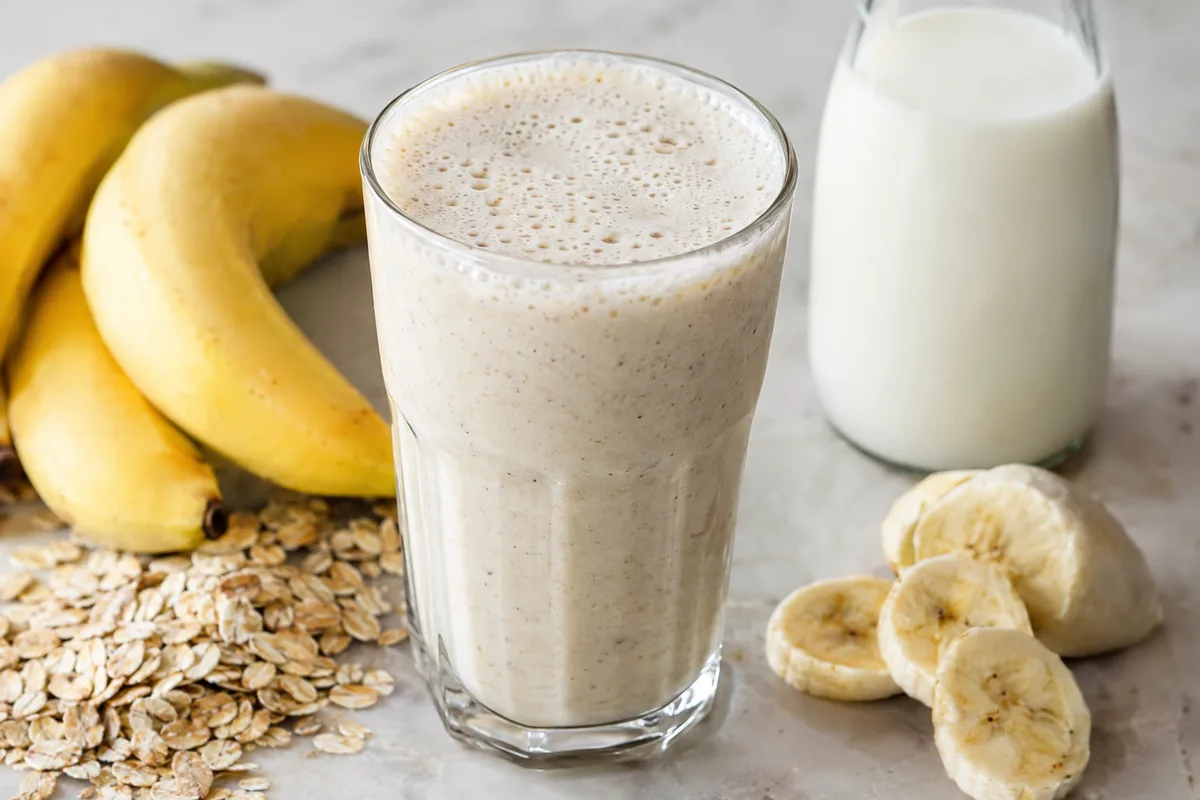
Those additions can turn a light drink into something closer to a meal. That is not necessarily a problem, but it changes what you should log. If you track only the protein powder, your diary will miss the energy and nutrients in the other ingredients.
- Protein powder mixed with water
- Protein powder blended with milk
- A fruit and yoghurt smoothie with added protein
- A ready-made protein drink
- A homemade shake containing oats or nut butter
Whether a shake is healthy depends on the whole drink
Protein supports the maintenance and repair of body tissues, and shakes can make it easier to get enough. However, the word protein does not tell you everything about a drink. A shake may also contain added sugar, fat, fibre, sweeteners and various flavourings.
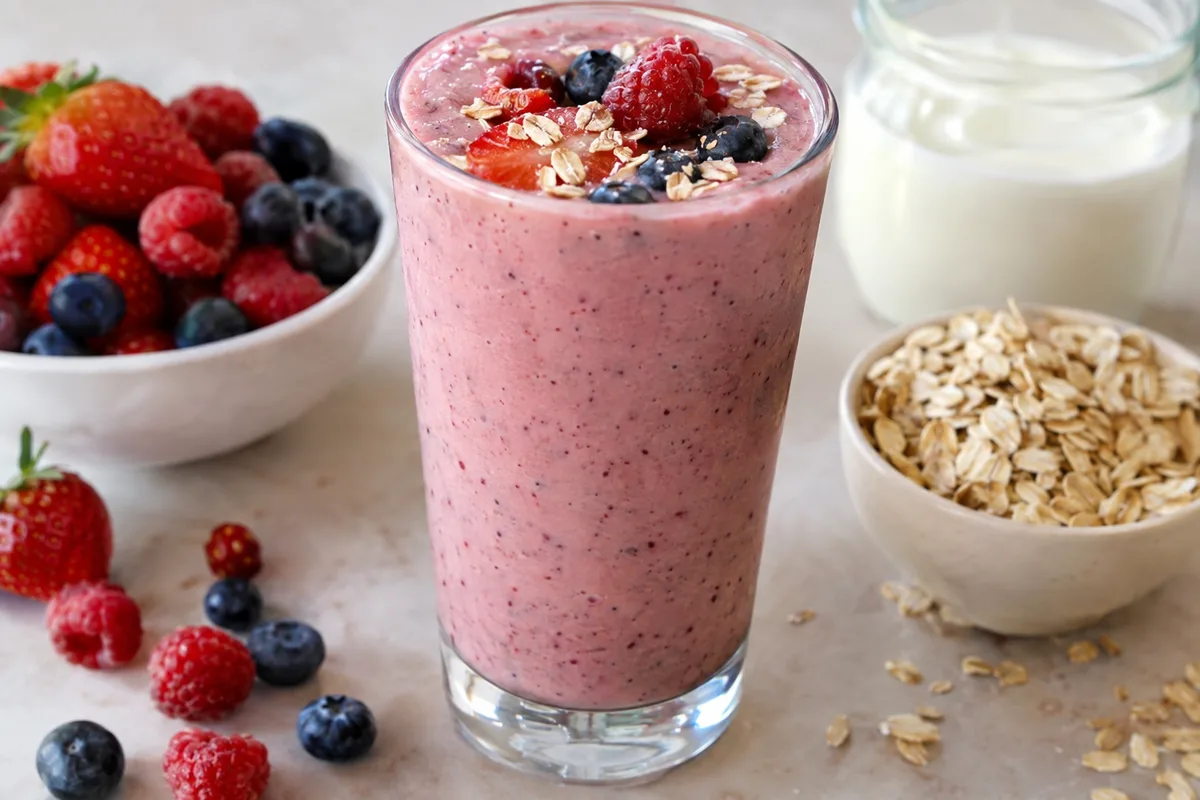
Look at how the shake fits with the rest of your eating rather than judging one ingredient on its own. A basic shake can be useful when convenience matters, while a shake with fruit, oats or yoghurt can provide a wider mix of nutrients. Whole foods still matter because they can add fibre, texture and variety that a plain powder does not provide.
- Check the serving size shown on the label
- Log the liquid used for mixing
- Include fruit, oats, yoghurt and nut butter separately
- Compare the protein, fibre, sugar and fat
- Notice whether the shake replaces food or is added alongside it
Can protein shakes help with weight loss?
A protein shake may support weight loss if it helps you manage your overall energy intake. Protein can make a meal or snack feel more satisfying, which may make your eating plan easier to follow. The result still depends on the amount you consume across the day, not on the shake itself.
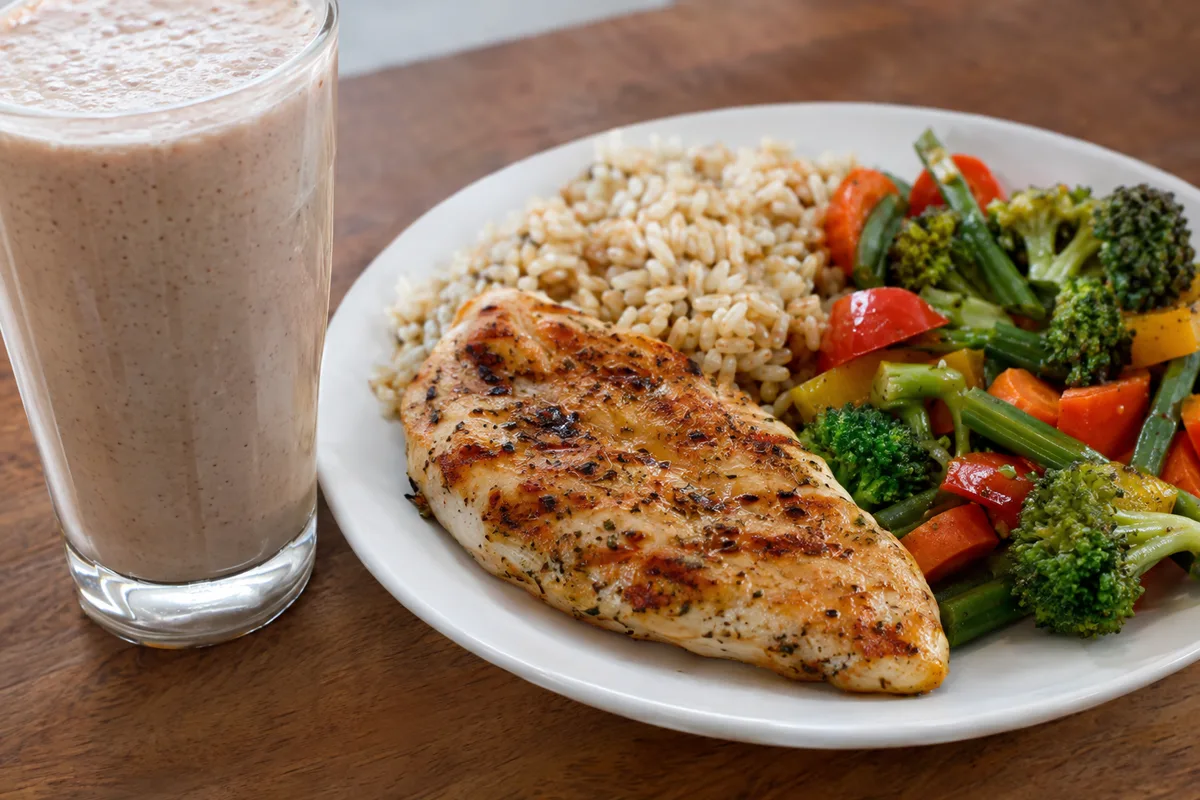
A shake does not create weight loss simply because it is high in protein. If you add it to your usual meals without changing anything else, it adds energy to your day. If it replaces a more energy-dense choice and still keeps you satisfied, it may be useful, but the effect depends on your portions and routine.
- Decide whether the shake is a meal, a snack or part of a meal
- Compare it with the food it is replacing
- Track every ingredient rather than estimating the finished drink
- Review whether it keeps you satisfied until your next planned meal
Protein still contributes calories
Protein provides about 4 kcal per gram, the same textbook energy factor as carbohydrate. Fat provides about 9 kcal per gram. A high-protein label therefore does not mean a drink is low in calories.
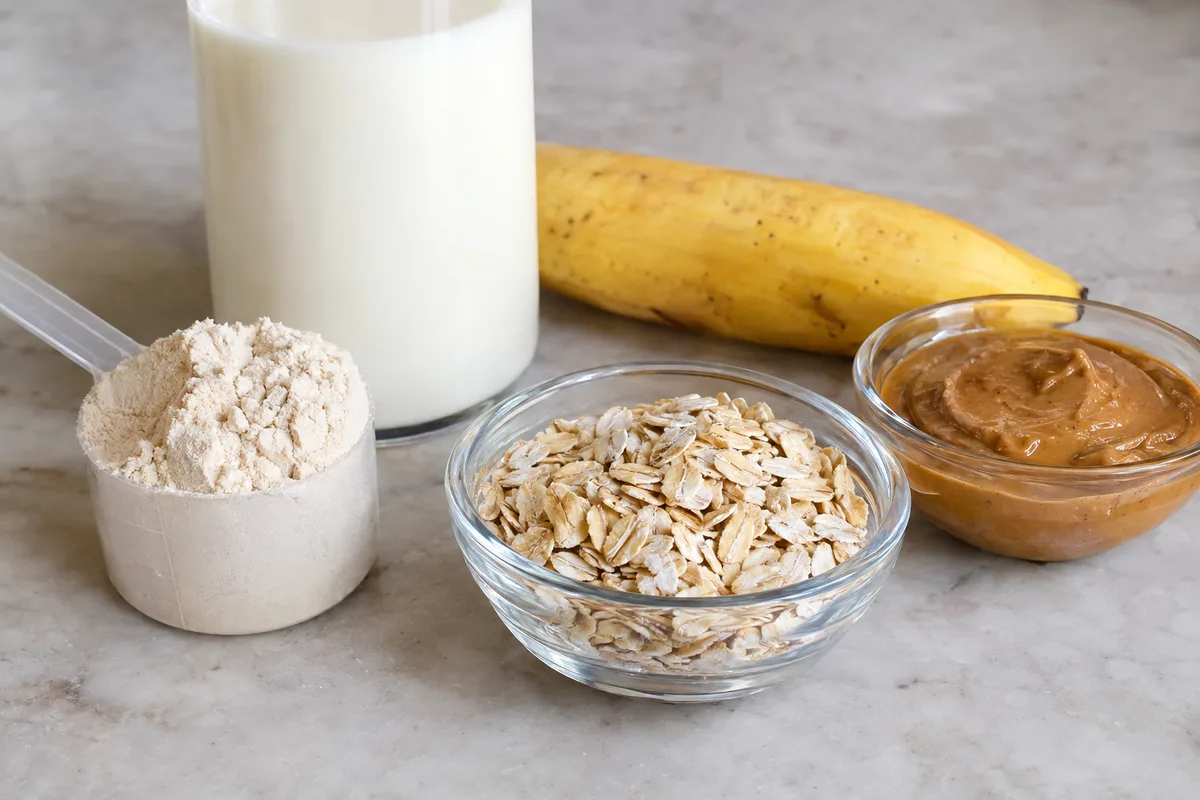
Milk, fruit, oats and nut butter can improve flavour, texture and nutritional variety, but they also change the calorie total. The same recipe can vary with the type of milk, the scoop size and the amount of each ingredient. Use the package information and the portions you actually add rather than relying on a generic entry.
- Measure the powder using its stated serving as a starting point
- Choose the correct milk or alternative in your tracker
- Log spreads and nut butters carefully
- Save your regular recipe so it is easier to record consistently
When food may be the more satisfying option
Drinks are quick to consume and may not feel as filling as a meal you chew, even when the logged calories are similar. A plate containing a protein food, vegetables and a source of carbohydrate also gives you more texture and volume. If a shake leaves you hungry soon afterwards, it may not be the best replacement for that meal.
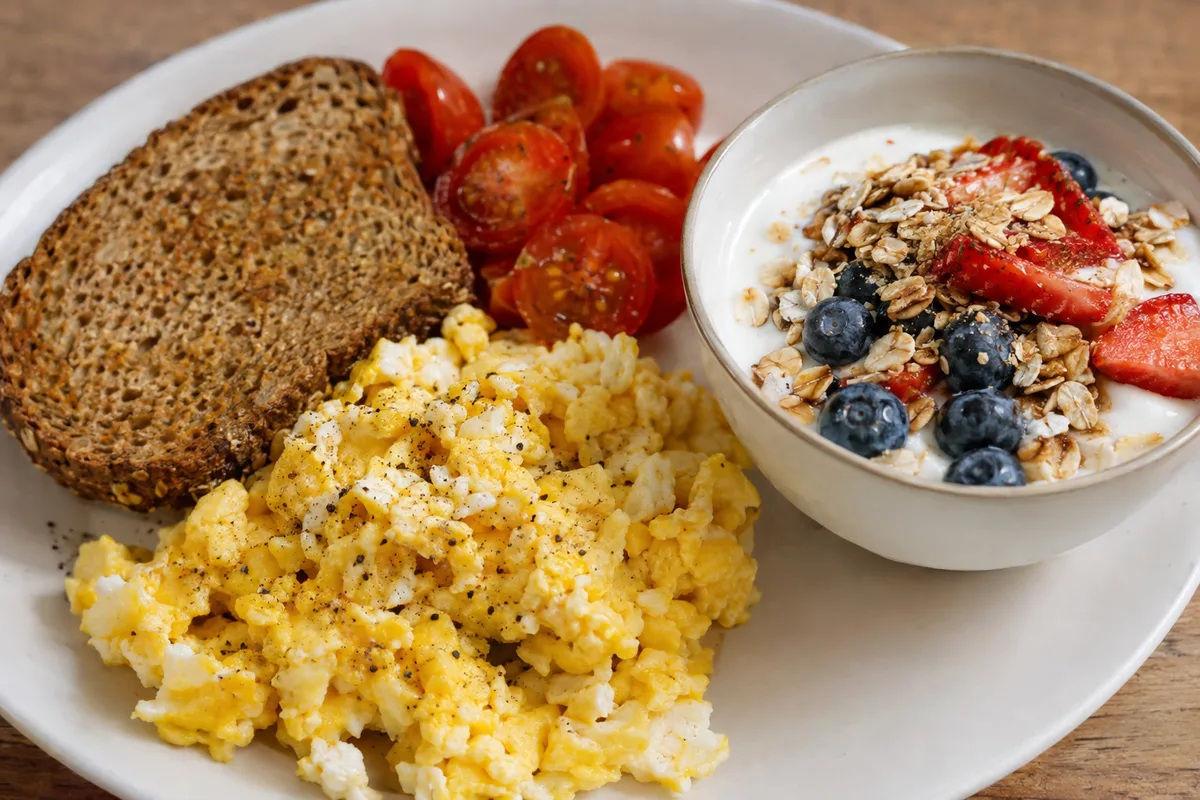
You can also use a smaller shake alongside food instead of making it the whole meal. For example, pair it with fruit, oats or wholegrain toast when those foods suit your plan. The aim is to build something satisfying rather than choosing a shake only because it appears efficient.
- Eggs with wholegrain toast and tomatoes
- Greek-style yoghurt with fruit and oats
- Beans with rice and vegetables
- Chicken, tofu or fish with potatoes and salad
- A smaller shake served with a piece of fruit
How to decide if protein shakes suit you
Start with the reason you want a shake. It might be convenience, support after exercise, a quick breakfast or help reaching your protein target. Once the purpose is clear, you can judge whether the drink actually meets it.
Track the shake for a while and look beyond the protein number. Notice your hunger, meal timing, digestion, food variety and total daily intake. If you have individual dietary requirements or have been advised to limit or increase particular nutrients, seek guidance from an appropriately qualified professional.
- Choose a shake for a clear purpose
- Keep the recipe and portion consistent enough to track
- Check how it affects hunger later in the day
- Continue eating varied sources of protein and fibre
- Adjust or stop using it if ordinary food works better for you