
Are Rice Cakes a Healthy Snack?
Rice cakes are light, convenient and easy to track, but they are not especially filling on their own. Here is how to judge their nutrition and turn them into a more balanced snack.
The short answer
Rice cakes can be part of a healthy way of eating, but they are not automatically a balanced snack. Plain varieties mainly provide carbohydrate, with the exact amounts of fibre, protein and salt depending on the product. Their value also depends on what you eat with them and what the rest of your day looks like.
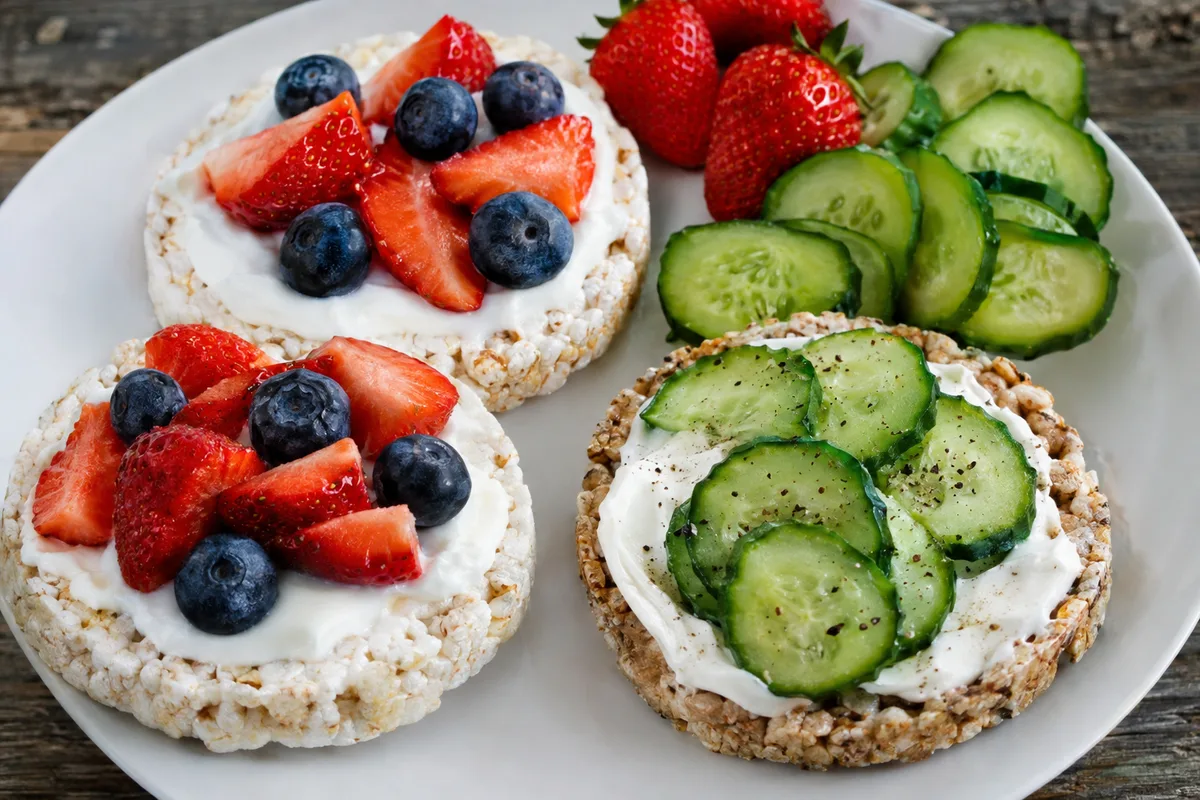
It helps to judge a snack by the job you want it to do. A plain rice cake may suit a quick, light bite, while a more substantial snack needs protein, fibre or fat alongside it. Since you already track your food, compare the whole snack rather than recording the rice cake alone.
- Choose plain rice cakes when you want control over the topping
- Add another food if you need the snack to keep you satisfied
- Count every rice cake and topping you eat, not just the first serving
- Consider how the snack fits your overall intake
What rice cakes provide
Most rice cakes are made from puffed rice pressed into a round shape. Plain versions usually contain mostly carbohydrate and only modest amounts of protein, fibre and fat. Wholegrain brown rice versions may provide more fibre than cakes made with refined rice, although labels vary.
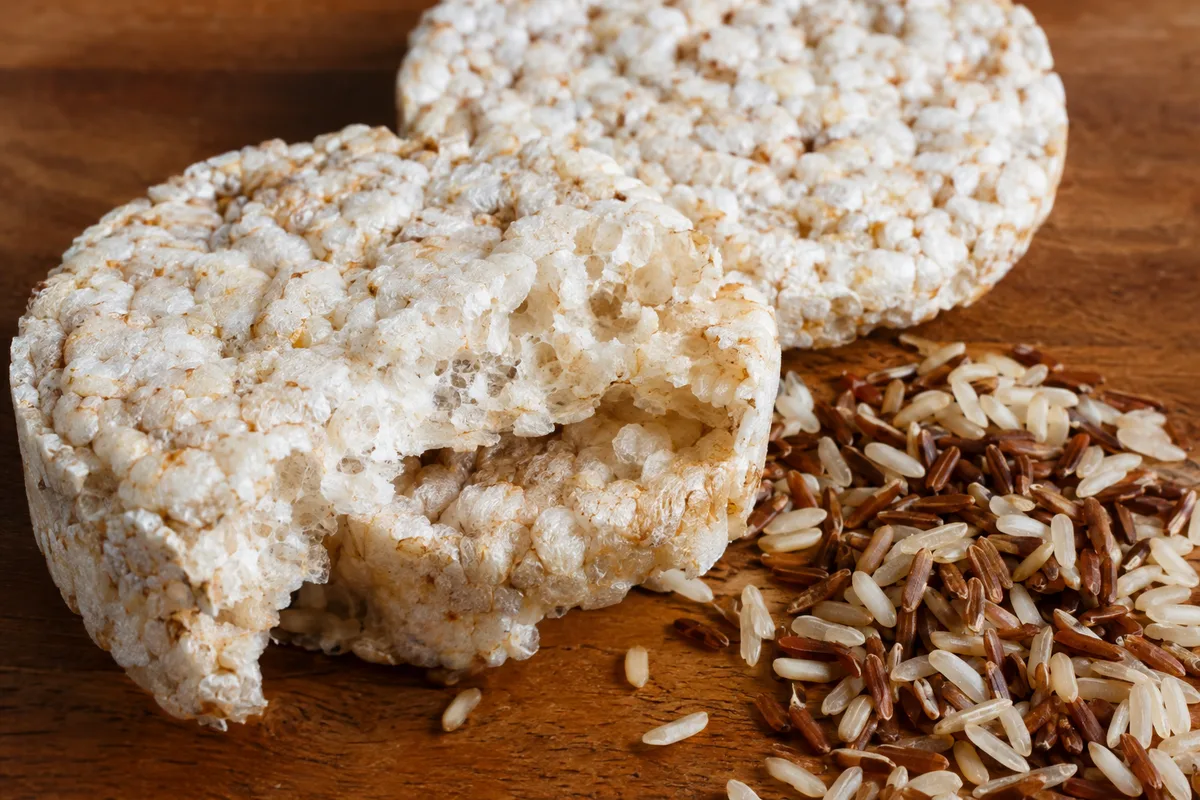
Because each cake feels large and airy, it can look more substantial than it is. That can be useful when you want something crisp, but it may also mean the snack does not satisfy you for long. Eating several cakes or adding generous toppings can change the total quickly, so log the amount you actually have.
How to make them more balanced
A rice cake becomes a more rounded snack when you add a source of protein, fibre or fat. These additions give the snack more substance and can make it feel more satisfying. The right combination depends on your preferences, dietary needs and daily targets.
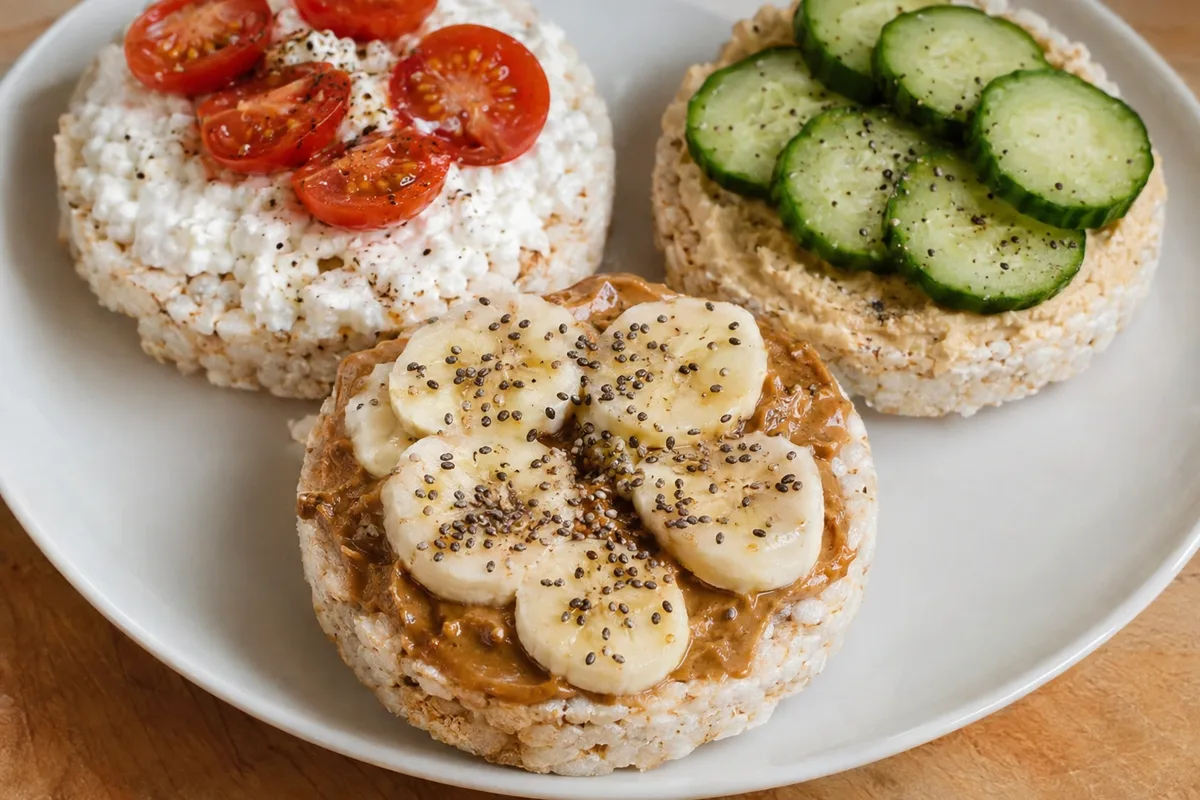
Toppings are often where most of the snack's energy and nutrition come from. Spreadable toppings can be easy to underestimate, so record the portion rather than assuming a thin layer contributes very little. Fruit, vegetables, yoghurt, eggs, beans and fish can all add useful variety.
- Peanut butter with sliced banana
- Cottage cheese with tomato and black pepper
- Hummus with cucumber and grated carrot
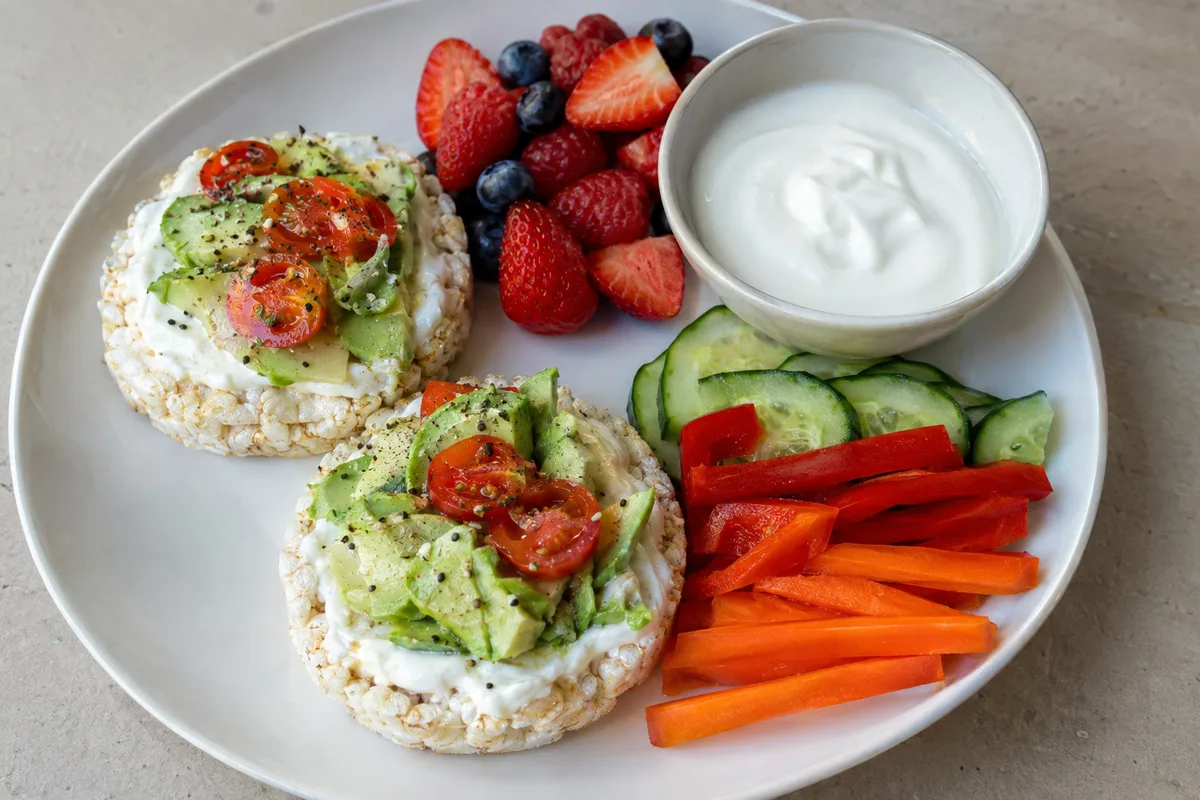
- Plain yoghurt with berries, served alongside
- Mashed avocado with sliced boiled egg
What to check on the label
Flavoured rice cakes may contain added salt, sugar, oils or seasonings. That does not make them unsuitable, but it can make them quite different from a plain rice cake. Compare products using the same amount shown on the nutrition label, rather than relying on words such as light or natural.
Pay attention to the serving size because it may not match the number you normally eat. Check whether the label gives figures per cake, per serving or per standard weight. If you track nutrients as well as energy, fibre, protein and salt are useful points of comparison.
- Ingredient list and type of rice used
- Serving size and number of cakes included
- Energy for the amount you plan to eat
- Fibre and protein content
- Salt, especially in seasoned varieties
When rice cakes may be useful
Rice cakes can work well when you want a portable base for other foods or a crisp alternative to bread or crackers. They may also suit moments when you want a lighter snack before a larger meal. Their neutral flavour makes them easy to use with sweet or savoury toppings.
They are less useful when you need a snack that will carry you through a long gap between meals. In that situation, a rice cake on its own may feel too slight. Adding protein and fibre, or choosing a naturally more substantial snack, may fit your appetite better.
- Before a meal, topped lightly if you only need a small snack
- After activity, combined with a suitable protein-rich food
- At work, packed with a separate topping to keep the cake crisp
- As part of a snack plate with fruit, vegetables and yoghurt
The practical verdict
Rice cakes are neither a nutritional shortcut nor a food you need to avoid. They are mainly a convenient carbohydrate base, and their overall quality depends on the variety, portion and toppings. Plain or wholegrain options can make it easier to control what goes into the finished snack.
Use your food log to notice whether rice cakes suit your appetite as well as your targets. If you regularly feel hungry soon after eating them, try adding protein, fibre or fat, or choose a denser snack instead. The healthiest choice is the one that fits your wider eating pattern and leaves you comfortably satisfied.