
Is rice pudding healthy? A practical guide
Rice pudding ranges from a lightly sweetened milk-based dish to a rich dessert with added cream and sugar. This guide explains what to look for in your food log and how to make a bowl that suits your needs.
The short answer
Rice pudding can be part of a healthy way of eating, but the name alone does not tell you much. Its nutritional value depends on the type of rice, the milk or alternative used, the amount of added sugar and any toppings. Your serving size and what else you eat across the day matter too.
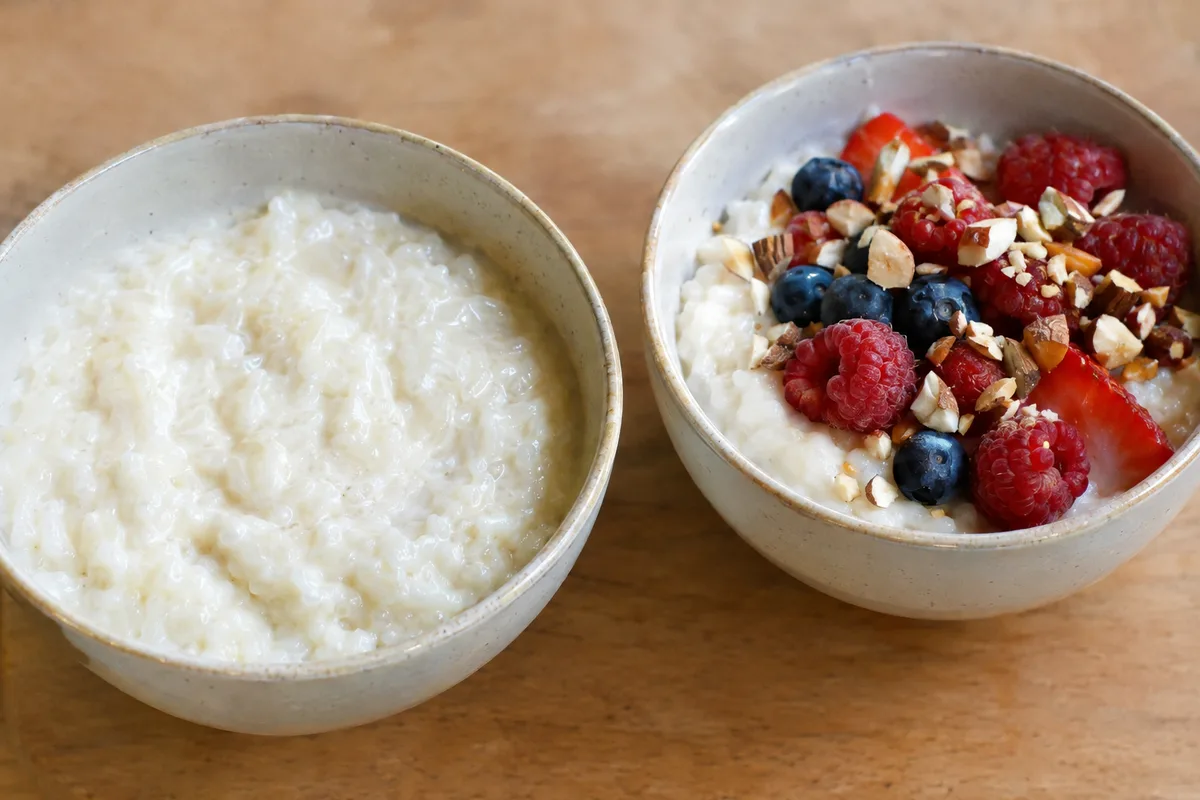
At its simplest, rice pudding combines rice and milk, giving you carbohydrate alongside some protein. Richer versions may include cream, butter or generous amounts of sugar, while lighter versions may rely mainly on milk and spices. Neither version needs to be labelled good or bad, but they serve different purposes in your food log.
- Check the serving size you actually eat
- Log added sugar, cream and toppings separately when needed
- Look at the whole meal or day rather than judging one bowl
- Choose the version that matches your appetite and goals
What rice pudding provides
Rice is mainly a source of carbohydrate, which the body uses for energy. Milk usually adds protein, along with nutrients such as calcium, although the exact amount varies by recipe. Plant-based alternatives differ widely, so check the label if you track protein or specific nutrients.

Traditional white rice pudding is usually fairly low in fibre unless fruit, seeds or a higher-fibre grain is added. Fat content depends largely on the milk, cream and other ingredients used. Added sugar can also vary considerably between homemade, chilled and tinned versions.
- Carbohydrate from the rice and added sweeteners
- Protein from dairy milk or a protein-containing alternative
- Fat from milk, cream, butter, nuts or seeds
- Fibre from fruit, seeds or less refined grains
How ingredients change the bowl
A basic homemade pudding gives you direct control over sweetness and richness. You can start with less sugar, taste near the end of cooking and add more only if needed. Cinnamon, nutmeg, vanilla or citrus zest can add flavour without making the pudding much sweeter.
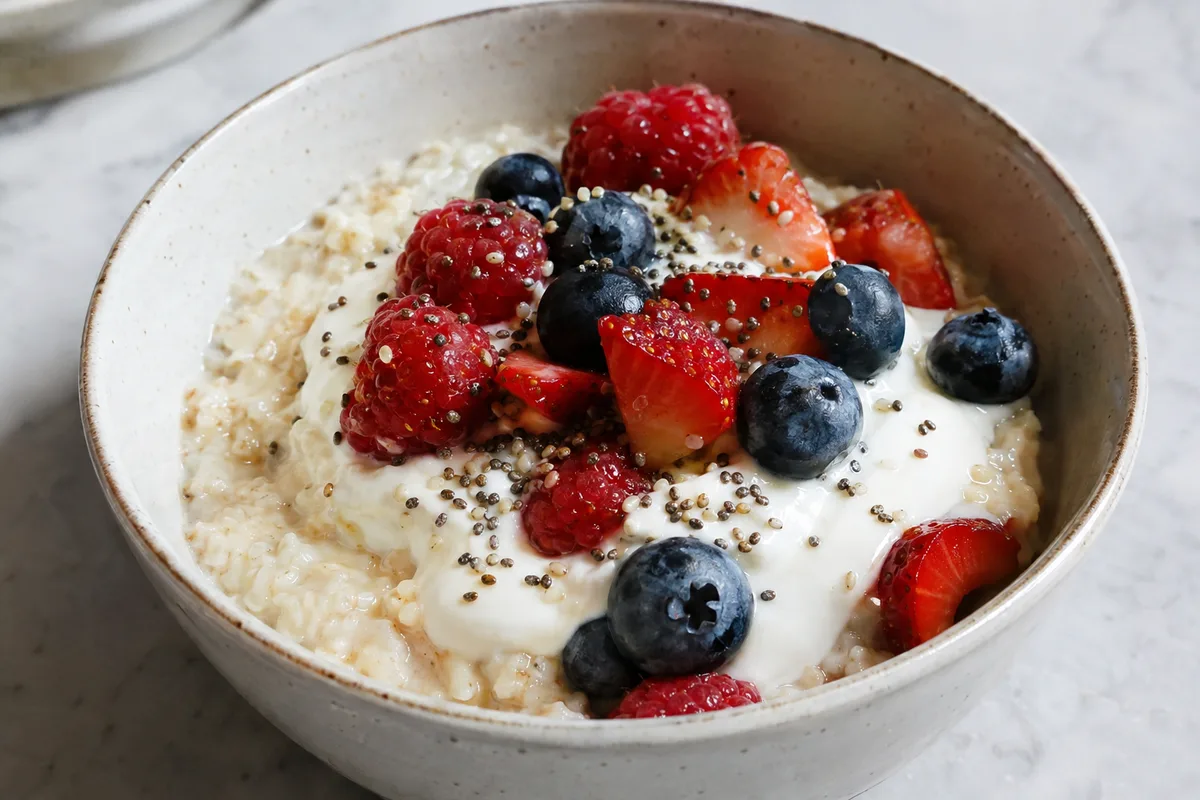
Ready-made rice pudding can still be convenient, but recipes differ. Compare products using the same serving basis and look at energy, added sugars where shown, saturated fat, protein and fibre. The best choice is the one that fits your usual intake rather than the one with the most eye-catching front label.
- Use mostly milk rather than relying heavily on cream
- Add spices or zest for flavour
- Stir in fruit for sweetness and fibre
- Add yoghurt for extra creaminess and protein
- Measure rich toppings if they are easy to underestimate
Portion size and fullness
A suitable portion depends on your appetite, daily energy needs and whether rice pudding is a snack, dessert or main breakfast. A small bowl after a filling meal has a different role from a larger bowl eaten on its own. Use your food log to compare the portion you planned with the amount that felt satisfying.
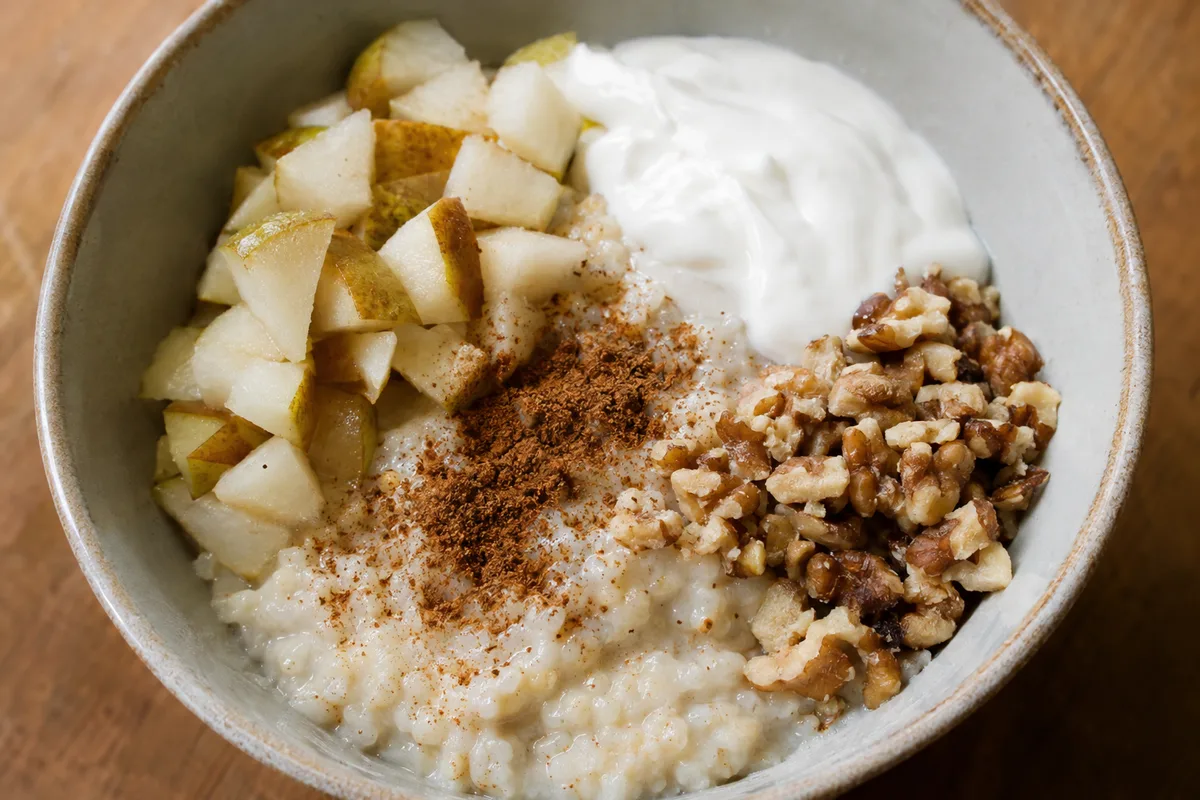
Rice pudding may feel more filling when it includes enough protein and some fibre. Fruit, yoghurt, nuts or seeds can make it more substantial, although nuts and seeds also add energy quickly. Eat slowly enough to notice whether you are still hungry before serving more.
- For dessert, pair a modest bowl with fresh fruit
- For breakfast, add yoghurt, fruit and a small amount of nuts or seeds
- For a snack, choose a portion that leaves room for your next meal
- Log second helpings and toppings rather than only the base pudding
Simple ways to adjust it
You do not need to remove every rich ingredient to make rice pudding fit your goals. Small changes can reduce added sugar or increase protein and fibre while keeping the dish enjoyable. Make one or two adjustments rather than changing so much that the result no longer satisfies you.
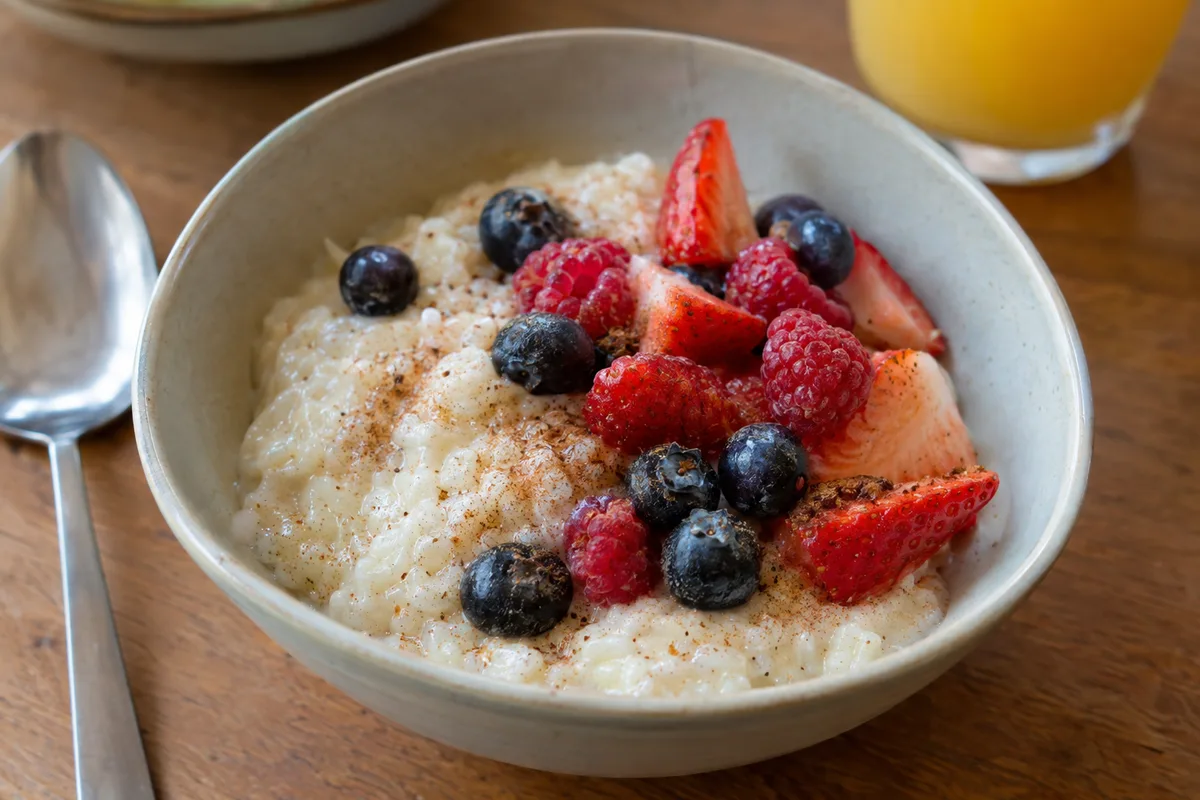
If sweetness is the main concern, reduce added sugar gradually and use ripe fruit or warming spices. If you want a more balanced bowl, include a clear source of protein and a fibre-rich topping. The precise amounts depend on your recipe, portion and wider food intake.
- Swap some cream for milk or an appropriate fortified alternative
- Top with berries, chopped apple, pear or stewed fruit
- Add plain yoghurt instead of extra cream
- Use cinnamon, vanilla, cardamom or nutmeg
- Sprinkle on nuts or seeds in a portion that suits your log
How to decide if it fits your diet
Look beyond a single entry and consider how rice pudding contributes to your overall pattern. If your day already contains plenty of sweet or rich foods, a simpler version may provide better balance. If you need a more substantial snack or breakfast, a protein-rich version with fruit may be useful.
Your food log can show which version works best for you. Record the recipe or label details, the portion and any toppings, then note how satisfying it was. Rice pudding can be a sensible choice when its ingredients and serving size match your needs and you genuinely enjoy it.
- Decide whether it is a dessert, snack or meal component
- Check whether the portion matches your planned intake
- Include toppings in the entry
- Notice how long the bowl keeps you satisfied