
Is soy protein isolate bad for you?
Soy protein isolate is a concentrated protein ingredient made from soybeans. This guide explains how it is produced, what it adds to food and what to consider when tracking your intake.
What soy protein isolate actually is
Soy protein isolate is made by separating most of the carbohydrate, fibre and fat from soybeans. The remaining ingredient is rich in protein and has a fairly neutral taste. Manufacturers use it in foods such as protein powders, snack bars, meat alternatives and ready-made drinks.
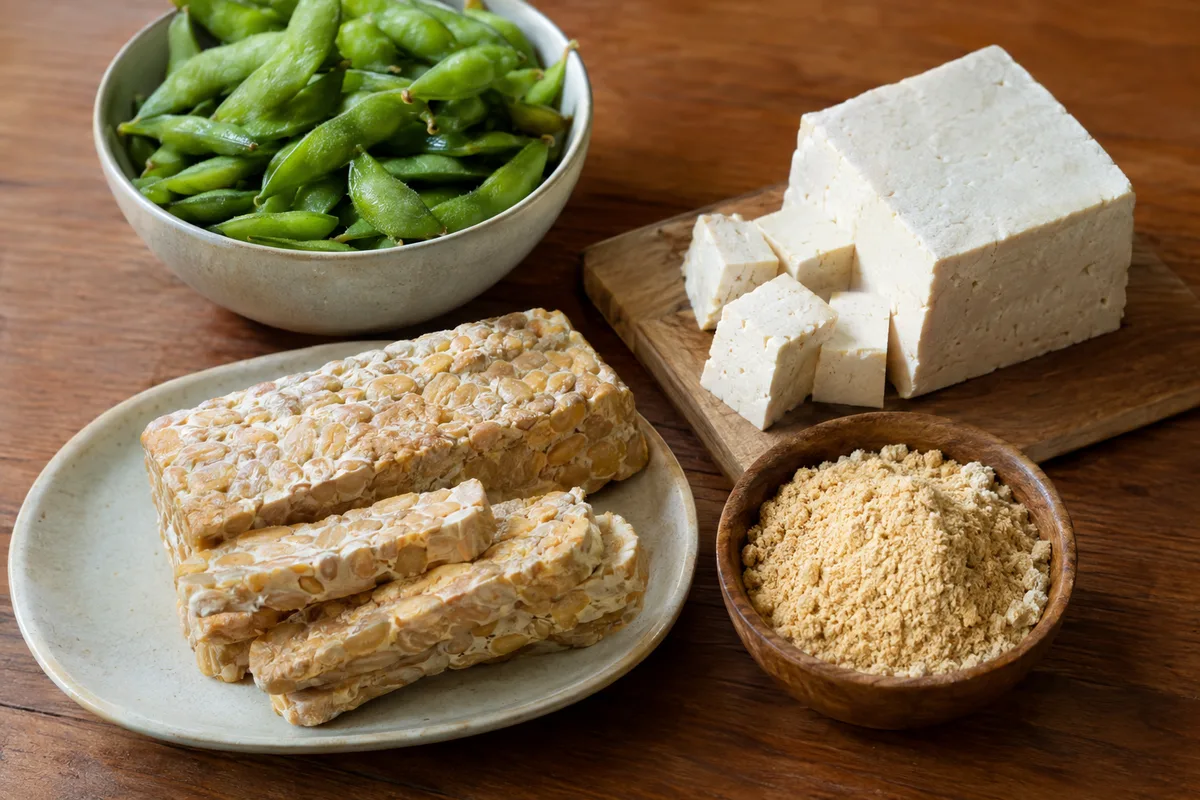
The word “isolate” describes how concentrated the protein is. It does not mean that the ingredient is automatically unsafe or unsuitable. However, an isolate offers a different mix of nutrients from whole soy foods such as tofu, tempeh and edamame.
- Soy protein isolate: concentrated protein with little fibre or fat
- Soy protein concentrate: protein with more of the original carbohydrate
- Tofu and tempeh: protein alongside fat and other soybean components
- Edamame: whole young soybeans containing protein, fibre and carbohydrate
Processing is not the whole story
Soy protein isolate goes through several processing steps before it reaches a food. Processing can change texture, flavour and nutrient content, but it does not tell you whether the complete food suits your needs. It is more useful to check what the product provides and how often it appears in your diet.

A product containing soy protein isolate may be simple, or it may include sweeteners, oils, salt and flavourings. Those additions are separate from the soy protein itself. When comparing products in your food log, look at the full ingredient list and nutrition information rather than judging one ingredient alone.
- Check the serving size used on the label
- Compare protein with the total energy provided
- Look at fibre, especially if the product replaces a meal
- Note added sugars and salt where relevant
- Consider whether the food leaves you satisfied
Protein quality and nutrition
Soy protein provides all the essential amino acids, which are the protein building blocks the body cannot make for itself. This makes it a practical option for increasing protein intake, including in a plant-based eating pattern. Protein provides about 4 kcal per gram, although the total energy of a product also depends on its carbohydrate and fat.
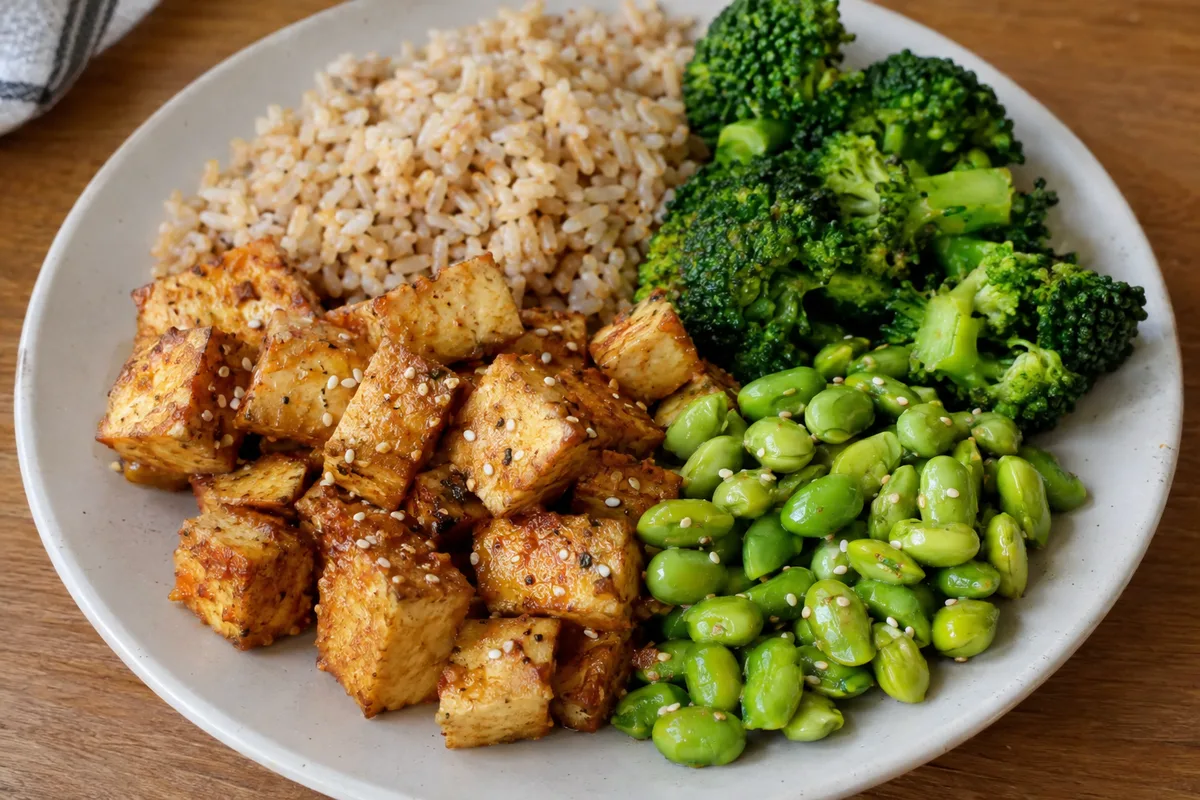
Isolate is useful when concentrated protein is the aim, but concentration comes with a trade-off. Much of the soybean’s fibre and some other components are removed during production. Whole or less processed soy foods can therefore contribute a broader range of nutrients.
You do not need every meal to contain the same type of protein. Variety can make it easier to obtain fibre, fats and micronutrients alongside protein. Your preferred balance depends on your overall diet, appetite, cooking habits and activity.
- Use isolate when concentrated protein is convenient
- Include tofu or tempeh for a less concentrated soy option
- Choose edamame when you also want fibre
- Rotate soy with beans, lentils, peas, eggs, dairy foods, fish or meat as appropriate
What about soy compounds and hormones?
Soy naturally contains compounds called isoflavones. Their structure has some similarities to one of the body’s hormones, which has led to concern that soy protein must disrupt normal hormone function. Similarity in structure does not mean they act in exactly the same way in the body.
For most adults, ordinary food portions of soy do not need to be avoided solely because they contain isoflavones. The amount in an isolate-based product can vary according to how it was made, so a precise figure cannot be assumed from the ingredient name. If this matters to you personally, use information supplied for that specific product rather than guessing.
When soy protein isolate may not suit you
An ingredient can be safe in general and still be unsuitable for a particular person. Soy can cause an adverse reaction in some individuals, and the appropriate response depends on the person and the reaction. If you already know that soy causes a reaction, check labels carefully and seek individual professional guidance.
Some people also notice digestive discomfort after a protein bar, powder or meat alternative. Soy protein isolate may not be the only possible cause because these products often contain sweeteners, added fibres, gums or several protein sources. Logging the product, portion and symptoms can help you spot a repeatable pattern.
Tolerance can also depend on portion size and what else was eaten at the same time. Avoid drawing a firm conclusion from one occasion. Seek prompt professional help if a reaction is severe or affects breathing.
- Record the exact food rather than writing only “protein bar”
- Note the portion and time eaten
- Record other ingredients that may be relevant
- Write down what you noticed and when it began
How to decide whether it fits your diet
Soy protein isolate is not inherently bad for you simply because it is processed. It can be a convenient protein source, while whole soy foods offer more fibre and a less concentrated form of the bean. The better choice depends on what the food replaces and what the rest of your diet contains.
Use your food log to look beyond a single day or ingredient. Check whether isolate-based foods support your protein target without crowding out fruit, vegetables, whole grains and other varied protein sources. There is no universal ideal amount because needs and eating patterns differ.
If you enjoy the food, tolerate it and it helps you build balanced meals, there is usually no reason to treat the ingredient as a warning sign by itself. If it dominates your protein intake, varying your sources can broaden the nutrients you eat. Judge the whole pattern rather than labelling one ingredient as good or bad.
- Check how often isolate-based foods appear in your log
- Notice what those foods replace
- Balance concentrated protein with fibre-rich foods
- Vary your protein sources across the week