
Is Sparkling Water Good for You?
Sparkling water can be a useful way to drink more fluid, especially if you enjoy bubbles more than still water. This guide explains what to track, how to read the label and when another drink may suit you better.
Sparkling water still counts towards hydration
Plain sparkling water is water with carbon dioxide added to create bubbles. It hydrates in much the same way as still water, so you can count it towards your daily fluid intake. The amount of fluid you need depends on your body, activity, food and surroundings.
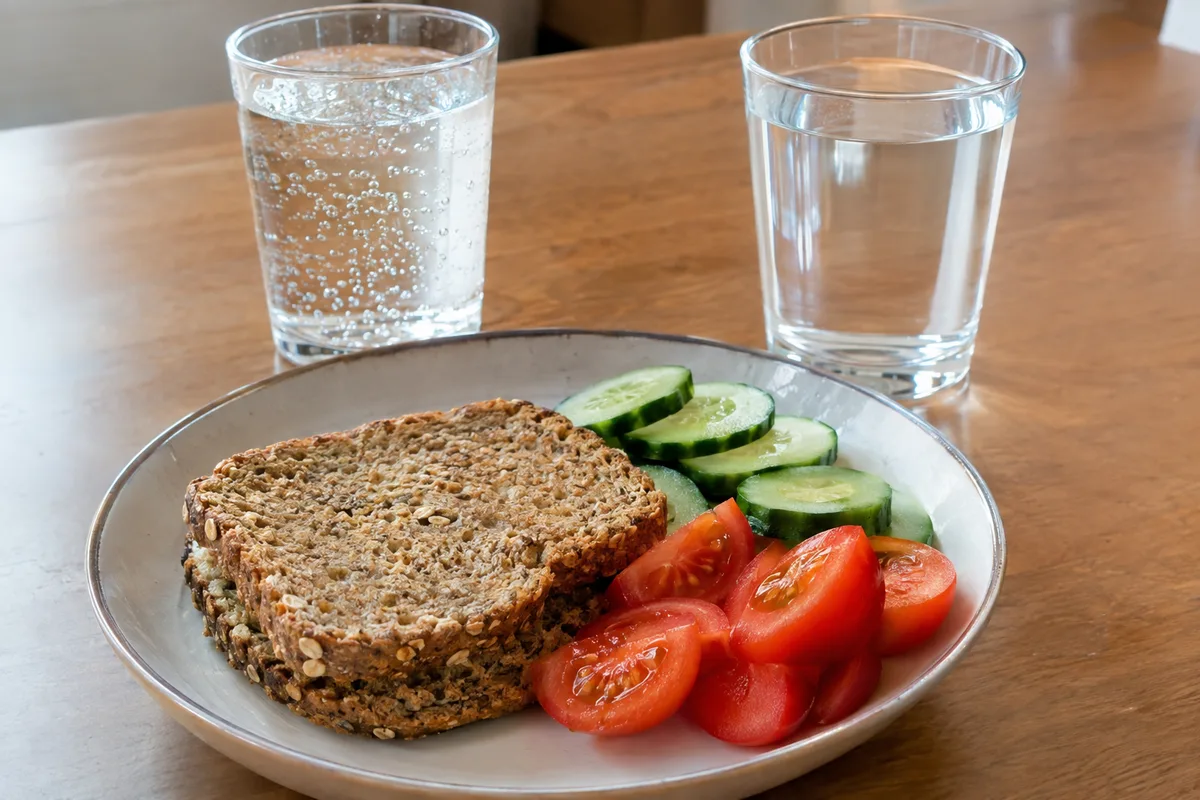
For someone who tracks food and drink, the main question is whether the bubbles help you drink enough. Sparkling water can add variety without changing your overall intake very much. It does not need to replace still water if you enjoy both.
- Count plain sparkling water as part of your fluid intake
- Log it separately if tracking helps you notice drinking habits
- Choose still water as well if it feels easier to drink around exercise
- Use thirst and urine colour as everyday guides, rather than chasing one fixed amount
Plain, flavoured and sweetened are not the same
The name on the front of a bottle does not always tell the full story. Plain carbonated water may contain only water and carbon dioxide, while other versions can include flavourings, fruit juice, sugar or sweeteners. Tonic water and fizzy soft drinks are different products, even though they also contain bubbles.
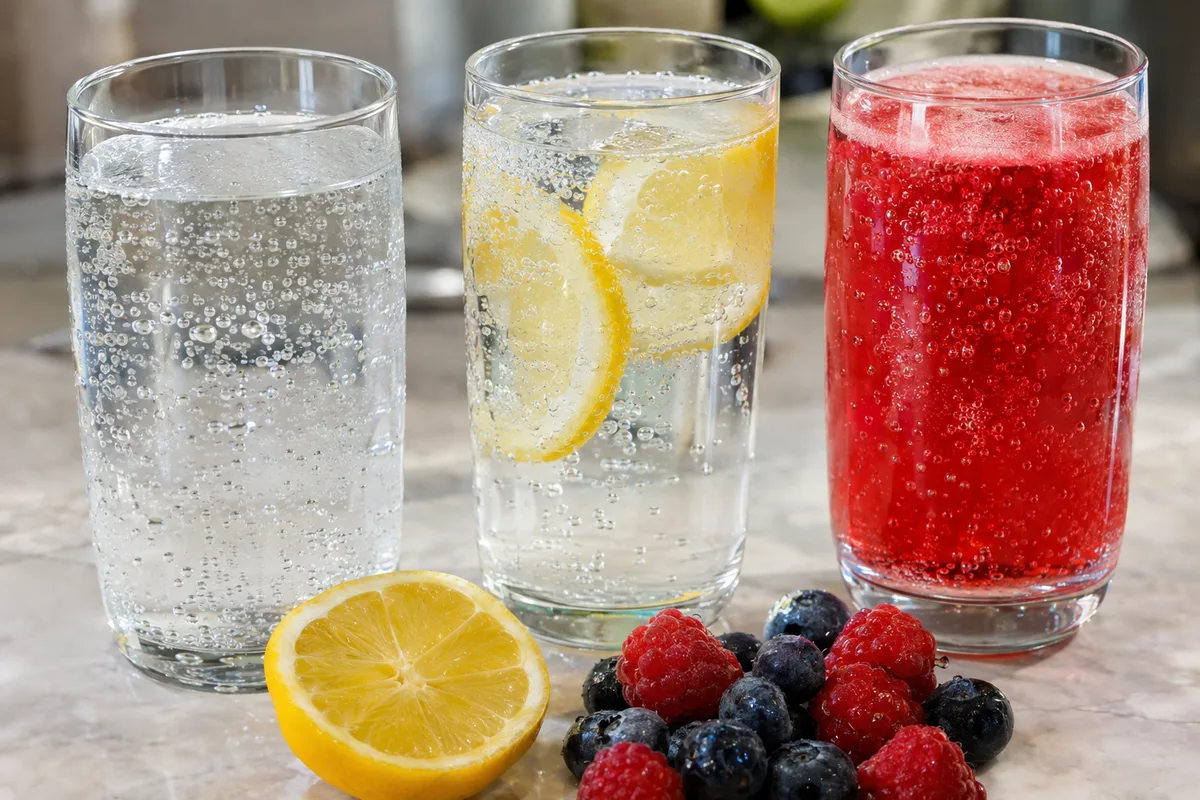
If you are tracking energy or carbohydrate, check the nutrition panel rather than assuming every clear fizzy drink is similar. Unsweetened flavoured water may contribute little or no energy, but recipes vary. A drink containing juice or sugar can add to your tracked intake.
- Plain sparkling water: usually water and carbon dioxide
- Mineral sparkling water: may naturally contain minerals
- Flavoured sparkling water: check for sugar, juice and sweeteners
- Tonic water: check the label because it may contain sugar or sweeteners
- Fizzy soft drinks: treat as a separate category from sparkling water
What to look for on the label
Start with the ingredients list, which shows what has been added. Then check the nutrition panel for energy, carbohydrate and sugars if these matter to your tracking. Compare drinks using the same serving basis because bottle and can sizes differ.

Some sparkling waters also contain sodium, either naturally or as an added ingredient. The amount varies between products, so the label is more useful than a general rule. Flavour words such as lemon or berry do not necessarily mean the drink contains much fruit.
- Read the ingredients rather than relying on the product name
- Check whether fruit juice, sugar or sweeteners are present
- Compare nutrition information using the same volume
- Notice whether your logged serving matches the amount you drank
- Check sodium if it is something you already monitor
The acidity can affect teeth
Carbon dioxide forms a mild acid when it dissolves in water, so sparkling water is more acidic than still water. Flavoured versions can be more acidic when they contain citrus juice or other acids. Frequent contact matters more than having an occasional glass with food.

You can reduce repeated exposure by drinking it with a meal rather than sipping it continuously. Swallowing normally, rather than holding or swishing the drink around your mouth, also limits contact. Plain still water remains the gentlest choice for teeth.
- Have sparkling water with meals when practical
- Avoid swishing it around your mouth
- Alternate with plain still water
- Check for citric acid, fruit juice and added sugar
- Use a straw if you already prefer one, without treating it as complete protection
Bubbles may feel different in your stomach
The gas in sparkling water can make some people feel full, burpy or uncomfortable. Others notice little difference and simply enjoy the texture. Your own response is more useful than a rule that claims sparkling water suits everyone.
Pay attention to timing as well as quantity when you track it. A fizzy drink before or during a meal may affect how hungry or comfortable you feel, while drinking it quickly can mean swallowing more gas. Still water may be easier before exercise or whenever you want to drink a larger amount comfortably.
- Notice whether bubbles leave you comfortably satisfied or overly full
- Record the drink alongside meals if you are exploring a pattern
- Try smaller servings or slower drinking if it feels uncomfortable
- Switch to still water around exercise if carbonation feels awkward
The practical verdict
Plain sparkling water can be a good everyday drink when you enjoy it and it helps you stay hydrated. It usually fits easily into food tracking because it may contain little or no energy, although the label should confirm this. It is not automatically better than still water, and it does not need to be.
Choose according to taste, ingredients, dental exposure and how your stomach responds. Keep sweetened fizzy drinks and tonic water separate in your log because their contents may differ from plain sparkling water. A mixture of still and sparkling water is a simple option if both work for you.
- Choose plain or unsweetened versions for a straightforward hydration option
- Log any sugar, juice or other energy-containing ingredients
- Drink it in a way that limits frequent contact with teeth
- Let comfort and preference guide how often you choose bubbles