
Is There Really Such a Thing as Healthier Bacon?
Some bacon choices may suit your eating goals better than others, but no single type is automatically healthy. Here is how to compare the options and log them accurately without relying on package claims.
What “healthier” bacon can mean
The word “healthier” only makes sense when you decide what you want to compare. You might be looking for less saturated fat, less salt, a shorter ingredient list or a portion that fits your day. One bacon can do well on one measure and less well on another.
Bacon is processed meat, whether it is smoked, unsmoked, cured or sold with a natural-sounding label. It can still be enjoyed, but it is better viewed as a strongly flavoured part of a meal rather than its nutritional foundation. Your usual eating pattern matters more than finding a supposedly perfect rasher.
- Lower saturated fat, if that is something you track
- Lower salt per serving
- More meat and less visible fat
- A simpler ingredient list
- A smaller amount used for flavour
Start with the cut
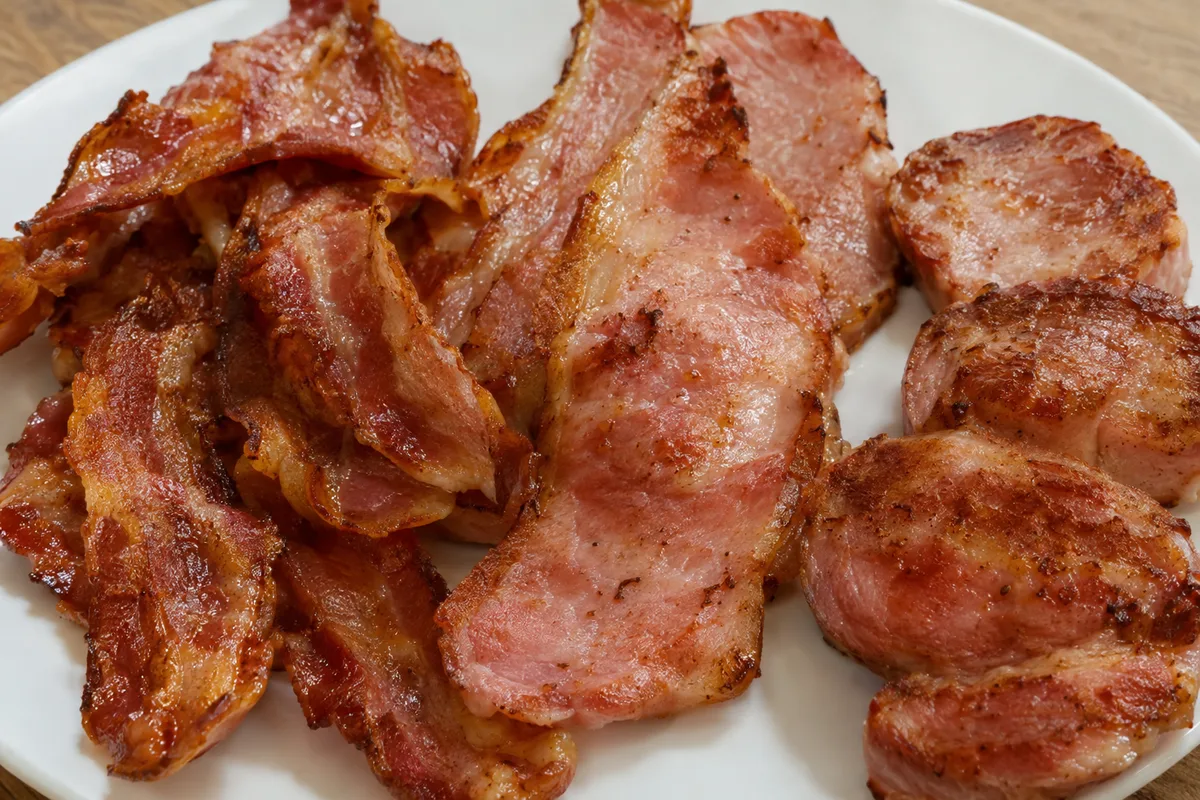
The cut can make a noticeable difference to the amount of visible fat. Streaky bacon comes from a fattier part of the pig, while back bacon usually contains a larger lean section. Exact nutrition varies, so the packet is still more useful than the name alone.
Medallions are trimmed to leave mainly the lean eye of back bacon. They can be lower in fat than an equal weight of streaky bacon, although seasoning and curing still affect the salt content. Turkey bacon may also be leaner, but its ingredients and nutrition vary widely between products.
- Streaky bacon: more visible bands of fat
- Back bacon: a lean eye with a strip of fat
- Bacon medallions: closely trimmed back bacon
- Turkey bacon: formed slices that need a label check
Read beyond the front of the packet
Claims such as “lean”, “smoked” or “no added nitrites” do not tell you everything about a bacon product. Turn the packet over and compare products using the same weight or the stated serving. Check saturated fat and salt alongside the ingredients list.
Some bacon labelled “uncured” or “no added nitrites” uses ingredients such as celery extracts that provide naturally occurring nitrates. That wording does not automatically make it lower in salt or fat. Smoking also changes flavour rather than guaranteeing a particular nutritional profile.
When logging bacon, use the entry that matches the exact product and whether the listed values refer to cooked or uncooked weight. Cooking removes water and some fat, so the values per gram can change. If the database entry and packet disagree, the packet is usually the better reference for that product.
- Compare the same weight or serving size
- Check saturated fat and salt
- Notice whether values are for cooked or uncooked bacon
- Match the brand and cut when logging
- Use the ingredients list to clarify package claims
Let portion and frequency do some of the work
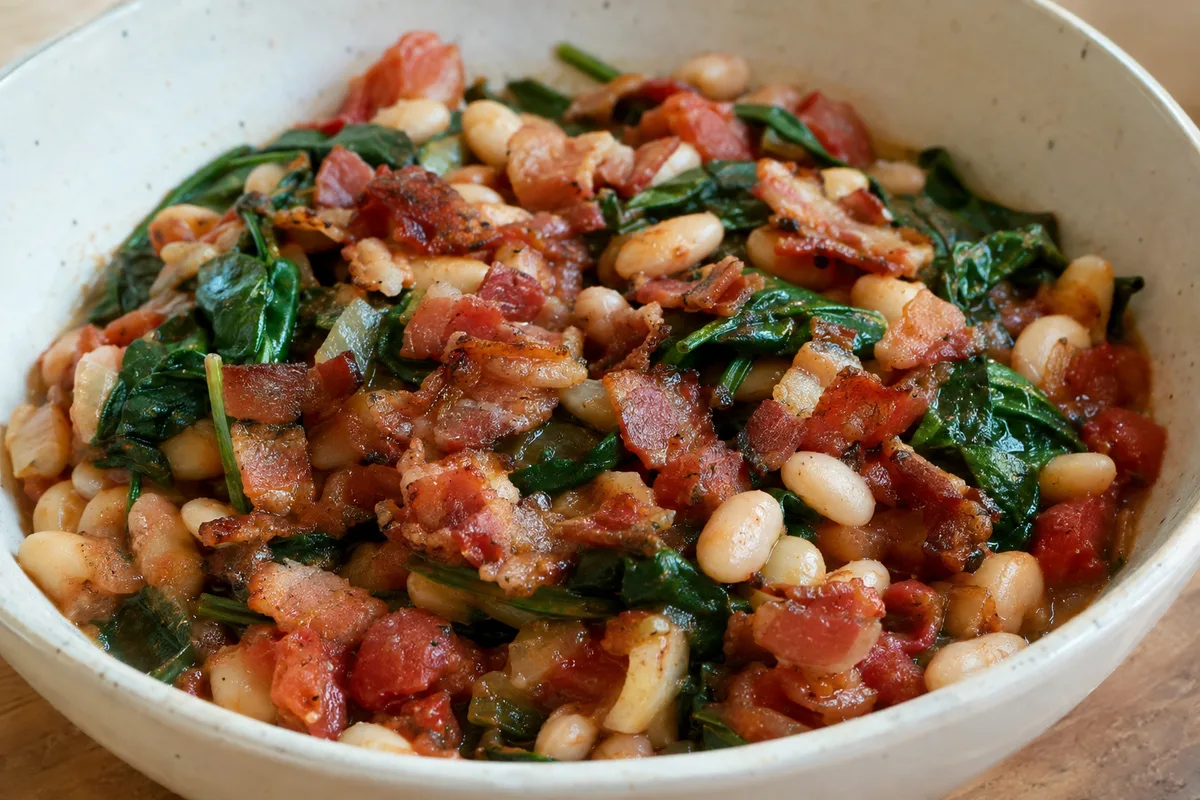
A leaner rasher is not the only way to adjust a bacon meal. Because bacon has a strong savoury taste, a smaller amount can still add plenty of flavour. Chopping it through a dish may make it feel more evenly distributed than serving several whole rashers.
There is no single correct portion or frequency for everyone. The amount that fits depends on the rest of your meal, your overall food pattern and the targets you track. Looking at your weekly log can be more useful than judging one breakfast in isolation.
- Crumble a little bacon over eggs and vegetables
- Stir chopped bacon through beans or lentils
- Add a small amount to a vegetable-based pasta sauce
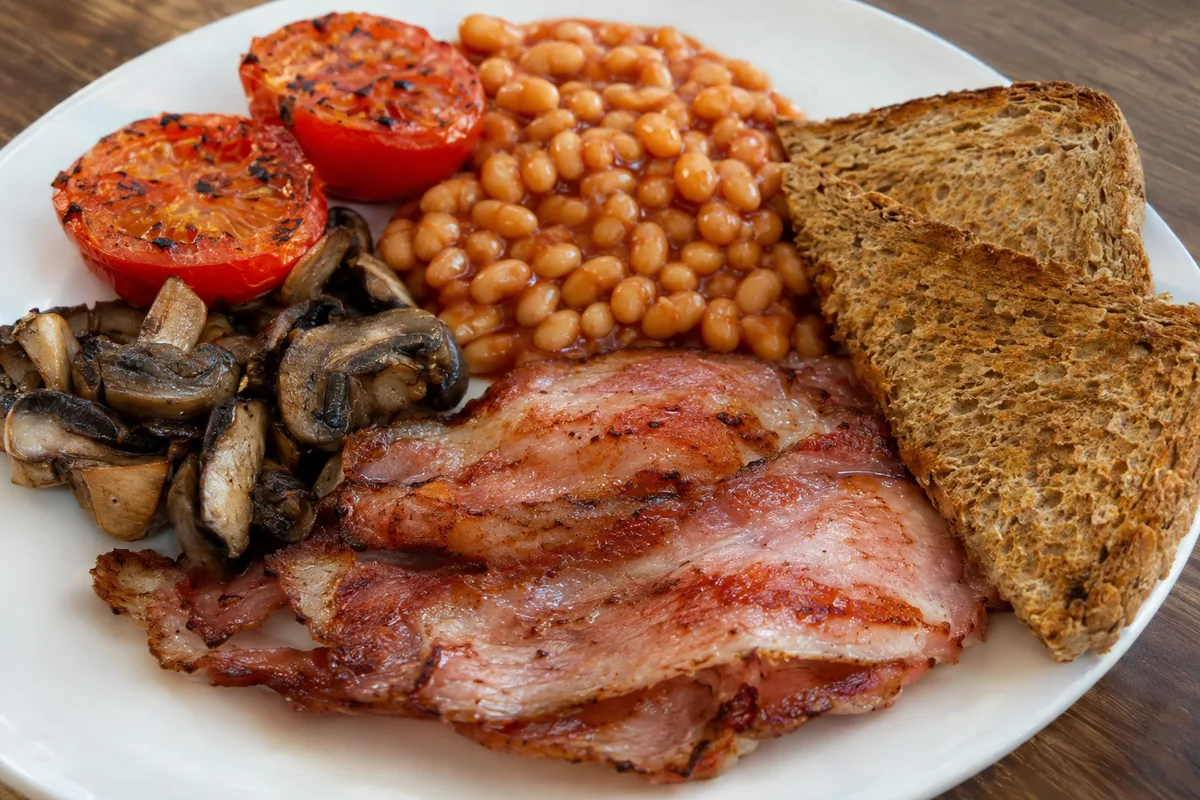
- Pair bacon with tomatoes, mushrooms or leafy greens
- Use it as a flavouring rather than the main filling
Cooking method changes the finished rasher
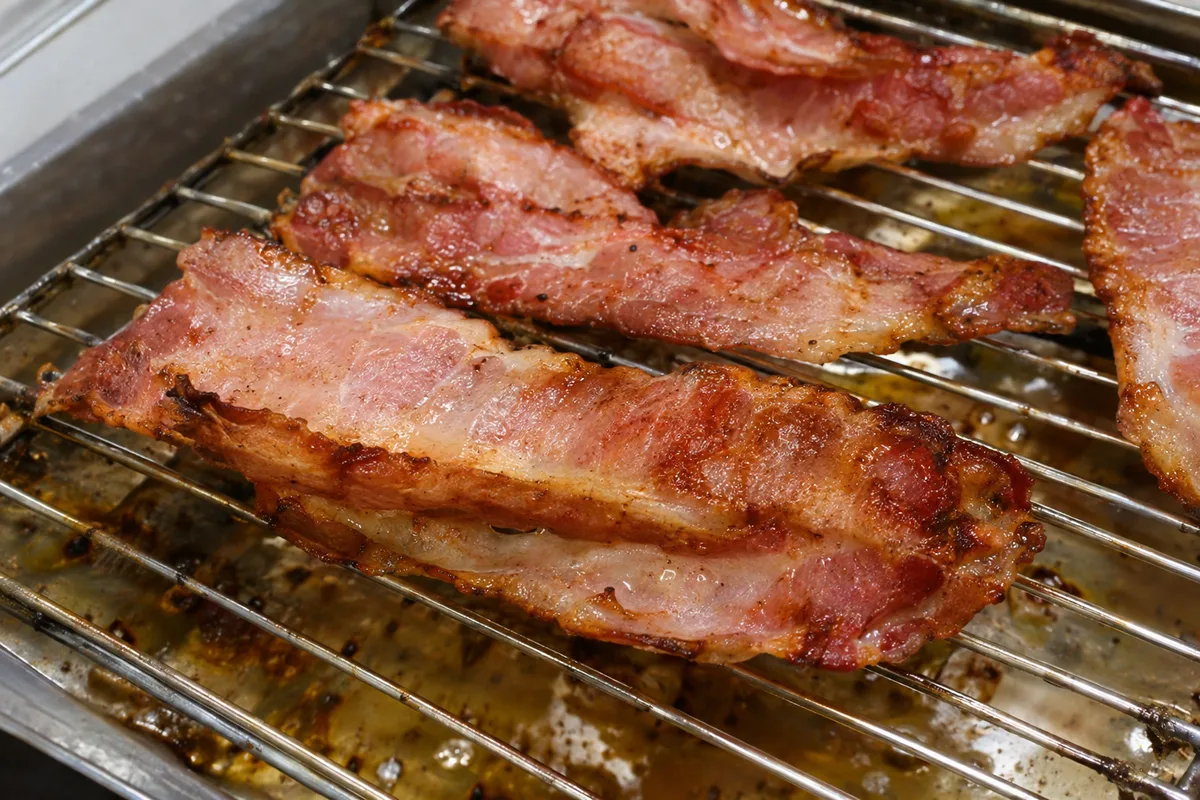
Bacon releases fat as it cooks, particularly when it contains visible streaks. Grilling or cooking it on a rack allows some of that fat to drain away. Pan-frying without added oil can also avoid adding extra fat to the meal.
Cooking bacon until very crisp does not make it nutritionally weightless. It mainly removes water and may remove some rendered fat, leaving a smaller, more concentrated piece. For accurate tracking, follow the packet instructions and log the cooked or uncooked amount consistently.
- Trim an outer strip of fat if you prefer
- Avoid adding oil unless it is needed
- Let released fat drain away
- Blot excess surface fat with kitchen paper
- Keep your weighing and logging method consistent
The practical verdict
There can be a bacon option that is better suited to your priorities, but “healthier bacon” is not a fixed category. Back bacon or medallions may help when you want less fat, while another product may be preferable when salt is your main concern. The label and your chosen portion settle the comparison better than marketing language.
You do not need to treat bacon as either forbidden or especially nourishing. Choose a version you enjoy, use an amount that fits your tracked intake and build the meal around foods that add fibre and variety. Vegetables, beans, wholegrain bread and fruit can make the overall meal more balanced without pretending the bacon itself has changed.
- Decide which nutrition measure matters to you
- Compare like with like on the label
- Choose the cut and flavour you genuinely enjoy
- Log the actual product and amount
- Consider the whole meal, not only the bacon