
Is Uncle Ben’s rice healthy? What to check before you log it
Rice can provide useful carbohydrate, while wholegrain varieties also add fibre. This guide explains how to compare Uncle Ben’s rice products, log them accurately and build a balanced meal around them.
The short answer
Uncle Ben’s rice, now sold under the Ben’s Original name in many places, can be part of a balanced diet. Whether it suits your needs depends on the type you choose, how much you serve and what you eat with it. Plain rice and seasoned microwave rice can have quite different nutrition information.
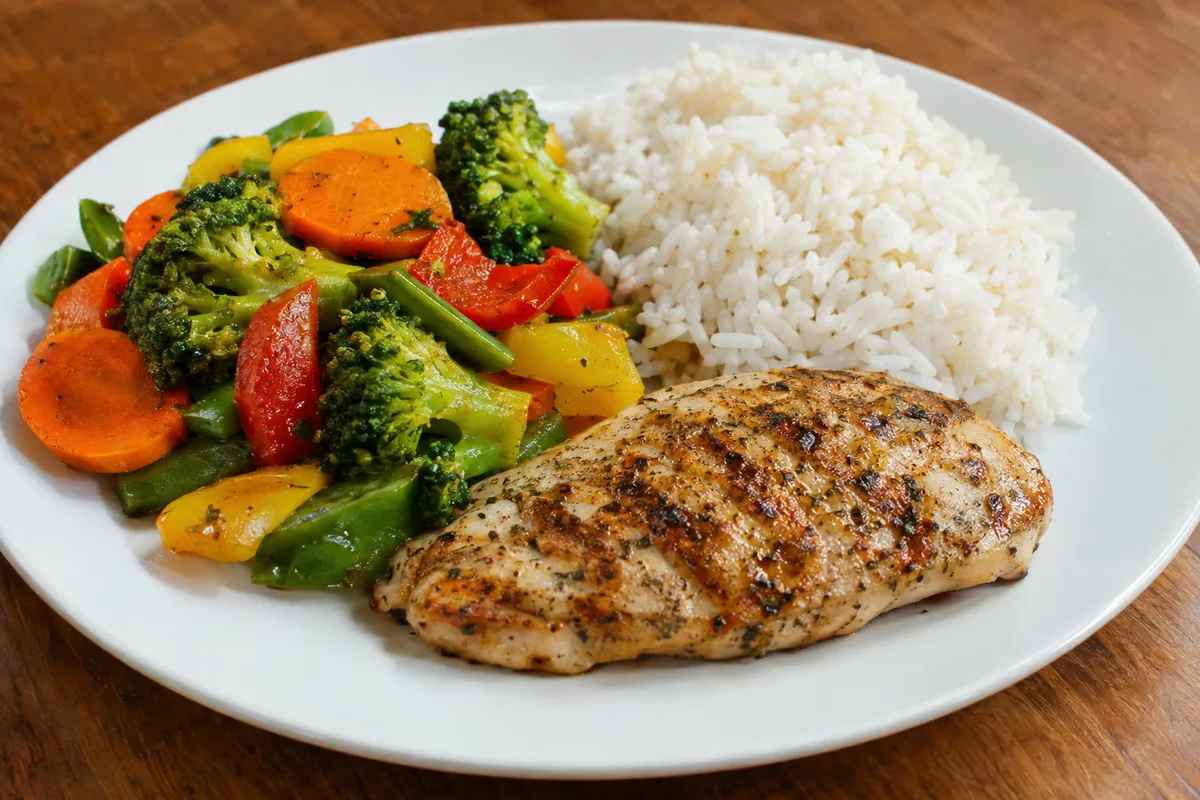
Rice mainly contributes carbohydrate, which the body can use for energy. A serving can also help make a meal filling, especially when paired with vegetables and a source of protein. No single rice product makes an entire diet healthy or unhealthy.
- Choose plain rice when you want more control over seasoning
- Try wholegrain rice when you want more fibre
- Check flavoured varieties for added salt, oil and other ingredients
- Consider the whole plate rather than judging the rice alone
Plain, wholegrain and flavoured rice are not the same
Plain long-grain or basmati rice usually has a short ingredient list. Wholegrain rice keeps more of the grain and generally provides more fibre than white rice. White rice can still fit into varied meals, particularly if other foods on the plate supply fibre.
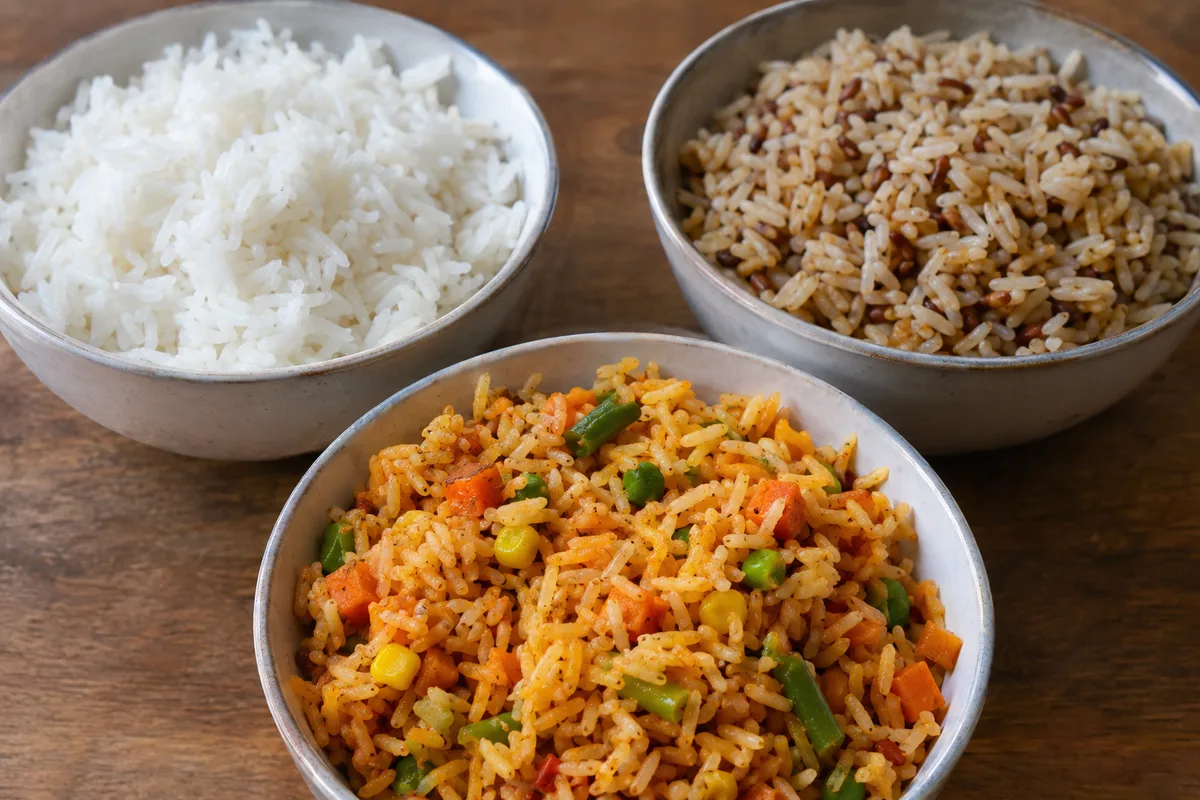
Flavoured pouches may include oil, salt, vegetables, herbs or sauces. These additions can change the energy, fat, salt and fibre shown on the label. Recipes can also change, so use the information on the pack you actually ate rather than relying on an old saved entry.
- Plain white rice: mild, quick to pair with other foods and usually lower in fibre than wholegrain rice
- Wholegrain rice: firmer in texture and generally a higher-fibre choice
- Flavoured rice: convenient, but the ingredients and nutrition vary by recipe
- Rice with grains or pulses: nutrition depends on the proportions and added seasoning
How to read the label
Start by checking whether the nutrition is listed per serving, per pack or per 100 grams. A pouch may be presented as more than one serving, even if you normally eat the whole amount. Log the quantity you actually have rather than automatically accepting the suggested serving.
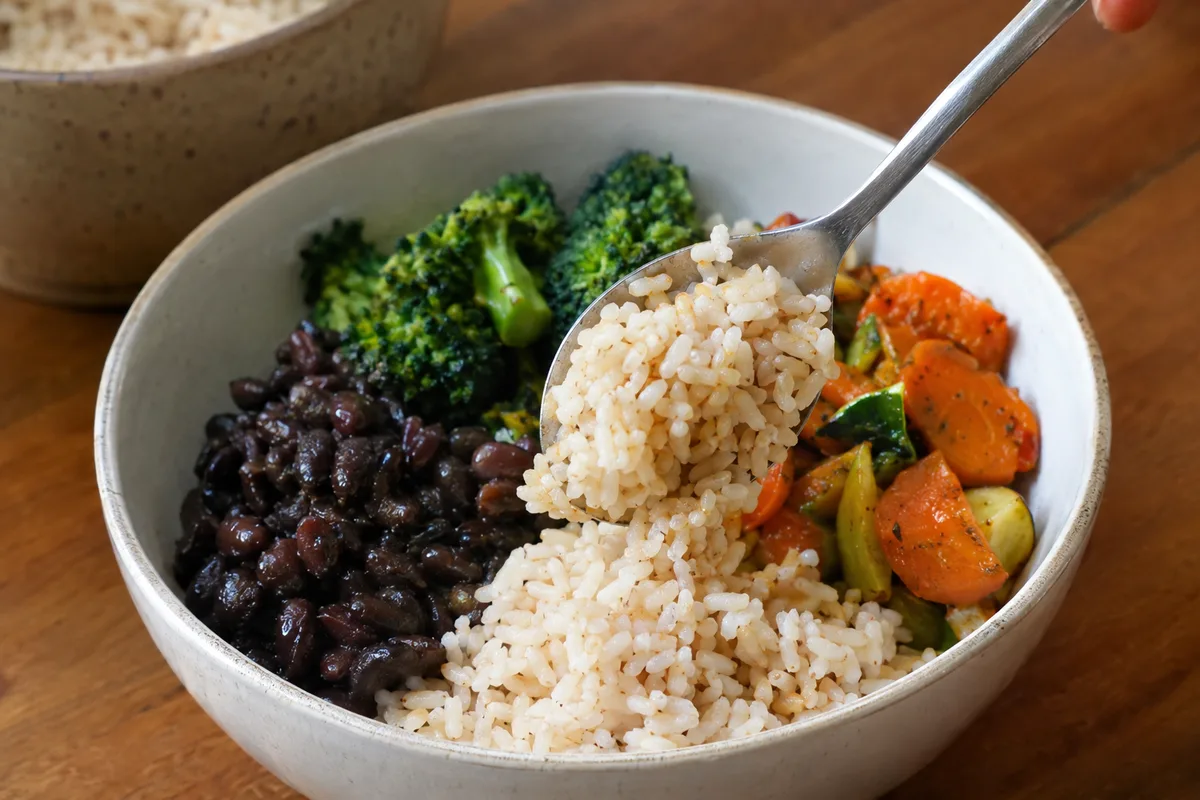
Next, compare energy, fibre, protein, fat and salt between varieties. Fibre can support fullness and regular eating patterns, while salt may be worth checking if the rice is already seasoned. The ingredient list shows whether oils, sauces or sweeteners have been added.
Make comparisons on the same basis. Per 100 grams is useful for comparing two ready-to-eat products, while per serving helps you understand what will be on your plate. Remember that dry rice and cooked rice have different weights because cooked grains contain absorbed water.
- Confirm whether the figures refer to cooked or uncooked rice
- Check the stated serving size against your actual portion
- Use per 100 grams when comparing similar products
- Read the salt value on seasoned varieties
- Update saved foods if the pack information changes
Getting an accurate entry in your food diary
Packaged microwave rice is often easiest to log using the label because it already accounts for the product’s ingredients. If you eat half a pouch, log half of the pouch’s total values rather than choosing a generic rice entry. If you eat the full pouch, check whether the database entry represents one serving or the complete pack.
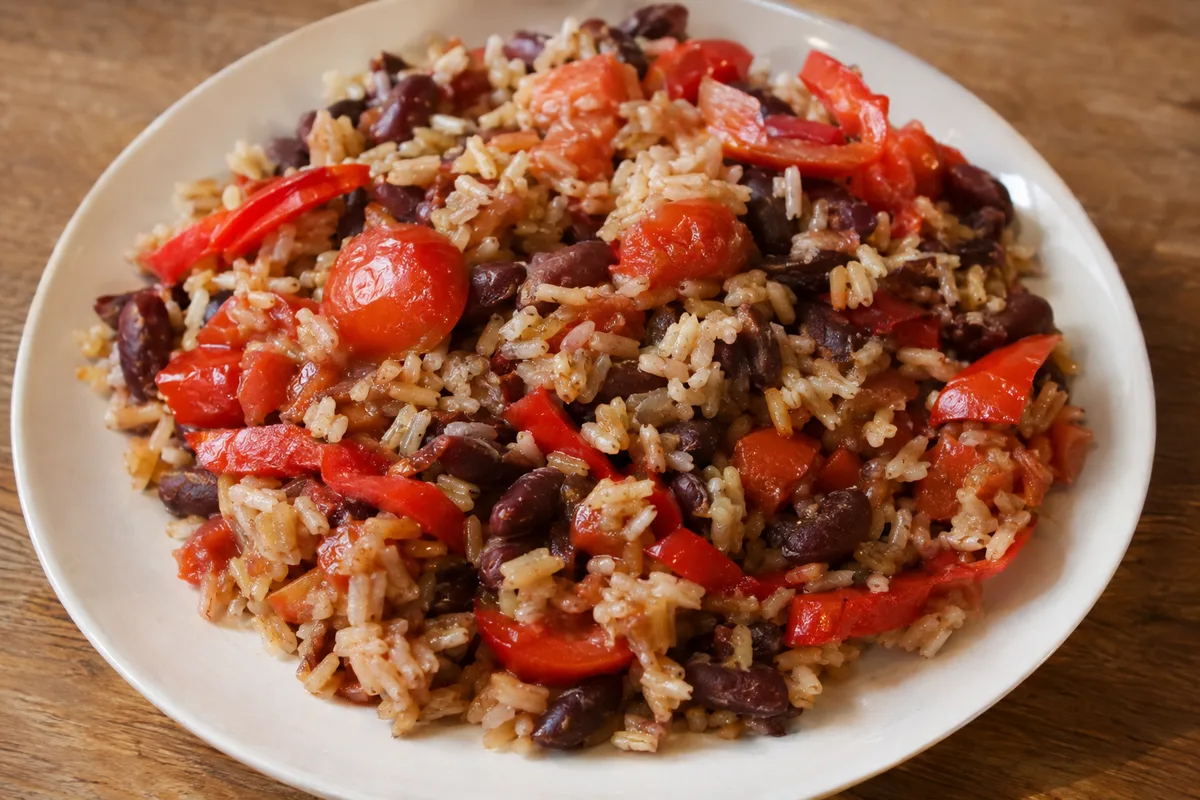
For dry rice cooked at home, choose either a dry-weight entry or a cooked-weight entry and match it to how you measured the food. Do not weigh cooked rice and log it as dry rice, as this can make the entry inaccurate. The exact change in weight depends on the rice, cooking method and amount of water absorbed.
Shared dishes need a little more care. Log the rice, oil, sauce and other ingredients in the full recipe, then divide the result by the portion you ate. If you cannot measure everything, record a sensible estimate and use the same method when you prepare a similar meal again.
- Match cooked weight with a cooked-rice entry
- Match dry weight with a dry-rice entry
- Include added oil, butter or sauce separately when needed
- Check whether your saved entry covers one serving or the whole pouch
Build a balanced meal around the rice
Rice works best as one part of the plate rather than the only substantial food. Add vegetables for fibre, colour and variety, then include a protein source that suits the meal. Sauces and toppings can also make a large difference to the final nutrition entry.
The right rice portion depends on your appetite, routine, activity and the other foods in the meal. You do not have to remove rice to make the plate more balanced. Adjust the amount while keeping enough food overall to make the meal satisfying.
- Rice with roasted vegetables and chicken
- Wholegrain rice with beans, peppers and tomatoes
- Basmati rice with tofu and mixed green vegetables
- Plain rice with fish, peas and a yoghurt-based herb sauce
- Seasoned rice with extra vegetables and a simply cooked protein
So, which variety should you choose?
Choose according to what matters in that meal. Wholegrain rice may be useful when you want more fibre, while plain white rice may suit a dish where vegetables, beans or other fibre-rich foods are already included. A flavoured pouch can also fit when its ingredients and serving size work with the rest of your day.
Your food diary can help you compare choices without labelling any one product as good or bad. Look at patterns across meals, including fibre, protein, vegetables, overall energy and salt. The most suitable option is one that meets your needs, tastes good to you and can be logged clearly.
- For more fibre, compare wholegrain and mixed-grain varieties
- For control over seasoning, start with plain rice
- For a flavoured option, check the label rather than judging by the product name
- For accurate tracking, use the current pack and your actual portion