
Is Worcestershire sauce gluten free?
Worcestershire sauce recipes vary between brands and countries, and some contain ingredients made from barley or wheat. Here is what to check on the label and how to record the sauce in your food log.
The short answer
Some Worcestershire sauces are gluten free, but the name of the sauce alone does not tell you. Recipes differ, and a brand may use different ingredients in different countries. The label on the bottle you are using is therefore the most reliable place to start.
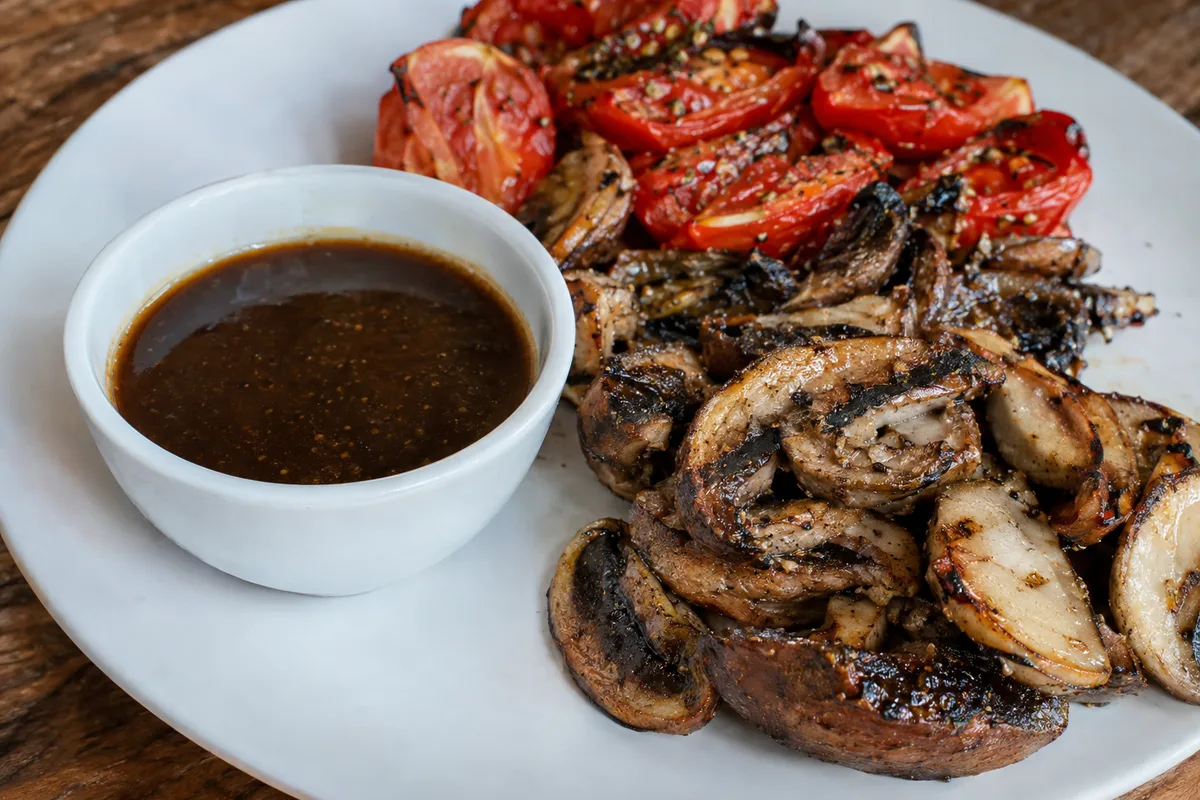
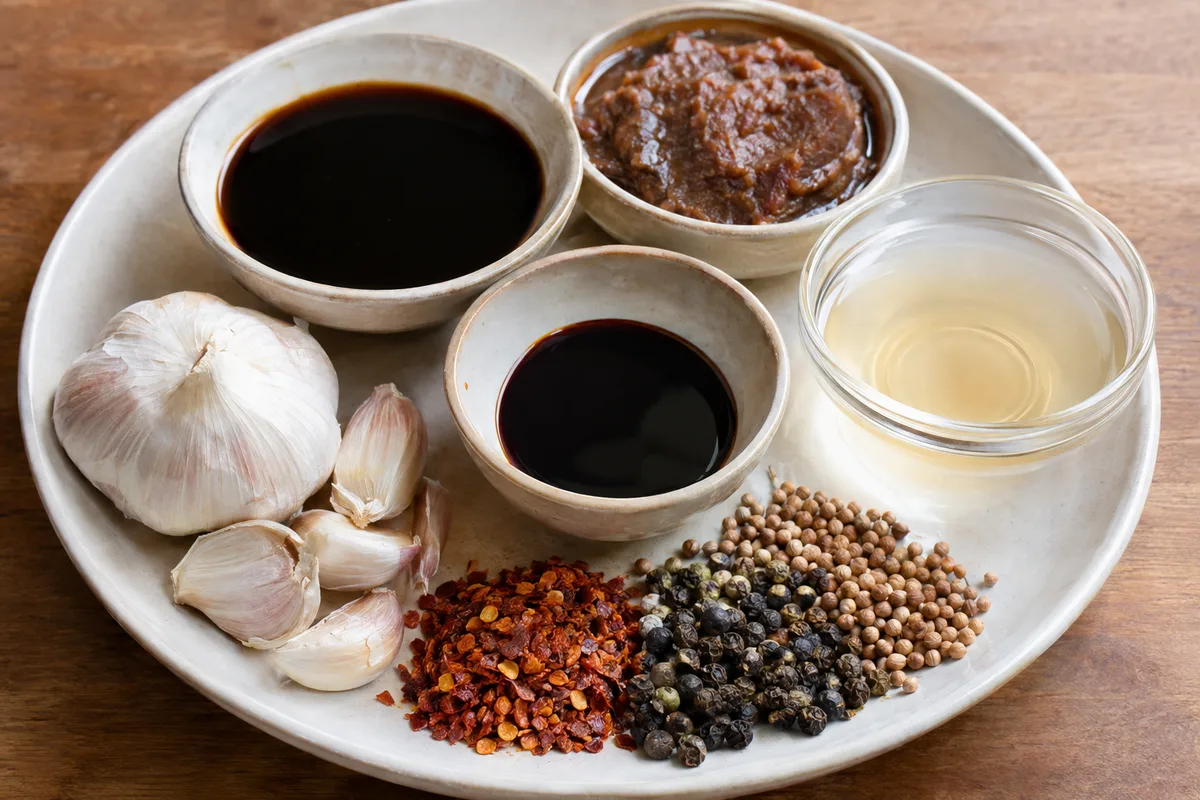
Traditional-style recipes often combine vinegar, anchovies, tamarind, sugar or molasses, salt, onions, garlic and spices. Many of these ingredients are naturally gluten free, but malt vinegar or certain flavourings can change the answer. Manufacturing methods and shared equipment may matter too.
- Check for wheat, barley, rye and malt in the ingredients.
- Read the allergen statement as well as the main ingredients list.
- Look for a clear gluten-free statement if you need firm reassurance.
- Recheck the label when buying a new bottle, even if you have used the brand before.
Why malt vinegar matters
Malt vinegar is usually made from barley, which contains gluten. If a Worcestershire sauce lists malt vinegar, barley or barley malt, do not assume it is gluten free. The allergen statement may also highlight barley separately.
Other vinegars, such as spirit vinegar or distilled vinegar, are different from malt vinegar. However, seeing the word vinegar is not enough to settle the question because the source and local labelling rules can vary. Read the full wording rather than judging the sauce by colour or flavour.
- Malt vinegar: commonly linked to barley.
- Barley malt extract: a barley-based ingredient that needs attention.
- Spirit or distilled vinegar: not the same as malt vinegar.
- Unspecified flavourings: check for an allergen statement or gluten-free claim.
How to check the bottle
Start with the ingredients list and scan for clearly named sources of gluten. Then read any statement beginning with words such as contains or may contain. These parts of the label answer different questions, so it is worth checking both.
A gluten-free statement can make the choice clearer, but packaging and recipes change over time. An online ingredients page may also differ from the bottle sold in your area. Give priority to the current label on the product in front of you.
- Find the ingredients list.
- Check for wheat, barley, rye, malt and malt vinegar.
- Read the contains or may contain statement.
- Look for a clear gluten-free declaration.
- If the wording remains unclear, choose a sauce with a more definite label.
Do not rely on the brand name alone
The same brand can sell different Worcestershire sauce recipes in different markets. One version may use malt vinegar while another uses distilled vinegar, and the allergen wording may not match. Advice found for another country may therefore be wrong for your bottle.
Own-label and speciality versions can also differ from familiar recipes. Vegetarian versions may replace anchovies, but that change does not automatically say anything about gluten. Reduced-salt or flavoured varieties should be checked as separate products too.
- Check the country named on the packaging.
- Treat each variety as a separate recipe.
- Do not use an old label photo as your only source.
- Check again after a packaging redesign or recipe update.
Gluten-free alternatives for similar flavour
If your usual sauce contains barley or has an unclear label, another product can provide some of the same savoury, sharp and slightly sweet qualities. No single substitute tastes exactly the same. Combining a few clearly labelled ingredients may give a closer result.
Choose substitutes according to the dish and check every label individually. Tamari can add savouriness, while vinegar provides sharpness and tamarind adds a fruity sour note. A little sweetness and spice can round out the mixture.
- Gluten-free tamari with a small splash of vinegar.
- Tamarind paste diluted with water and seasoned to taste.
- A clearly labelled gluten-free brown sauce.
- Vinegar mixed with molasses, garlic and spices.
- A clearly labelled gluten-free fish sauce for savoury depth.
Recording it in your food log
Worcestershire sauce is normally used in a small serving, but it should still be recorded if you track everything you eat. Select the exact brand and variety where possible because recipes and nutrition information vary. Use the serving shown on your bottle or measure the amount added to the whole dish.
For a shared recipe, log the amount of sauce used in the full batch and divide it across the portions served. If you only add a dash, estimate consistently rather than switching between different entries. Gluten-free status and nutrition tracking are separate checks, so confirm the label even when the food-log entry looks familiar.
- Record the exact product rather than a generic sauce when possible.
- Measure by spoon or use the serving information on the label.
- For batch cooking, divide the total amount between portions.
- Save a verified entry, but recheck it if the packaging changes.