
Are Mung Bean Noodles a Good Choice?
Mung bean noodles are light, versatile and easy to add to stir-fries, soups and salads. Here is what they provide, how they compare with whole mung beans and how to track them accurately.
What are mung bean noodles?
Mung bean noodles are thin, translucent noodles commonly used in stir-fries, soups, salads and spring rolls. They are often called glass noodles or bean thread noodles because they become clear and slippery when cooked. Their mild flavour allows them to take on the taste of sauces, herbs and broths.
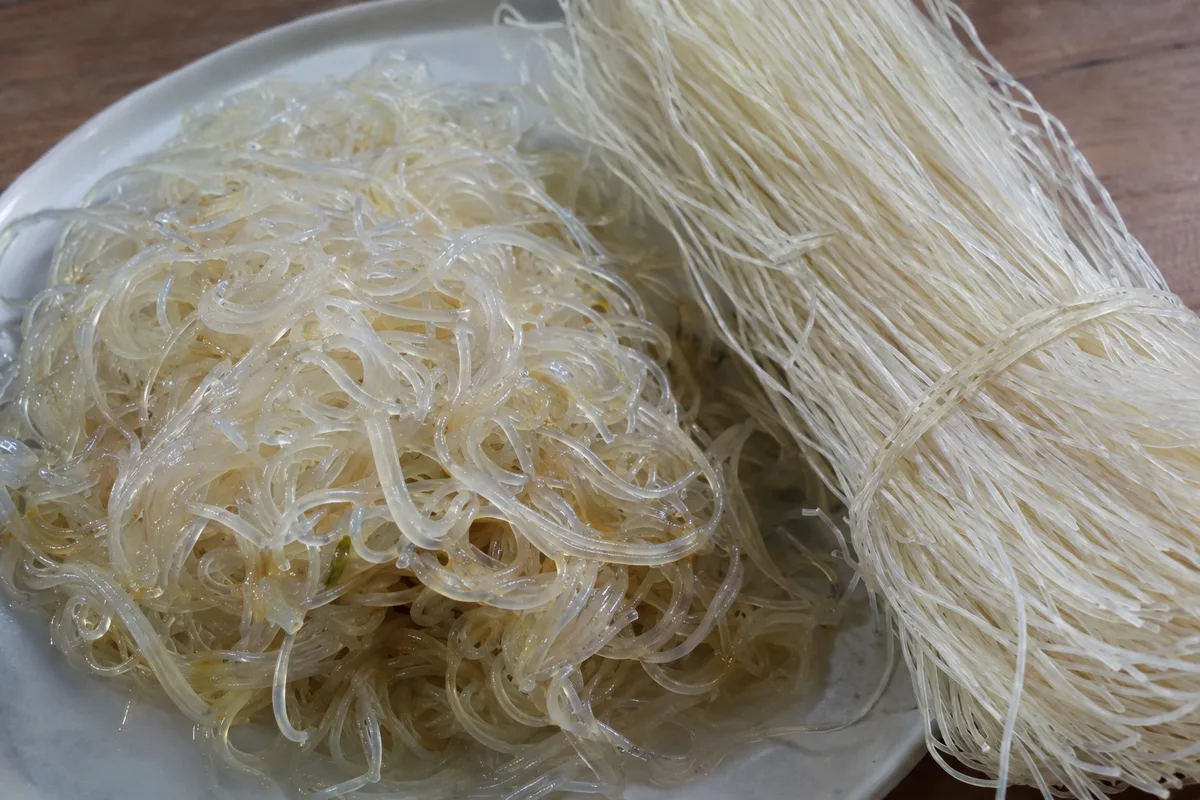
Despite the name, these noodles are usually made from starch extracted from mung beans rather than from the whole bean. Some versions contain pea, potato, sweet potato or maize starch as well as, or instead of, mung bean starch. Check the ingredients if the exact source matters to you, as similar-looking noodles can have different recipes.
- Look for mung bean starch near the start of the ingredients list.
- Check whether other starches have been added.
- Do not assume every noodle labelled glass noodle has the same ingredients.
- Follow the packet instructions because soaking and cooking times vary.
What nutrition do they provide?
Mung bean noodles mainly provide carbohydrate, which the body can use as energy. Because they are generally made from purified starch, they usually contain less protein and fibre than whole mung beans. The exact amounts depend on the recipe, so use the packet label for the product you eat.
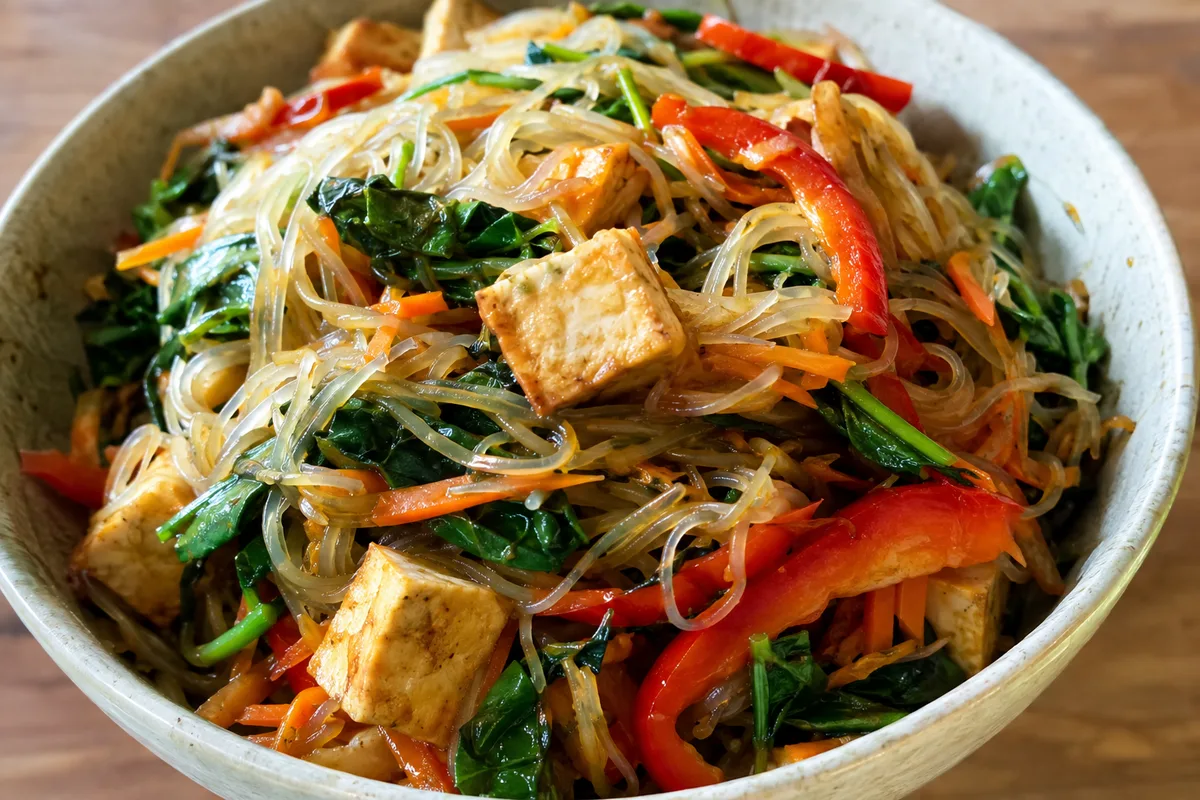
They can still form part of a varied meal, but they are not nutritionally identical to beans. Think of them as the starchy part of the plate, rather than as the main protein or vegetable. Adding other foods makes the meal more filling and brings a wider range of nutrients.
- Add tofu, eggs, fish, chicken or another protein food.
- Include vegetables such as peppers, carrots, mushrooms or leafy greens.
- Use herbs, spring onions, chilli or citrus for extra flavour.
- Add nuts or seeds when their texture suits the dish.
How they compare with other noodles
Mung bean noodles are not automatically better or worse than wheat, rice or pulse-based noodles. Different noodles offer different textures and nutritional qualities. Wheat noodles may provide more protein, while noodles made from whole pulses may provide more fibre than starch-based glass noodles.
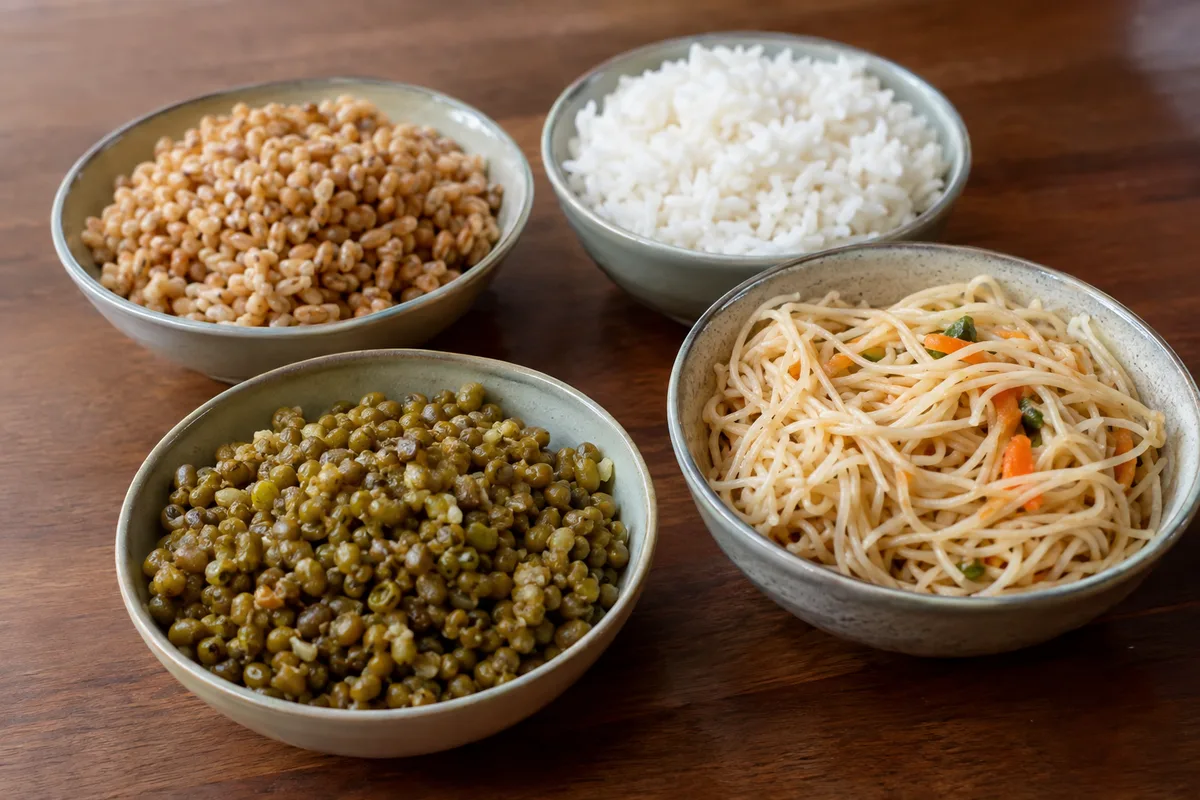
The best choice depends on the meal and what you want from it. Mung bean noodles work well when you want a delicate texture that absorbs dressing or broth. If fibre or protein is your priority, compare labels rather than relying on the product name.
- Compare values using the same dry or prepared weight.
- Look at carbohydrate, protein, fibre and salt.
- Check the serving information, but adjust it to the amount you actually eat.
- Consider the full meal rather than judging the noodles alone.
How to track mung bean noodles accurately
Dry and cooked mung bean noodles can differ greatly in weight because they absorb water. Water adds weight but does not add energy, so entering a cooked amount against a dry-food listing can distort your log. Choose a database entry that clearly states whether the noodles are dry or cooked.
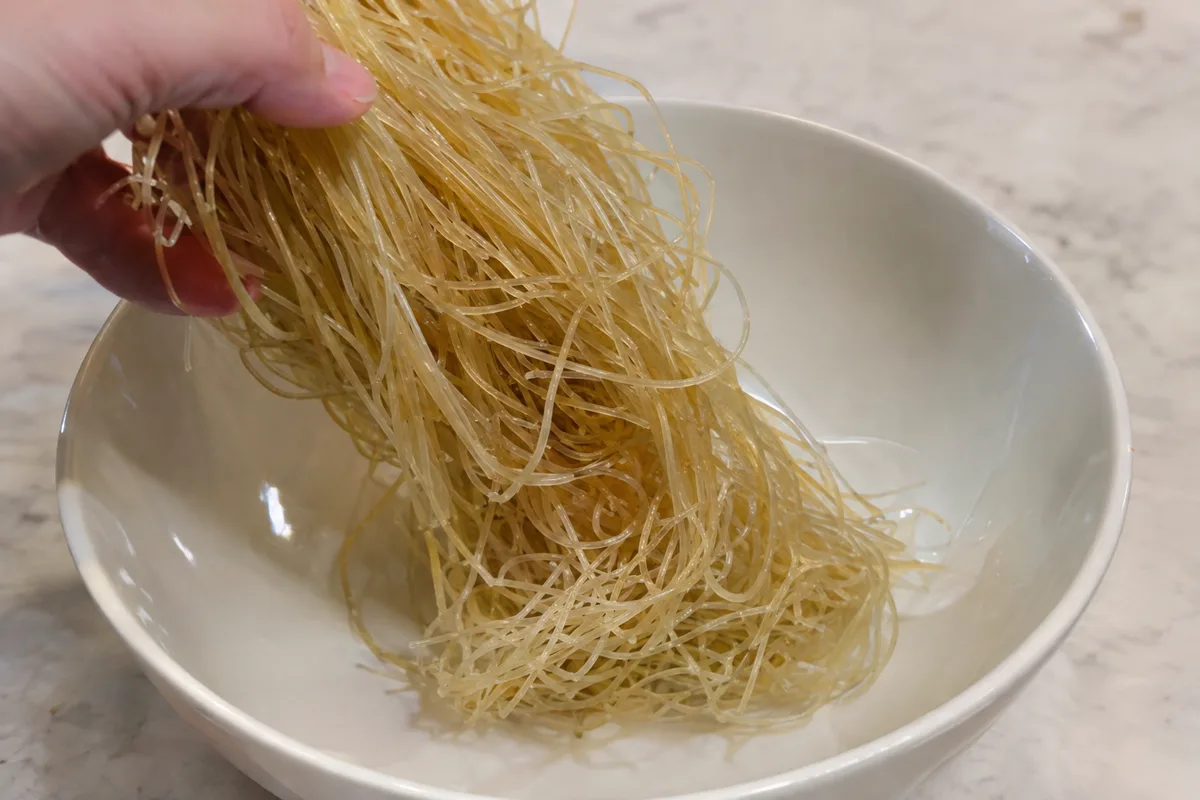
For the most consistent result, record the dry amount before soaking or boiling and use the matching packet information. If you are sharing a batch, note the dry total and divide it according to the portion you serve yourself. When only cooked noodles are available, use an entry specifically based on cooked weight.
- Match dry noodles with dry nutrition information.
- Match cooked noodles with a cooked-food entry.
- Log oils, dressings and sauces separately.
- Save the exact product as a favourite entry if you eat it regularly.
Building a balanced noodle meal
A bowl of plain mung bean noodles may provide carbohydrate without much fibre or protein. Build around them by adding a generous mix of vegetables and a clear source of protein. A little fat from oil, nuts or seeds can contribute flavour and help the meal feel satisfying.
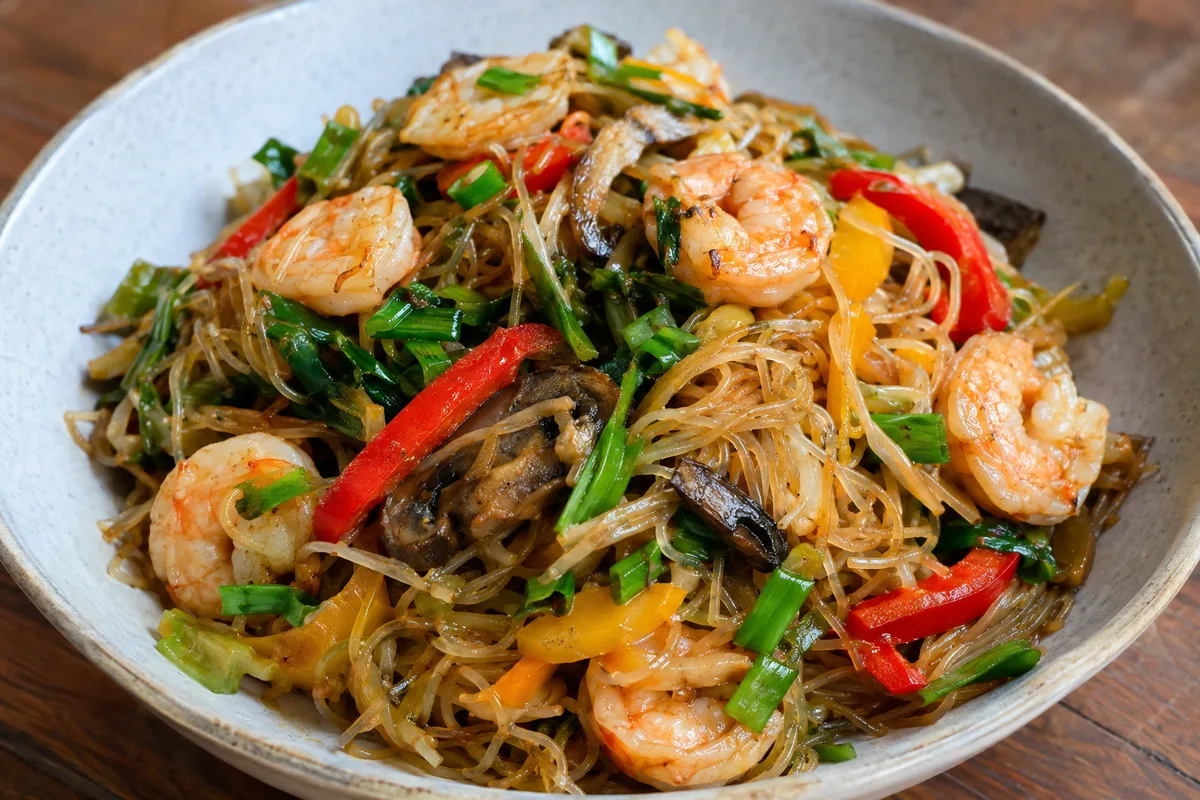
Sauces and broths can make a larger nutritional difference than the noodles themselves, particularly when they are used freely. Start with a modest amount, taste the dish and add more only if needed. Ginger, garlic, lime, vinegar and fresh herbs can provide strong flavour without depending entirely on salty or sweet sauces.
- Toss noodles with shredded vegetables, tofu, lime and sesame.
- Serve them in broth with mushrooms, greens and egg.
- Stir-fry them with prawns, peppers and spring onions.
- Make a cool noodle salad with cucumber, herbs and a nut-based dressing.
So, are mung bean noodles good for you?
Mung bean noodles can be a useful part of a balanced diet, especially when you enjoy their texture and pair them with varied ingredients. They supply carbohydrate, but starch-based versions are not a direct replacement for the fibre and protein found in whole mung beans. Whether they suit your goals depends on your portion, the rest of the meal and how often you eat them.
There is no need to label them as either healthy or unhealthy. Track the noodles in the form you measured, check the ingredients and include protein and vegetables alongside them. That approach gives you a clearer picture than judging the noodles by their name alone.