
What Is Garbanzo Bean Flour and How Do You Use It?
Garbanzo bean flour is simply dried chickpeas ground into a fine powder. It can thicken, bind and form the base of batters while contributing protein and fibre.
A flour made from chickpeas
Garbanzo beans are another name for chickpeas, so garbanzo bean flour is often called chickpea flour. It has a pale golden colour, a fine texture and a mildly earthy, nutty taste.
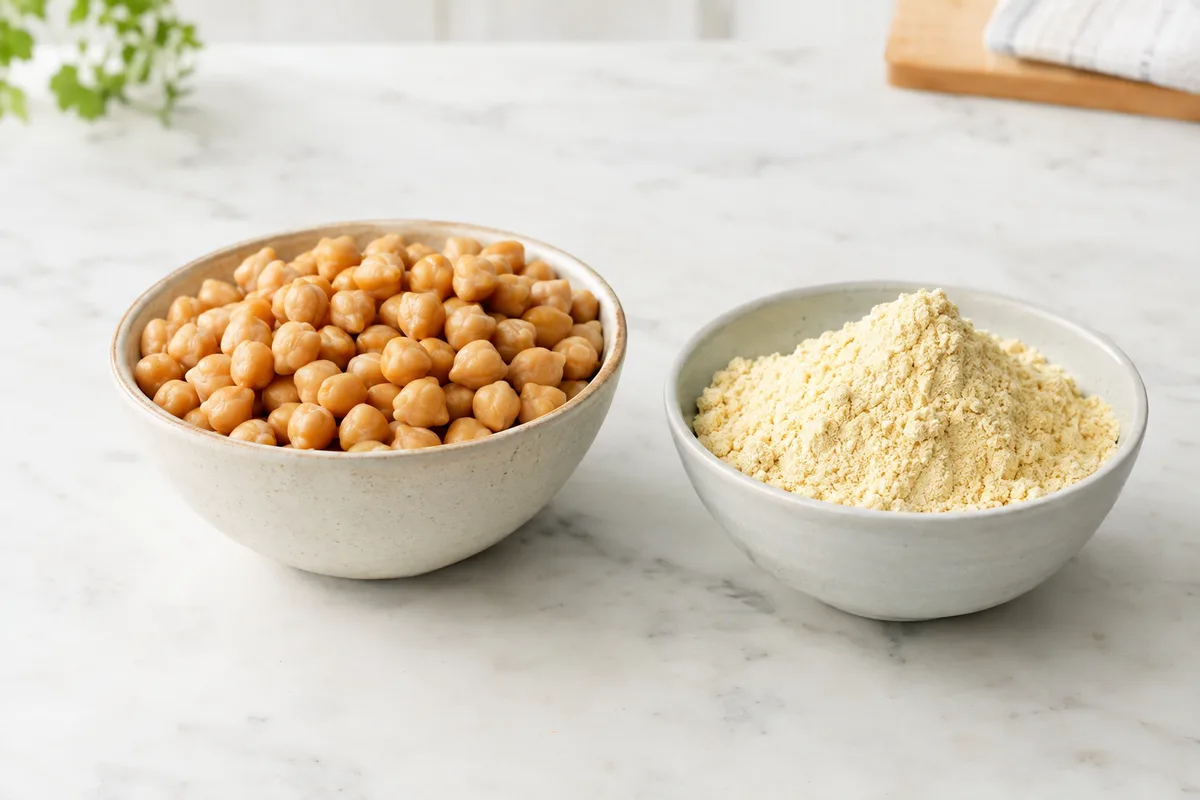
You may also see gram flour or besan in recipes and shops. These names are sometimes used interchangeably, although some versions are made from split chickpeas and may differ slightly in flavour, colour and fineness.
How it behaves in cooking
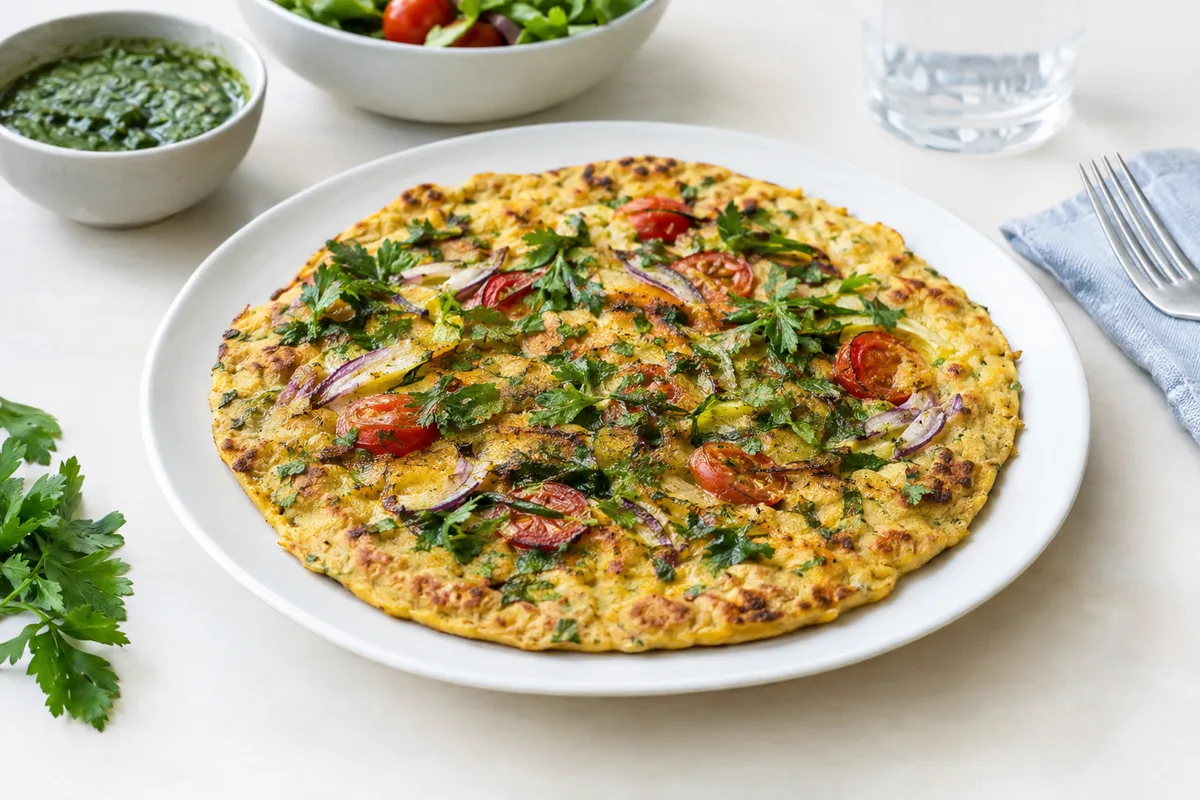
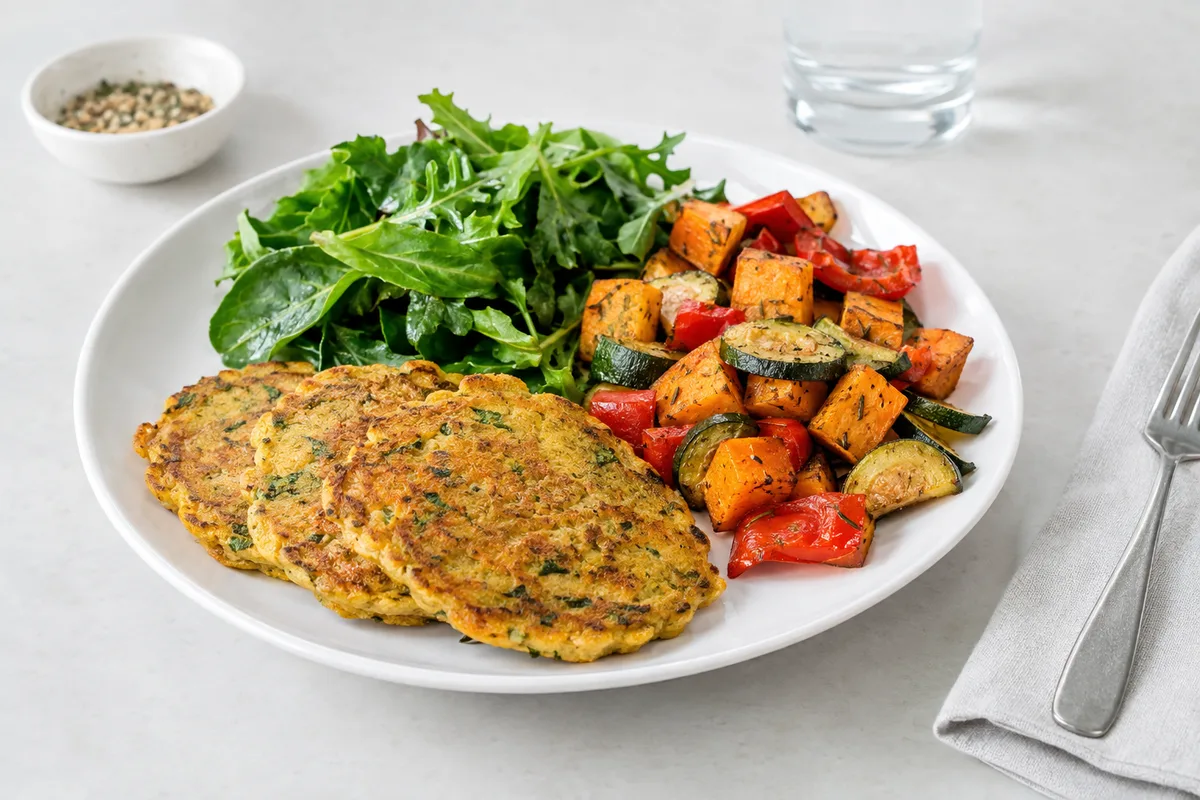
Unlike wheat flour, garbanzo bean flour does not contain gluten. It forms a thick mixture when combined with water, making it useful for savoury pancakes, flatbreads, batters and fritters.
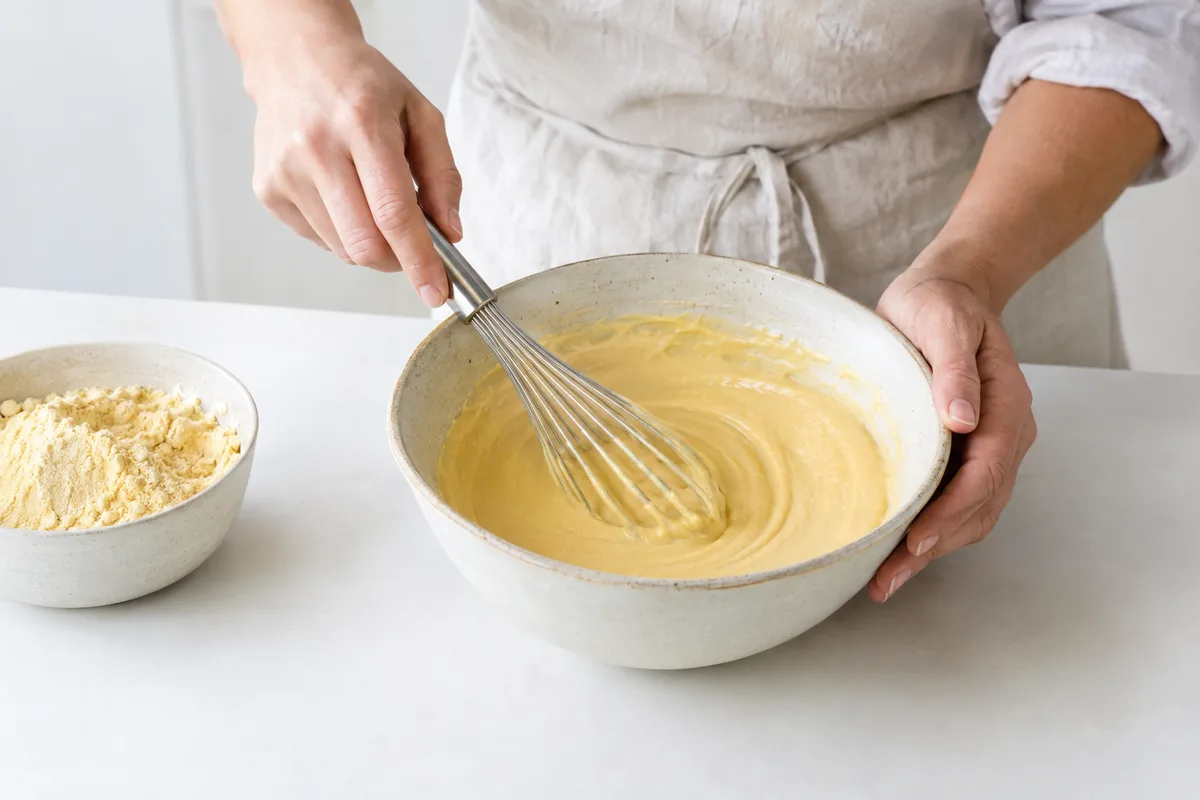
It can also help bind mixtures or thicken soups and sauces. Its chickpea flavour can be noticeable when raw, but cooking softens it and brings out a more rounded, toasted character.
What it adds nutritionally
Because it is made from the whole dried pulse, garbanzo bean flour provides carbohydrate alongside protein and fibre. It may also contain more fat than some cereal flours, as chickpeas naturally include a small amount.
The exact energy and nutrient values depend on the product and serving size. If you track your food, use the label on your packet rather than choosing a generic database entry whenever possible.
Tracking it in recipes
Weigh the dry flour before mixing it with water or other ingredients, then log that amount. Water changes the finished weight and texture but does not add energy, so a cooked portion may look larger without containing more energy from the flour.
For a shared recipe, record every ingredient and divide the finished dish by the portions you actually serve. If you substitute garbanzo bean flour for another flour, update the entry rather than assuming both have the same nutritional values.