
What the Cabbage Soup Diet Really Involves
The cabbage soup diet is a short, highly restrictive eating plan built around homemade vegetable soup. This guide explains its typical rules, how it affects food tracking and why the soup may be more useful as part of a varied diet.
What is the cabbage soup diet?
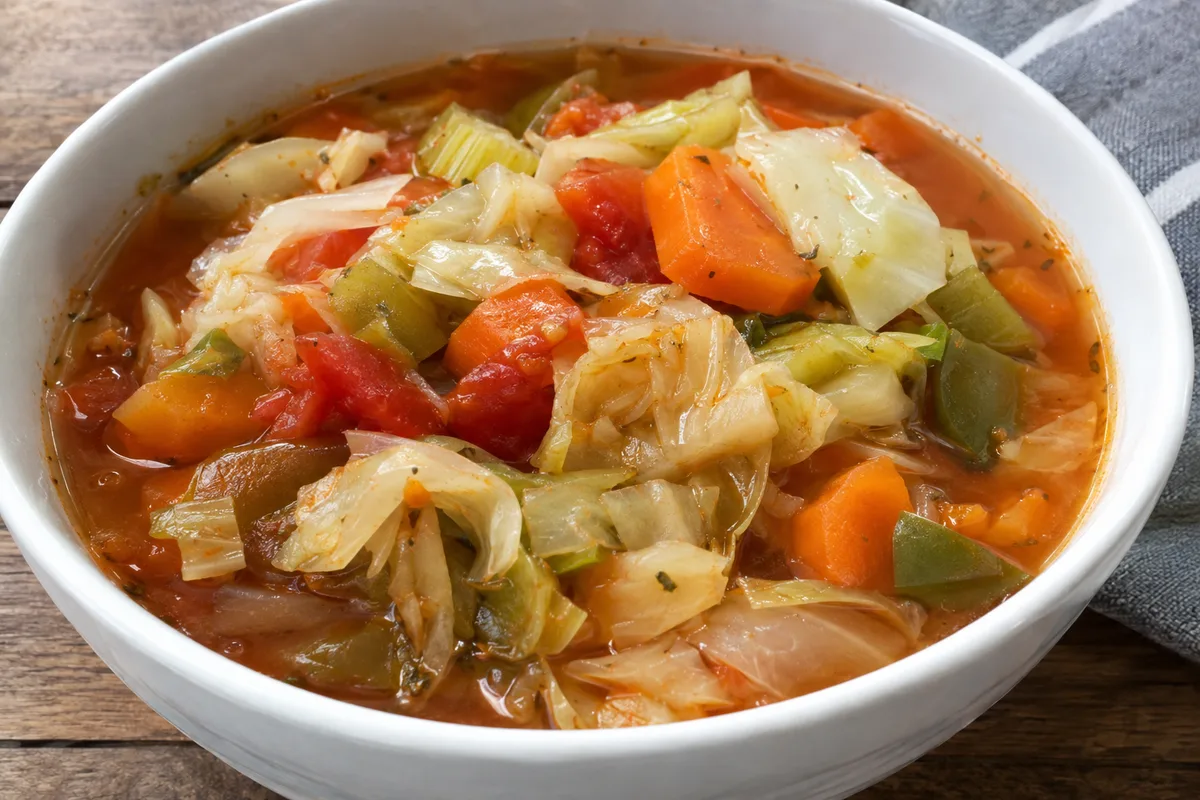
The cabbage soup diet is a short-term eating plan in which cabbage-based vegetable soup becomes the main food. Many versions run for about a week, although the exact rules and recipes differ. It is not simply a suggestion to eat more cabbage or include soup with your usual meals.
Alongside the soup, each day usually permits a narrow selection of other foods. These may include particular fruits, vegetables, milk, rice or sources of protein, depending on the version being followed. Foods are often assigned to certain days rather than chosen according to hunger, preference or an individual's usual nutrition targets.
The plan is intended to reduce overall food intake by limiting both choice and variety. There is no single official recipe or standard programme, so its total energy and nutrient content depend on the soup, permitted extras and portion sizes. Any result on the scale can also vary with fluid balance and the amount of food passing through the body.
- Cabbage and other non-starchy vegetables form the base of the soup
- The soup is eaten repeatedly throughout the plan
- Only selected additional foods are allowed on each day
- Many everyday meals, snacks and drinks are excluded
- The plan is followed for a brief fixed period
What goes into the soup?
A typical recipe combines cabbage with vegetables such as onions, carrots, celery, tomatoes and peppers. Water or stock provides the liquid, while herbs, garlic and spices may add flavour. The ingredients are chopped and simmered until tender.
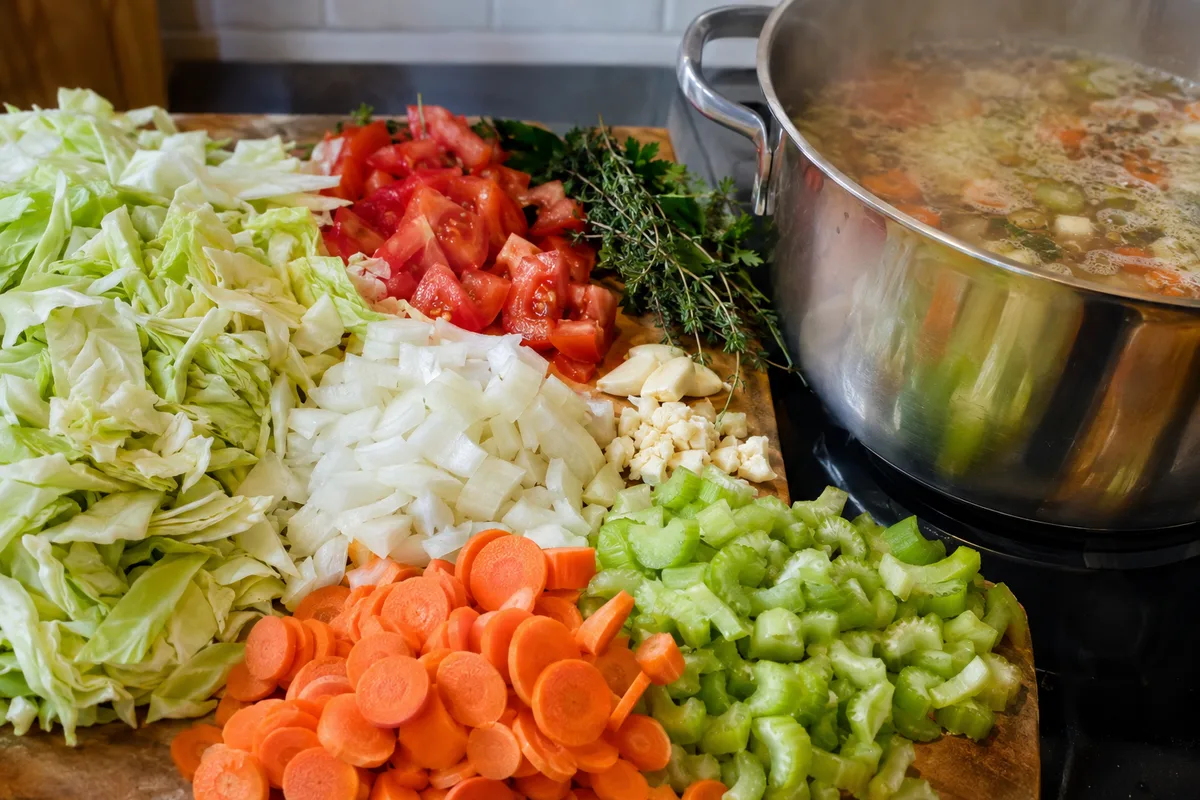
Recipes can differ considerably, which matters when you track what you eat. Oil, starchy vegetables, beans, meat and toppings can change the energy and nutrient content of a bowl. Stock, seasoning and ready-made sauces can also change the amount of salt.
For a more accurate log, enter the full recipe and the number of portions it produces. Record any oil and extras rather than logging only plain cabbage soup. If bowl sizes vary, dividing the cooked batch into similar portions can make tracking easier.
- Cabbage
- Onions, carrots or celery
- Tomatoes or peppers
- Water or stock
- Herbs, garlic and spices
Why can the scale change quickly?
A restrictive plan may provide less energy than someone usually eats, but the size of that reduction depends on the recipe, portions and additional foods. Cabbage itself does not have a special ability to remove body fat. The structure works mainly by narrowing food choices and replacing usual meals with a low-energy vegetable soup.
An early scale change is not necessarily the same as a lasting change in body fat. Eating fewer carbohydrates and less food overall can alter stored carbohydrate, body water and the contents of the digestive system. These factors can move in the other direction when normal eating resumes.
Your food log can help separate the soup's ingredients from the rules surrounding it. Look at your total intake across the day rather than treating a bowl as the whole story. Also note hunger, satisfaction, energy and concentration, as these can show whether the plan is practical for you.
The limits of such a narrow plan
Cabbage and other vegetables provide fibre and a range of nutrients, but one soup cannot cover every nutritional need. Depending on the version, the plan may offer too little protein, fat or overall energy. Repeating the same foods can also make meals less satisfying and harder to continue.
Very restrictive rules leave little room for appetite, social meals, cultural foods or personal preferences. They may also encourage an all-or-nothing approach, where eating an unlisted food feels like failure. A brief set of rules does not teach much about building balanced meals once the fixed period ends.
Physical comfort can be another issue. A sudden rise in cabbage, onions and other fibre-rich vegetables may cause wind, bloating or changes in bowel habits for some individuals. Increasing fibre more gradually and drinking according to thirst may feel more comfortable.
- Limited food variety
- Potentially low protein or fat intake
- Hunger or low energy
- Digestive discomfort after a sudden increase in fibre
- No clear plan for ordinary meals afterwards
A more balanced way to use cabbage soup
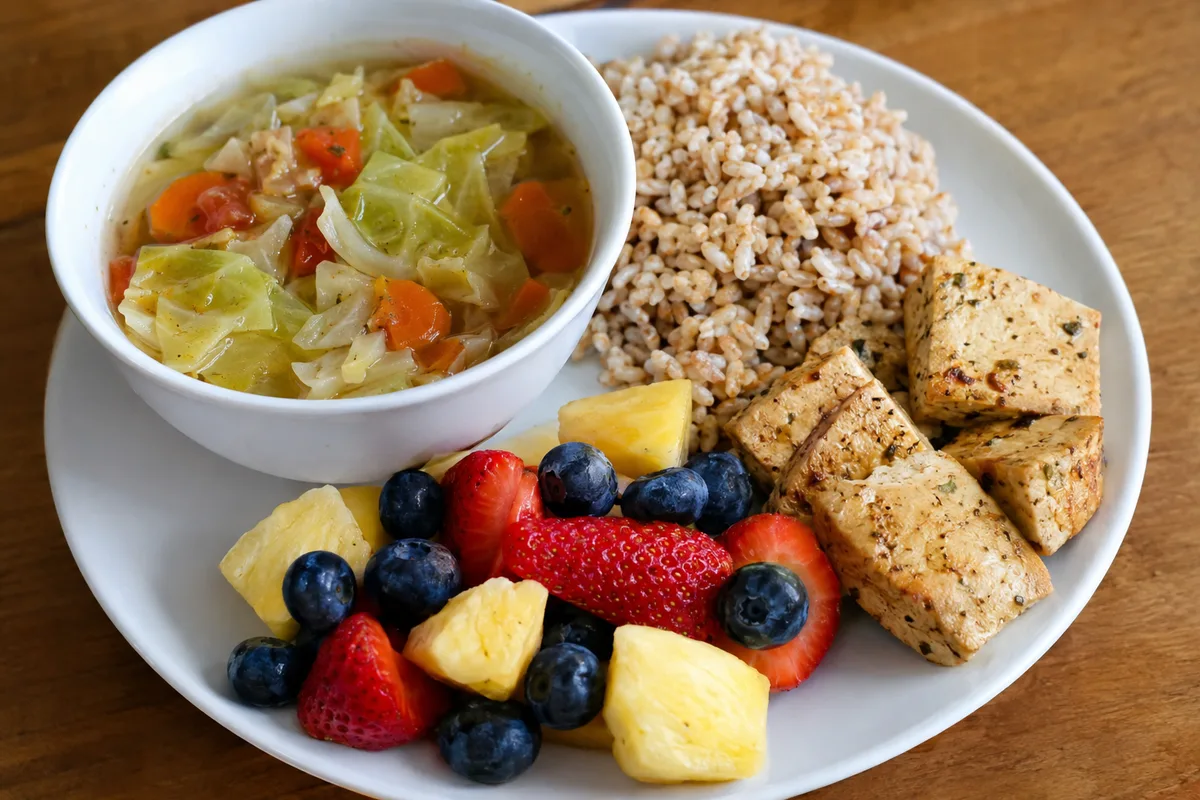
Cabbage soup can still be a useful meal component without following the named diet. It can add vegetables, fluid and fibre while leaving room for protein, carbohydrate and fat. The aim is to build a complete meal rather than rely on soup alone.
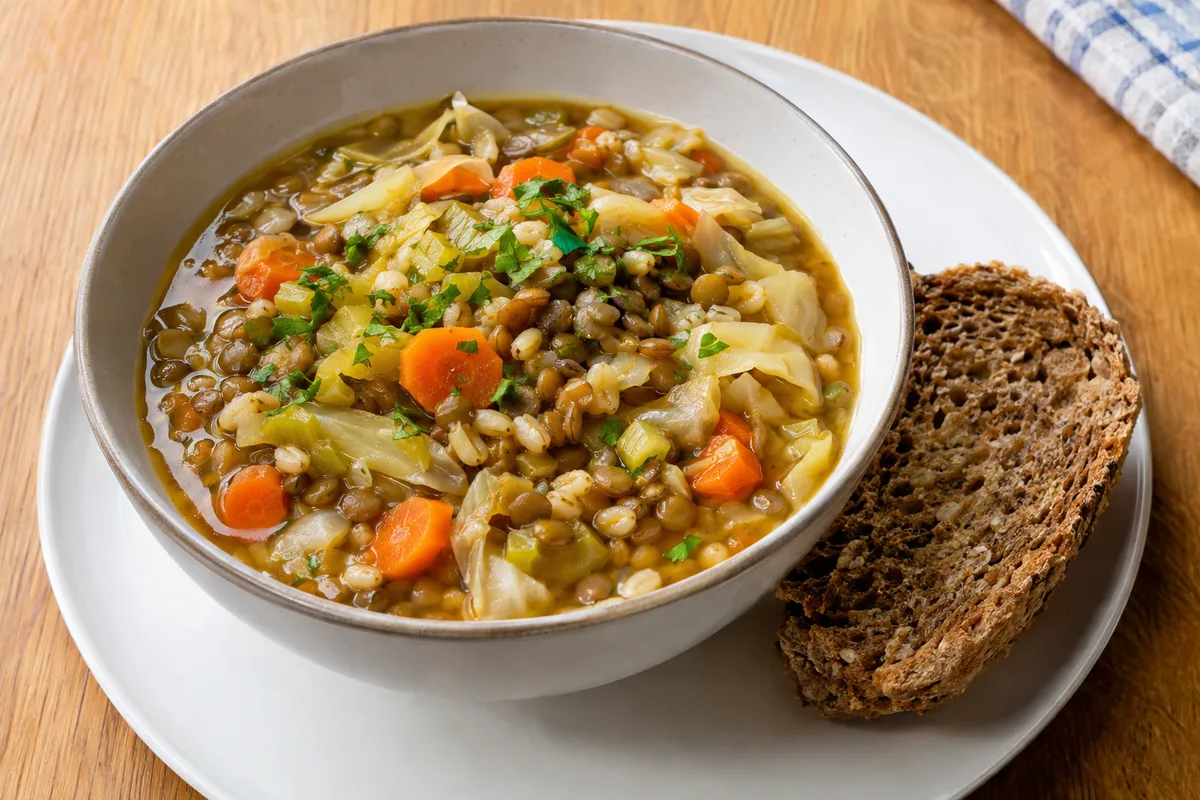
You could add beans, lentils, chicken, fish, tofu or another preferred protein. Potatoes, rice, pasta, barley or bread can provide carbohydrate, while a little oil, seeds or another fat source may improve flavour and satisfaction. The suitable portions depend on your appetite, activity and personal targets.
When logging the meal, save the complete recipe if you expect to make it again. Include sides and toppings so the entry reflects what you actually ate. Reviewing several days of records is generally more informative than judging one unusually light meal.
- Add beans or lentils directly to the soup
- Serve it with eggs, tofu, fish or chicken
- Include bread, potatoes, rice, pasta or barley
- Use oil, seeds or another chosen fat in a suitable portion
- Add fruit or yoghurt if it fits the meal
What to consider before following it
Before trying the cabbage soup diet, ask what you want the plan to achieve and whether its rules support that aim. If your goal is to create a manageable energy reduction, your existing food record may reveal smaller changes that preserve more variety. Examples include adjusting portions, changing frequent extras or building meals around filling sources of protein and fibre.
Pay attention to how restrictive plans affect your thoughts as well as your food intake. If rigid rules lead to guilt, repeated overeating or anxiety around meals, stepping away from the plan may be more helpful than trying to follow it more strictly. Personal support from a suitably qualified nutrition professional can help when individual needs are complex.
The central point is simple: cabbage soup is a food, not a complete strategy. It can fit into a varied eating pattern, but the named diet depends on severe short-term restriction. A sustainable approach allows enough nourishment, flexibility and enjoyment to work beyond a fixed week.
- Check whether the rules meet your usual nutrition needs
- Compare the plan with patterns already visible in your food log
- Consider hunger, energy, enjoyment and social meals
- Choose changes that can continue after the initial period