
Are Grapes Really as Bad as Candy Bars?
This comparison looks beyond sugar to explain how grapes and candy bars differ in fibre, fat, nutrients and fullness. It also shows how to record each food in a way that supports practical, balanced tracking.
Why sugar alone does not tell the whole story
Grapes and candy bars can both contribute sugar and carbohydrate to your daily total. That single similarity does not make them nutritionally equal. Foods are better compared by looking at their complete make-up, the portion eaten and how they fit into the rest of the day.
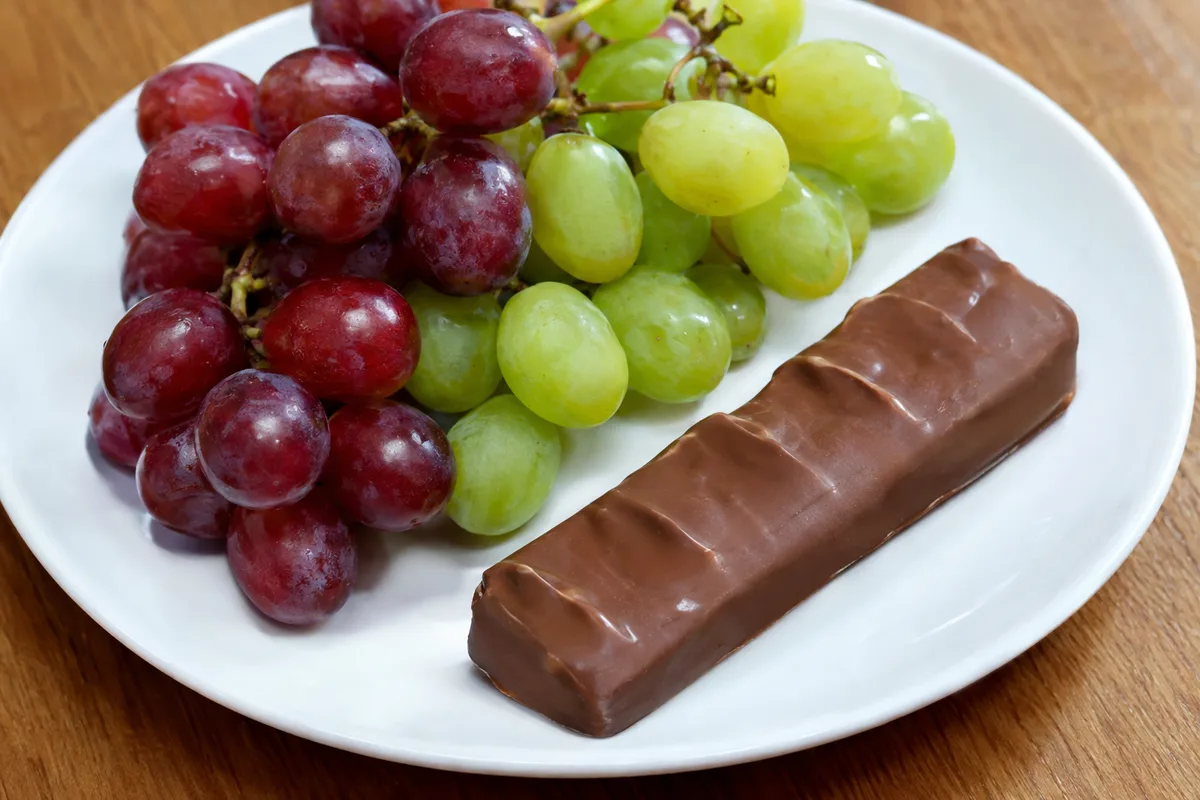
Calling either food good or bad can also hide useful detail. Grapes are whole fruit containing water, fibre and a range of micronutrients, while a candy bar is usually a mixture of sugar, fat and other ingredients. Your tracker may show some of these differences, but the ingredient list and nutrition label provide extra context.
- Compare the portion you actually eat, not two unrelated serving suggestions.
- Look at energy, carbohydrate, sugar, fibre, fat and protein together.
- Check whether the food offers useful micronutrients as well as energy.
- Consider how satisfying the portion feels and what you eat with it.
What grapes provide
Much of a grape's weight comes from water, which lowers its energy density. Grapes also provide fibre, although the exact amount depends on the variety and portion. Their natural sugars sit within the fruit's structure alongside water and micronutrients.
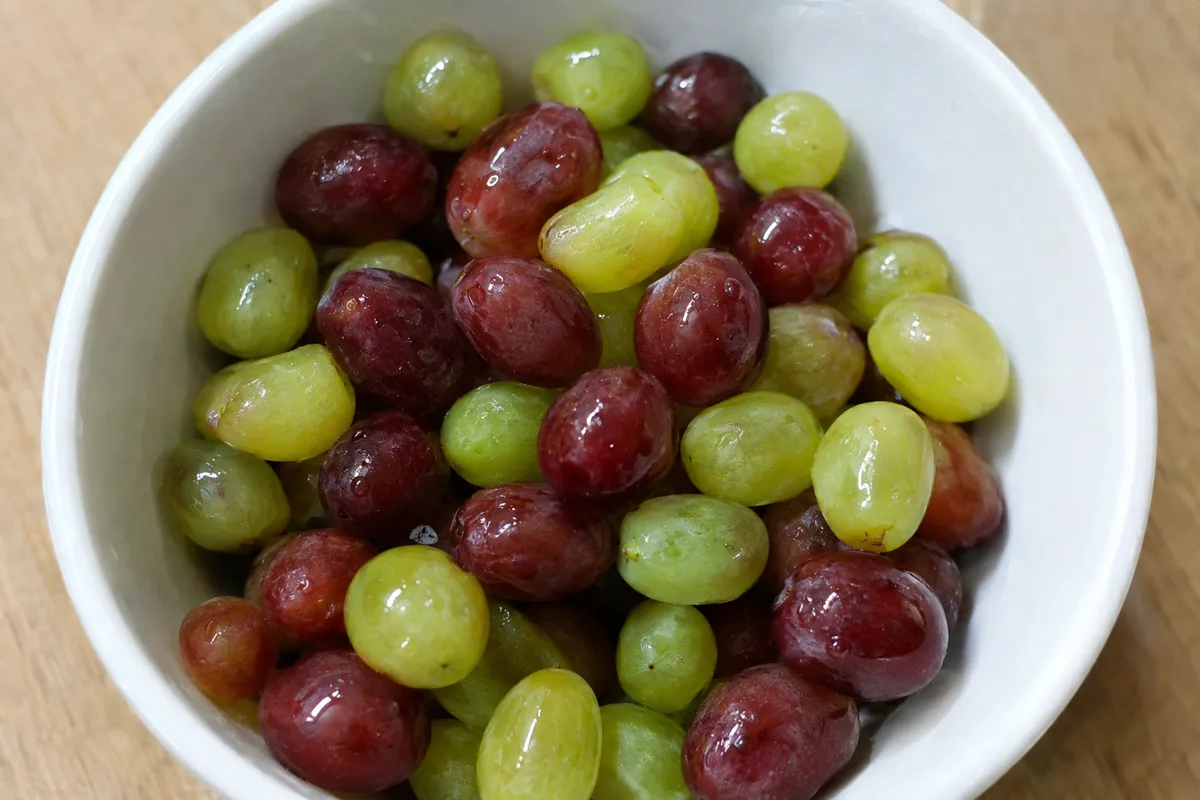
Grapes are easy to eat quickly, so a large bunch can add more carbohydrate than expected. That does not turn them into candy, but it makes portion awareness useful when you track them. Weighing or measuring occasionally can help you recognise your usual portion without treating every grape as a problem.
- Record the edible amount rather than the weight of stems.
- Choose the correct fresh, dried or frozen entry because these forms are not interchangeable.
- Check whether frozen or prepared grapes have added ingredients.
- Pair grapes with a source of protein or fat if that makes the snack more satisfying.
What a candy bar provides
Candy bars vary widely, but many combine added sugar with fat. Fat supplies more energy per gram than carbohydrate, so a relatively small bar can be energy-dense. Some bars also contain nuts, milk ingredients, wafers or fillings that change their protein, fibre and fat content.

A candy bar may be enjoyable and convenient, yet it usually contains less water than fresh grapes. This means a smaller-looking portion can contribute substantial energy without taking up much space. The label for the exact bar is more useful than a generic database entry because recipes and bar sizes differ.
- Log the size or weight shown for the bar you ate.
- Check whether the label describes one bar, several pieces or a smaller reference portion.
- Use the product's carbohydrate, fat, protein and fibre figures rather than judging it by sugar alone.
- Include sauces, coatings and fillings when comparing different bars.
Volume and fullness change the comparison
A portion of grapes usually occupies more space than a similar amount of energy from a candy bar because grapes contain plenty of water. Chewing a larger volume of food may also make the eating experience feel more substantial. Fullness still depends on the person, the portion and what else is eaten.
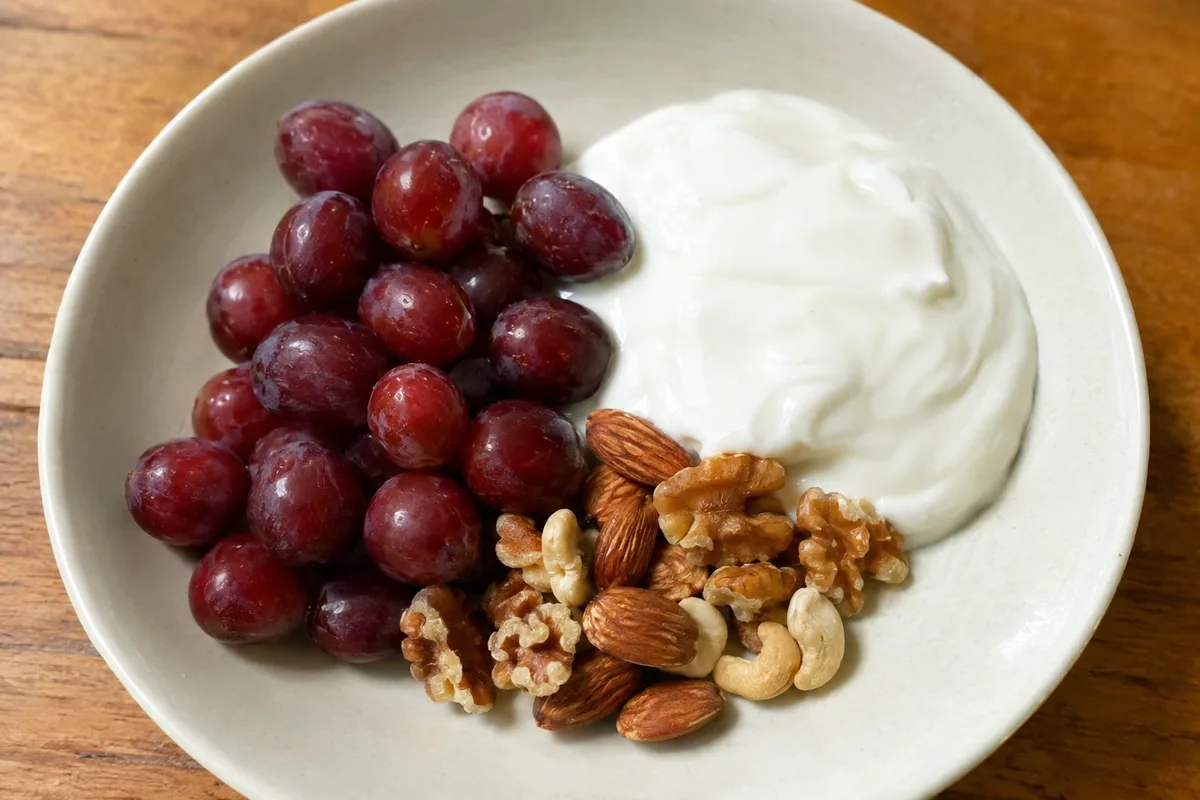
Neither option is guaranteed to keep you satisfied on its own. Grapes mainly supply carbohydrate, while the fat or nuts in some candy bars may slow the eating experience or make the snack feel richer. A more balanced snack can combine fruit with protein or fat rather than expecting fruit or candy to do every job.
- Grapes with plain yoghurt
- Grapes with a small handful of nuts
- Grapes alongside cheese
- A candy bar eaten after a balanced meal rather than as the only food
How to make a fair comparison in your tracker
Start by comparing portions you might genuinely choose, not equal weights unless that is useful to you. Equal-weight comparisons answer a technical question, while real portions show what each choice contributes to your day. The most helpful view depends on whether you are monitoring energy, carbohydrate, fibre or overall meal balance.
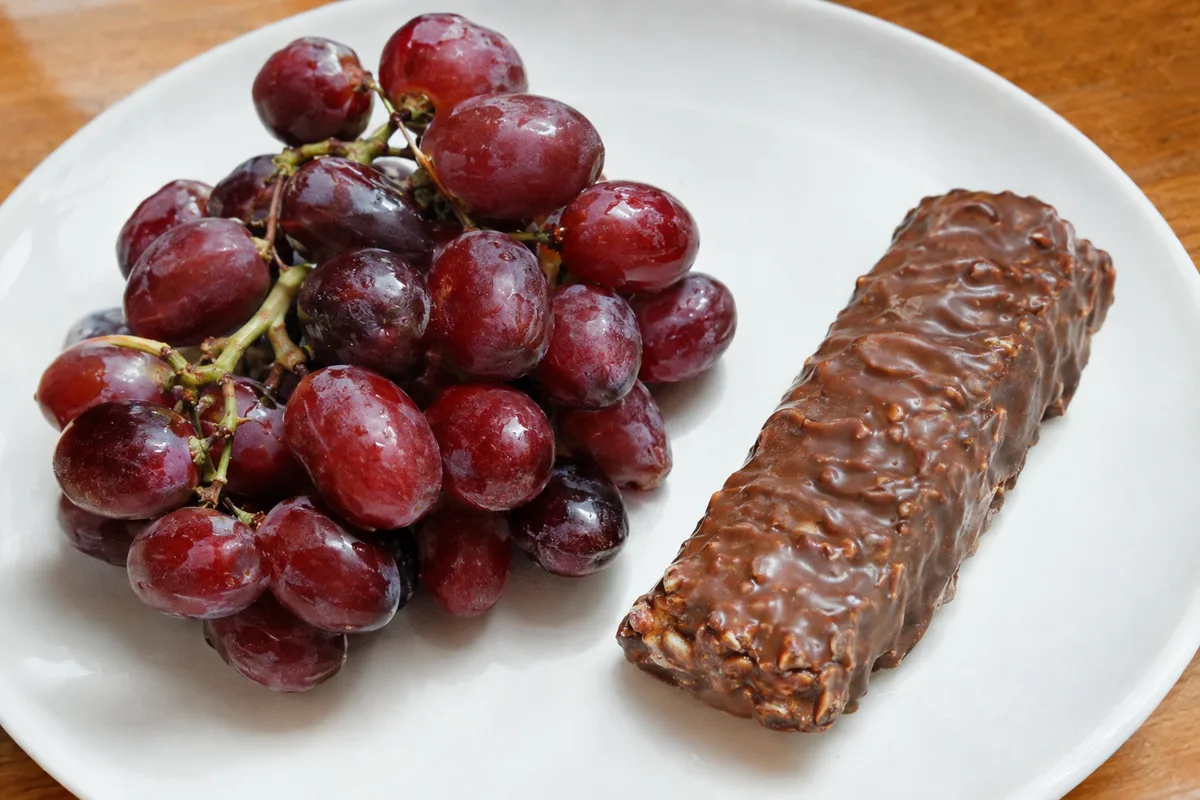
Use averages for fresh grapes when no label is available, but select an entry that matches the form of fruit. For a candy bar, use the wrapper information or a verified entry for that specific size. If your portion differs from the reference amount, adjust the logged quantity rather than changing the food entry.
- Confirm the food form and portion.
- Compare total energy and the main macronutrients.
- Notice fibre and relevant micronutrients.
- Review the foods eaten around the snack.
- Use the result to inform your next choice, not to label the food as a failure.
The practical verdict
Grapes are not nutritionally the same as candy bars simply because both contain sugar. Fresh grapes provide water, fibre and micronutrients in a whole-fruit form, while candy bars tend to combine concentrated carbohydrate and fat in a smaller volume. The exact comparison changes with the grape portion and the type and size of bar.
There is still room to track and enjoy either food. Grapes can be a useful everyday fruit choice, while a candy bar can fit as an occasional pleasure within a varied intake. Accurate portions and the wider daily pattern matter more than treating one nutrient as the entire story.