
A practical guide to choosing gluten-free sweets
Many sweets have no obvious gluten-containing ingredients, but recipes and manufacturing methods vary. This guide covers promising choices, common warning signs and practical label checks.
What makes a sweet gluten-free
Gluten comes from grains including wheat, barley and rye. Sugar itself is gluten-free, as are many basic ingredients used in sweets, such as plain chocolate, fruit juice and gelatine. The finished sweet still needs checking because flavourings, crunchy pieces, coatings or shared production lines can change its suitability.
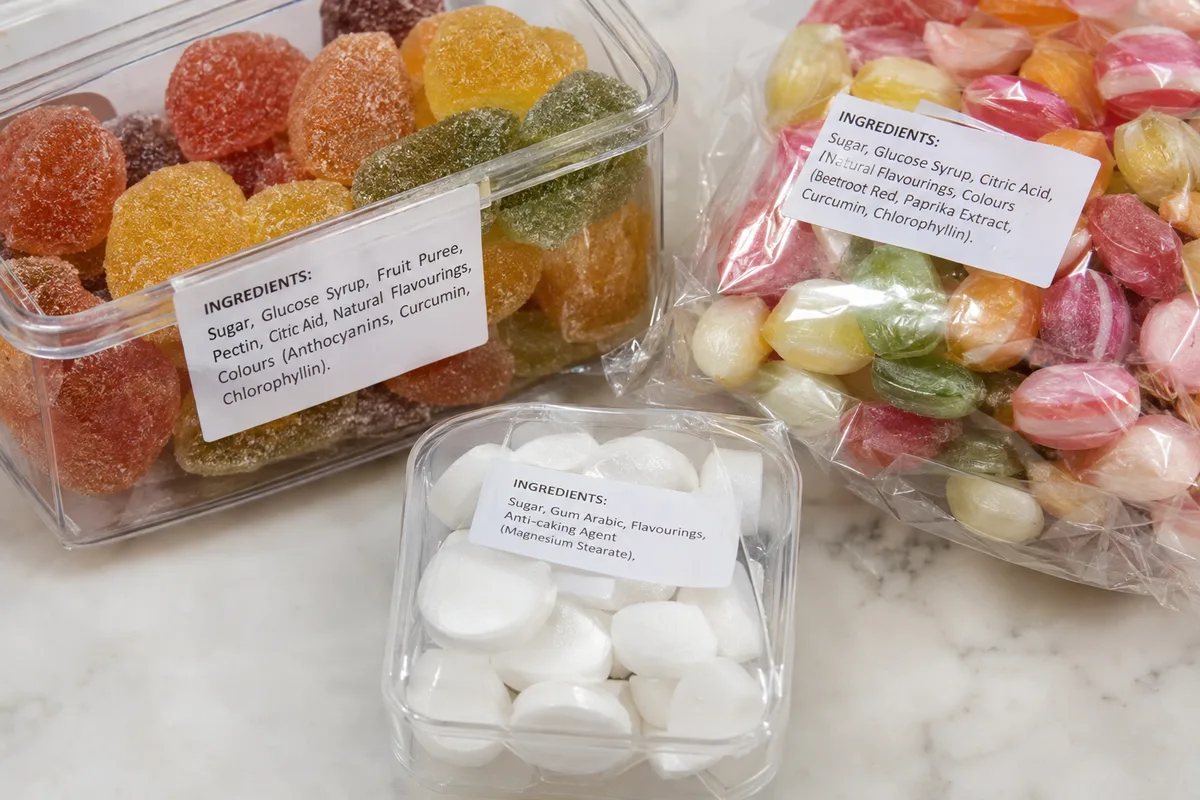
The most reliable choice is a sealed product clearly labelled gluten-free. If that wording is absent, read both the ingredients and any allergen or precautionary statement. Check every new packet, even when you have eaten the same sweet before, because recipes and factories can change.
- Look for a clear gluten-free statement
- Read the complete ingredients list
- Check allergen information and precautionary wording
- Recheck multipacks and seasonal versions separately
Sweets that may be suitable
Some types of sweet are more likely to have simple recipes, but no whole category is automatically safe. Different colours, flavours and fillings within the same range can contain different ingredients. Treat this list as a starting point for label checking rather than a guarantee.
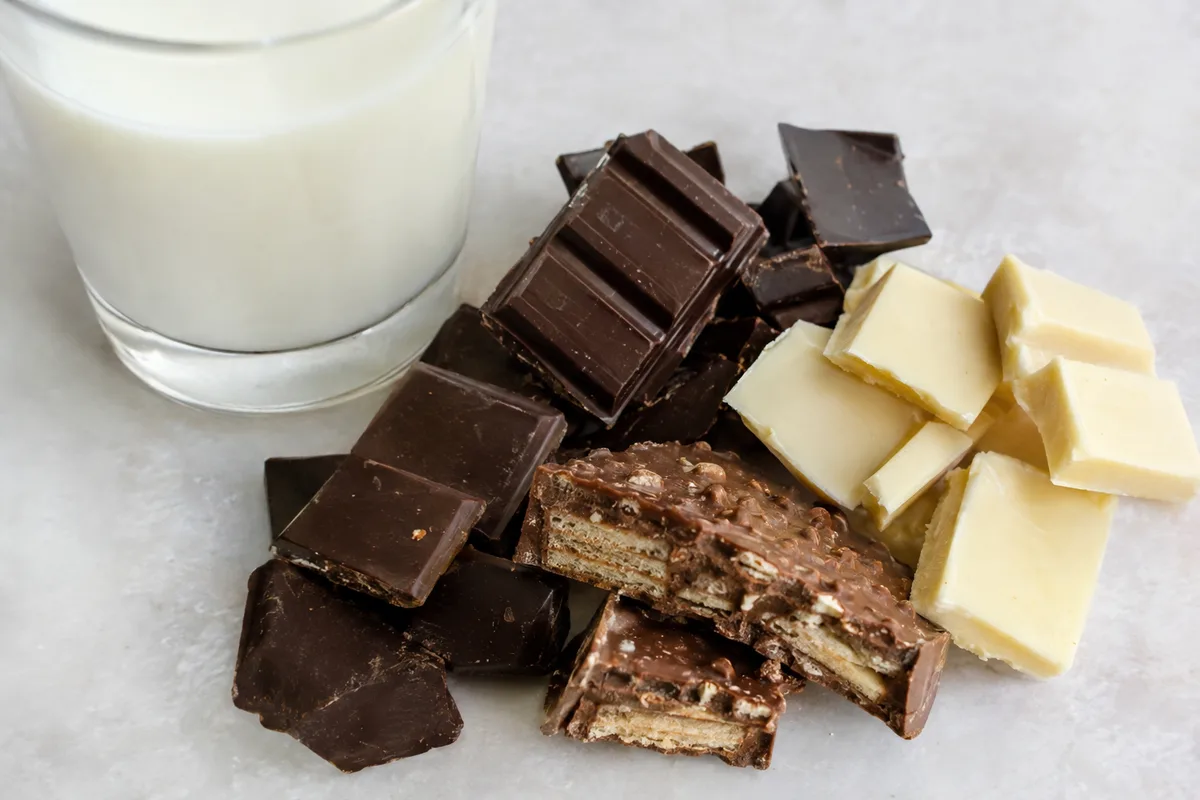
Plain boiled sweets, simple fruit jellies and basic mints may contain no gluten ingredients. Marshmallows and chewy sweets can also be suitable when their starches, flavourings and coatings are confirmed as gluten-free. Individually wrapped products are easier to identify than loose sweets from a mixed container.
- Plain boiled fruit sweets
- Clearly labelled fruit jellies or gums
- Clearly labelled marshmallows
- Simple mints without biscuit pieces
- Clearly labelled chewy sweets
Chocolate needs its own check
Cocoa, cocoa butter and sugar do not naturally contain gluten, so plain chocolate can have a short ingredient list. Problems are more likely to appear in filled bars, coated centres and products containing wafers, biscuits or crisped grains. Some chocolate is also made where gluten-containing products are handled.
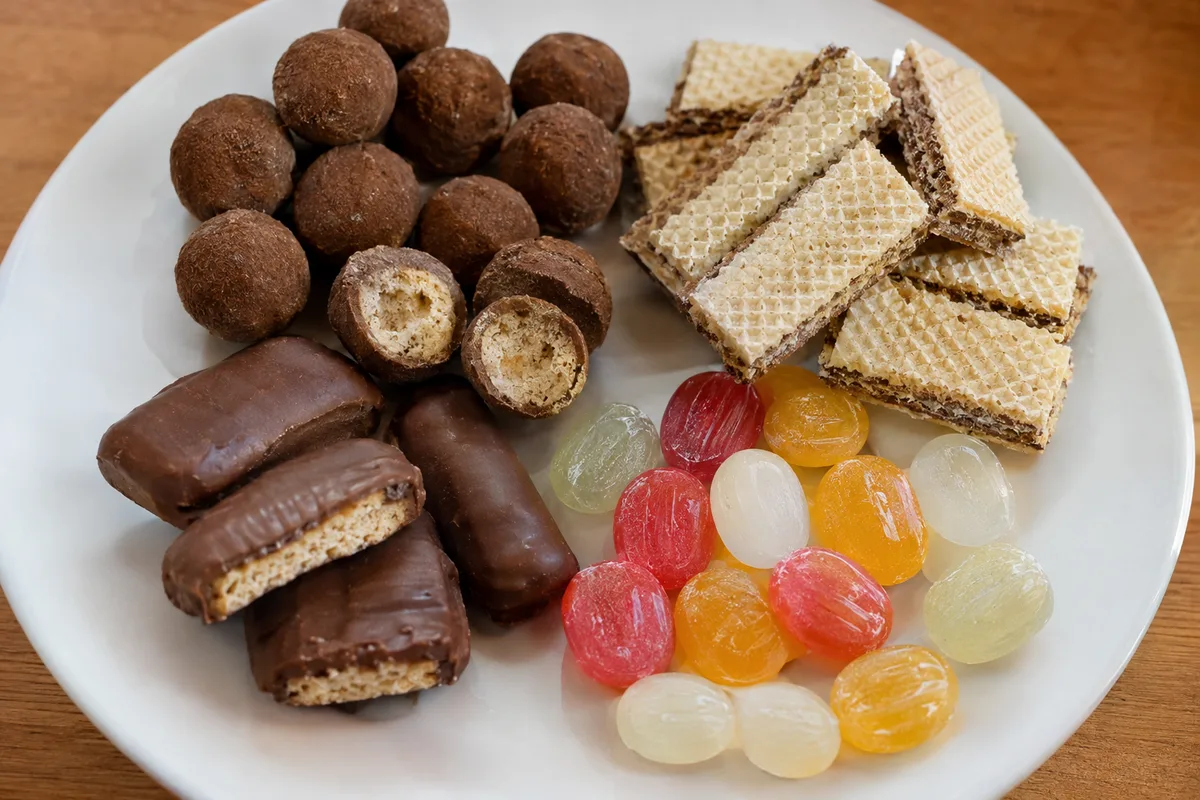
Start with chocolate that carries a gluten-free statement and has no added crunchy pieces. Check flavoured chocolate separately, including versions with caramel, nougat or seasonal decorations. A familiar brand name does not mean every product in the range has the same ingredients or production controls.
- Plain milk, dark or white chocolate that is labelled gluten-free
- Chocolate with nuts or dried fruit, after checking the label
- Avoid unverified wafer, biscuit and cookie-filled bars
- Check crisped or malt-flavoured chocolate especially carefully
Ingredients and wording to notice
Wheat, barley, rye and malt are clear reasons to pause. Malt is commonly made from barley unless another source is stated, so malt flavouring or malt extract needs careful checking. Wafer, biscuit, pretzel and cookie pieces are also strong clues that a sweet may contain gluten.
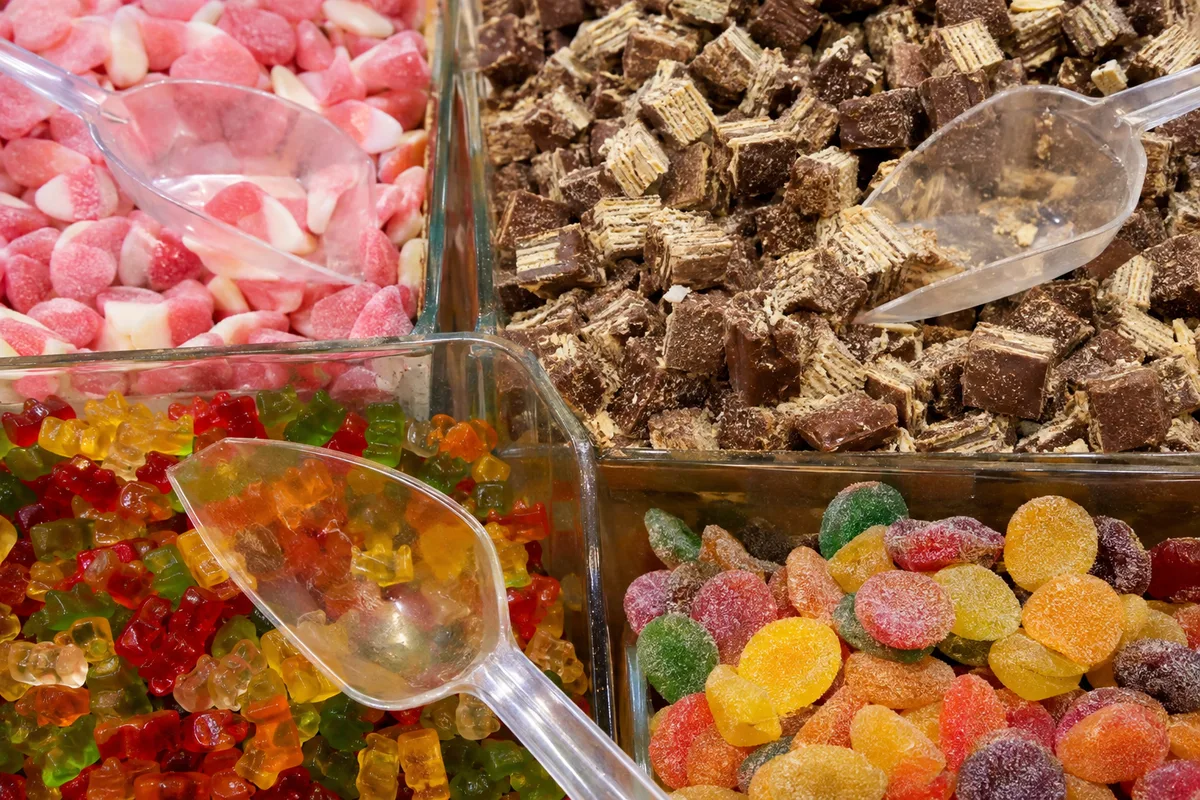
A precautionary statement such as “may contain wheat” describes a possible risk from production rather than a main recipe ingredient. Whether that level of risk is acceptable depends on why you avoid gluten and the guidance you follow. If the wording is unclear, choose a product with a direct gluten-free statement instead of guessing.
- Wheat flour or wheat starch not identified as gluten-free
- Barley, rye or malt ingredients
- Biscuit, wafer, pretzel or cookie pieces
- Crisped grains with an unspecified source
- Precautionary statements about wheat or gluten
Loose sweets and shared containers
Loose sweets are harder to assess because the original packaging may not be available. Scoops, tongs and hands can move crumbs or coatings between neighbouring containers. Even a suitable sweet may no longer be a reliable choice if it sits beside products containing wafers or biscuit pieces.
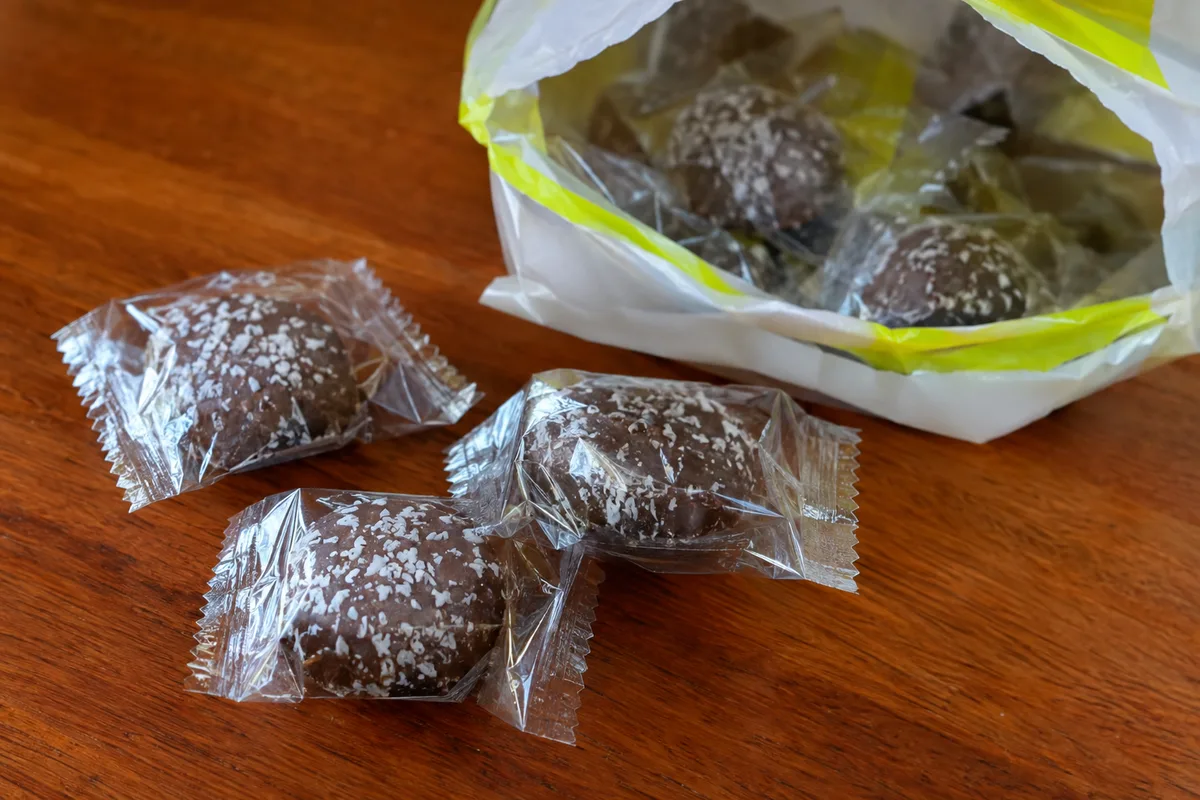
Ask to see the manufacturer’s label rather than relying only on appearance. Pick-and-mix displays, sweet tables and unlabelled gifts provide less certainty because recipes and handling are unknown. A sealed, clearly labelled packet is usually easier to verify and log.
- Choose sealed packets with readable labels
- Avoid mixed bowls with unknown ingredients
- Do not rely on colour, shape or texture
- Keep verified sweets separate from crumbly snacks
Logging gluten-free sweets accurately
Gluten-free does not describe the energy, sugar or portion size of a sweet. When logging, use the nutrition information for the exact product and flavour you ate. A gluten-free version can have a different recipe from the standard version, so avoid copying the standard entry without checking.
Use the serving amount shown on the packet or log the amount you actually eat when that information is available. For individually wrapped sweets, check whether the nutrition panel refers to one sweet, several sweets or a weight of product. If the database entry does not match the packet, create or edit an entry using the label in front of you.
Save verified favourites if your tracker allows it, but compare the saved details with new packaging from time to time. This keeps both your gluten check and food record tied to the current recipe. The right amount depends on your own eating pattern, preferences and goals.
- Match the brand, product and flavour
- Check the stated serving basis
- Use the current packet’s nutrition panel
- Review saved entries when packaging changes