
Bulgur or quinoa: which fits your food diary better?
Bulgur and quinoa can both provide a useful base for meals, but their nutritional strengths are not identical. Here is how to compare them and record each one accurately in your food diary.
The basic difference
Bulgur is made from wheat grains that have been cooked, dried and cracked. It has a firm, slightly chewy texture and a mild, nutty taste. Because it is partly cooked during production, many types need only brief soaking or simmering.
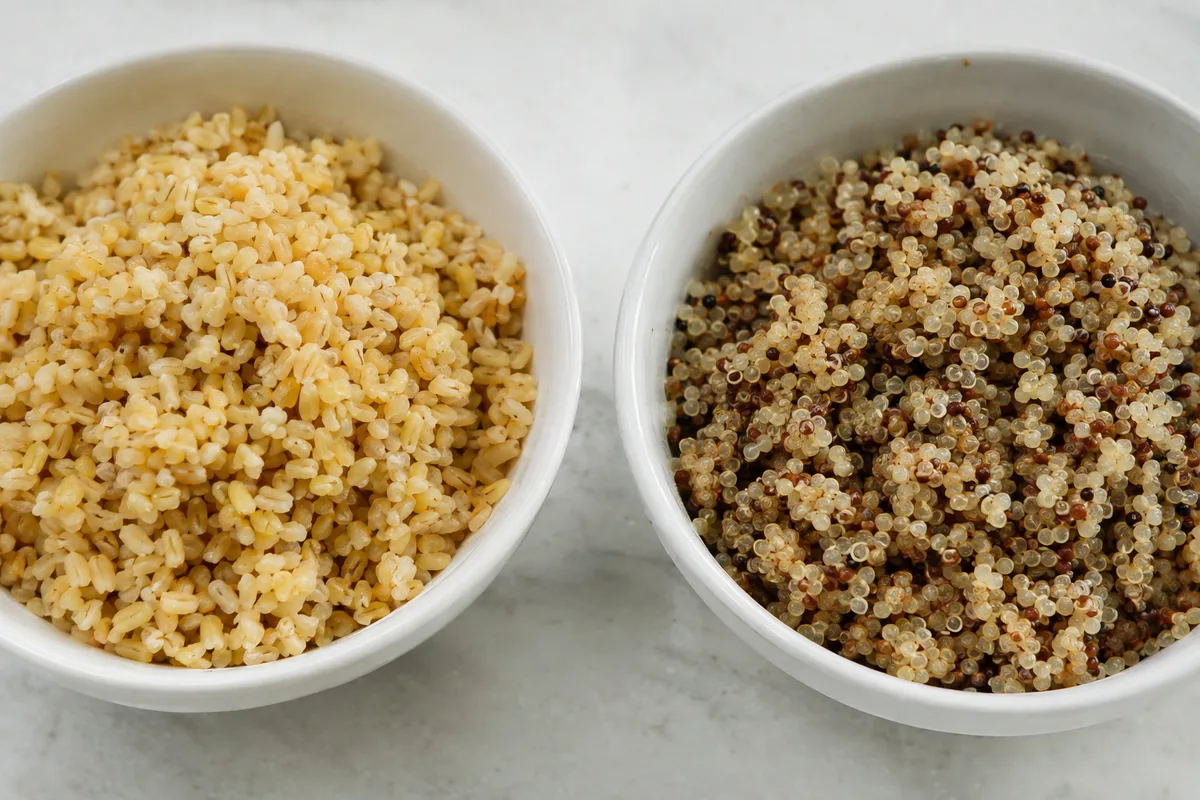
Quinoa is a seed, although it is cooked and eaten much like a grain. It becomes soft with a slight bite, and the small germ forms a visible curl during cooking. Quinoa should usually be rinsed before cooking to remove naturally bitter compounds from its surface.
Both work as alternatives to rice, pasta or couscous. Bulgur contains gluten because it is made from wheat, while quinoa does not naturally contain gluten. Packaged quinoa may still need a label check if avoiding traces from processing is important to you.
- Use bulgur for tabbouleh, grain bowls, soups and warm side dishes.
- Use quinoa for salads, breakfast bowls, stuffed vegetables and mixed grain dishes.
- Choose fine bulgur for soaking and coarser bulgur for simmering.
- Rinse quinoa in a fine sieve before cooking.
Carbohydrate, fibre and fullness
Both foods supply most of their energy through carbohydrate. Carbohydrate provides about 4 kcal per gram, so portion size has a strong effect on the total energy you record. Neither food is automatically a low-carbohydrate choice.
Bulgur generally has the fibre advantage when equal cooked portions are compared. Its whole-grain structure can also give meals a substantial, chewy quality. Quinoa still contributes fibre, particularly when it replaces a more refined grain.
Fullness depends on the whole meal rather than one ingredient. Vegetables add volume and fibre, while beans, fish, eggs, yoghurt or other protein-rich foods can make the meal more balanced. Oils, dressings and toppings also matter because they may contribute more energy than the grain or seed itself.
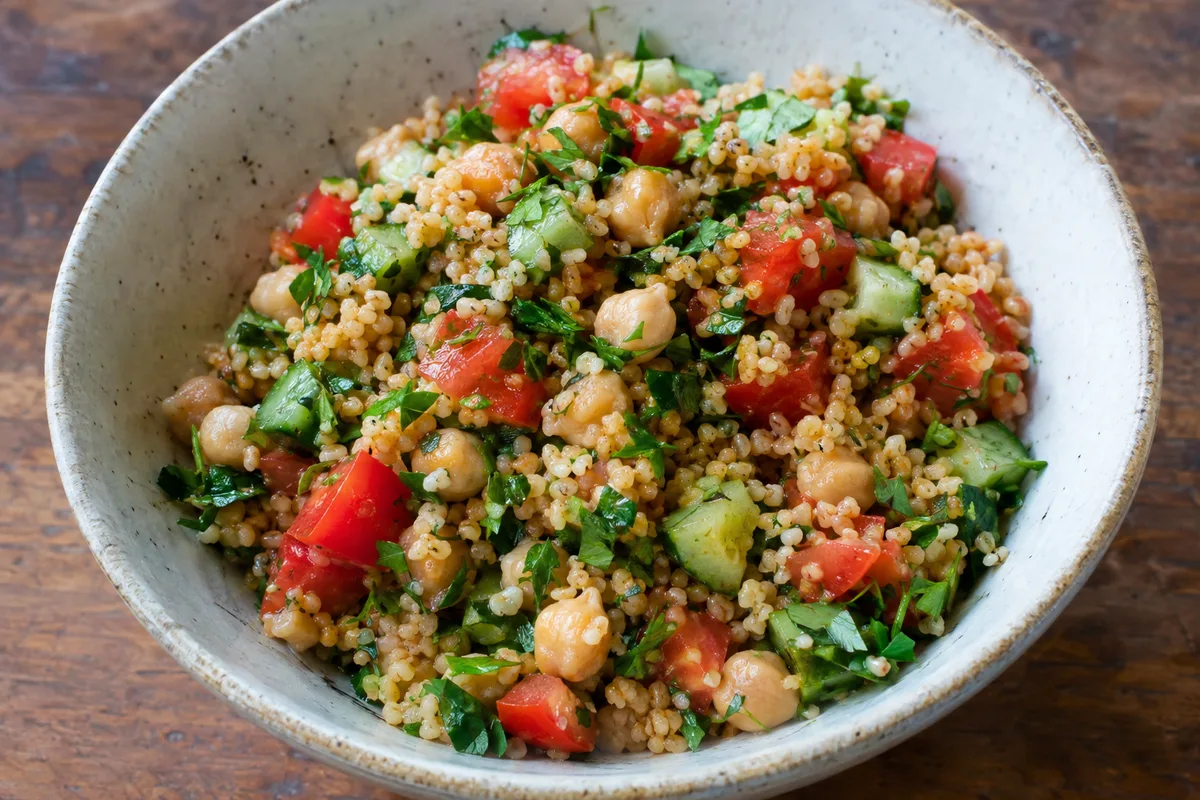
- Pair bulgur with tomatoes, cucumber, herbs and chickpeas.
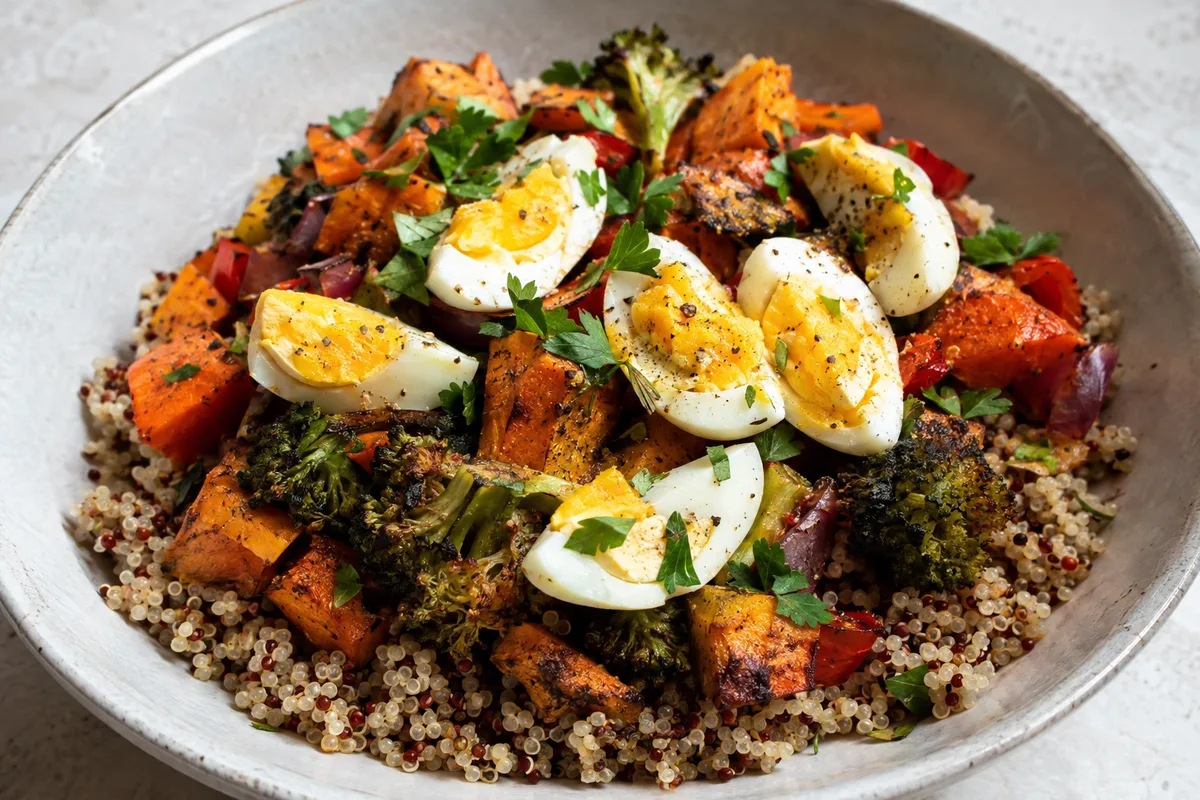
- Serve quinoa with roasted vegetables and a protein-rich topping.
- Measure oils and dressings if you track energy closely.
- Compare portions by cooked weight rather than spoonfuls or bowl size.
How their protein compares
Quinoa usually provides more protein than bulgur in a comparable cooked portion. It also contains all the essential amino acids, which are the protein building blocks the body cannot make itself. That does not mean quinoa replaces every other protein source in a meal.
Bulgur contributes some protein, but it is mainly used as a carbohydrate-rich base. Protein provides about 4 kcal per gram, just like carbohydrate. The amount you need from a meal depends on your body, activity and overall eating pattern.
You can raise the protein content of either dish by adding another food rather than simply increasing the grain portion. This often gives the meal more variety in texture and nutrients. Your food diary can show whether the final combination suits your usual targets.
- Add lentils or beans to bulgur salads.
- Top quinoa with eggs, fish, tofu or yoghurt.
- Mix either one with peas, seeds or chopped nuts.
- Include several protein sources across the day rather than relying on one food.
Vitamins, minerals and fat
Bulgur and quinoa both provide a mixture of B vitamins and minerals, but their exact profiles differ. Bulgur is a useful source of whole-grain nutrients, while quinoa commonly contributes magnesium, iron and other minerals. The amounts vary with the variety, brand, portion and cooking method.
Quinoa naturally contains more fat than bulgur, although both are relatively low-fat when cooked without added ingredients. Fat provides about 9 kcal per gram, so oil used during cooking can quickly change the meal’s energy total. Nuts, seeds, cheese and creamy dressings can have a similar effect.
No single micronutrient decides which food is better. A varied meal built around either option can include colourful vegetables, protein-rich foods and a measured source of fat. Choose according to the rest of your diet rather than expecting one ingredient to cover everything.
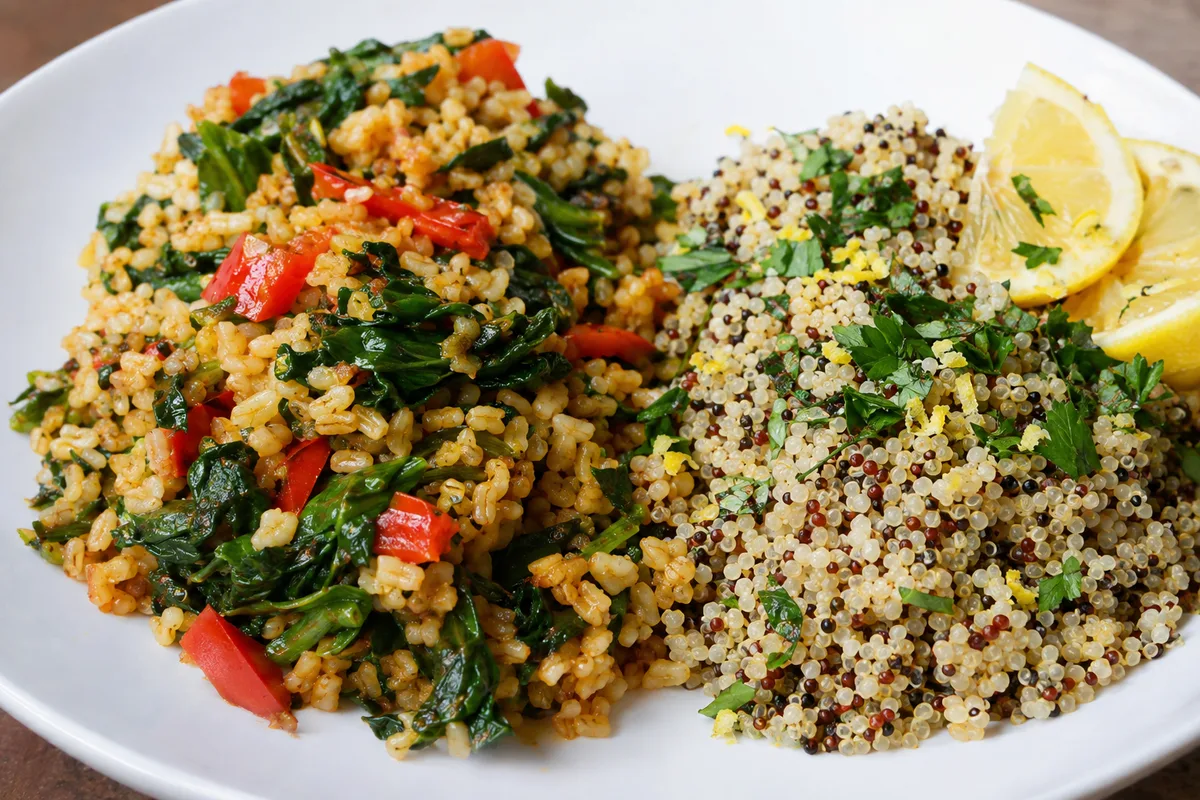
- Add leafy vegetables or peppers for colour and variety.
- Use lemon juice, herbs and spices for flavour without relying only on oil.
- Record nuts, seeds, cheese and dressings separately when possible.
- Rotate bulgur, quinoa and other grain choices across your meals.
Logging cooked and dry portions correctly
Bulgur and quinoa absorb water as they cook, so their weight increases without water adding energy. A cooked entry and a dry entry therefore represent very different amounts of food. Using the wrong one can make your diary noticeably less accurate.
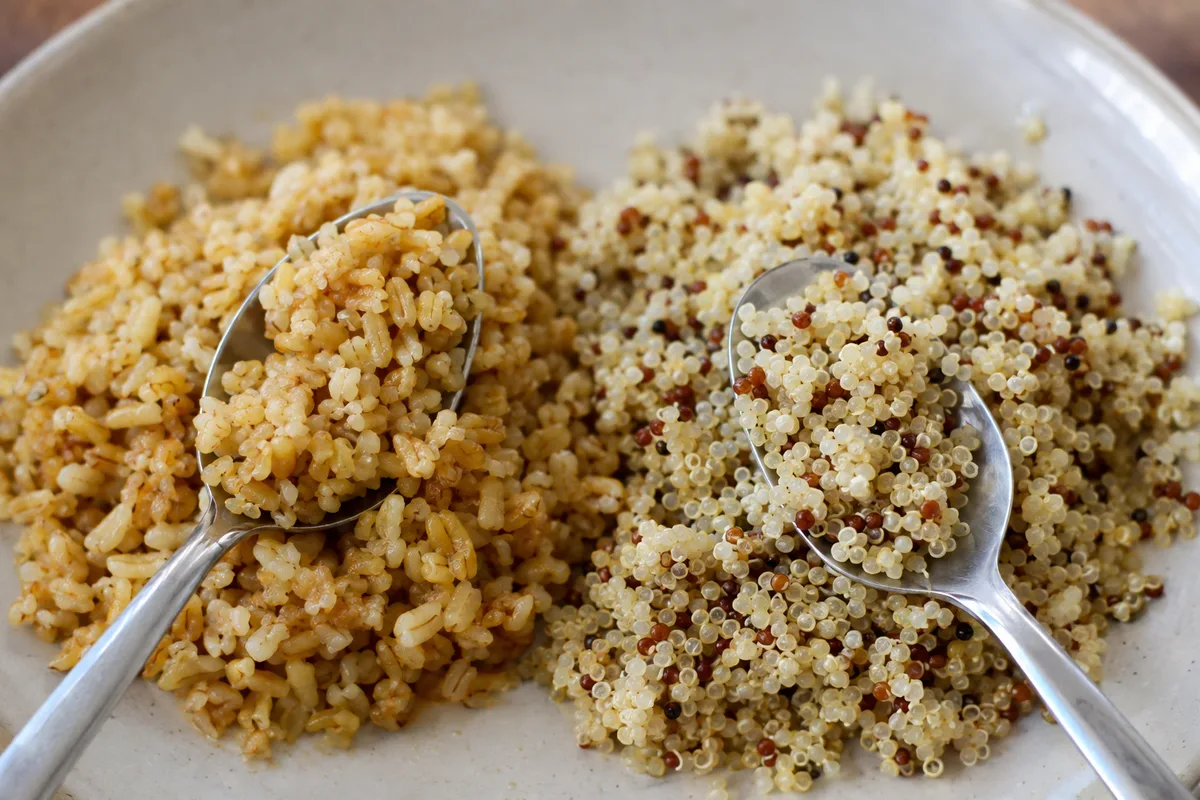
Check whether your database entry says dry, uncooked, cooked, boiled or prepared. Weigh the food in the same state named by the entry whenever possible. If you cook a batch, record the dry ingredients first and divide the finished recipe into the portions you actually serve.
Cooking liquid and extra ingredients also affect the entry. Water adds no energy, but stock, oil, butter or sauce may need to be logged. Nutrition values can vary between products, so use the packet information when it is available.
- Match dry weight to a dry database entry.
- Match cooked weight to a cooked database entry.
- Create a recipe entry for mixed dishes or batch cooking.
- Include cooking fats, sauces and toppings.
- Keep the same logging method when comparing the two foods.
Choosing between bulgur and quinoa
Choose bulgur when you want a quick-cooking whole-grain base with a chewy texture and a strong fibre contribution. It works especially well with fresh herbs, chopped vegetables and sharp dressings. It is not suitable when you need to avoid gluten.
Choose quinoa when you want a naturally gluten-free option with somewhat more protein and fat. Its softer texture suits warm bowls, salads and breakfast-style dishes. Rinsing and careful cooking help prevent a bitter taste or soggy result.
There is no universal winner because the best choice depends on your meal, preferences and tracking goals. Compare equal cooked portions and include everything served with them. You can also alternate between bulgur and quinoa to gain variety without treating either one as compulsory.
- Pick bulgur for chewiness, whole-grain character and more fibre.
- Pick quinoa for a naturally gluten-free base and more protein.
- Base the portion on your own energy and carbohydrate targets.
- Judge the complete meal, not the grain or seed alone.