
Quinoa or rice: which is the healthier choice for you?
Quinoa generally offers more protein and fibre, while rice can be an equally useful base for a balanced meal. This guide explains the differences and shows how to choose the option that suits your food log, preferences and routine.
There is no single winner
Quinoa and rice are both carbohydrate-rich foods that can form part of a balanced meal. Quinoa is a seed but is cooked and eaten much like a grain, while rice comes in several varieties with different textures and nutritional profiles. Which one is healthier for you depends on the rest of your meal, your preferred portion and what you want from it.
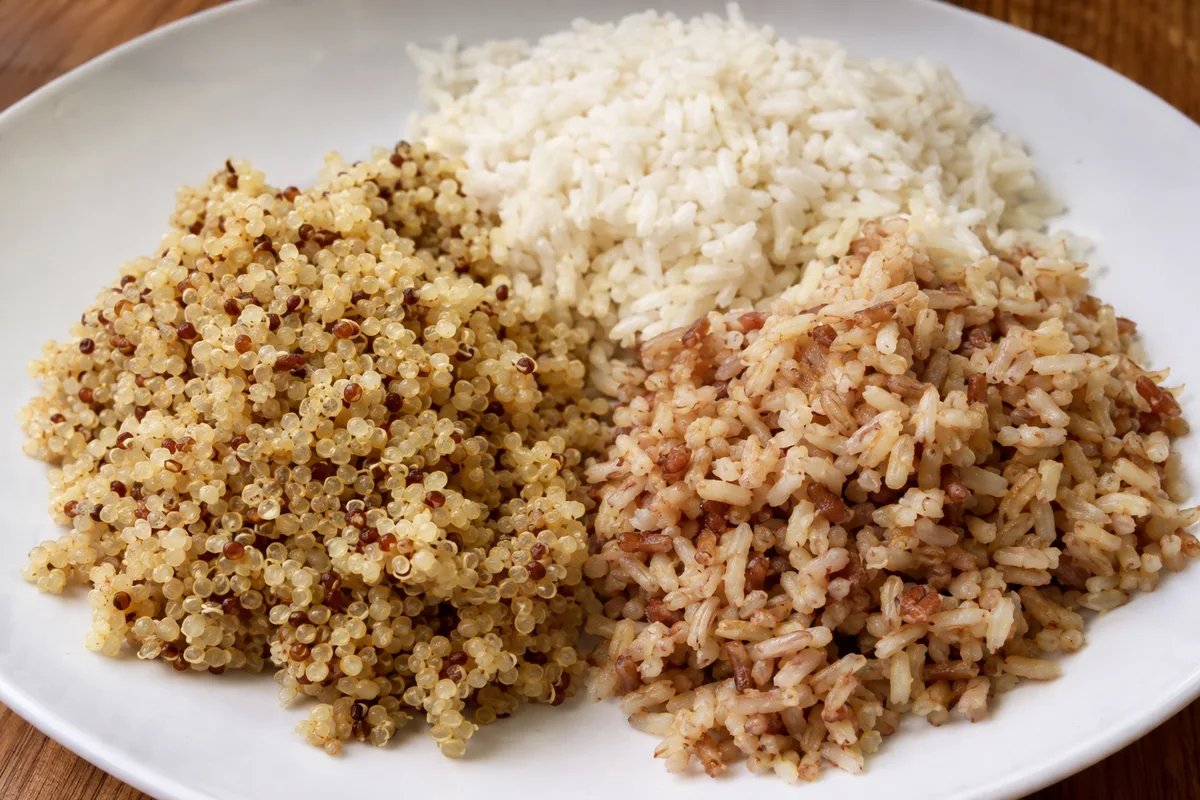
Quinoa may be more useful when you want extra protein and fibre from the base of a meal. Rice may suit you better when you want a familiar flavour, a softer texture or a food that works naturally with a particular dish. Enjoyment matters because a nutritious choice is only practical if you are happy to eat it.
- Choose quinoa when protein and fibre are priorities
- Choose rice when its flavour and texture suit the dish better
- Alternate between them to add variety
- Judge the whole meal rather than the grain or seed alone
How their nutrition differs
For a comparable cooked portion, quinoa usually provides more protein and fibre than white rice. It contains all the essential amino acids, although this does not mean every meal needs quinoa to provide useful protein. Its fibre can also make the meal feel more substantial.
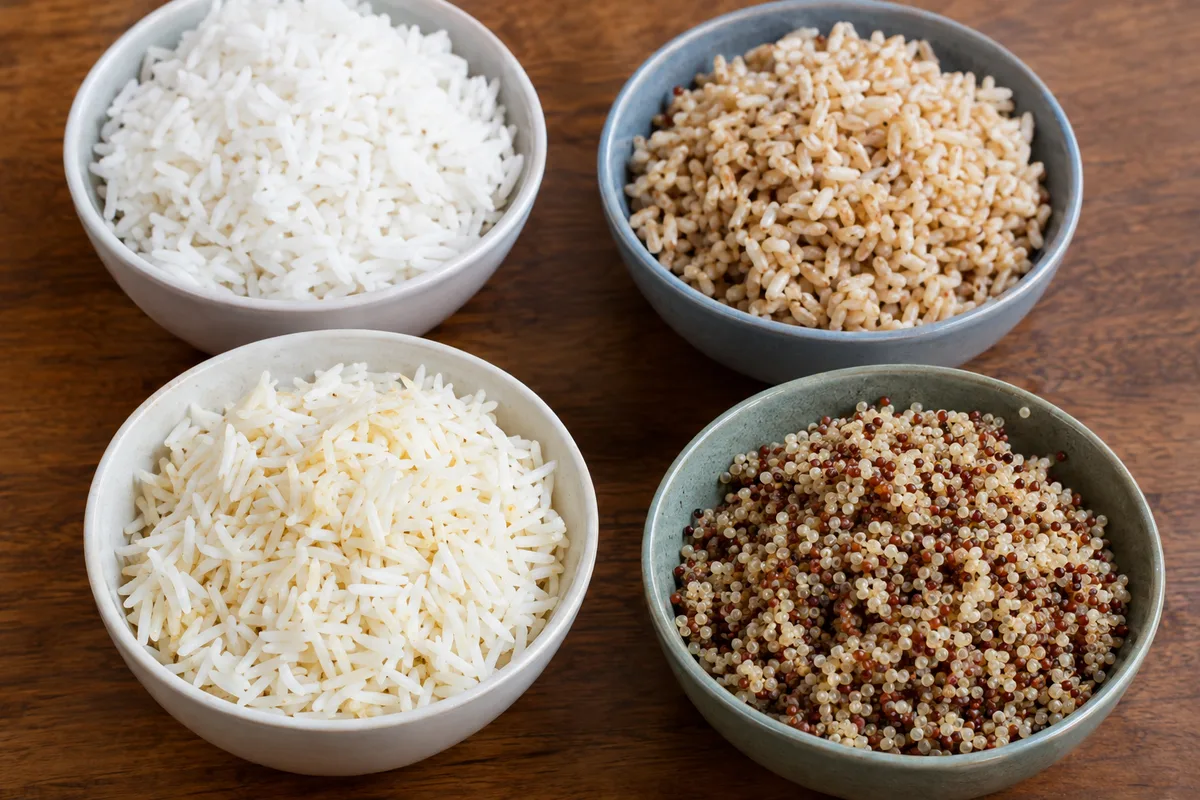
Rice is mainly a source of carbohydrate, with smaller amounts of protein and varying amounts of fibre. White rice has had the fibre-rich outer layers removed, while wholegrain rice keeps more of them. The exact energy and nutrient values depend on the variety, cooking method and amount served.
- Quinoa: generally higher in protein and fibre
- Wholegrain rice: more fibre than white rice and a firmer texture
- White rice: softer, milder and usually lower in fibre
- Both: useful sources of carbohydrate for meals
The type of rice changes the comparison
Comparing quinoa only with white rice misses part of the picture. Wholegrain rice retains more of the grain and usually offers more fibre than white rice, though quinoa commonly remains higher in protein. Different rice varieties also absorb water differently, which can change the weight and nutritional values of a cooked portion.
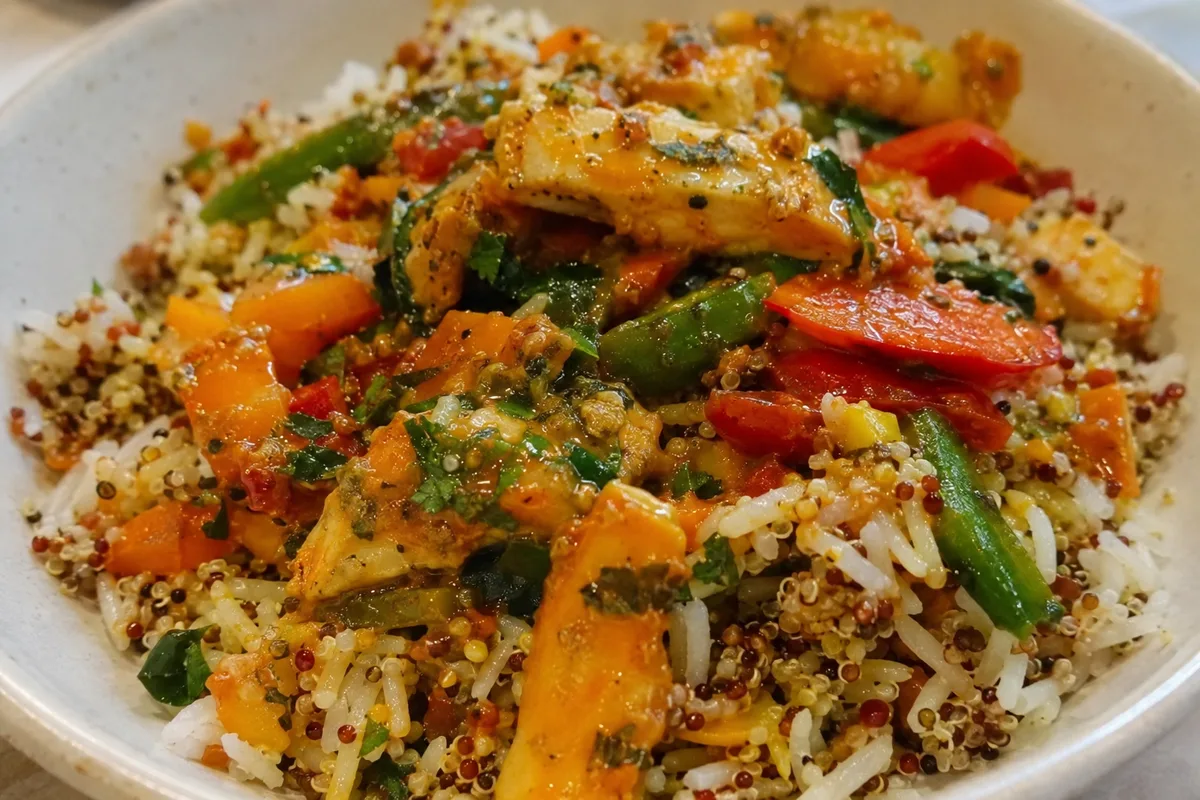
White rice is not automatically an unhealthy choice. It can be combined with vegetables, beans, lentils, eggs, fish, meat or other protein-rich foods to make a more varied meal. Wholegrain rice may feel more filling to some readers, while others prefer the texture and digestibility of white rice.
- White rice for a soft, neutral base
- Wholegrain rice for a chewier, higher-fibre option
- Basmati rice for separate, aromatic grains
- Quinoa for a slightly nutty taste and lighter texture
Compare the portions you actually eat
Food tracking is most useful when the entry matches the food in front of you. A small serving of one option cannot be fairly compared with a much larger serving of the other. Check whether your log entry refers to dry or cooked weight, because cooking adds water and changes the weight without adding energy.
Recipes can also alter the comparison. Rice or quinoa cooked in water will log differently from versions prepared with oil, butter, coconut milk, sauces or dressings. Record those additions separately when they are not already included in the recipe entry.
- Use a cooked entry when recording a cooked portion
- Use a dry entry only when you measured the food before cooking
- Check that the listed variety matches what you ate
- Include cooking fats, sauces and toppings
- Save a personal recipe for dishes you make regularly
Build the meal around your needs
If your meal already includes a generous protein source and plenty of vegetables, either quinoa or rice can work well. If the rest of the dish is light on protein or fibre, quinoa may help strengthen that part of the meal. Beans or lentils can also add both nutrients to a rice-based dish.
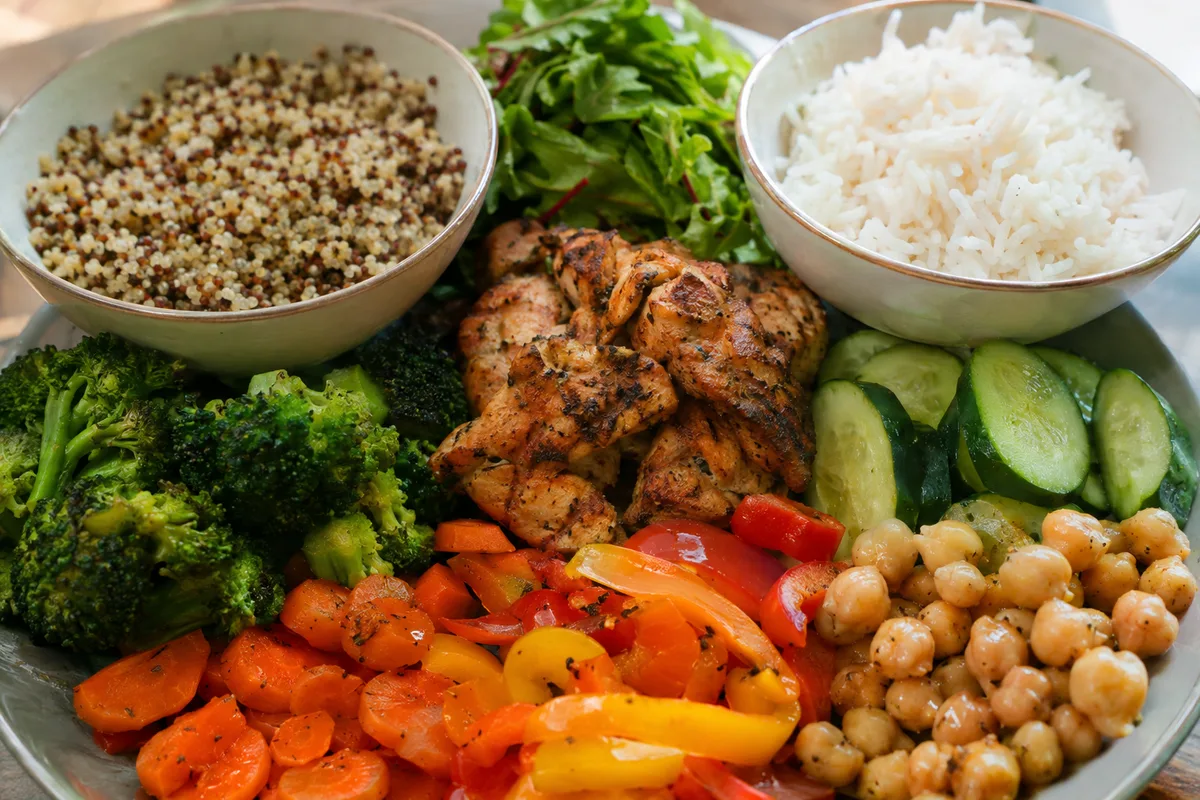
Your preferred portion depends on your appetite, activity, eating pattern and the other ingredients on the plate. Rather than labelling one food as good and the other as bad, look at how each choice affects the balance of your meal and how satisfied you feel afterwards. Your food log can help you notice which combinations work best for you.
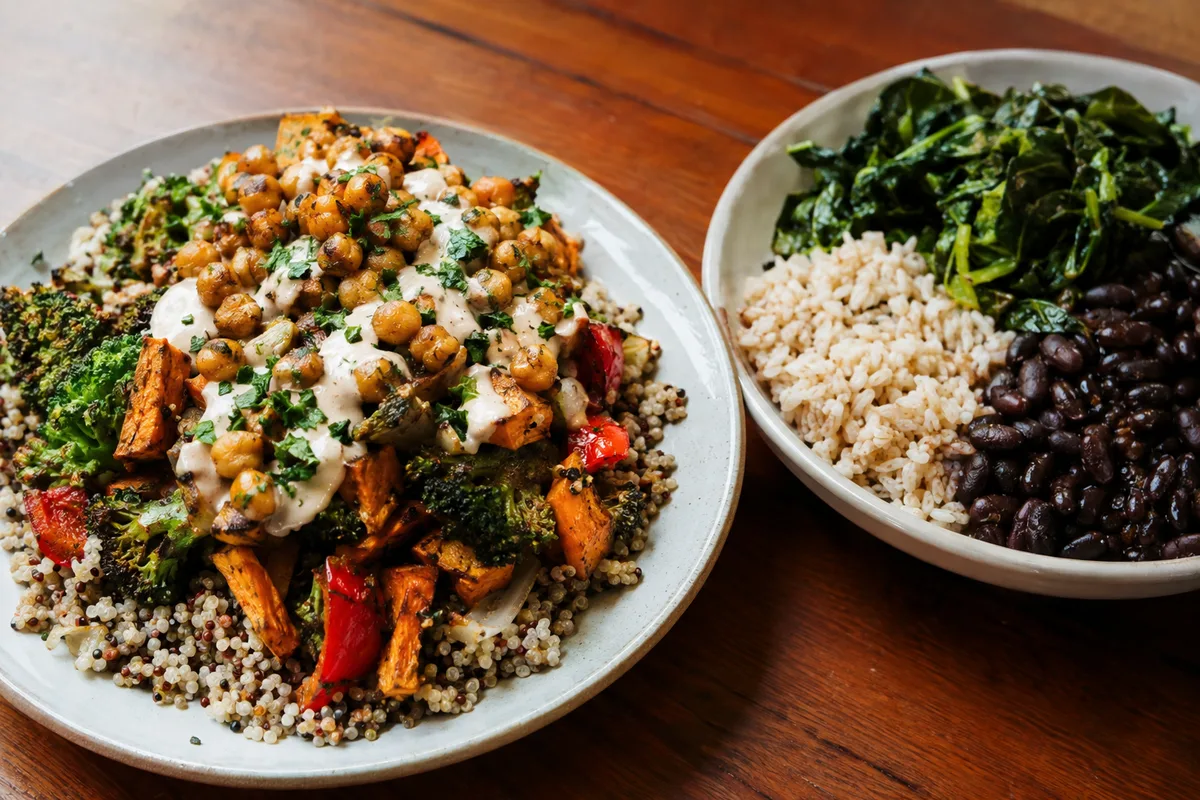
- Quinoa with roasted vegetables and a protein-rich topping
- Wholegrain rice with beans and colourful vegetables
- White rice with fish, eggs, tofu or meat and greens
- Either option with a dressing or sauce recorded separately
The practical verdict
Quinoa has the nutritional edge when you compare protein and fibre in similar cooked portions. Wholegrain rice narrows the fibre difference, while white rice remains a useful and versatile carbohydrate source. None of these choices determines the quality of your overall diet by itself.
Choose quinoa when its extra protein, fibre and texture fit your meal. Choose rice when you prefer it, when it suits the recipe or when the other ingredients already provide plenty of protein and fibre. Using both across the week can bring variety without turning the decision into a strict rule.
- Prioritise quinoa for more protein and fibre from the base
- Prioritise wholegrain rice when you want a hearty rice option
- Use white rice when it best complements the meal
- Keep portions and log entries consistent when comparing them