
How to Do a Bear Crawl: Technique, Benefits and Variations
The bear crawl is a floor-based movement that asks your arms, legs and middle to work together. This guide explains the basic technique, common benefits, useful variations and simple ways to include it in your routine.
What a bear crawl involves
A bear crawl starts on your hands and feet, with your knees hovering just above the floor. From there, you travel while keeping your body low and your middle steady. Your opposite hand and foot move together, creating a controlled crawling pattern.
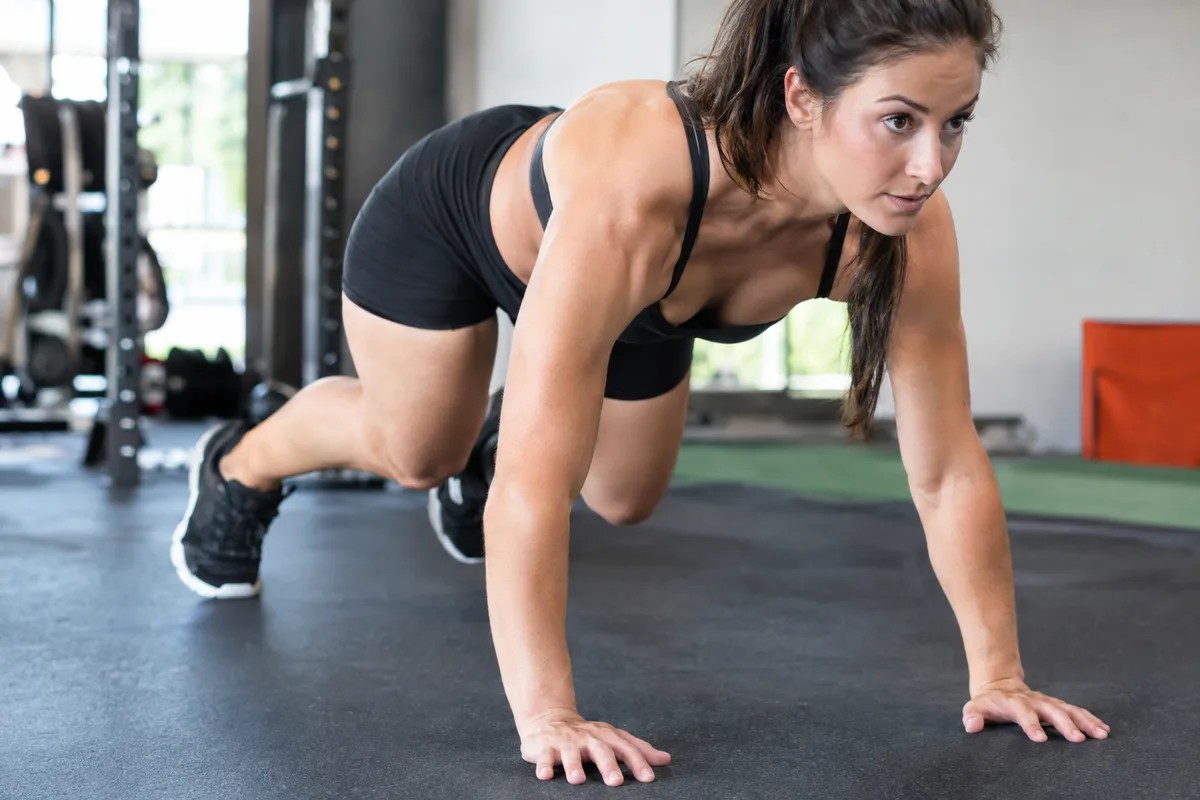
The movement uses several areas at once rather than focusing on a single muscle. Your shoulders and arms support part of your weight, while your legs push you forwards or backwards. Your trunk works to limit twisting as your limbs move.
Bear crawls do not need to be fast to be challenging. Slow, deliberate steps often make it easier to notice your position and maintain control. The right distance or duration depends on your strength, mobility, available space and experience.
- Hands stay roughly beneath the shoulders
- Knees hover close to the floor
- Back remains steady rather than heavily arched or rounded
- Opposite hand and foot move at about the same time
How to perform the basic bear crawl
Begin on all fours with your hands spread comfortably on the floor. Place your knees beneath your hips and tuck your toes under. Press through your hands and toes, then lift your knees slightly without raising your hips high.
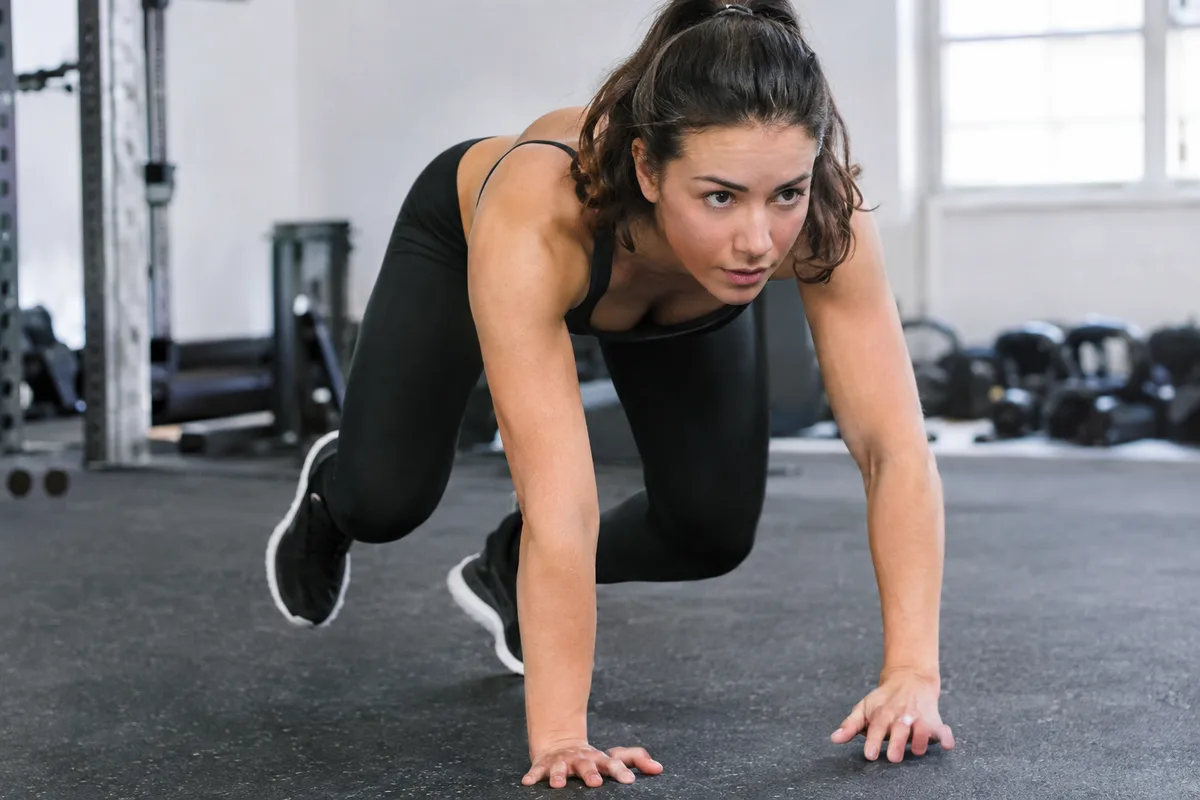
Move one hand forwards as the opposite foot takes a small step. Follow with the other hand and foot, keeping each step short enough to control. Continue breathing and look towards the floor slightly ahead of your hands rather than lifting your head.
Pause if your hips begin to sway strongly or your knees rise higher with every step. Reset on all fours, then begin again with smaller movements. Good technique matters more than covering a long distance.
- Set your hands and knees in a stable position
- Brace your middle gently before lifting your knees
- Take a small step with the opposite hand and foot
- Keep your hips low and level as you travel
- Lower your knees with control when you finish
What the bear crawl can help you practise
The bear crawl builds practice in supporting your body through your hands while your legs are moving. This can challenge the shoulders, arms, chest and upper back. The legs also contribute as you push against the floor and control each step.
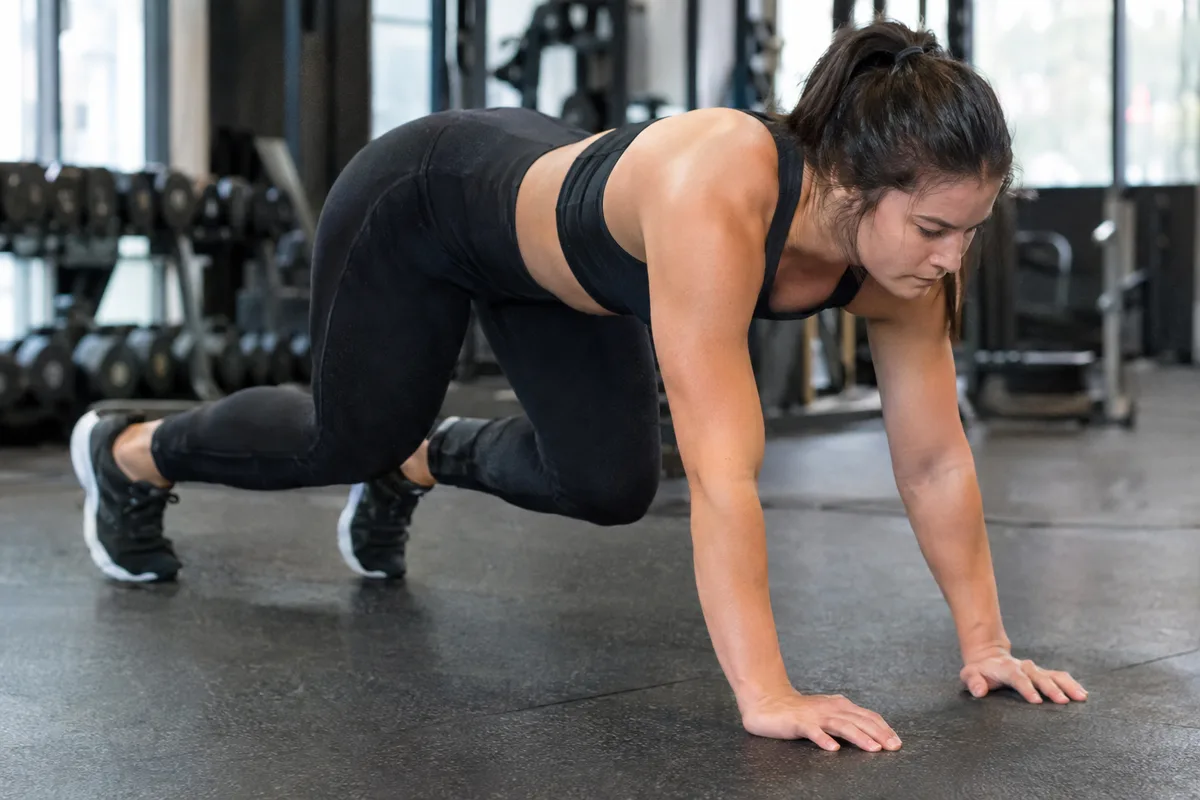
Keeping your torso steady gives your abdominal and back muscles a useful job. They work together to reduce unwanted turning and sagging while your limbs change position. This makes the crawl a whole-body coordination exercise as well as a strength movement.
Because you have to match opposite limbs, the exercise also tests rhythm and body awareness. Moving backwards or sideways adds another coordination demand. These benefits depend on using a variation that allows you to stay controlled.
- Whole-body muscular effort
- Trunk stability while the limbs move
- Coordination between opposite arms and legs
- Shoulder and hip control
- Practice changing direction close to the floor
Common technique problems and simple fixes
A common mistake is lifting the hips until the movement looks more like a walk on the hands and feet. This may reduce the demand on the trunk and change the intended position. Try bringing the knees closer to the floor and shortening each step.
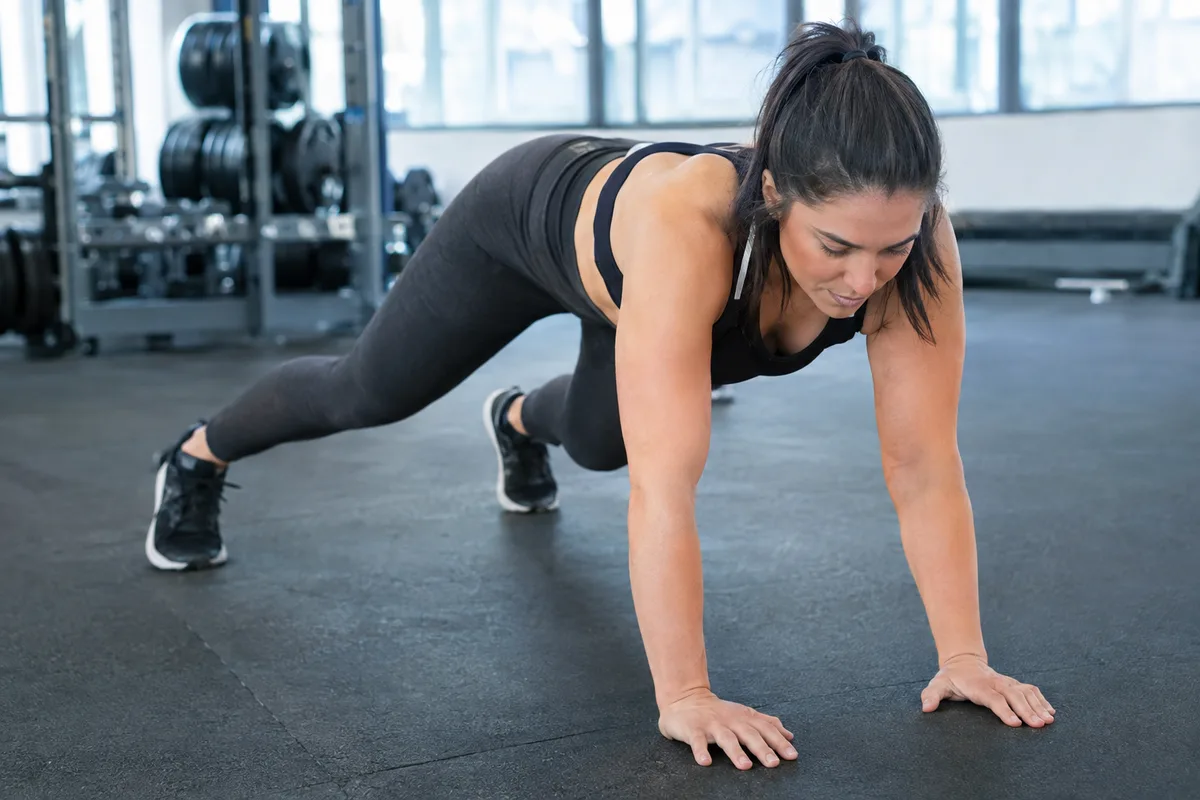
Another issue is allowing the hips to rock from side to side. Imagine balancing something light across your lower back and move slowly enough to keep it steady. Placing the feet a little wider can also provide more stability while you learn.
Hands can become uncomfortable when too much pressure sits in one small area. Spread your fingers, press through the whole hand and avoid collapsing heavily into the wrists. Stop the set if you cannot maintain a comfortable, controlled position.
- Hips too high: lower the knees and shorten the steps
- Strong side-to-side rocking: slow down and widen the feet slightly
- Long, hurried strides: use smaller steps
- Head lifted sharply: keep the neck in line with the back
- Breath held: exhale steadily as you move
Bear crawl variations
The basic forward crawl is only one option. Changing the direction, pace or knee position alters the challenge without changing the main idea. Choose the simplest version that lets you keep your back steady and steps controlled.
A stationary bear hold is a useful starting point because it removes the coordination of travelling. Once that feels manageable, you can add a single small step and pause before changing sides. Progress does not require a fixed timetable, as readiness differs from person to person.
For a harder coordination challenge, crawl backwards or move sideways. Keep the steps short because unfamiliar directions can make the hips turn or rise. You can also pause briefly after each step to make momentum less helpful.
- Bear hold: hover the knees without travelling
- Step-and-pause crawl: take one step, settle, then continue
- Backward bear crawl: lead with a foot and the opposite hand
- Lateral bear crawl: move one hand and the opposite foot to the side
- Slow bear crawl: take deliberate steps with minimal body sway
Adding bear crawls to your routine
Bear crawls can fit into a warm-up, a bodyweight circuit or a short movement practice. Start with enough space to travel safely and use a floor that gives your hands and feet reliable grip. Clear the route so you do not have to twist around furniture or other obstacles.
You can track the movement by time, distance or controlled steps. There is no single correct amount, so choose a measure that lets you keep the same quality from start to finish. Rest when your posture changes or your steps become hurried.
If you already track your food, keep exercise and food records in their proper roles. A completed crawl does not provide an exact reason to add or subtract a particular amount of food, because energy use depends on the person and the session. Record the variation, direction and effort instead if that helps you notice progress in control.
- Warm-up: use short, easy crawls with plenty of control
- Circuit: place the crawl between movements that use different positions
- Technique practice: alternate brief crawls with full rest
- Progress note: record the variation, direction and movement quality