
How to Do a Captain’s Chair Leg Raise
The captain’s chair leg raise trains your midsection while your forearms support your body on the station. Slow, controlled movement matters more than lifting your legs as high as possible.
Set up your position
Step onto the captain’s chair platform and place your forearms firmly on the pads, with your back against the support. Grip the handles lightly, press your shoulders down and let your legs hang straight beneath you.
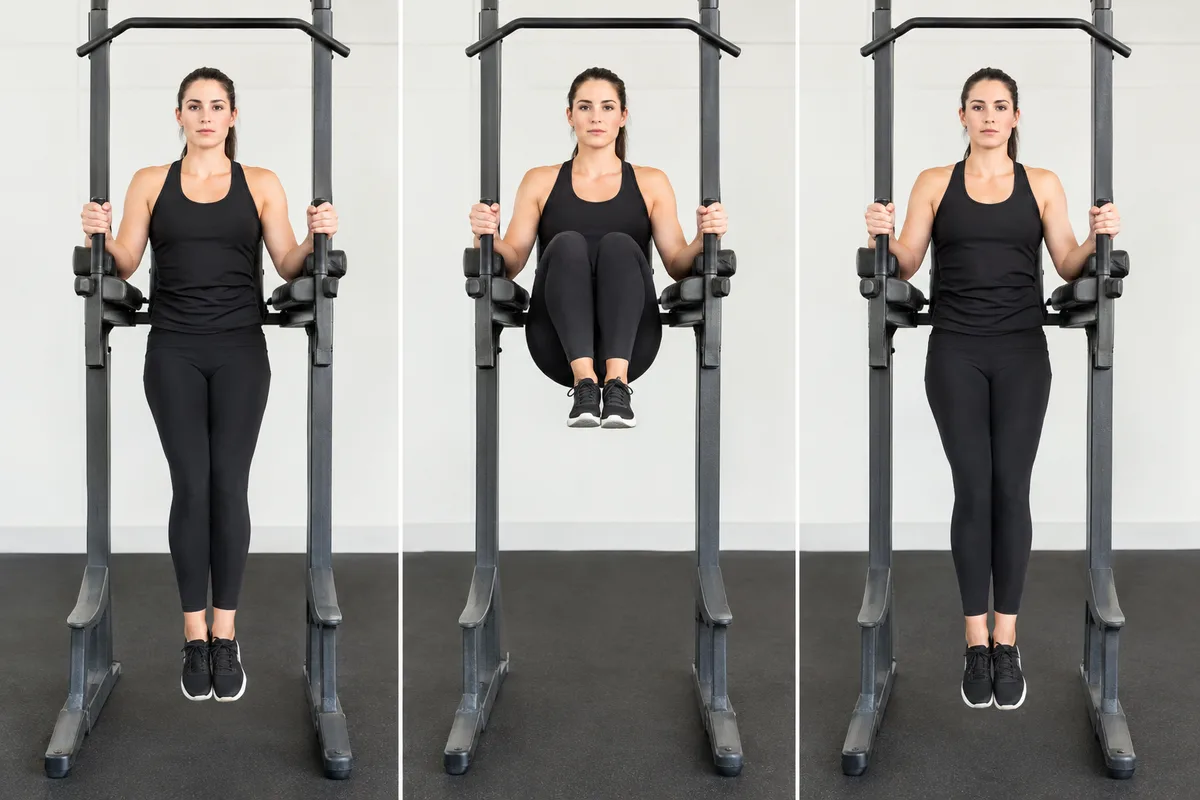
Brace your middle as though preparing for a gentle push against your stomach. Keep your chest lifted and your head in a neutral position, without forcing your lower back into an exaggerated arch.
Raise and lower your legs
Breathe out as you lift your knees towards your chest, allowing your pelvis to curl slightly at the top. Keep the motion smooth and stop before your shoulders shrug or your body begins to swing.
Pause briefly, then breathe in as you lower your legs under control. Return to a steady hanging position before starting the next repetition rather than using momentum to bounce upwards.
Choose the right variation
Bent-knee raises are a practical starting point because the shorter leg position is easier to control. As your control improves, you can gradually straighten your legs or lift them slightly higher without changing the steady pace.
The number of repetitions and sets depends on your current ability and the rest of your training programme. Finish the set when you can no longer keep your torso still, your shoulders settled and the lowering phase controlled.
Avoid common form mistakes
Swinging the legs turns the exercise into a momentum-driven movement and reduces the work done by your midsection. Reset between repetitions, and use a smaller range if you cannot prevent rocking.
Avoid pulling hard on the handles, rounding your shoulders forwards or dropping quickly to the starting position. Stop if the movement causes sharp or unusual discomfort, and choose a comfortable alternative until you can get suitable guidance.