
How to Do a Cable Woodchop with Control
The cable woodchop is a diagonal pulling movement that trains you to control rotation through your torso. This guide covers the set-up, technique, breathing, common mistakes and ways to record it in your programme.
What the cable woodchop involves
A cable woodchop uses a cable machine to create resistance as your hands travel diagonally across your body. The movement resembles reaching towards one side and then pulling across towards the opposite hip. Your torso turns, but the action should remain controlled rather than becoming a fast swing.
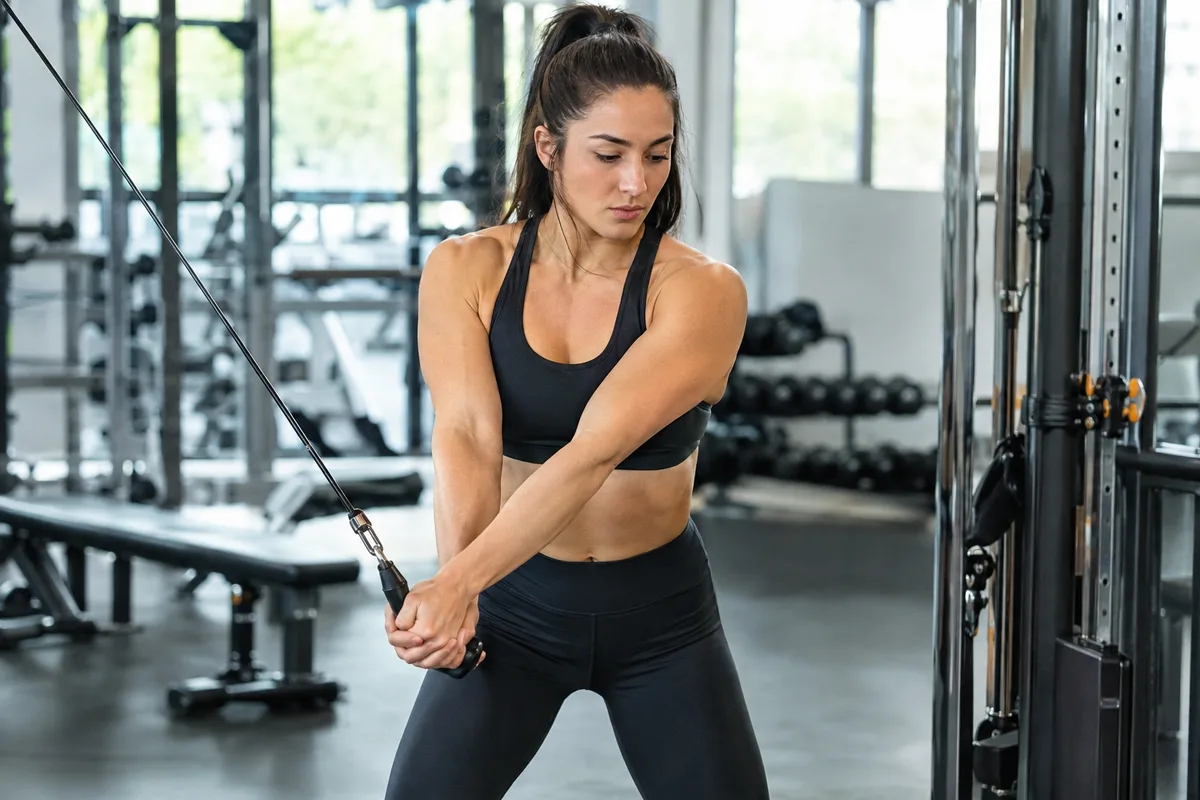
Your abdominal muscles help manage the rotation while your shoulders, back, hips and legs support the movement. The aim is not simply to move the handle from one point to another. You are practising how your upper and lower body work together while keeping a steady position.
- A diagonal pull across the body
- Controlled rotation through the torso
- Stable feet and balanced pressure through the floor
- A smooth return to the starting position
Set up the cable and your stance
Attach a suitable handle and place the cable pulley above shoulder height for a high-to-low woodchop. Stand sideways to the machine with enough space for your arms to move without the weight stack touching down. Choose resistance that lets you control both the pull and the return.
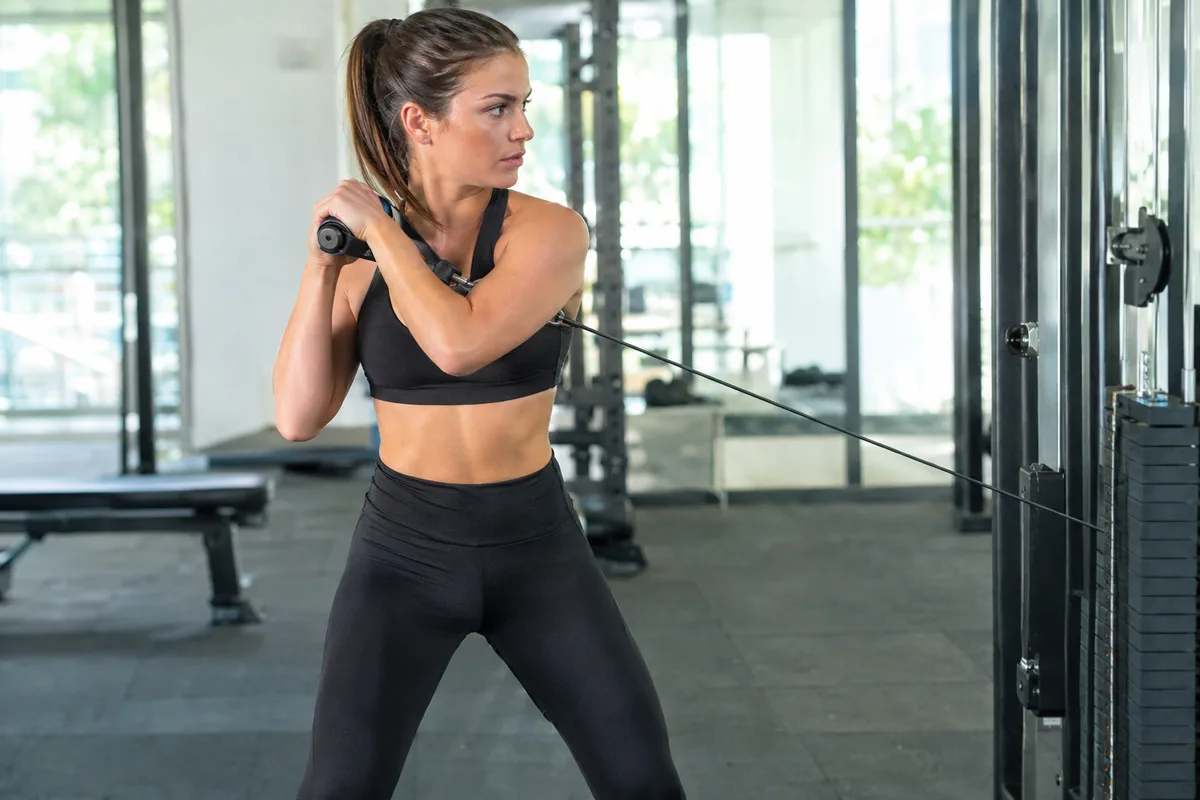
Take the handle in both hands and step away until the cable is gently tensioned. Place your feet at a comfortable width, soften your knees and keep your weight balanced. Start with your hands near the shoulder closest to the pulley, while keeping your chest tall and your neck relaxed.
- Stand side-on to the cable
- Hold the handle securely with both hands
- Keep your knees soft rather than locked
- Begin with light enough resistance to avoid leaning or jerking
Perform the movement step by step
Brace your middle as though preparing to absorb a gentle nudge. Pull the handle diagonally down and across your body towards the hip furthest from the machine. Allow your torso and hips to turn together while your arms guide the handle.
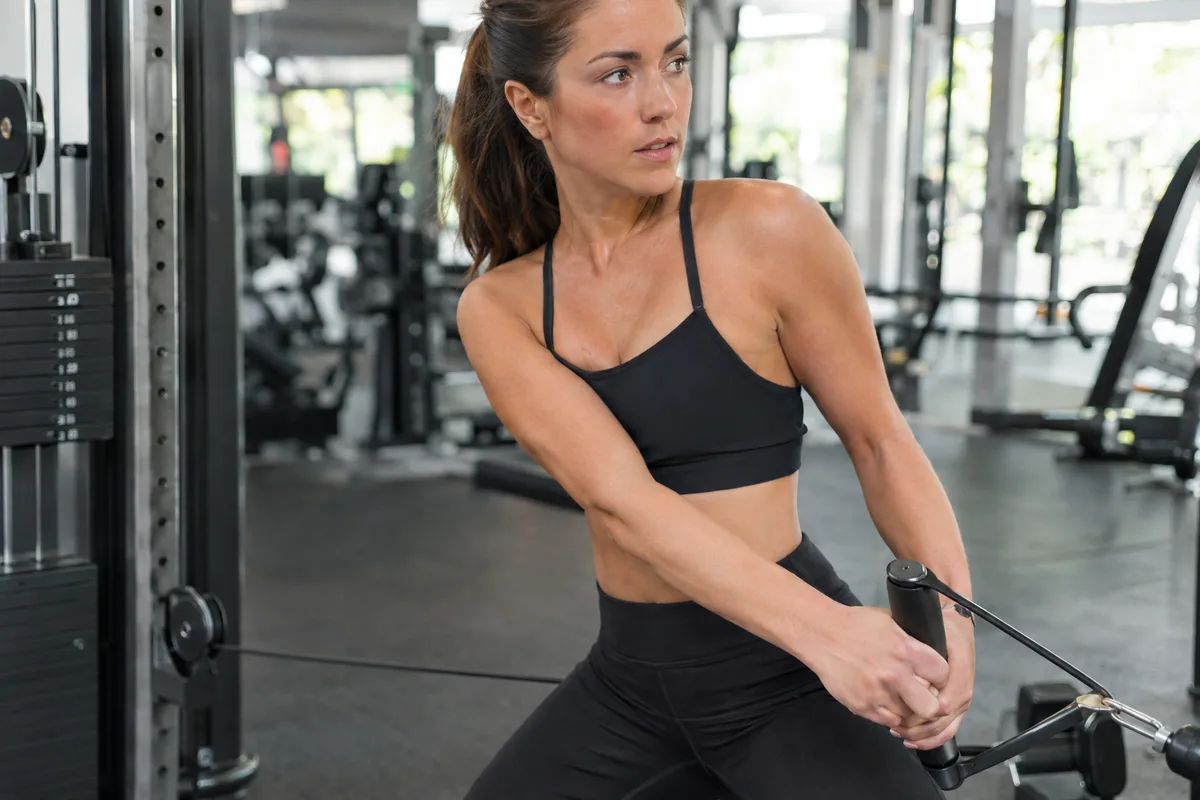
Finish with your hands near the outside hip without rounding your back or forcing extra range. Pause briefly, then reverse the same path under control. Complete your chosen work on that side before changing position and repeating in the opposite direction.
- Set your trunk before beginning the pull
- Move the handle diagonally across your body
- Turn through a comfortable range
- Control the cable back to the start
- Train both directions separately
Use your breath and keep the motion smooth
Breathe out during the pulling phase and breathe in as the handle returns. Avoid holding your breath for the whole movement, as this can make the exercise feel more tense than necessary. A steady breathing rhythm can also help you keep an even pace.
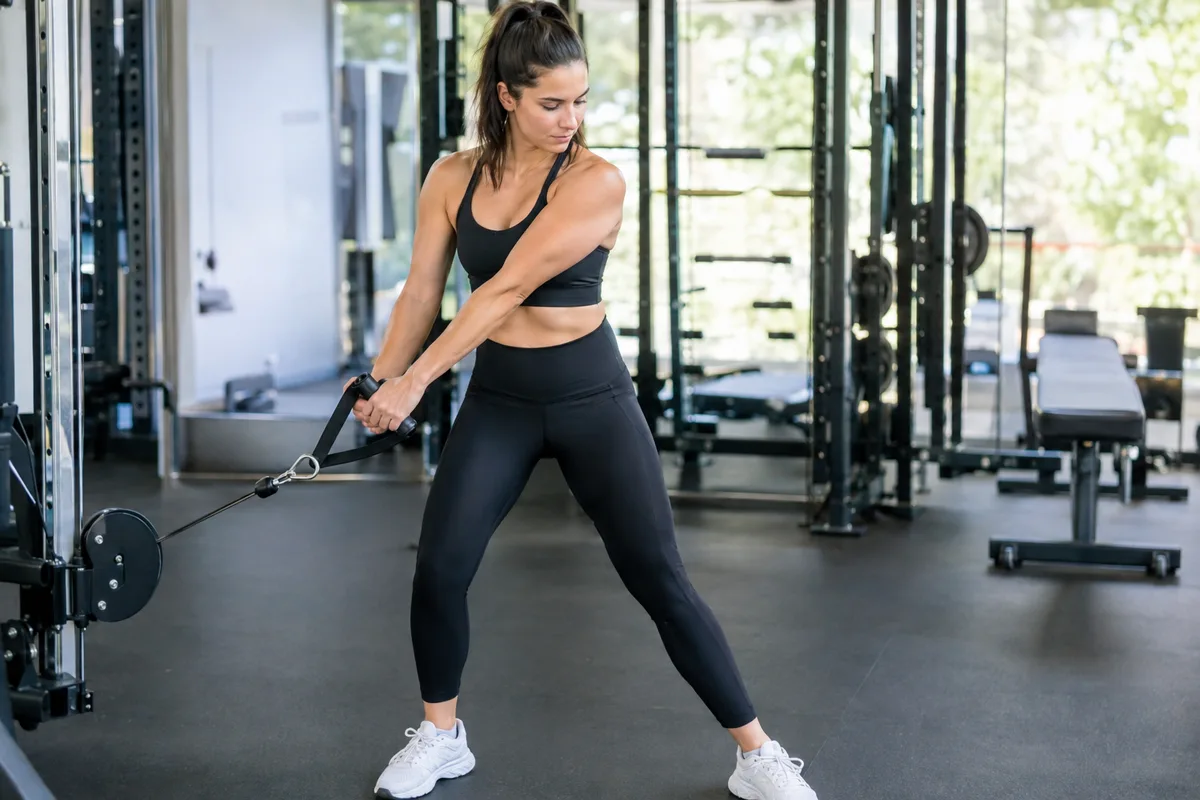
The cable should travel smoothly without snapping forwards or dragging you back. Keep your hands connected to your torso rather than letting your arms race ahead. If you cannot pause or control the return, reduce the resistance or shorten the range.
- Exhale as you pull across
- Inhale during the controlled return
- Keep your shoulders away from your ears
- Use a range you can manage without straining
Watch for common technique mistakes
Using too much resistance often turns the woodchop into a whole-body tug. You may notice your shoulders hunching, your back rounding or your body leaning away from the machine. Lower resistance usually makes it easier to feel the intended diagonal rotation.
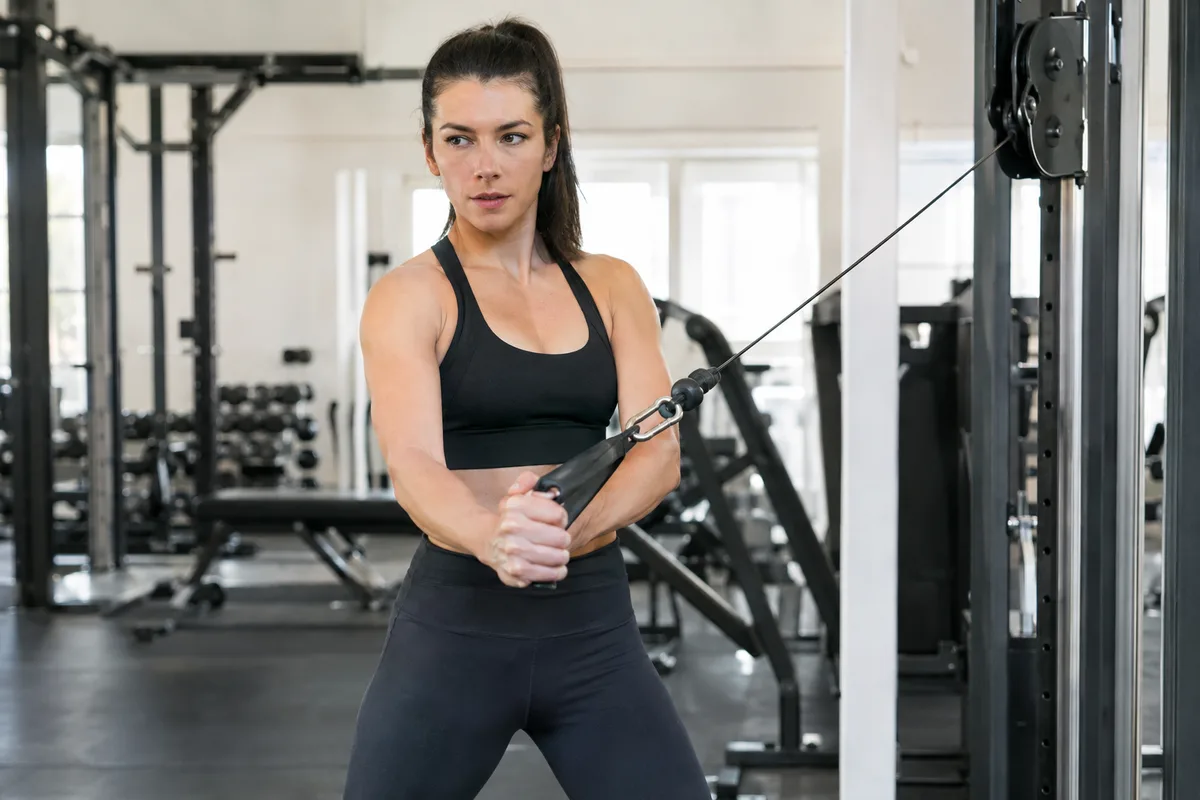
Another common mistake is keeping the hips completely fixed while twisting hard through the upper body. Let the hips and torso share the turn, with the feet staying grounded or pivoting slightly if needed for comfort. Stop the set when control changes noticeably rather than forcing more repetitions.
- Jerking the handle to start each repetition
- Leaning sideways instead of rotating
- Pulling mainly with the arms
- Letting the cable pull the body back
- Using a longer range than you can control
Add it to your programme and food log
The suitable number of sets and repetitions depends on your experience, resistance and wider training programme. Record the cable height, handle, resistance and repetitions so you can repeat the same version next time. Progress only when the movement remains balanced and controlled on both sides.
Exercise calorie estimates can vary with body size, effort, duration and the way an activity is measured. If you record the session alongside your food, treat any energy figure as an estimate rather than a precise allowance. The most useful training record is often the detail that shows whether your technique, resistance or control is improving.
- Cable position and handle used
- Resistance selected
- Sets and repetitions on each side
- Any difference in control between directions
- Notes about pace, range and technique