
How to Cut Calories From Your Sandwich Without Losing the Good Bits
A sandwich can pick up extra calories from several small choices rather than one obvious ingredient. This guide shows you how to adjust each layer while keeping flavour, texture and a satisfying portion.
Start with the whole sandwich
Before changing anything, look at everything you usually count as part of your sandwich meal. Bread and filling matter, but spreads, cheese, dressings and sides can make a large difference too. Your food log can show which parts contribute the most in your usual portion.

There is no single best calorie target for a sandwich because the right amount depends on the person and the rest of the day. Instead, choose one or two changes that fit your appetite. A sandwich that leaves you hungry may simply lead you to eat something else soon afterwards.
- Log every slice of bread, wrap or roll
- Include butter, mayonnaise, oil and dressing
- Count cheese, sauces and extra toppings
- Add crisps, soup or other sides to the same meal entry
Choose the bread with purpose
Bread is the frame of the sandwich, so begin with a portion that suits the filling. Thick slices, large rolls and oversized wraps can add more than you expect, even when they look like a single serving. Compare the amount you actually use rather than assuming one sandwich always means the same thing.
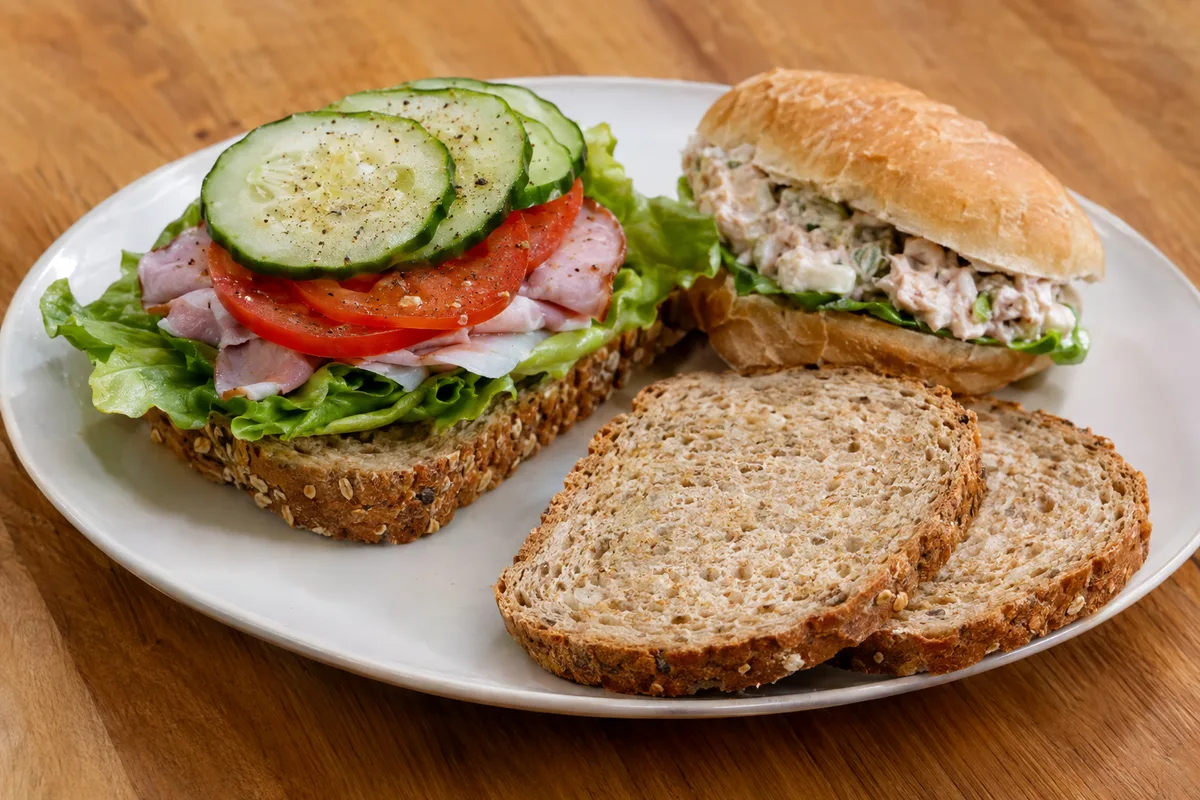
You do not have to remove bread to make a useful change. You might use slightly thinner slices, make an open sandwich or choose a smaller roll. A bread with more fibre can also give the meal more substance, although its calorie content still needs to be logged.
- Use two thinner slices instead of thick-cut bread
- Make an open sandwich with one slice and plenty of topping
- Choose a smaller roll when the filling is generous
- Check the logged portion for wraps, pittas and flatbreads
Build a filling that earns its space
A good filling should provide flavour and make the sandwich feel like a meal. Start with a clear main ingredient rather than piling several rich fillings together. Chicken, turkey, tuna, eggs, beans, lentils or tofu can all form the centre, depending on what you enjoy.
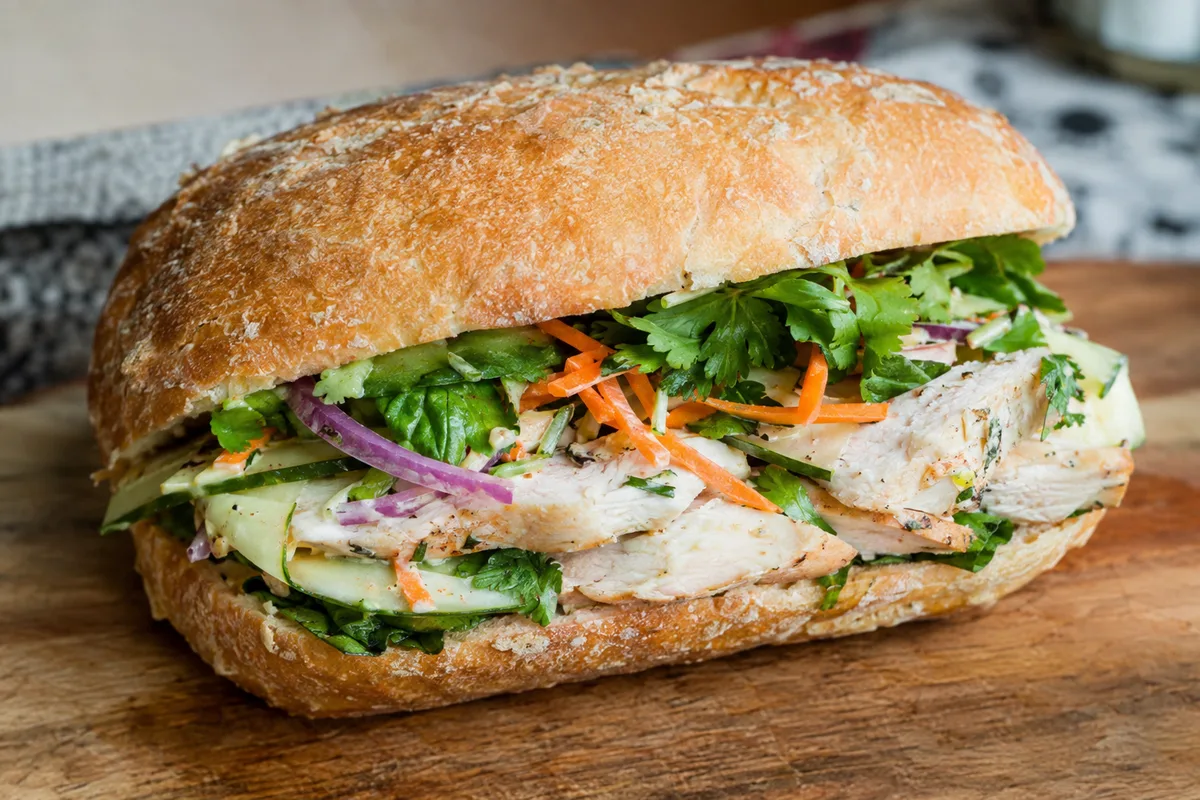
Preparation matters as much as the ingredient itself. A filling mixed with a large amount of creamy dressing will usually be more calorie-dense than the same main ingredient with a lighter coating. Keep enough moisture for a pleasant texture, then add herbs, pepper, mustard or citrus for flavour.
- Choose one main protein-rich filling
- Remove visible skin or excess fatty pieces where practical
- Mix creamy fillings with chopped crunchy vegetables
- Use herbs, spices, mustard or lemon juice to lift the flavour
Be deliberate with spreads and cheese
Spreads are easy to overlook because they form a thin layer, but generous spoonfuls can add up. Butter, mayonnaise, oil-based dressings and creamy sauces are rich in fat, which provides about 9 kcal per gram. That does not make them off limits; it means the portion is worth noticing.
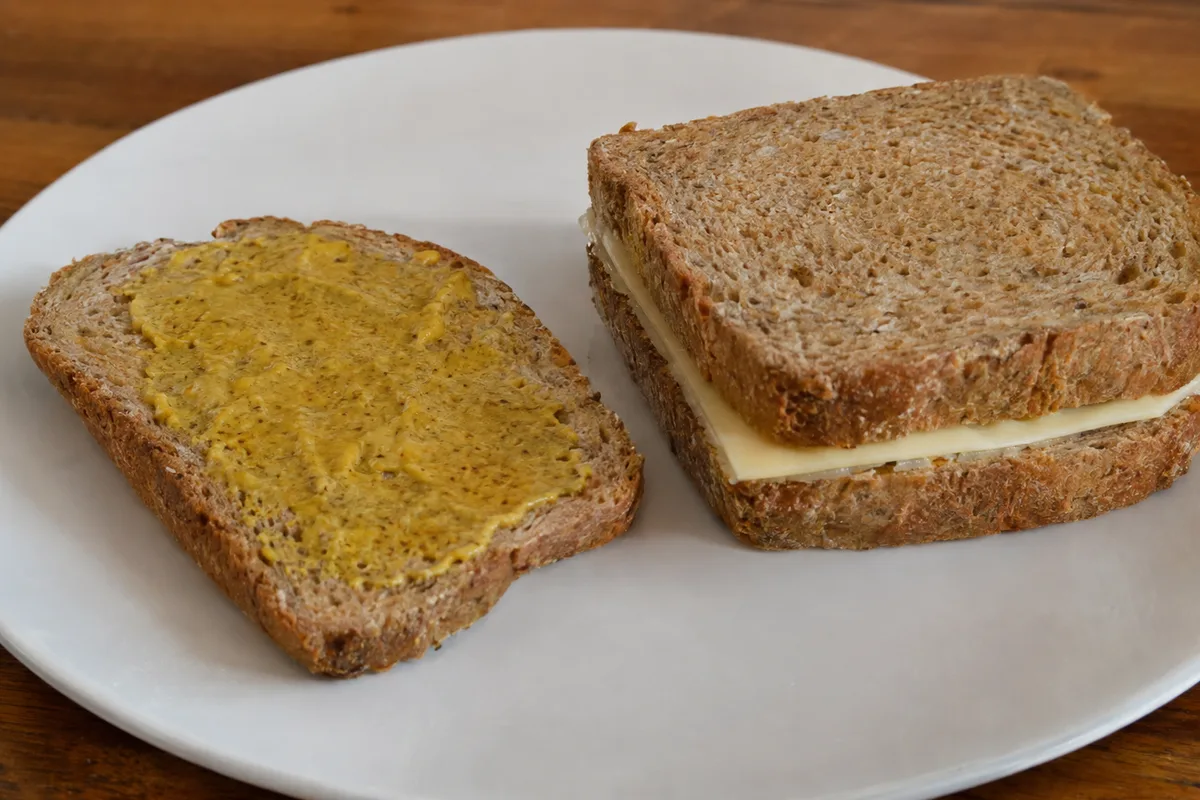
Use a spread for a clear job, such as moisture, sharpness or richness. If cheese already provides richness, you may not need butter and mayonnaise as well. Stronger-tasting ingredients can often give plenty of character in a smaller amount.
- Spread mayonnaise thinly rather than adding a thick layer
- Use mustard, salsa or a yoghurt-based dressing for moisture
- Choose either cheese or a rich spread when both feel unnecessary
- Place cheese where each bite gets some flavour
Add volume with vegetables and contrast
Vegetables can make a sandwich taller, crunchier and more colourful without relying on another layer of cheese or sauce. Lettuce, cucumber, tomato, peppers, grated carrot and shredded cabbage all bring different textures. Roasted vegetables can add deeper flavour, but remember to log any oil used.
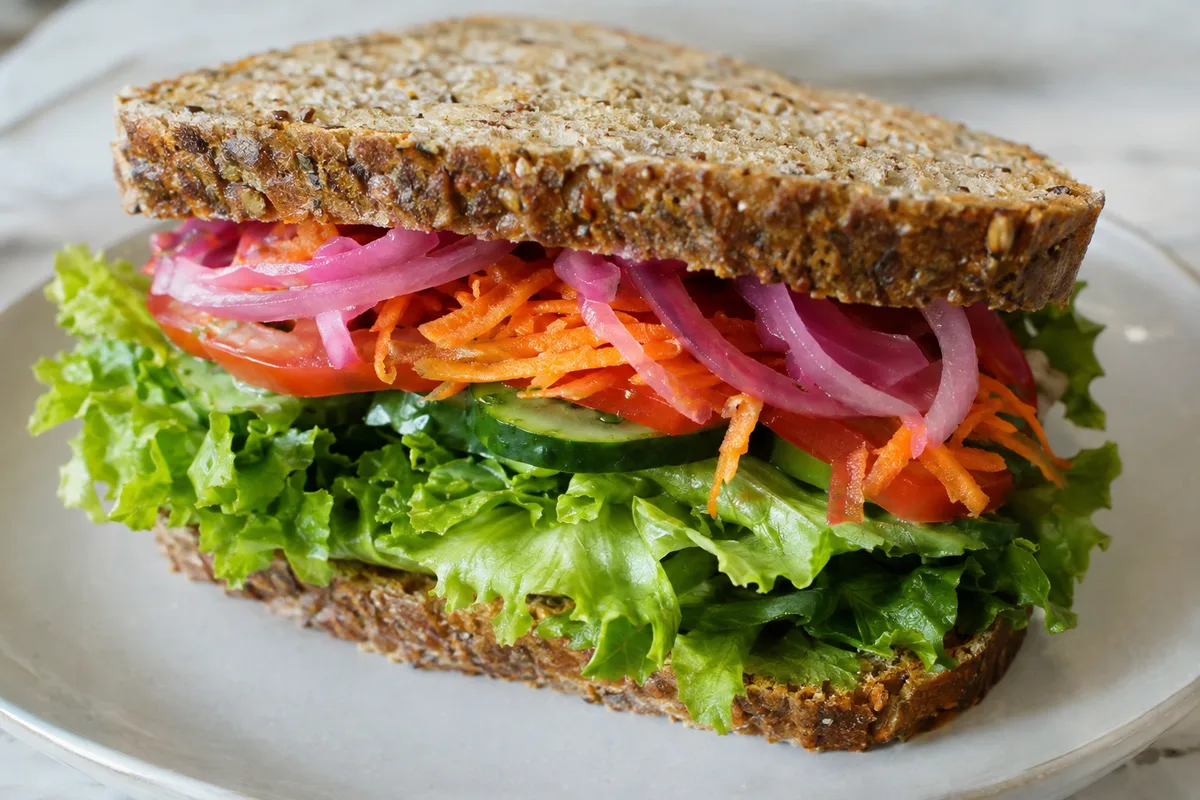
A mixture of textures often feels more satisfying than a very soft sandwich. Pair a tender filling with crisp leaves, sliced radish or pickled vegetables. Drain wet ingredients well so the bread does not become soggy.
- Add a handful of crisp leaves or shredded cabbage
- Layer in cucumber, tomato, peppers or grated carrot
- Use drained pickled onions or gherkins for sharpness
- Add roasted vegetables with the cooking oil included in your log
Make one change, then check your log
Rebuild your usual sandwich in your tracker after making a change. This lets you see whether the adjustment is meaningful for you without guessing. Check saved recipes carefully, as changing the bread or spread will alter the total.
Change one or two parts at a time and notice how the meal holds up. If the sandwich feels too small, add more vegetables, a suitable main filling or a simple side rather than automatically restoring every removed extra. The aim is a sandwich you enjoy and can log accurately, not the smallest sandwich possible.
- Save the revised sandwich as a recipe you can edit
- Record the actual number of slices and spoonfuls used
- Include oils and sauces used during preparation
- Review hunger and enjoyment as well as the calorie total