
Low-carb cereals: what to look for and what to put in your bowl
Cereal can vary widely in carbohydrate, even when two options look similar. This guide explains which styles tend to be lower in carbs and how to fit them into the food tracking you already do.
What counts as a low-carb cereal?
There is no single carbohydrate limit that makes a cereal low carb for everyone. The useful comparison is the amount of carbohydrate in the portion you actually eat, rather than a claim on the front of the packet. Your preferred amount will depend on your eating pattern and personal goals.
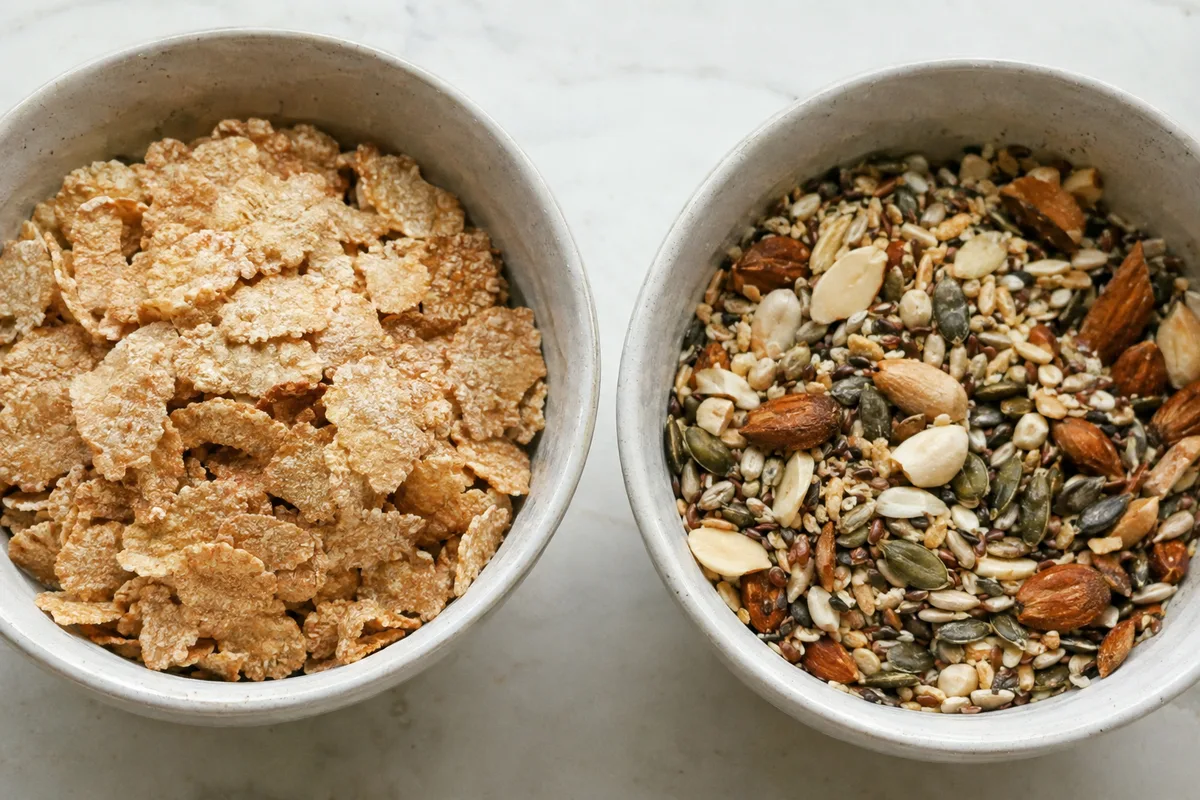
Most grain-based cereals contain carbohydrate because grains are naturally rich in starch. Cereals based mainly on nuts, seeds or soya often contain less, but recipes differ. Checking the nutrition label is more reliable than judging a cereal by its name or appearance.
- Compare total carbohydrate for equal serving sizes
- Check whether the listed serving matches your usual bowl
- Log milk, yoghurt, fruit and sweeteners separately
- Compare several similar cereals rather than relying on front-of-pack wording
Nut and seed granola
Granola made mainly from nuts, seeds and unsweetened coconut can be lower in carbohydrate than granola based on oats or other grains. Almonds, walnuts, pecans, pumpkin seeds, sunflower seeds and coconut flakes all add crunch. However, syrups, sugar, dried fruit and chocolate can raise the carbohydrate content.
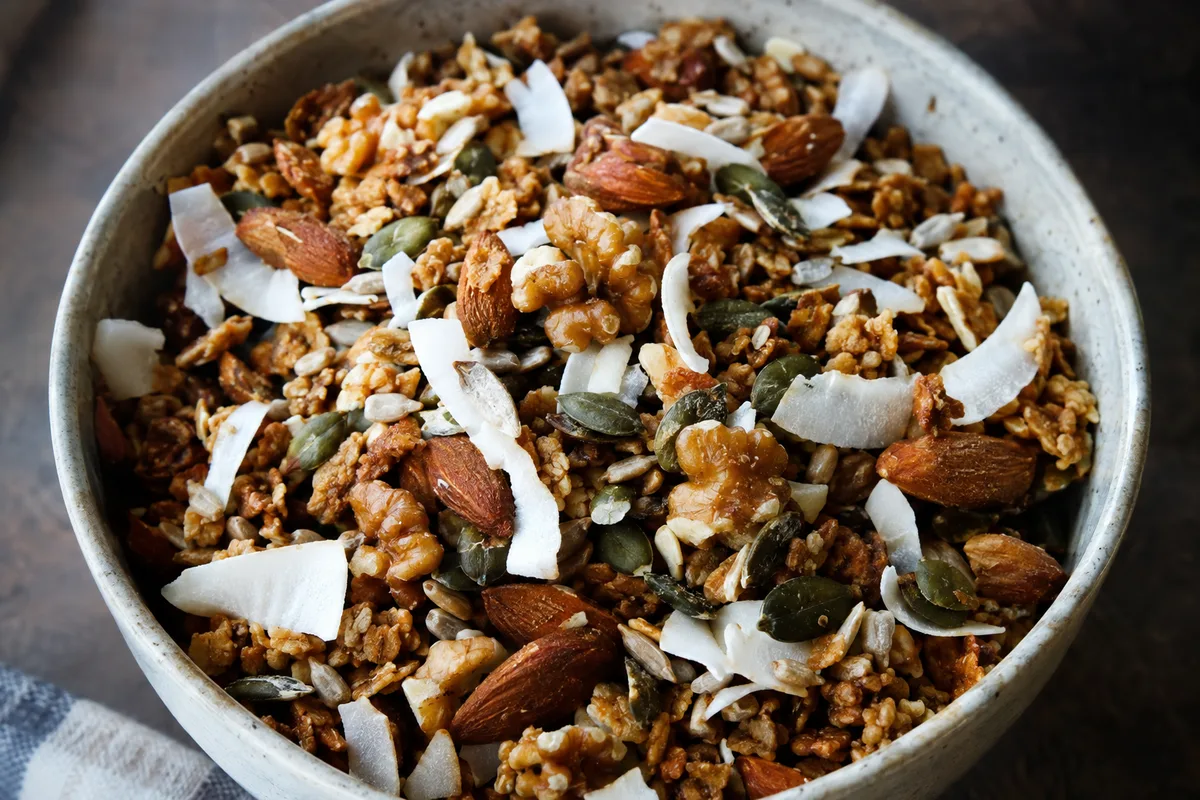
Nut and seed granola can also be energy-dense, so the portion matters when you log it. Weighing or measuring is not essential if you prefer another tracking method, but use a consistent portion description. Remember to record the yoghurt or milk and any toppings as well.
- Unsweetened nut and seed granola
- Coconut, almond and pumpkin seed mixes
- Chopped nuts with toasted seeds
- Grain-free granola without added syrup
Bran and high-fibre cereals
Some bran-based cereals contain less available carbohydrate than more refined flakes or puffed grains, although this is not always the case. Fibre is included differently on nutrition labels depending on where the product is sold. Use the carbohydrate figure shown on the label in your tracking method rather than trying to recalculate it unless your tracker specifically requires that.
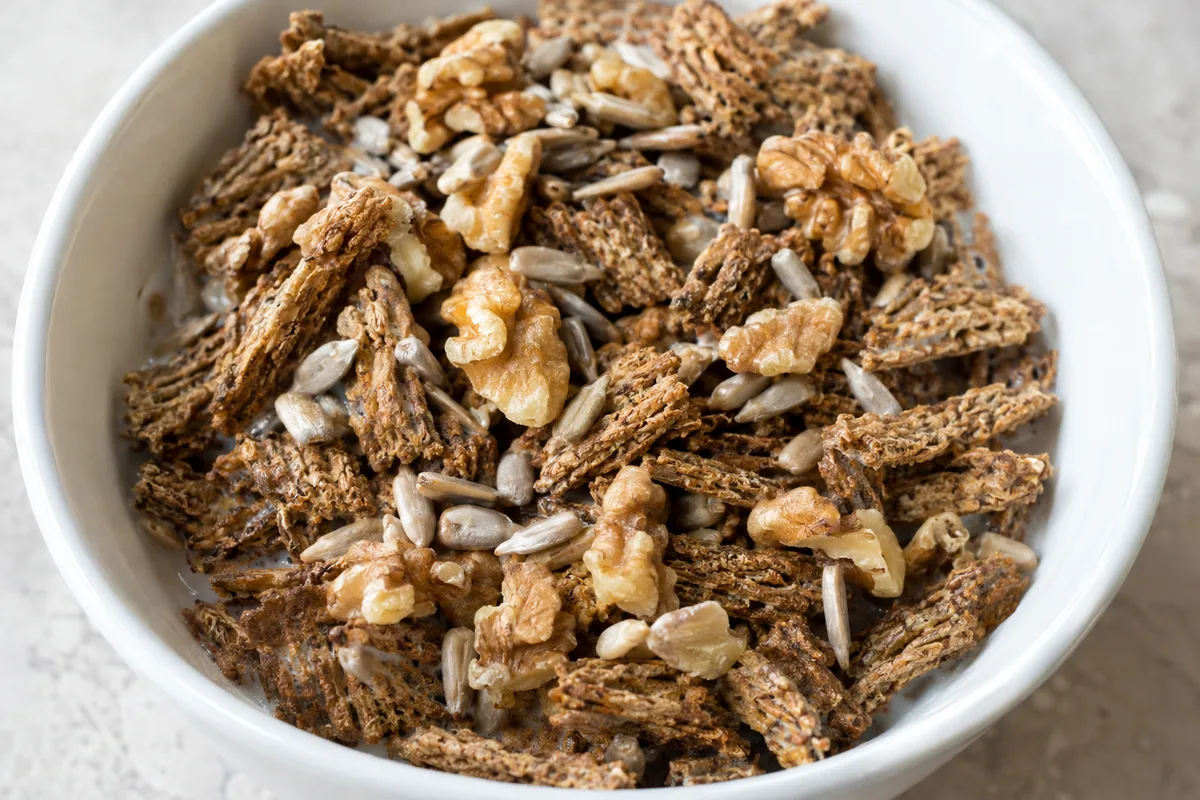
A high-fibre claim does not automatically mean a cereal is low in carbohydrate. Bran cereals may still contain flour, starch, malt or added sugar. Compare labels within the same cereal style and look at the portion you plan to eat.
- Plain bran flakes with no sweet coating
- Bran sticks or shreds with a short ingredient list
- Wheat bran mixed with nuts and seeds
- High-fibre cereals with little or no dried fruit
Soya, seed and coconut-based cereal options
Puffed or crisp soya cereals may provide a lower-carb alternative to cereals based mainly on rice, maize or wheat. Seed clusters and toasted coconut flakes are other options, especially when they contain little added sugar. The carbohydrate amount still depends on the full recipe.
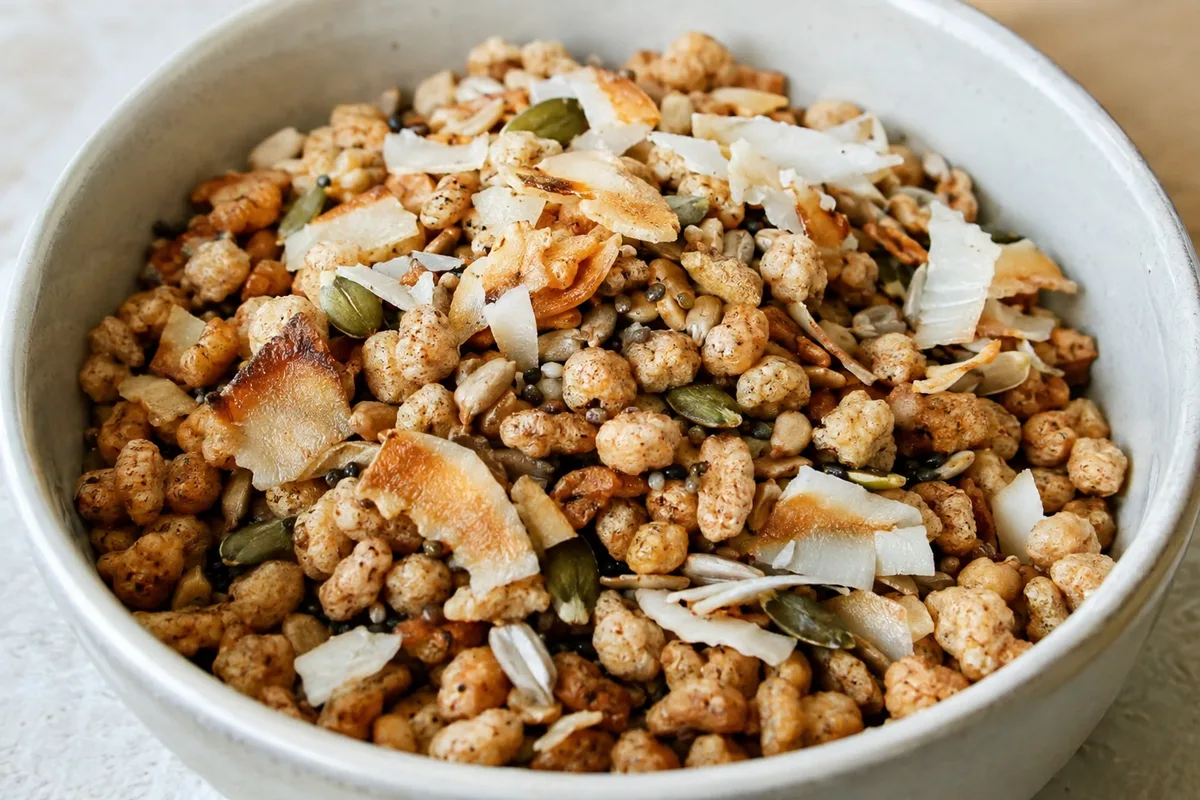
Some of these foods are very light, while others are compact and rich. A serving listed on the packet may look different from the amount you naturally pour. Logging your own portion keeps the comparison relevant to your bowl.
- Plain puffed soya cereal
- Toasted coconut flakes without added sugar
- Seed clusters made with minimal sweetener
- Mixed soya, nut and seed cereal
Cereals that are often higher in carbohydrate
Traditional cereals made mainly from oats, rice, wheat or maize are usually more carbohydrate-heavy than nut or seed mixtures. Sweet coatings, syrups and dried fruit can add more carbohydrate. This does not make them forbidden, but it may affect the portion that suits your plan.
Muesli and porridge can sound less sweet than frosted cereals, yet both are still usually based on grains. Granola can also contain substantial amounts of oats and sweetener despite its wholesome image. The label and your logged portion give a clearer picture than the style name.
- Oat-based granola with syrup or honey
- Sweetened flakes, loops or clusters
- Puffed rice or maize cereals
- Muesli containing plenty of oats and dried fruit
- Instant porridge with sweetened flavourings
Build a lower-carb cereal bowl
Start with a cereal whose carbohydrate level suits your usual target, then add the rest of the bowl to your log. Unsweetened yoghurt or milk alternatives can change the total, and their carbohydrate amounts vary. Fruit, sweeteners and dried toppings also need to be counted if you use them.
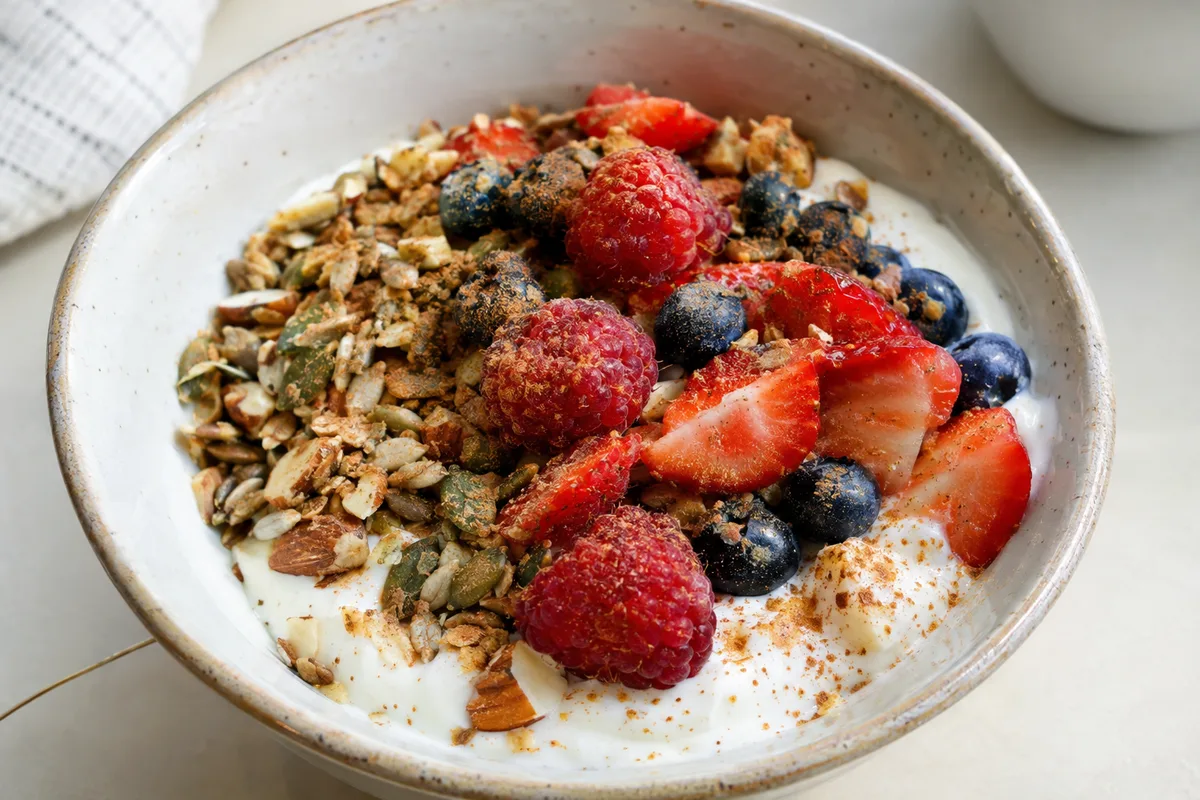
For more texture, try nuts, seeds, coconut or a small amount of fresh fruit instead of relying on sweet clusters. Cinnamon or unsweetened cocoa can add flavour without turning the bowl into a different meal. Save combinations you enjoy in your tracker so they are easier to log again.
- Choose a nut, seed, bran or soya-based cereal
- Add unsweetened yoghurt or a milk that fits your target
- Use nuts, seeds or coconut for extra crunch
- Add fresh fruit in a portion that works for you
- Log the complete bowl, not only the cereal