
Low-Carb Vegetarian Foods That Add Useful Protein
Vegetarian protein does not always come with a large serving of carbohydrate. This guide explains which foods can fit a lower-carb approach and how to build and track balanced meals with them.
What low carb means in a vegetarian diet
Low carb does not have to mean removing every source of carbohydrate. It usually means choosing smaller portions of carbohydrate-rich foods while giving more space to protein foods, vegetables and fats. The right balance depends on your preferences, appetite and usual eating pattern.
Many vegetarian staples provide both protein and carbohydrate, so the categories are not always tidy. Beans, lentils and whole grains can still fit, but their carbohydrate contribution may be larger than that of tofu, eggs or some dairy foods. Your food diary can show which choices work within the intake you have set for yourself.
- Start with a clear protein food at each main meal
- Track total carbohydrate rather than judging foods by reputation
- Compare foods using the same weight or serving basis
- Adjust portions instead of automatically excluding a food
Make tofu, tempeh, seitan and eggs the main event
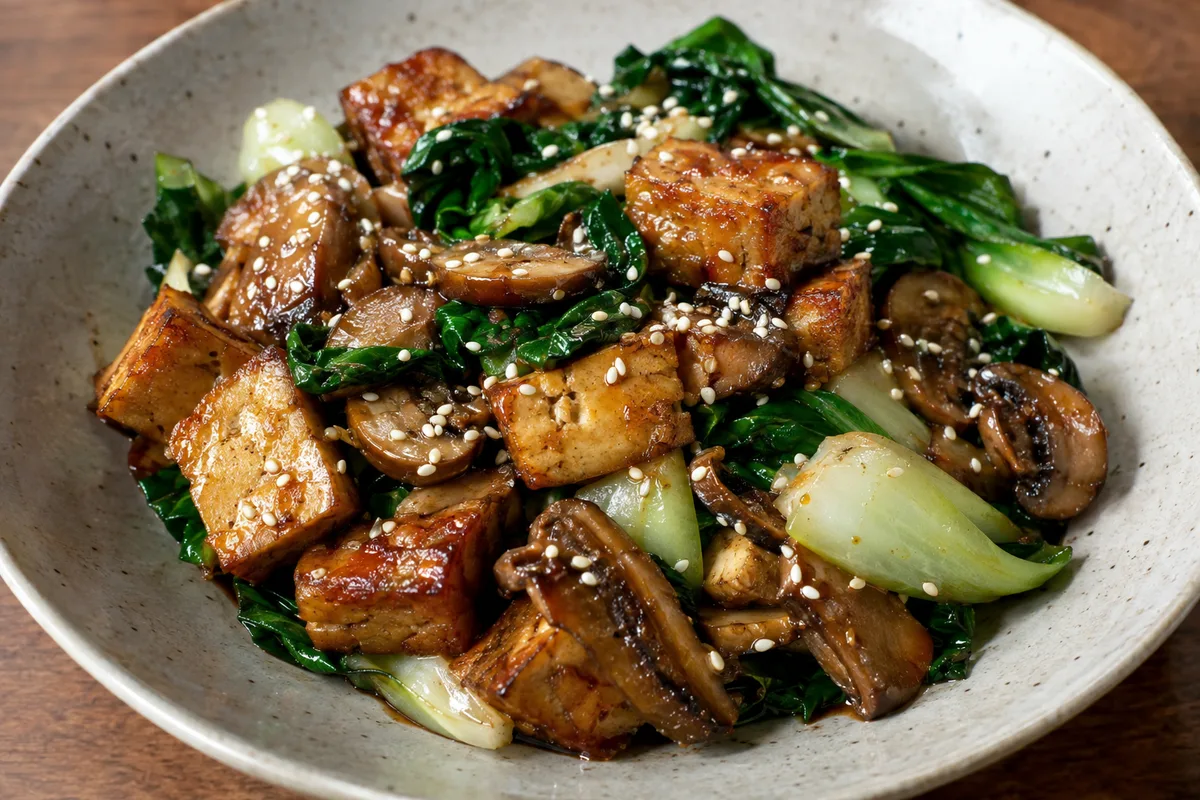
Tofu is a versatile lower-carbohydrate protein that takes on the flavour of sauces, spices and marinades. Firm varieties work well in stir-fries, trays and scrambles, while softer tofu can be blended into dressings or fillings. Check the label because protein and carbohydrate values vary between products.
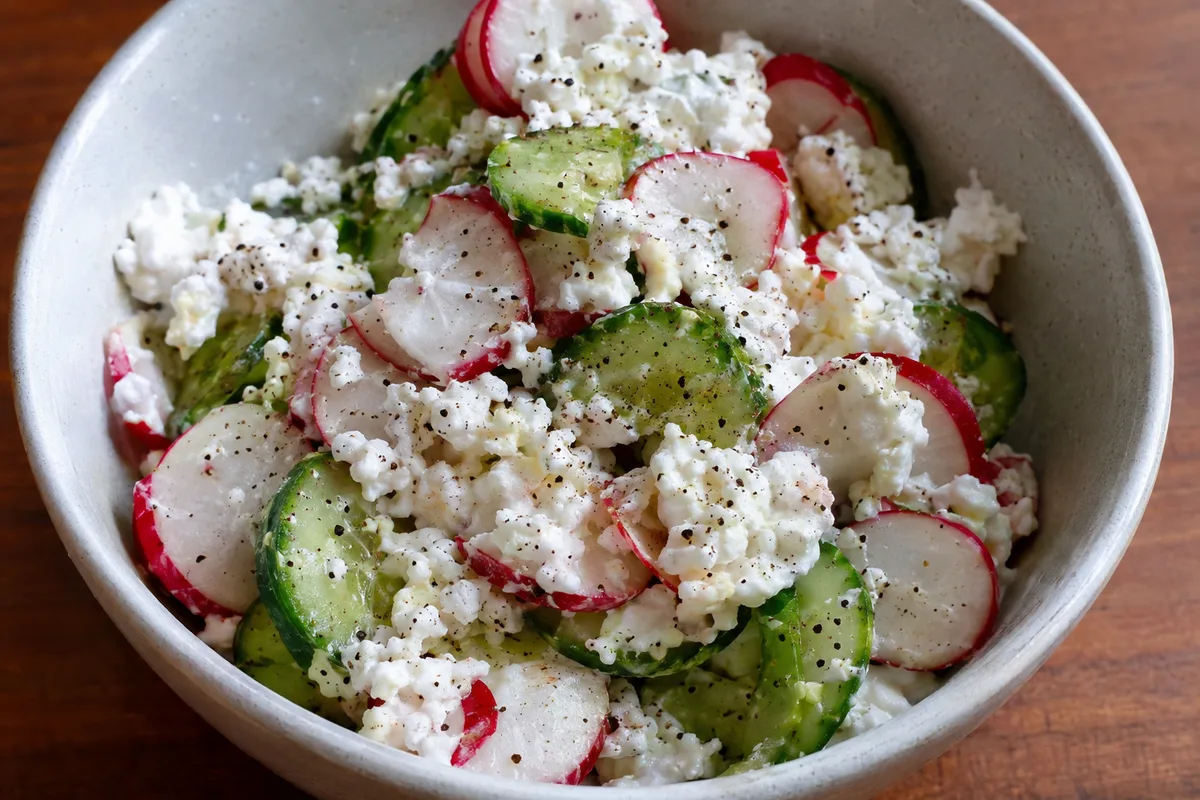
Tempeh has a firmer texture and a stronger savoury flavour, while seitan is dense and particularly protein-focused. Seitan is made from wheat protein, so it does not suit a wheat-free eating pattern. Eggs are another straightforward option for vegetarians who include them, whether boiled, poached, baked or made into an omelette.
- Crisp tofu with mushrooms, pak choi and sesame
- Tempeh strips with cabbage and a peanut dressing
- Seitan with roasted peppers, courgette and herbs
- Egg omelette with spinach, tomato and cheese
Use dairy foods according to their role
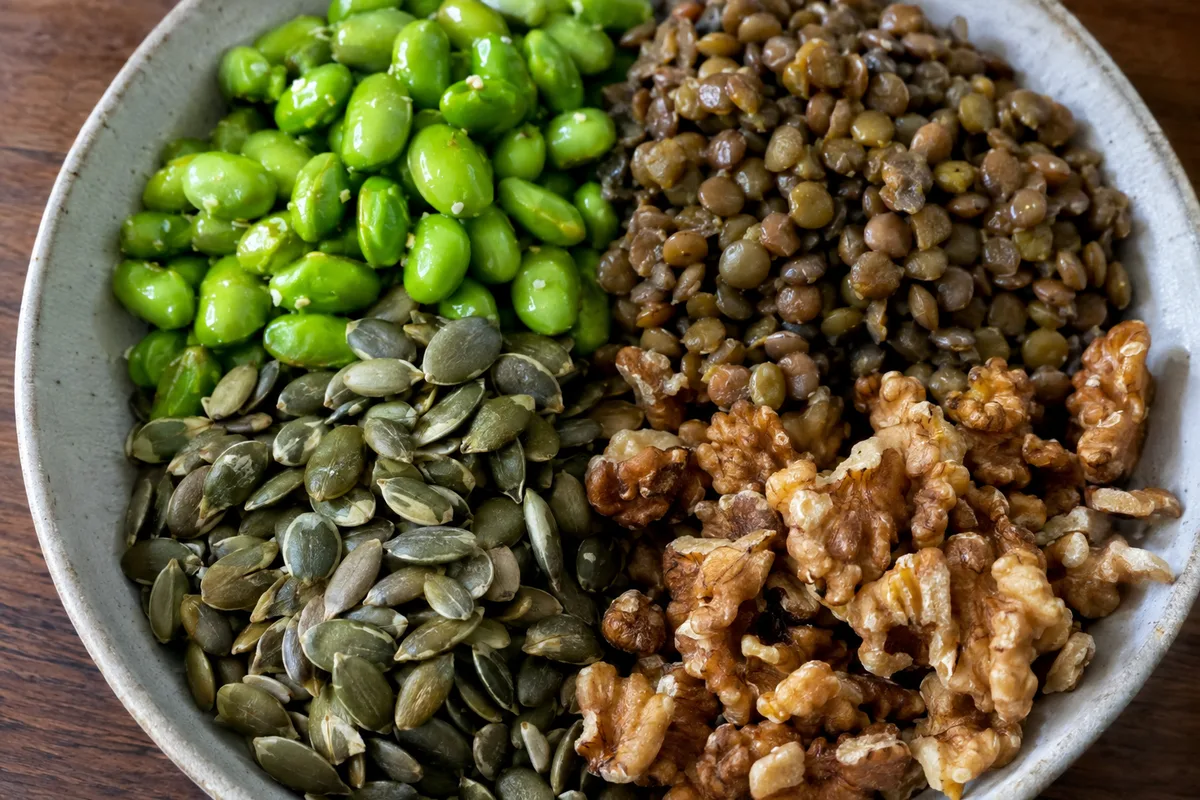
Dairy foods can provide protein with relatively little carbohydrate, but the balance differs by type. Cottage cheese, strained plain yoghurt and some firm cheeses can be useful choices. Milk generally contributes more carbohydrate per serving than firm cheese, so record the amount you actually use.
Cheese brings protein, fat and flavour, but a small portion may work better as an addition than as the whole protein base. Plain yoghurt can become a breakfast, dip or sauce when paired with seeds, herbs or chopped vegetables. Choose unsweetened versions when you want to avoid carbohydrate added through sugar, syrups or fruit preparations.
- Cottage cheese with cucumber, radish and black pepper
- Plain strained yoghurt with walnuts and cinnamon
- Paneer with cauliflower, spinach and spices
- Firm cheese with eggs and a leafy salad
Treat beans, nuts and seeds as mixed foods
Beans, chickpeas, lentils and peas supply protein, but they also contain carbohydrate. That does not make them unsuitable; it simply means the portion matters when carbohydrates are being tracked. A smaller serving can be combined with tofu, eggs or dairy to raise protein without relying on a large bowl of pulses.
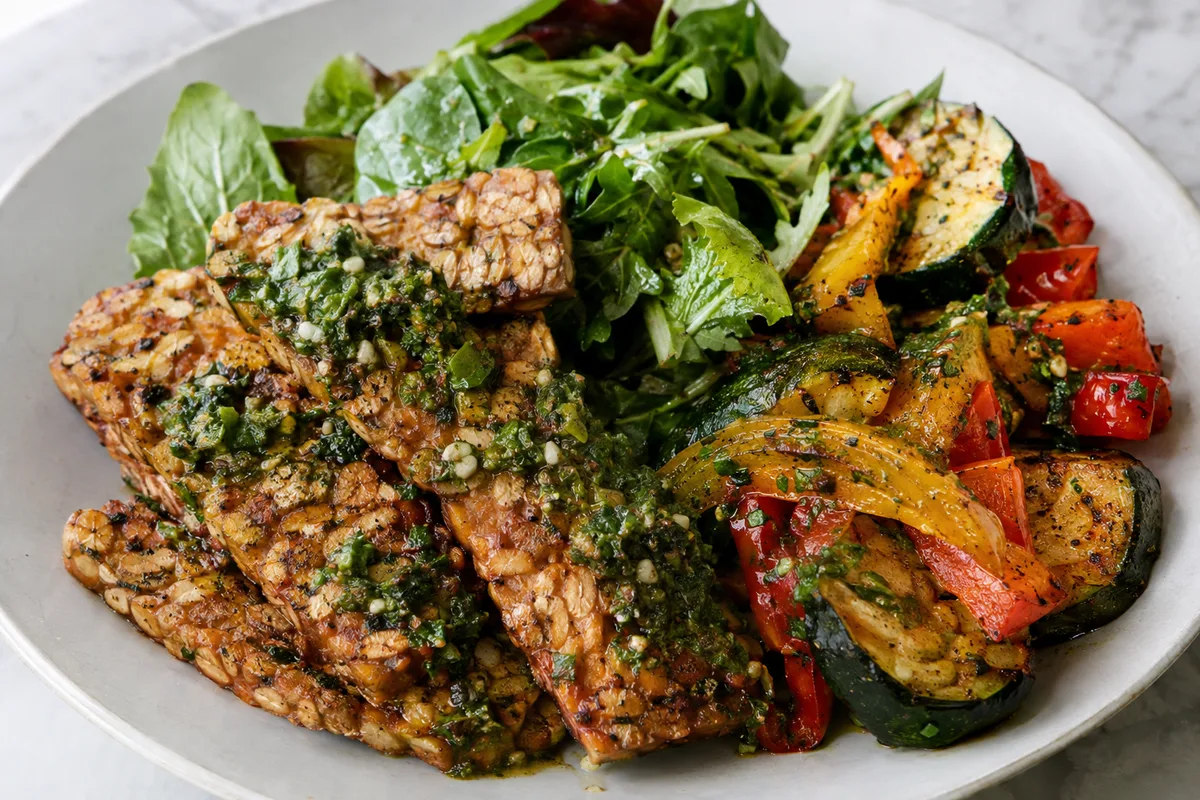
Nuts and seeds add some protein, along with fat and fibre. They are useful for texture and flavour, but they may not provide as much protein as expected from a casual handful. Weighing or measuring them occasionally can make your food log more consistent.
- Edamame added to a tofu and vegetable bowl
- A small lentil portion mixed into a paneer salad
- Pumpkin seeds scattered over cottage cheese
- Ground almonds stirred into plain yoghurt
- Peanut dressing served with tempeh and shredded vegetables
Build the meal around protein first
Begin by choosing the main protein, then add vegetables and flavourings around it. This is often easier than starting with pasta, rice or bread and trying to fit protein in afterwards. Non-starchy vegetables can add colour, fibre, volume and variety without becoming the main carbohydrate source.
Sauces and toppings deserve attention because they can change the carbohydrate total quickly. Sweet chilli sauce, glazes and some ready-made dressings may contain added sugars, while oil, herbs, spices, mustard and unsweetened yoghurt offer other routes to flavour. The label and your logged portion give a clearer answer than the name of the sauce alone.
- Choose tofu, tempeh, seitan, eggs or a protein-rich dairy food
- Add two or more vegetables with contrasting colours or textures
- Include beans or grains in a measured portion if wanted
- Finish with herbs, spices, seeds or a lower-sugar sauce
Track the version and portion you ate
Accurate tracking depends on matching your entry to the food in front of you. Raw and cooked weights are not interchangeable because cooking can add or remove water. Drained tofu, cooked lentils and dry lentils should therefore be logged as the correct form.
For mixed dishes, record the ingredients used in the whole recipe and divide them by the number of portions you actually served. Save regular recipes if your tracking method allows it, especially for tofu marinades, vegetable bakes and egg dishes. Consistency matters more than finding a supposedly perfect entry.
- Check whether the database entry is raw, cooked or drained
- Use the product label when it differs from a generic listing
- Include cooking oils, sauces and toppings
- Record the portion served rather than the portion planned