
Which Nuts Give You More Protein with Less Saturated Fat?
Nuts contain protein, but the amount and type of fat differ between varieties. This guide explains which choices tend to offer more protein with less saturated fat and how to fit them into your food log.
What to compare when choosing nuts
The useful comparison is not simply which nut has the most protein. You also need to look at how much saturated fat comes with that protein. A nut that is mostly unsaturated fat may suit your aim better than one with a similar protein content but more saturated fat.
Compare nuts using the same serving size, preferably the amount you actually eat. Nutrition labels and food-tracking entries can differ because products may be roasted, flavoured or mixed with other ingredients. Check both protein and saturated fat rather than relying on total fat alone.
- Use the same weight or serving basis for each nut
- Compare protein and saturated fat side by side
- Check whether the nuts are raw, roasted or flavoured
- Log the edible portion rather than shells
The strongest options for protein
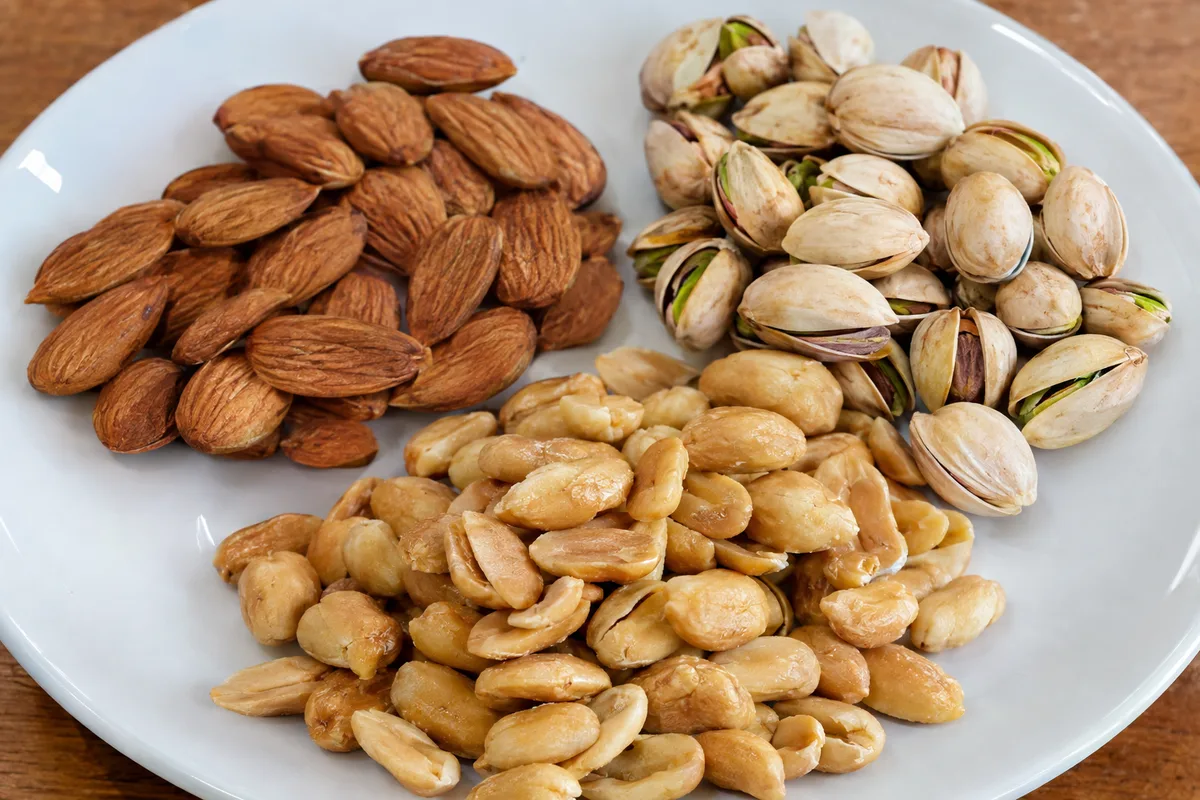
Peanuts, almonds and pistachios are useful starting points when you want relatively more protein and less saturated fat. Peanuts are technically legumes, but they are eaten and tracked in much the same way as nuts. Their fat is mainly unsaturated, although exact figures depend on the product and serving.
Almonds also provide fibre, while pistachios can add protein to meals as well as snacks. Plain or dry-roasted versions make the comparison simpler because added oils and coatings can change the nutrition entry. Choose according to taste, portion and the figures shown in your tracker.
- Peanuts or peanut pieces
- Almonds or flaked almonds
- Pistachios without sugary or oily coatings
Other nuts that can still fit
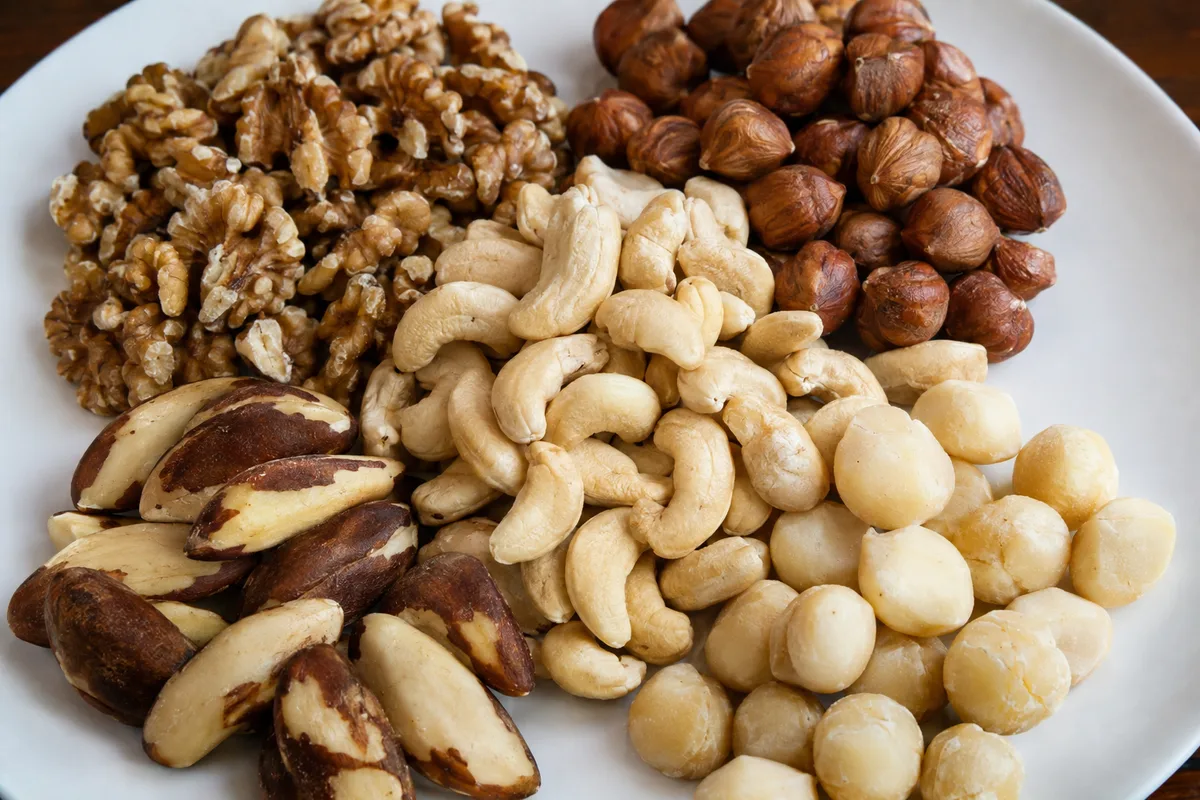
Hazelnuts and walnuts are not usually the highest-protein choices in the nut aisle, but most of their fat is unsaturated. They can still fit a protein-aware eating pattern, especially when combined with another protein source. Walnuts are particularly useful when flavour and texture matter more than maximising protein from the nuts alone.
Cashews provide some protein, but their saturated fat contribution can be higher than that of almonds, pistachios or peanuts for a comparable amount. Brazil nuts and macadamias generally offer less protein relative to their fat content. This does not make them unsuitable, but they may be less direct matches for this particular goal.
- Use walnuts for crunch alongside yoghurt or oats
- Pair hazelnuts with a protein-rich meal rather than treating them as the main protein source
- Compare cashews with almonds or pistachios using the same serving size
- Choose Brazil nuts or macadamias for preference, not primarily for protein
Why the portion still matters
Nuts pack a lot of energy into a small amount because fat provides about 9 kcal per gram. Protein and carbohydrate each provide about 4 kcal per gram. A casual handful can therefore make a noticeable difference to the total in your food log.
The right portion depends on your appetite, meals and overall targets. Weighing can improve logging accuracy, but you can also use the serving stated on the packet when that matches what you ate. Avoid copying an entry for a small serving if your actual portion was larger.
- Decide on the portion before eating from a large packet
- Record extra handfuls rather than treating them as part of the first serving
- Check whether the tracker entry is listed per serving or per 100 grams
- Include added oil, sugar or coatings when relevant
Simple ways to use higher-protein nuts
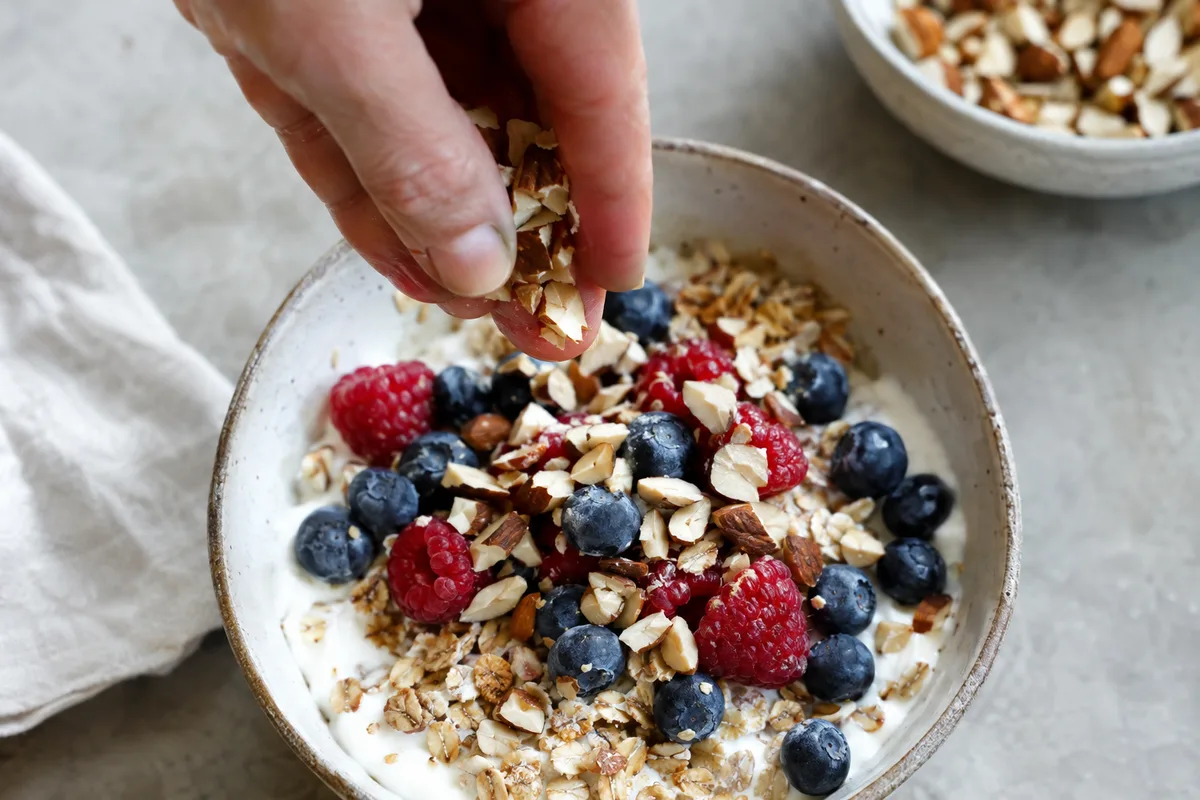
Nuts work well as an addition to a meal, but they do not have to carry the whole protein target. Adding almonds, pistachios or peanuts to a dish can provide texture while another food supplies most of the protein. This approach also makes it easier to keep the nut portion clear in your log.
Plain nuts are often easier to track than nut mixes because every ingredient has a different nutrient profile. Nut butter can also fit, provided its ingredients and serving are logged accurately. Stirred or spread nut butter is easy to underestimate because the amount is less visually obvious than whole nuts.
- Add chopped almonds to yoghurt and fruit
- Scatter pistachios over a grain or vegetable dish
- Mix peanuts into a stir-fry or salad
- Stir a measured serving of nut butter into porridge
- Combine walnuts with a separate protein-rich food
A practical order of preference
For a straightforward balance of protein and lower saturated fat, begin by comparing peanuts, almonds and pistachios. Hazelnuts and walnuts can provide variety, though they generally contribute less protein. Cashews, Brazil nuts and macadamias may be better treated as flavour choices when protein is the main priority.
There is no single best nut for every food log. Brand, preparation, serving size and the rest of the meal all affect the final totals. Use the ranking as a shortlist, then confirm the protein and saturated fat on the label or in a reliable matching entry.
- First compare peanuts, almonds and pistachios
- Use walnuts and hazelnuts for variety
- Check cashews carefully against the same serving size
- Treat Brazil nuts and macadamias as less protein-focused choices