
High-protein foods and how much protein they provide
Protein comes from meat, fish, eggs, dairy foods, beans, soya, nuts and seeds. This guide gives approximate amounts and explains how portions, preparation and labels can change what you record.
How to read the protein amounts
The figures below are approximate amounts for common portions of food. Protein content varies with the exact product, the size of the portion and whether the food is weighed raw, cooked or drained. Use the nutrition label or your tracker's verified entry when you have one.
A food can be rich in protein per 100g without providing a large amount in the portion you normally eat. This is particularly relevant for nuts and seeds, which are often eaten in smaller servings. Comparing both the amount per 100g and the amount in your actual portion gives you a clearer picture.
- Check whether an entry describes the food as raw or cooked.
- Drain canned foods before using an entry based on drained weight.
- Match the portion unit, such as grams, millilitres or number of eggs.
- Use the product label when its value differs from a generic database entry.
Meat and fish
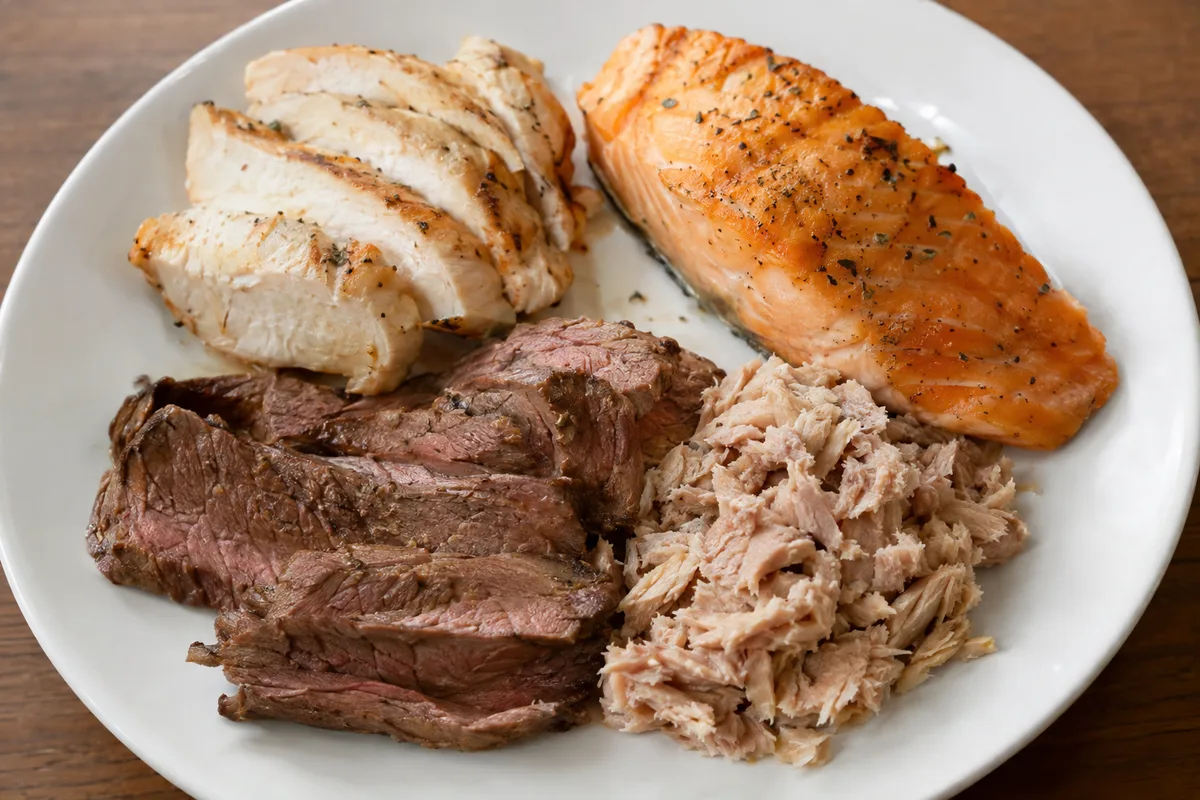
Meat and fish contain a concentrated amount of protein because much of their weight comes from muscle tissue. Cooking removes some water, so cooked food often shows more protein per 100g than the same food weighed raw. This does not mean cooking has added protein; it has changed the food's weight.
Skin, bones, sauces and coatings can make a tracking entry less accurate if they are included in the weight. Choose an entry that matches the cut and preparation method as closely as possible. For canned fish, check whether the listed amount refers to the full contents or the drained portion.
- Cooked skinless chicken breast: about 31g of protein per 100g.
- Cooked turkey breast: about 29g per 100g.
- Cooked lean beef: about 26g per 100g.
- Canned tuna, drained: about 25g per 100g.
- Cooked salmon: about 25g per 100g.
Eggs and dairy foods
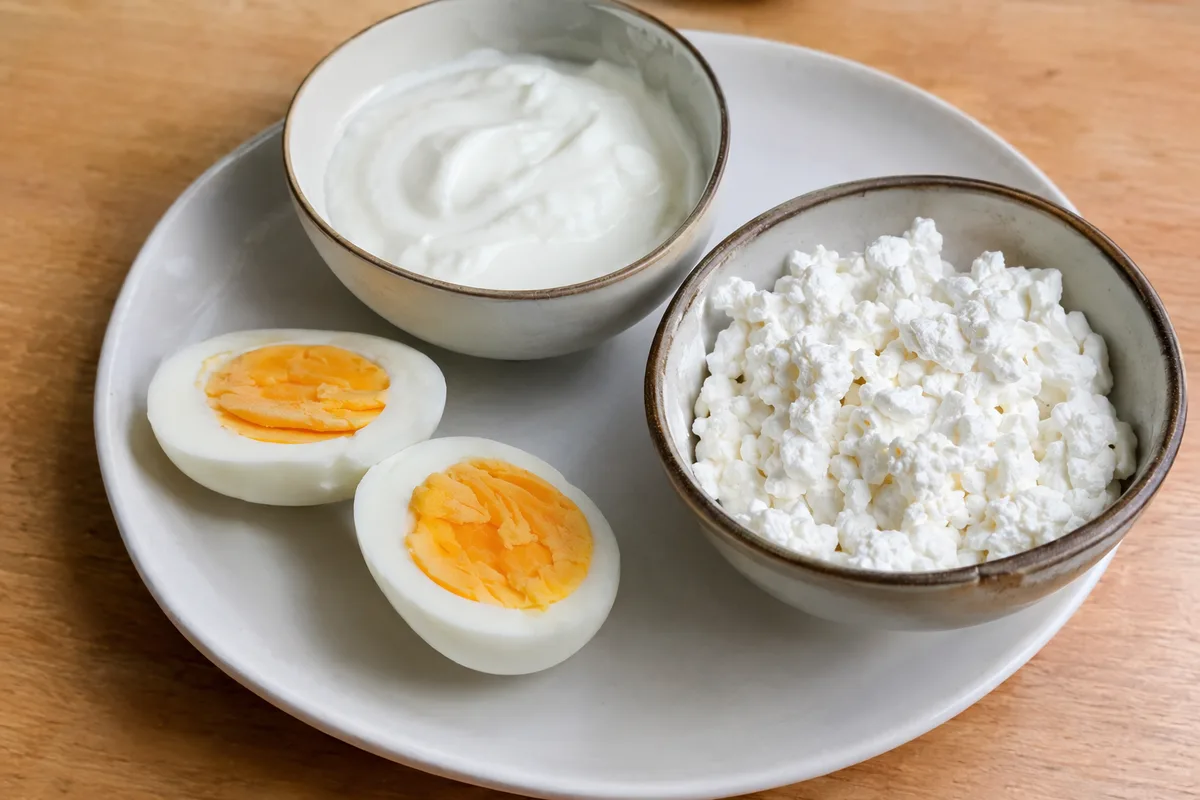
Eggs and dairy foods can add protein at breakfast, in snacks or alongside a main meal. The amount in yoghurt and cheese varies noticeably between styles, even when the products look similar. Check the label rather than assuming every pot or slice contains the same amount.
A larger serving naturally provides more protein, but it may also change the rest of the meal. When tracking, record the amount you actually used rather than selecting a standard serving without checking it. Milk added across several drinks can also contribute protein over the day.
- Two medium eggs: about 13g of protein.
- Strained Greek-style yoghurt, 200g: often around 18g to 20g.
- Skyr-style yoghurt, 200g: often around 20g to 22g.
- Cottage cheese, 200g: about 24g.
- Cow's milk, 250ml: about 8g to 9g.
Soya, beans and pulses
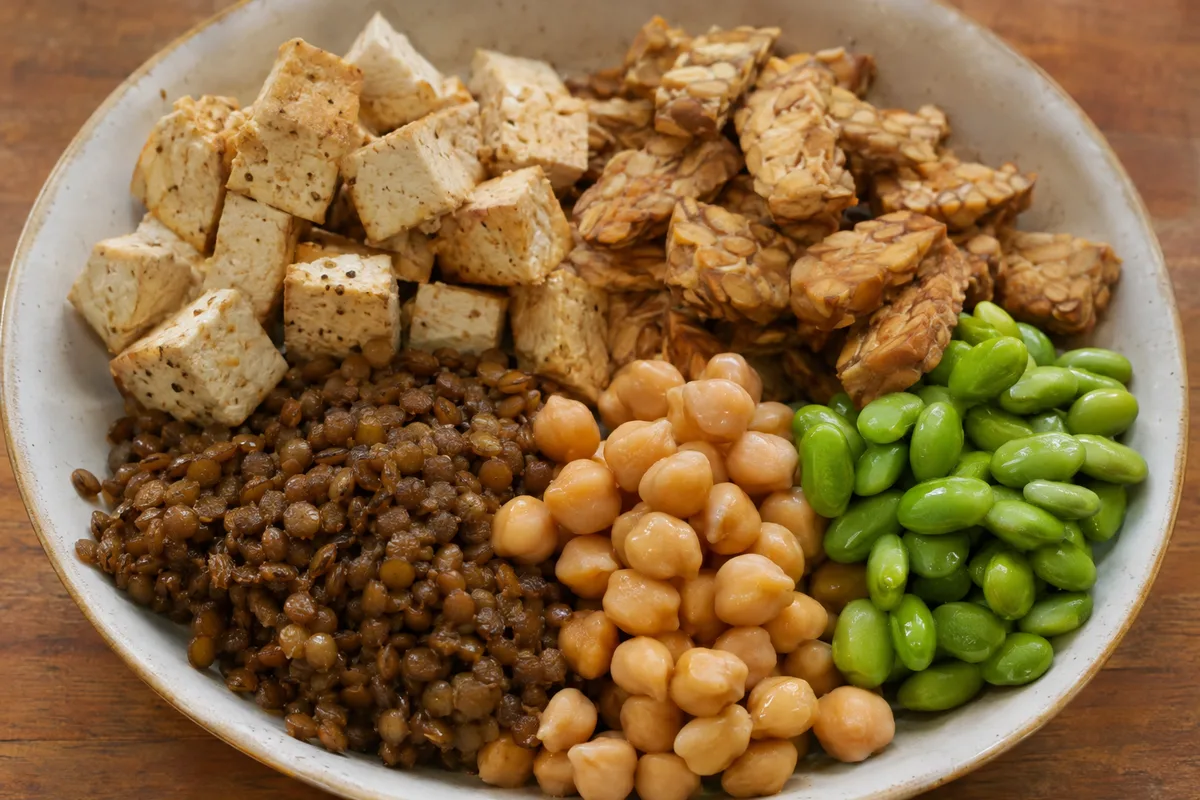
Soya foods, beans and pulses provide plant protein as well as fibre. Their protein content depends on how much water they contain, so dry, cooked and canned entries are not interchangeable. A dry weight will usually look much higher per 100g than the same food after cooking.
Tofu can vary from soft and water-rich to firm and pressed, which changes the amount of protein in the same weight. Beans and lentils may also absorb different amounts of water during cooking. Use the packet or label value where possible, especially for tofu and tempeh.
- Firm tofu: commonly around 12g to 17g of protein per 100g.
- Tempeh: about 19g to 20g per 100g.
- Cooked lentils, 150g: about 12g.
- Cooked chickpeas, 150g: about 11g.
- Cooked edamame beans, 100g: about 12g.
Nuts, seeds and grains
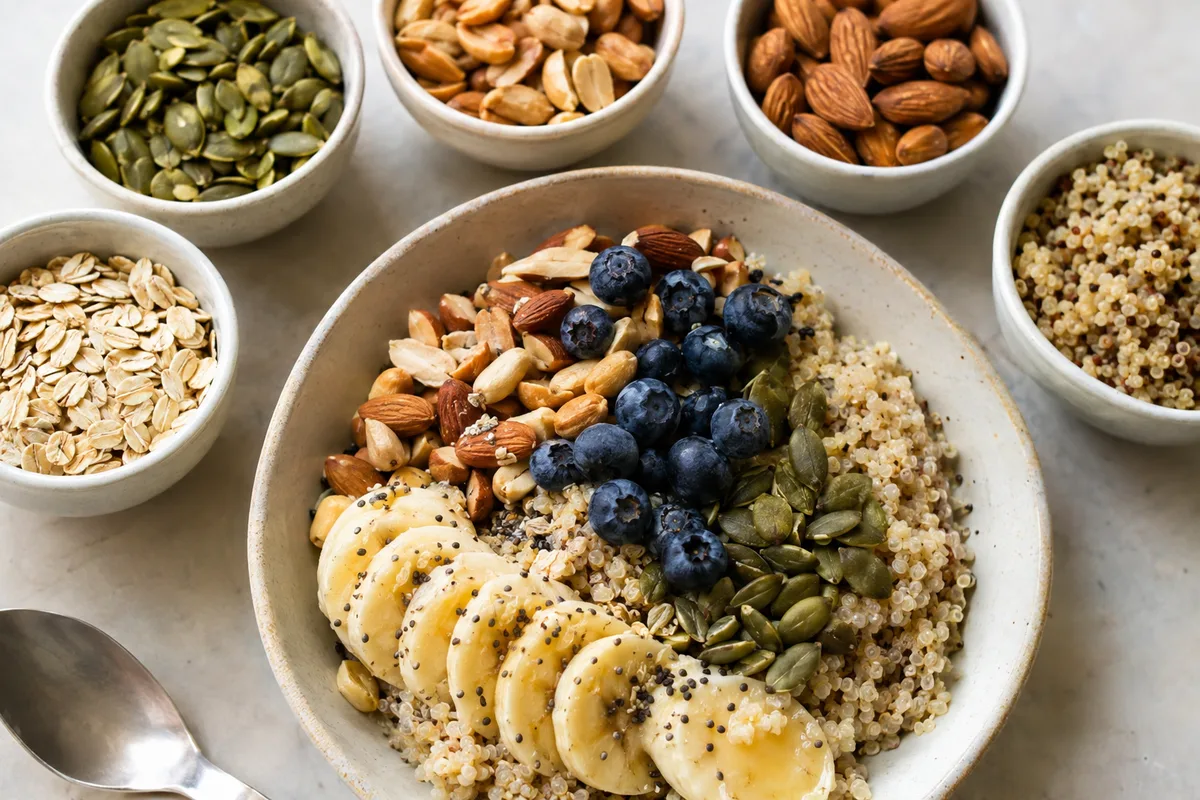
Nuts and seeds contain useful protein, but their usual portions are smaller than those of many main-meal foods. They work well as additions to yoghurt, porridge, salads and cooked dishes. Tracking the portion helps you see their contribution without treating a spoonful as if it were a full serving.
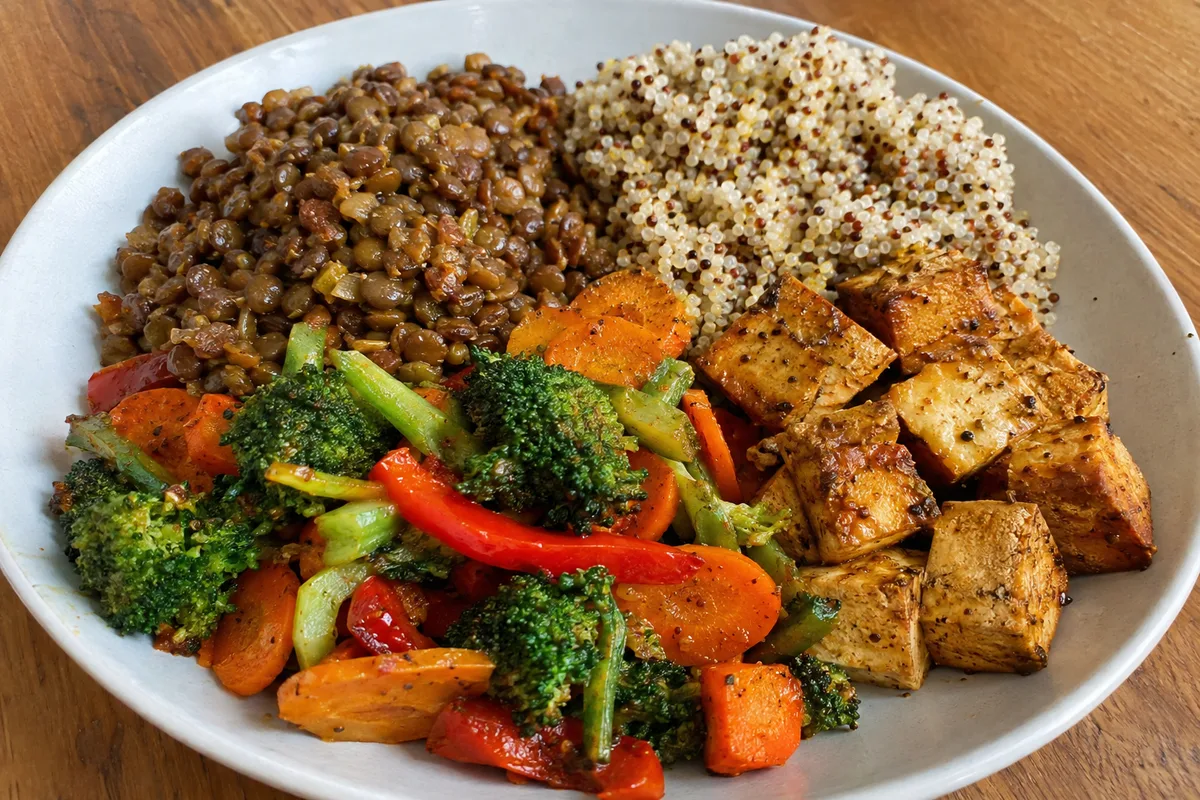
Grains also add protein, although they are not always the main protein source in a meal. Their contribution can become meaningful when combined with beans, dairy foods, eggs or soya. Record grains as dry or cooked according to the weight you measured, because cooking adds water.
- Pumpkin seeds, 30g: about 9g of protein.
- Peanuts, 30g: about 8g.
- Almonds, 30g: about 6g.
- Oats, 50g dry: about 6g.
- Quinoa, 150g cooked: about 6g.
Building and tracking a protein-rich meal
Start with the main protein food, record its actual portion and then add the smaller contributions from the rest of the meal. Bread, grains, vegetables, sauces and toppings may each add some protein, even if none is the main source. Logging the complete plate is more accurate than counting only the most obvious food.
There is no single portion or daily protein amount that suits everyone. Your needs depend on factors such as body size, activity, age and your wider eating pattern. Use consistent entries in your tracker and look at your overall pattern rather than expecting every meal to contain the same amount.
- Choose a main protein food that fits the meal.
- Match the database entry to its raw, cooked or drained state.
- Enter the portion you ate rather than the portion shown by default.
- Include smaller sources such as grains, yoghurt, seeds or beans.
- Save frequently used meals only after checking each ingredient.