
What a Registered Dietitian Nutritionist Might Order at Panera
There is no single Panera order that every registered dietitian nutritionist would choose. A useful order depends on appetite, preferences, dietary needs and what else you plan to eat that day.
Start with the purpose of the meal
A registered dietitian nutritionist might first consider how filling the meal needs to be. Lunch before a busy afternoon may call for a different choice from a light snack or a meal eaten shortly before another planned meal.

Rather than searching for the lowest number on the menu, look at the whole combination. A satisfying option often includes a clear protein source, some fibre-rich carbohydrate, vegetables or fruit, and enough fat for flavour and staying power.
Build a balanced order
A sandwich or salad can both provide a useful base, depending on the ingredients and portion. An RDN might choose a sandwich with a protein-rich filling and vegetables, or a salad containing protein and a substantial topping such as grains, beans, seeds or cheese.
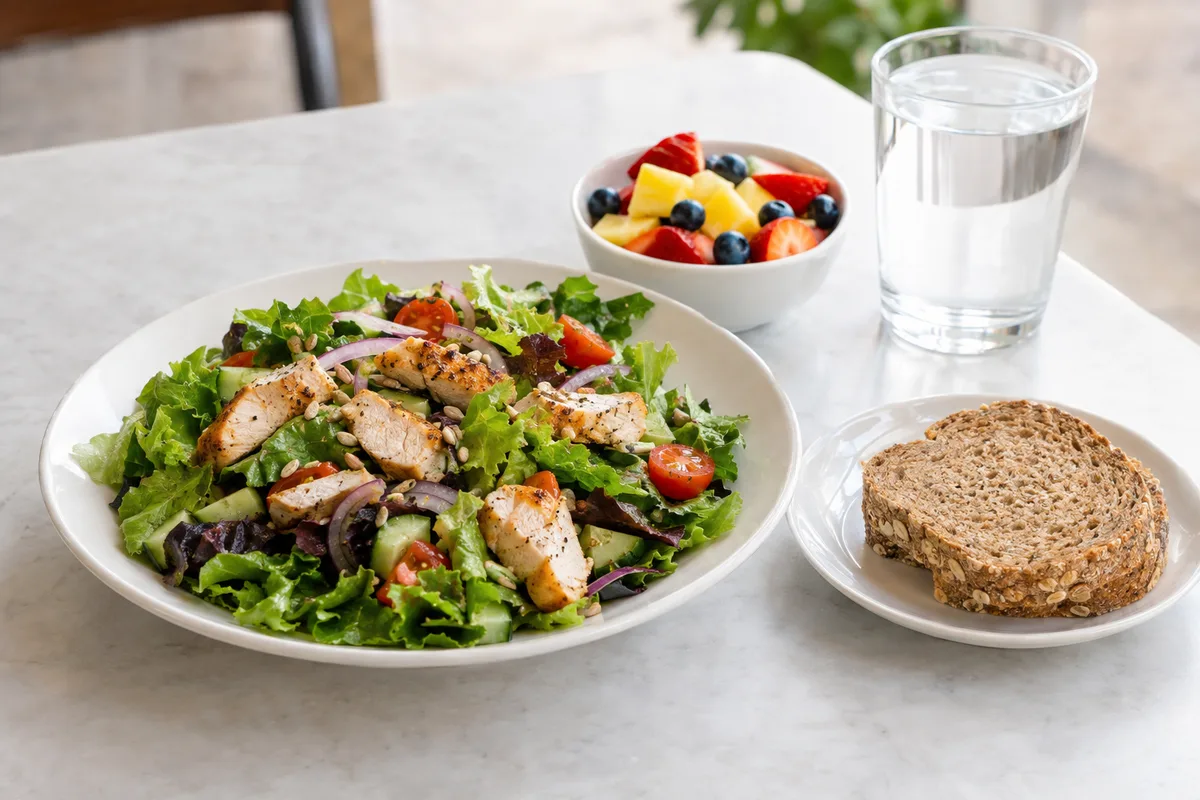
Soup can work as part of the meal, but a small serving may not be enough on its own for everyone. Pairing it with half a sandwich, a salad or another side can make the order feel more complete, while the right amount depends on your appetite.
Use customisation with a purpose
Customising does not have to mean removing every higher-calorie ingredient. An RDN might ask for dressing or sauce on the side to control the amount, add vegetables for volume and fibre, or choose a different side to suit the rest of the meal.

Keep the parts you genuinely enjoy, because satisfaction matters when choosing food. If cheese, avocado, dressing or bread makes the meal enjoyable, it can still fit; tracking simply helps you see how those choices contribute to your day.
Track the order you actually eat
Panera menu details and recipes can change, so use the current nutrition information provided for your location when logging. Include dressings, spreads, toppings, sides and any substitutions, as these are easy to overlook.

An RDN-style approach is less about finding a flawless order and more about making an informed one. Check how the meal fits your usual targets, notice whether it keeps you satisfied, and use that information to adjust your next order if needed.