
Foods That Feel Easier to Digest
Some foods require less chewing and contain less fibre or fat, which can make them feel easier to digest. This guide explains useful options, simple preparation methods and how to track your own response.
What does easy to digest mean?
Digestion breaks food into smaller parts that your body can use. A food may feel easy to digest when it is soft, simple to chew and comfortable after eating. There is no single list that works for everyone, so your own experience matters.
Texture, fibre, fat, portion size and cooking method can all change how a meal feels. Removing tough skins, cooking foods until soft and keeping meals fairly simple may make digestion feel less demanding. Your food log can help you compare meals without relying on broad labels alone.
- Note how comfortable you feel after each meal
- Record cooking methods as well as ingredients
- Compare similar portions where practical
- Look for repeated patterns rather than one-off reactions
Soft carbohydrate foods
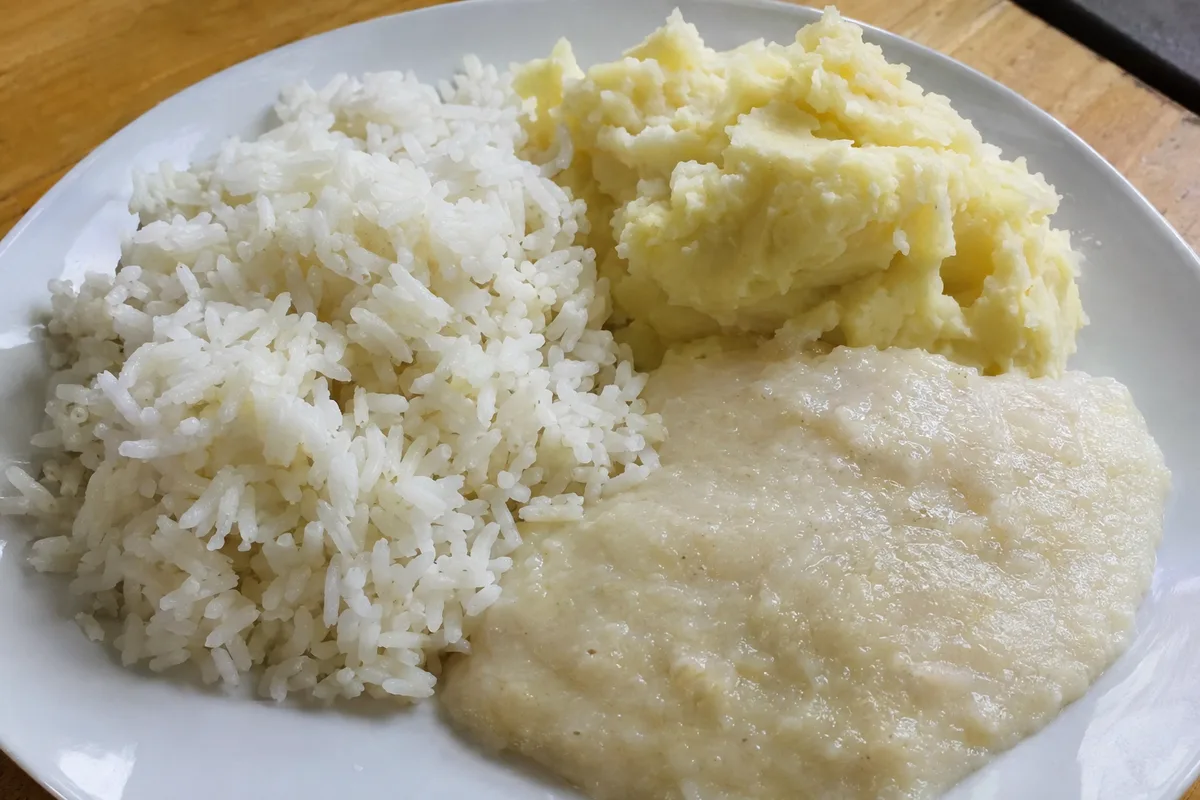
Soft, lower-fibre carbohydrate foods often need less chewing and contain fewer tough plant parts. White rice, smooth porridge and mashed potato are familiar examples. These foods can also provide a simple base for a meal.
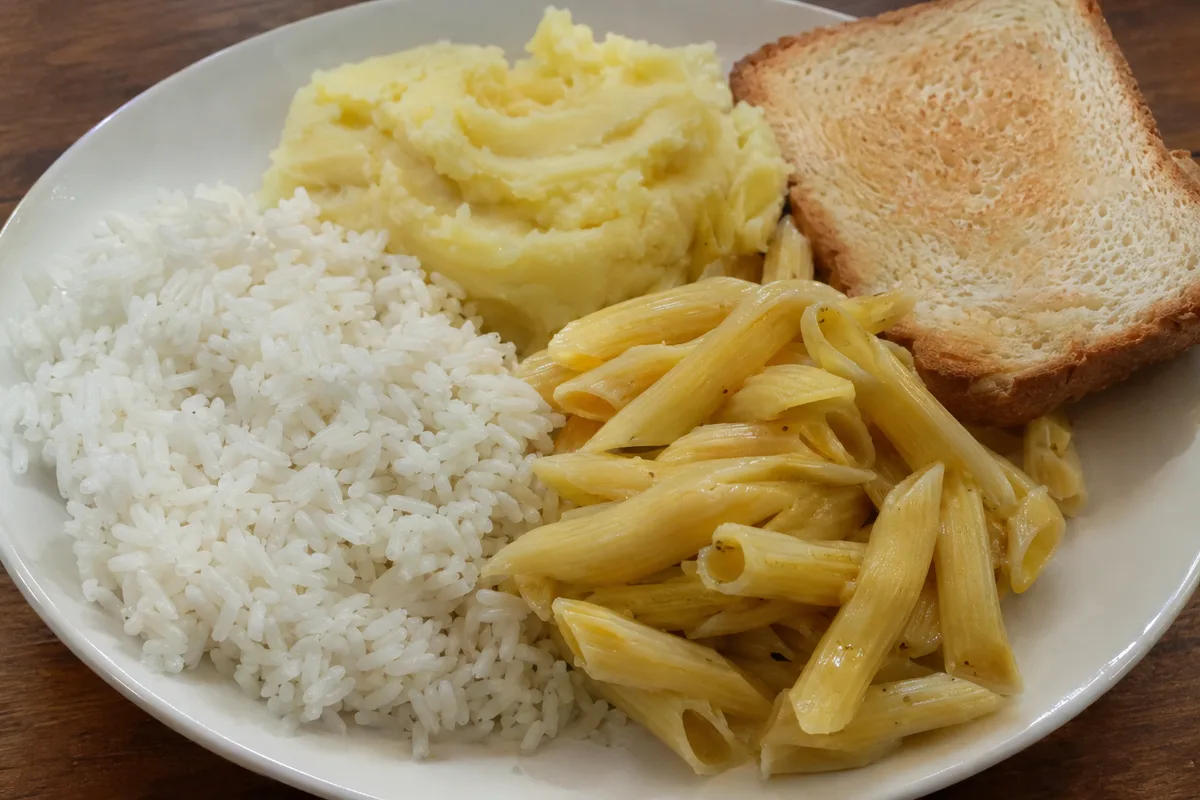
Preparation makes a difference. Rice cooked until tender may feel gentler than firm grains, while peeled potatoes are less fibrous than potatoes with their skins. Add other foods gradually if you are trying to understand which part of a meal affects you.
- White rice cooked until tender
- Smooth porridge made with fine oats
- Peeled boiled or mashed potatoes
- Plain pasta cooked until soft
- White toast or a soft bread roll
Gentle protein choices
Protein foods vary in texture and fat content. Tender fish, eggs and finely prepared poultry may be easier to manage than meat with gristle, crisp coatings or a high fat content. Moist cooking also helps prevent food becoming dry and difficult to chew.
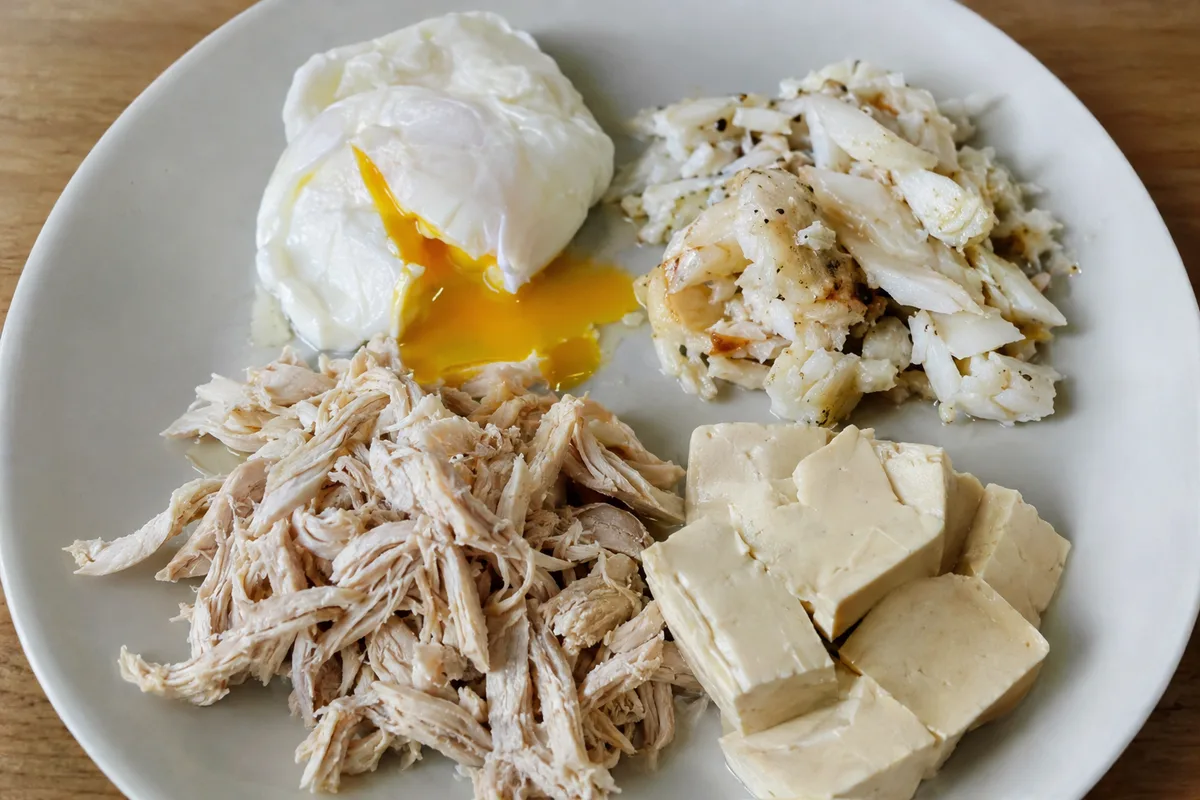
Try baking, poaching, steaming or gently simmering protein foods. Shredding, flaking or chopping them into small pieces can make a meal easier to eat slowly. The portion that feels comfortable depends on the person and on what else is on the plate.
- Poached or softly scrambled eggs
- Flaked white fish
- Finely shredded chicken or turkey
- Smooth tofu
- Plain yoghurt if it suits you
Fruit and vegetables with a softer texture
Fruit and vegetables provide fibre, but their texture changes with ripeness and cooking. Soft, ripe fruit is usually easier to chew than firm fruit, while stewed fruit has less structure than raw fruit. Removing pips, skins or stringy parts can also make a difference.
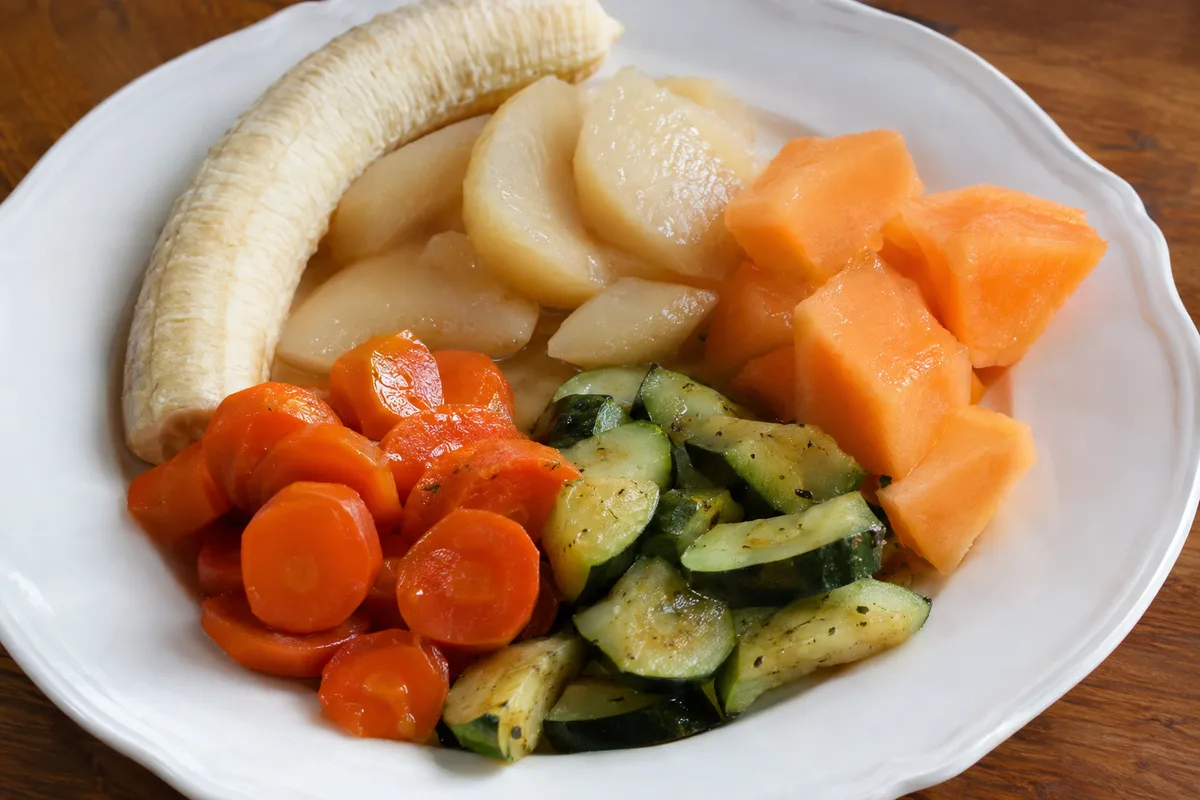
Vegetables often become gentler in texture when steamed, boiled or roasted until soft. Blending them into a smooth soup is another option, although the total amount still matters. You do not need to avoid fibre altogether; changing the type, texture or portion may be enough.
- Ripe banana
- Stewed peeled apple or pear
- Melon without seeds
- Well-cooked carrots or courgettes
- Smooth vegetable soup
How fat, fibre and seasoning affect a meal
Fat slows the movement of food from the stomach, so a rich meal may feel heavier than a lower-fat version. Fibre adds bulk and can take more work to break down, especially when it comes from skins, seeds and coarse grains. Neither fat nor fibre is inherently bad, but the amount and form can affect comfort.
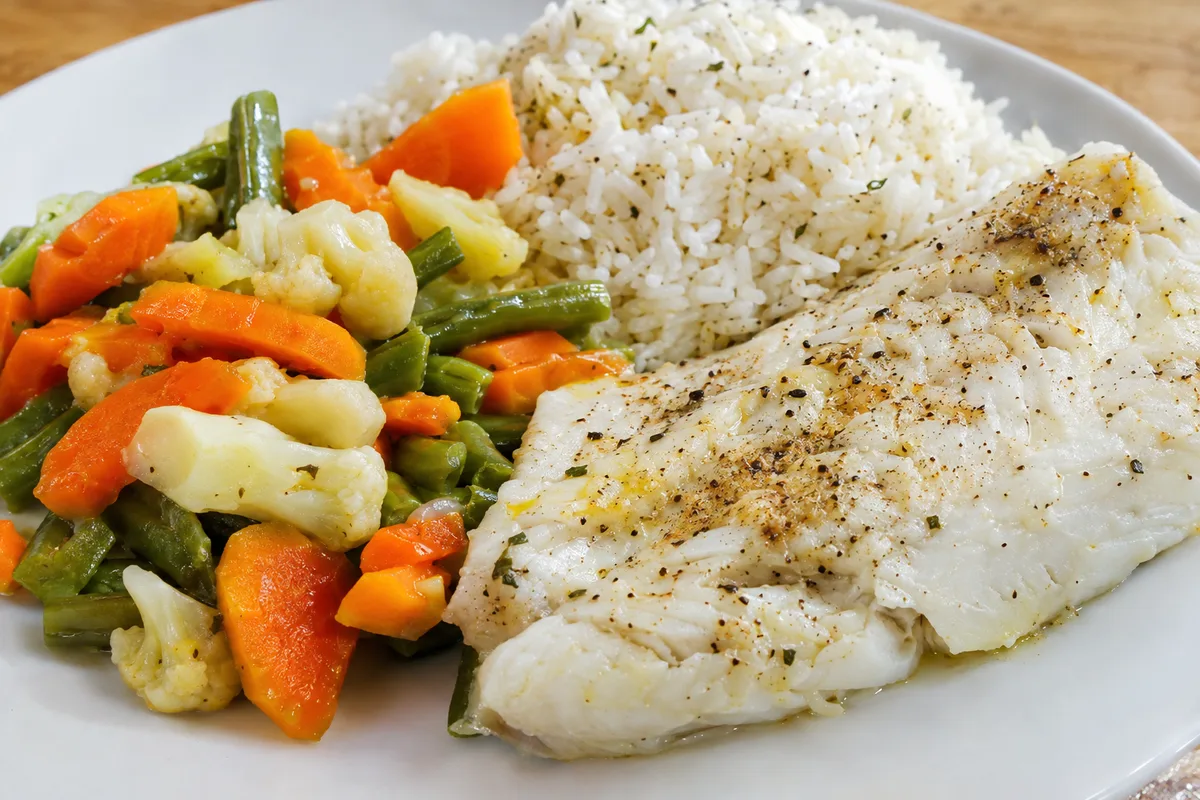
Strong seasoning may also feel uncomfortable for some individuals. If you are checking what suits you, change one feature at a time rather than replacing the whole meal. This makes your tracking notes easier to interpret.
- Choose grilled or poached food instead of a heavy coating
- Use a small amount of oil rather than a rich sauce
- Try peeled produce instead of skin-on versions
- Choose smooth textures instead of seeds and coarse grains
- Keep seasoning mild while comparing meals
Build a simple meal and track the result
A straightforward meal can combine one soft carbohydrate, one tender protein and one cooked fruit or vegetable. Eat slowly, chew thoroughly and stop when you feel comfortably satisfied. A large portion of an otherwise gentle food may still feel heavy.
In your log, record the food, portion, preparation method and how you felt afterwards. It can also help to note meal timing and eating speed, because the ingredient may not be the only factor. Use several entries to find a pattern, then keep the meals that reliably suit you.
- Start with foods you already know you tolerate well
- Introduce one less familiar food at a time
- Keep preparation consistent while comparing entries
- Review patterns across several meals
- Adjust texture or portion before removing a food entirely