
How to Combine Vegan Proteins Without Overcomplicating Your Meals
Plant foods contain different mixes of the amino acids used to build protein in the body. This guide explains useful combinations, simple meal ideas and what to look for in your food log.
What vegan protein combinations mean
Protein is made from smaller building blocks called amino acids. Some amino acids must come from food, and plant protein sources contain them in different proportions. Combining a varied range of foods helps provide a balanced mix.
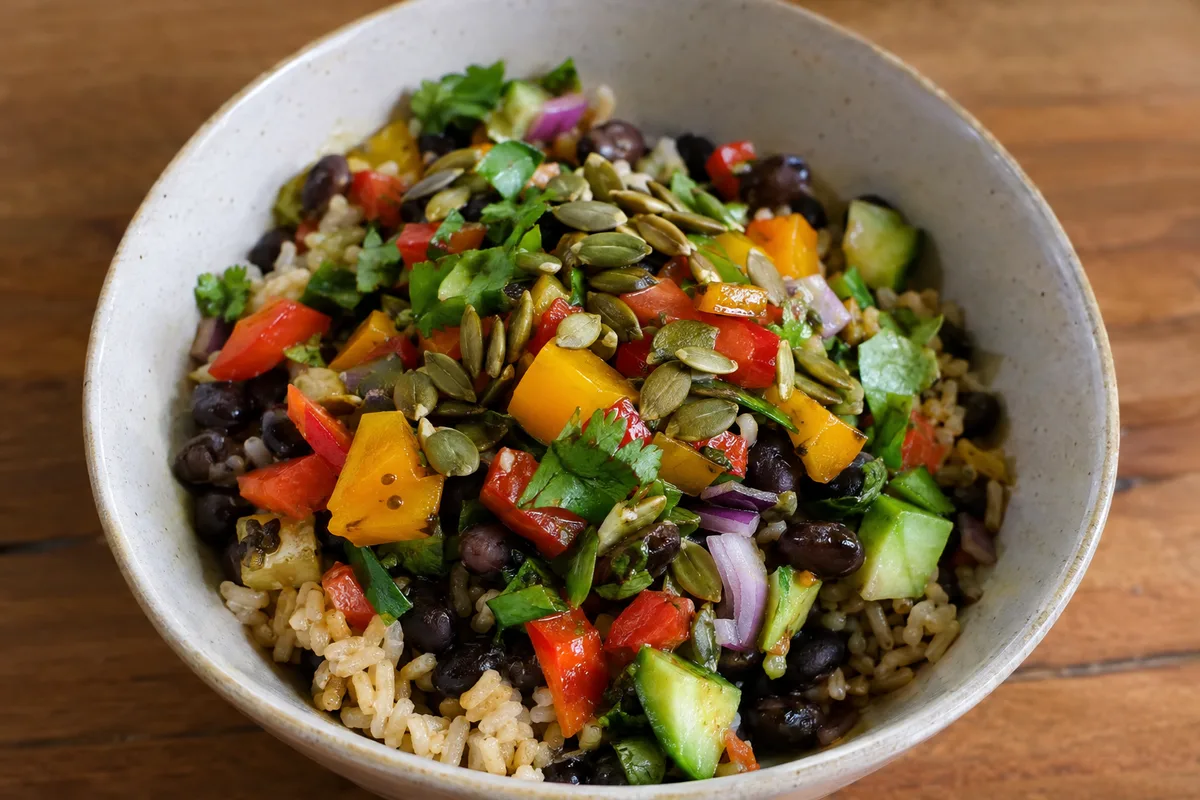
This does not mean every vegan meal needs a carefully matched pair of ingredients. Your body can use amino acids from foods eaten at different points in the day. Total protein and overall variety usually matter more than creating a perfect combination on every plate.
- Pulses include beans, lentils, peas and chickpeas.
- Grains include rice, oats, wheat, barley and maize.
- Nuts and seeds add protein alongside fat and fibre.
- Soya foods provide a broad range of essential amino acids.
- Vegetables contribute smaller amounts that still count towards the daily total.
Why different plant foods work well together
A food may contain every essential amino acid but provide less of one compared with another food. Grains tend to be lower in some amino acids that pulses provide more readily. Pulses and grains can therefore complement each other.
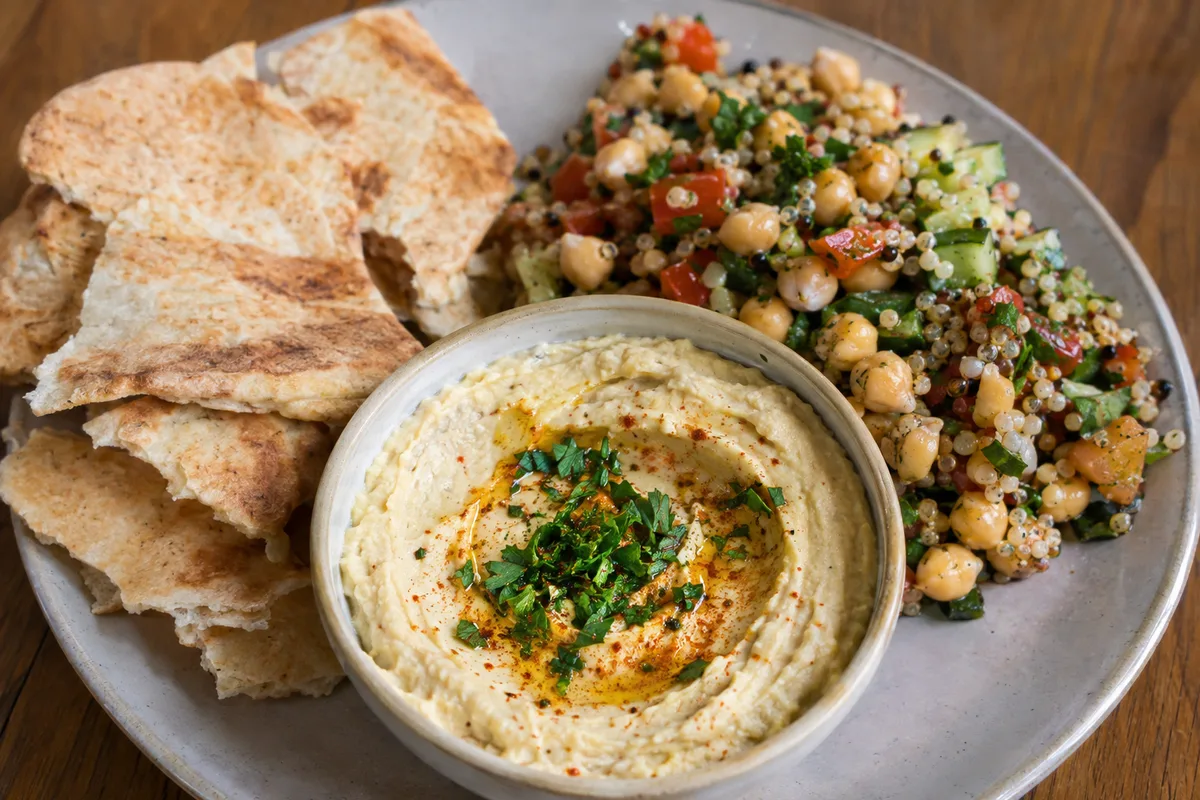
Nuts and seeds can also add amino acid variety to meals based on grains or pulses. Soya foods are useful on their own because their amino acid profile is already broad. None of this requires precise matching or complicated calculations.
- Beans with rice
- Lentils with bread or flatbread
- Chickpeas with couscous
- Peanut butter with wholemeal toast
- Hummus with pitta bread
Everyday meals that combine protein sources
Many familiar vegan meals already contain more than one protein source. A chilli may include beans and rice, while a lentil pasta sauce combines pulses with wheat-based pasta. You may already be making useful combinations without thinking about amino acids.
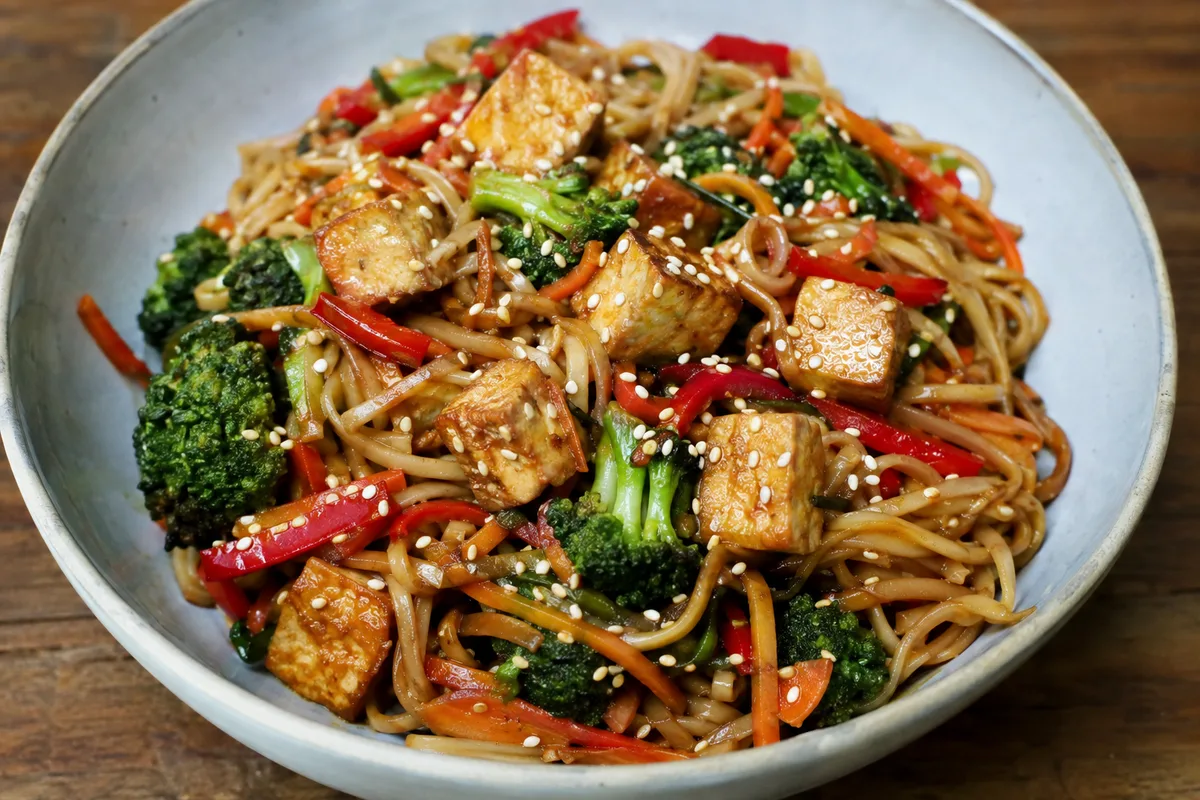
Combinations do not have to involve a grain and a pulse. Tofu with noodles, porridge with seeds, or a bean salad with nuts also brings together different sources. Choose combinations that suit your appetite, cooking habits and usual foods.
- Porridge topped with peanut butter and seeds
- Baked beans on wholemeal toast
- Tofu stir-fry with noodles and vegetables
- Lentil curry served with rice
- Chickpea salad with pumpkin seeds and bread
How to track vegan protein across the day
Start by looking at the protein total in your food log rather than checking whether each meal is complete. Then note which foods provide most of it. If nearly all your protein comes from one narrow group, adding another type can improve variety.
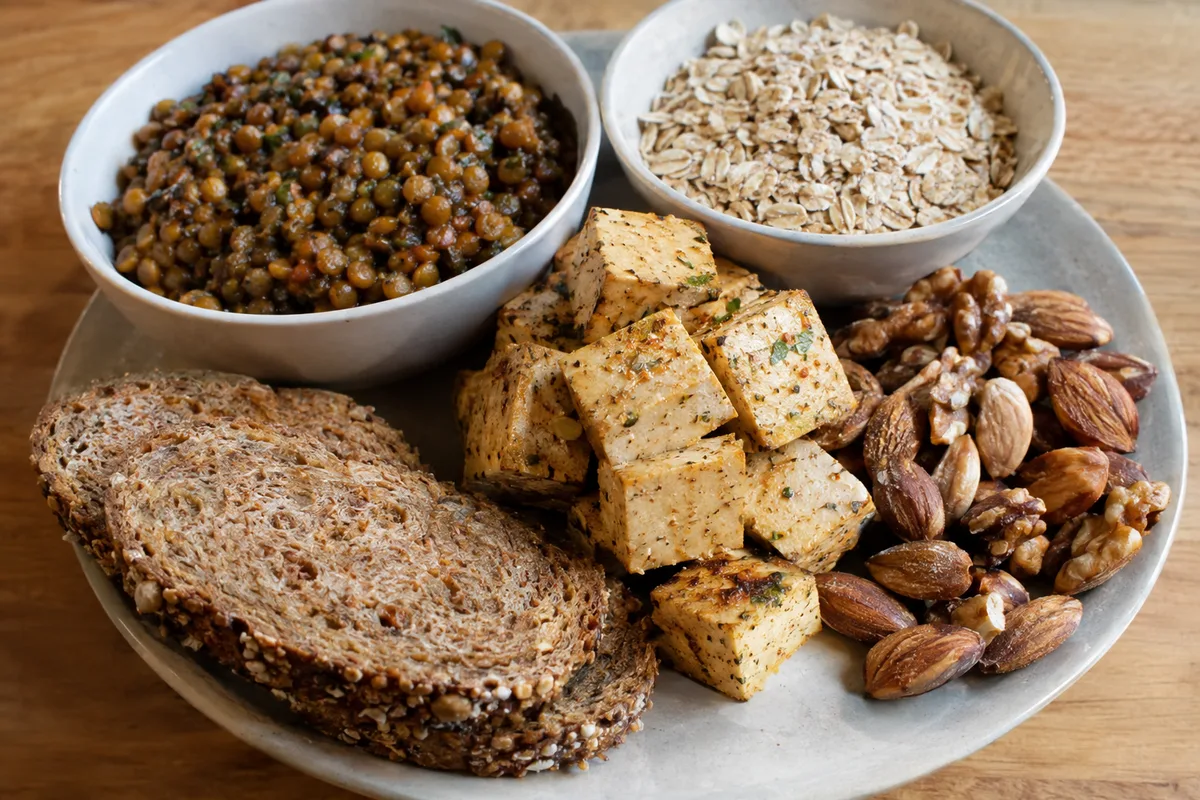
Nutrition labels and database entries can vary, especially for home-cooked dishes. Record the portion you actually eat and use the closest suitable entry. The amount you need depends on your body, activity and circumstances, so avoid copying someone else’s target without context.
- Check whether each main meal includes a noticeable protein source.
- Look for a mixture of pulses, grains, soya foods, nuts and seeds over the day.
- Include smaller contributions from bread, pasta, oats and vegetables in your total.
- Save common meals in your tracker so repeated entries stay consistent.
Portions still shape the protein total
A varied meal can contain several protein sources but still provide a modest total if each portion is small. For example, a light scattering of seeds adds less protein than a larger serving of lentils or tofu. Check the quantities in your log rather than relying only on the name of the food.
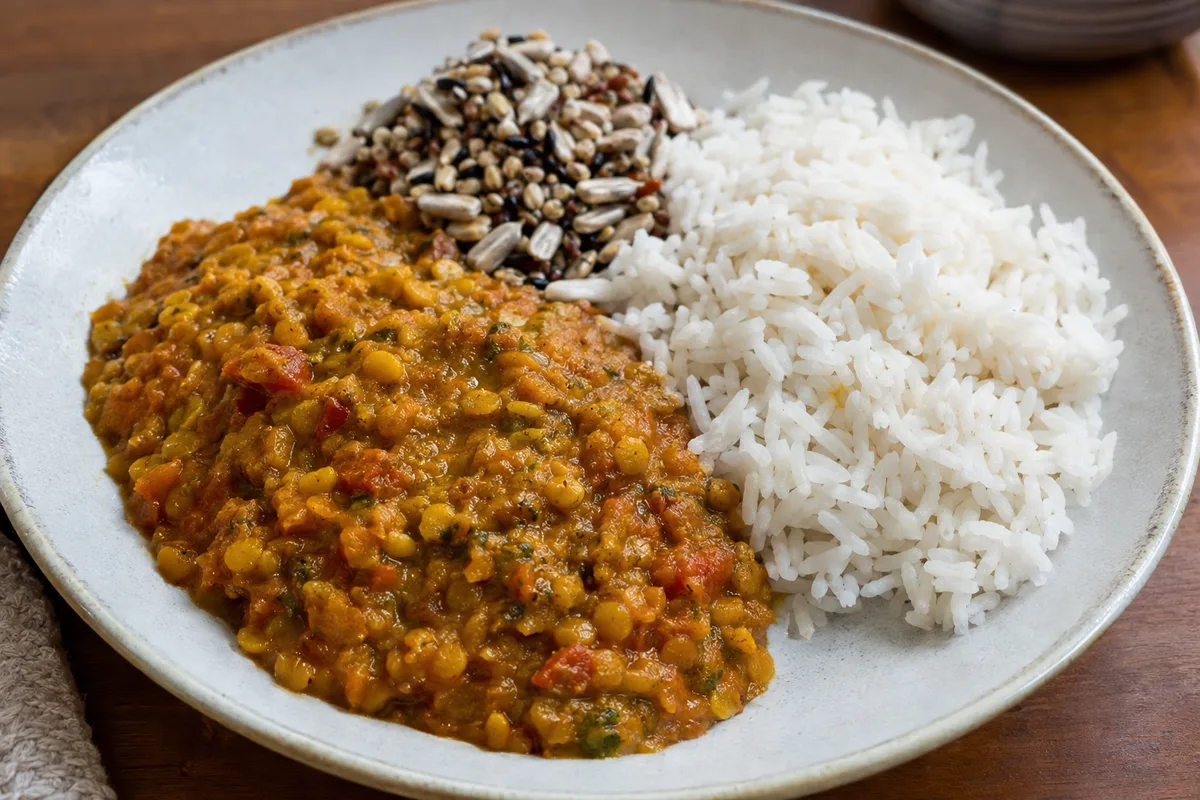
Protein-rich foods also bring different amounts of carbohydrate, fat and fibre. Nuts and seeds are compact and contain more fat, while beans and lentils commonly provide more carbohydrate and fibre. Mix them in ways that fit your wider energy and nutrient goals.
- Use beans, lentils, chickpeas or tofu as a clear part of the main dish.
- Add nuts or seeds as a topping rather than assuming a small garnish is the main protein source.
- Choose portions according to your appetite and tracked daily target.
- Count sauces, spreads and side dishes when they make a meaningful contribution.
Keep combinations flexible
There is no single best vegan protein pairing. A useful pattern is to rotate your main sources and combine foods because they make satisfying meals, not because every plate must follow a rule. Variety across breakfast, lunch, dinner and snacks can cover many different amino acids.
Use your tracker to spot simple gaps rather than to chase perfection. If breakfast contains little protein, you might add soya yoghurt, nuts, seeds or a nut butter. If lunch relies mainly on vegetables and bread, adding beans, lentils, hummus or tofu can make the protein contribution clearer.
- Change the pulse in a familiar soup, curry or stew.
- Alternate tofu, beans, lentils and chickpeas across main meals.
- Vary grains by using oats, rice, pasta, bread or barley.
- Keep convenient options such as tinned pulses or ready-cooked grains available.
- Review the whole day before deciding that one meal needs changing.