
Vegan or meat eater: what changes on your plate and in your food log
Vegan and meat-based diets use different foods, but either can include balanced meals or less useful everyday choices. This guide explains what changes when you track them, from protein sources and calorie density to nutrients that need attention.
The basic difference
A vegan diet leaves out meat, fish, dairy products, eggs and other ingredients derived from animals. Meals are built from foods such as beans, lentils, tofu, grains, vegetables, fruit, nuts and seeds. A meat eater may include any of those plant foods alongside meat, fish, dairy products or eggs.
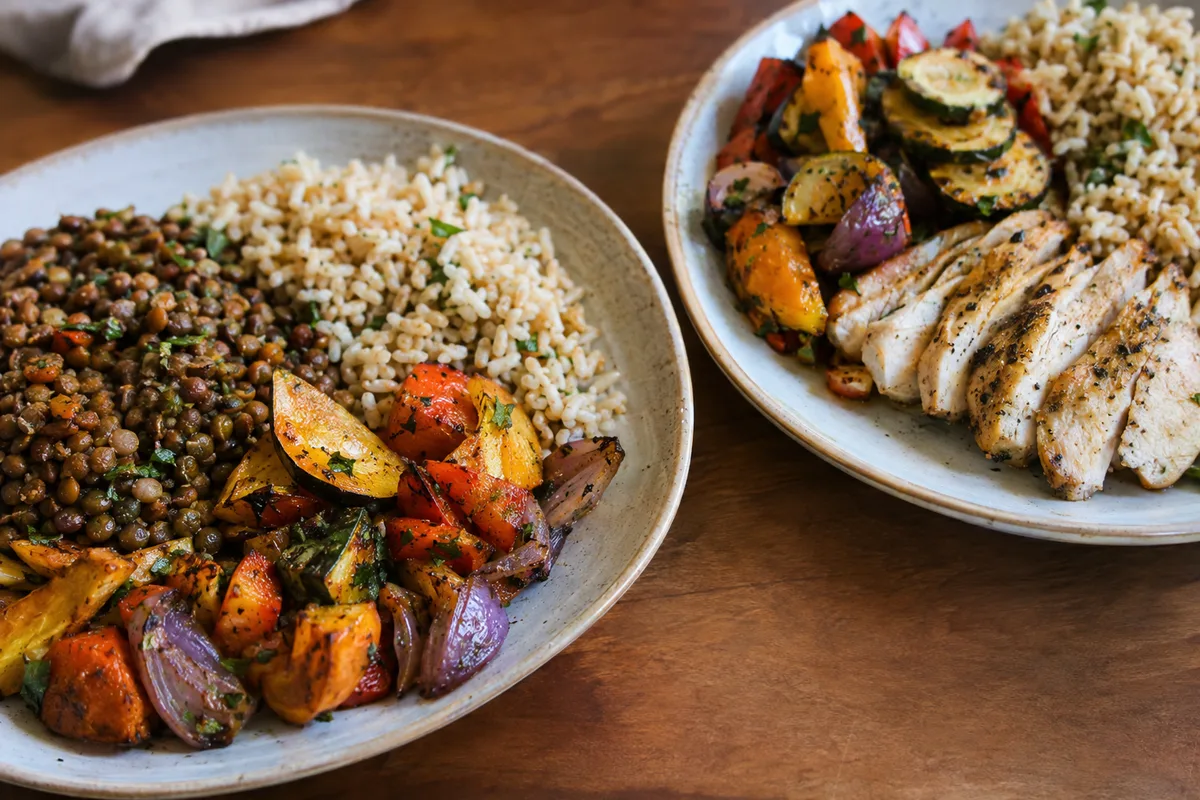
The label alone does not tell you how nutritious or filling a diet is. A vegan meal could be based on lentils and vegetables, or mostly on highly processed snack foods. In the same way, a meat-based meal could contain plenty of vegetables and wholegrains, or very few plant foods.
Your food log offers more useful detail than the label. Look at the pattern across meals: where protein comes from, how often vegetables and pulses appear, and which foods contribute most of the energy. This makes the comparison about what is actually eaten rather than what the diet is called.
- Vegan staples: beans, lentils, chickpeas, tofu, tempeh, grains, nuts and seeds
- Foods meat eaters may add: meat, fish, eggs, milk, yoghurt and cheese
- Foods both can share: vegetables, fruit, pulses, grains, herbs and spices
Calories depend on the whole meal
Neither vegan food nor meat is automatically low or high in calories. Fat provides about 9 kcal per gram, while protein and carbohydrate each provide about 4 kcal per gram. Foods rich in fat can therefore add energy quickly, whether that fat comes from oil, nuts, cheese or a fatty cut of meat.
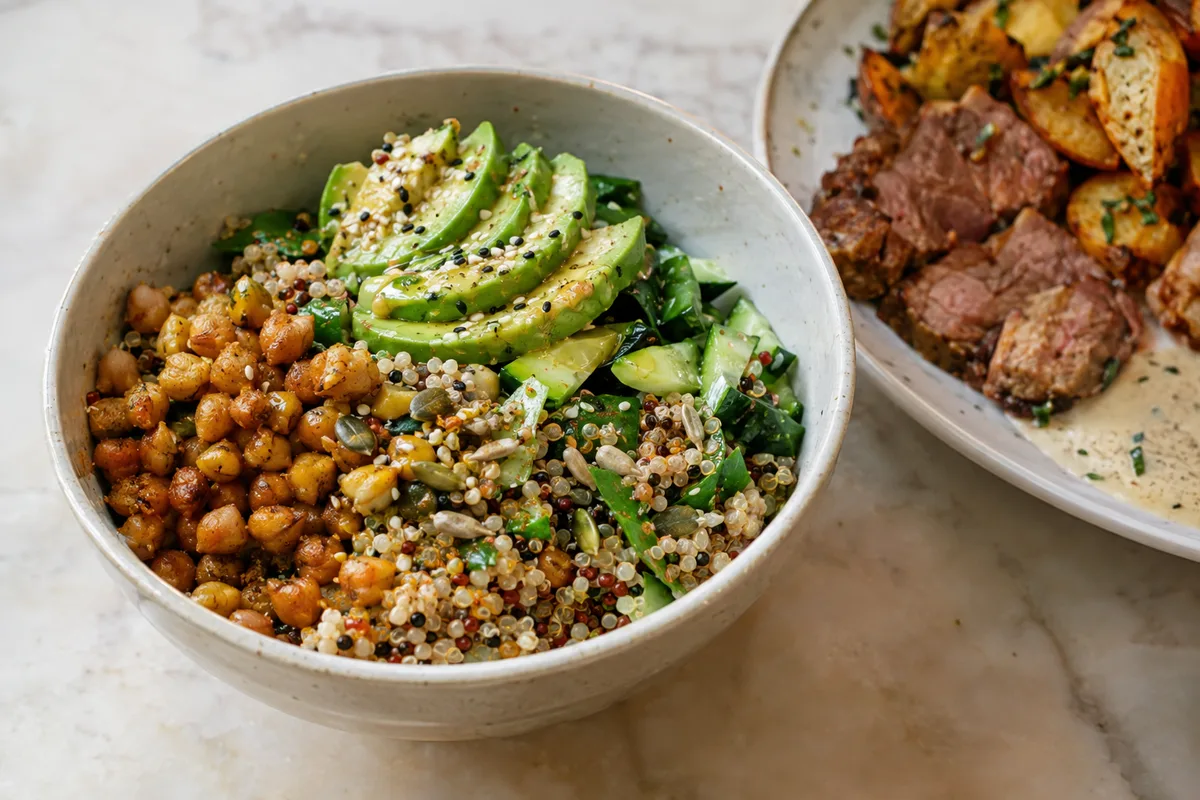
Plant-based meals often contain vegetables, pulses and wholegrains, which can add fibre and volume. However, generous amounts of oil, nut butter, coconut-based ingredients or fried foods can make a vegan meal energy-dense. Meat-based dishes can also vary widely depending on the cut, cooking method, sauce and portion.
When logging a meal, record the ingredients that are easy to overlook. Cooking oil, dressings, spreads, sauces and toppings may change the total more than swapping beans for meat. The relevant portion is the one you actually ate, so the number depends on your ingredients and serving size.
- Log oil used for roasting, frying or dressing
- Record sauces, marinades and creamy additions
- Include nuts, seeds, cheese or plant-based toppings
- Check whether the logged weight is raw or cooked
Protein comes in different forms
Meat, fish, eggs and dairy products can provide concentrated portions of protein. Vegan diets obtain protein from foods including beans, lentils, peas, tofu, tempeh, seitan, nuts, seeds and some grains. The amount varies by food and portion, so your log can show whether protein is spread across the day.
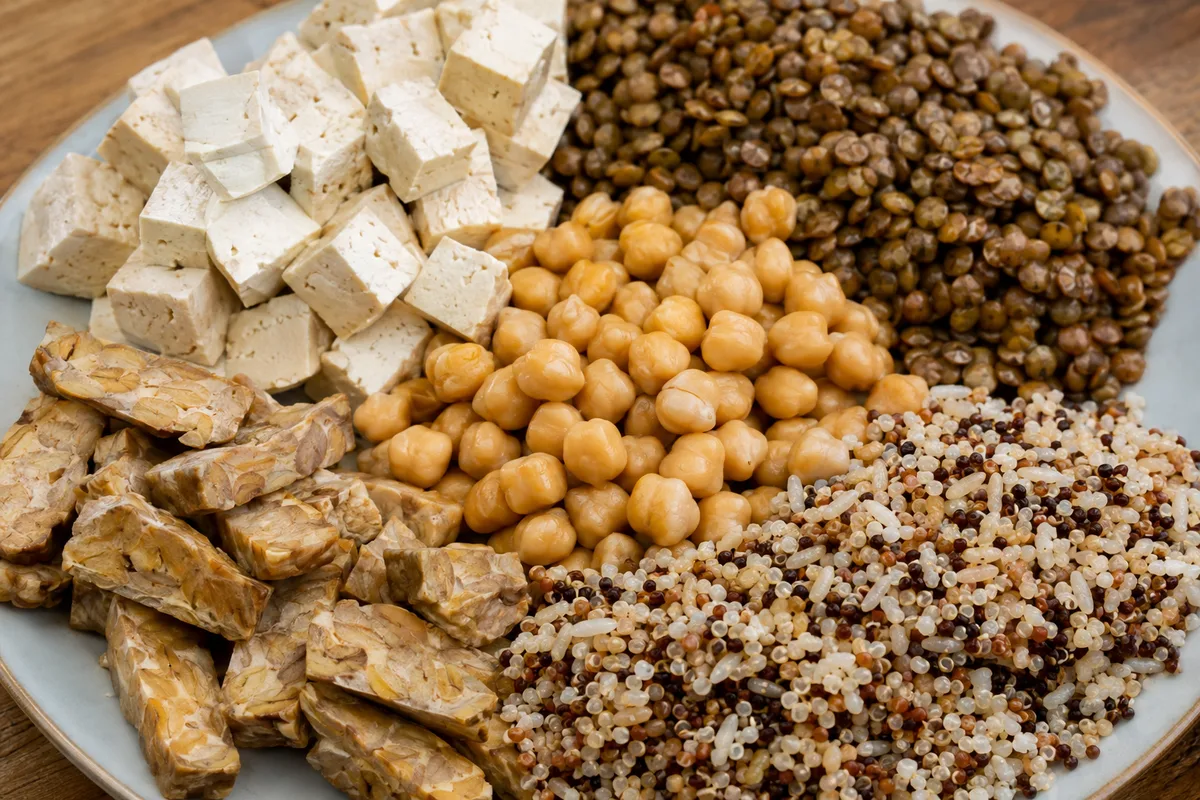
You do not need to force every plant protein into a single meal. Eating a varied selection of plant foods across the day provides different amino acids, which are the building blocks of protein. Combining foods such as pulses and grains can also make meals satisfying and practical.
Some vegan protein foods come with more carbohydrate, fat or fibre than an equivalent portion of lean meat. That is not automatically good or bad, but it changes the meal total and may affect how filling it feels to you. Compare complete meals in your tracker rather than judging foods only by protein per serving.
- Add lentils or beans to soups, stews and pasta sauces
- Use tofu or tempeh in a vegetable stir-fry
- Pair chickpeas with rice, couscous or wholemeal bread
- Add seeds or nuts where their extra fat fits your meal
Nutrients worth watching
Removing animal-derived foods changes where several nutrients come from. A vegan diet needs dependable sources of vitamin B12, while iron, calcium, iodine, vitamin D, zinc and omega-3 fats may also need closer attention. Meat eaters can fall short of nutrients too, particularly when meals lack variety and plant foods.
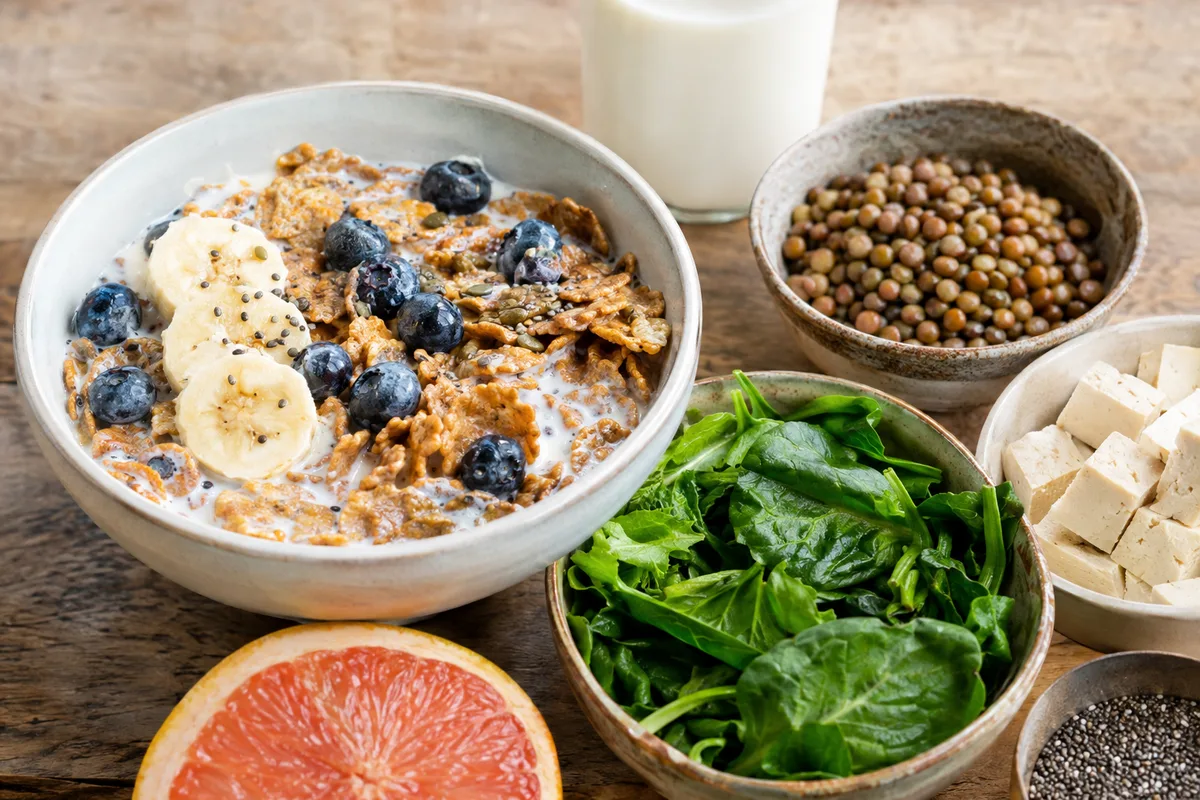
Fortified foods can contribute nutrients that are harder to obtain from unfortified vegan foods. Labels help you check whether a plant drink, cereal or other product has nutrients added, because similar-looking products may differ. Choose entries in your tracker that match the exact fortified or unfortified food where possible.
Iron from plant foods is absorbed differently from iron in meat. Eating vitamin C-rich foods, such as peppers, tomatoes or citrus fruit, alongside plant sources of iron can support absorption. Personal nutrient needs vary, so use appropriate professional guidance if you are unsure how your usual intake fits your circumstances.
- Vitamin B12: fortified foods or an appropriate reliable source
- Iron: lentils, beans, tofu, seeds and fortified cereals
- Calcium: fortified plant drinks, calcium-set tofu and some leafy vegetables
- Iodine: dependable fortified sources where available
- Omega-3 fats: ground flaxseed, chia seeds and walnuts
Fibre and the shape of the plate
Fibre is found in plant foods, not meat. A vegan diet can be rich in fibre when it includes pulses, vegetables, fruit, wholegrains, nuts and seeds. A meat eater can also get plenty of fibre by making those foods a regular part of meals.
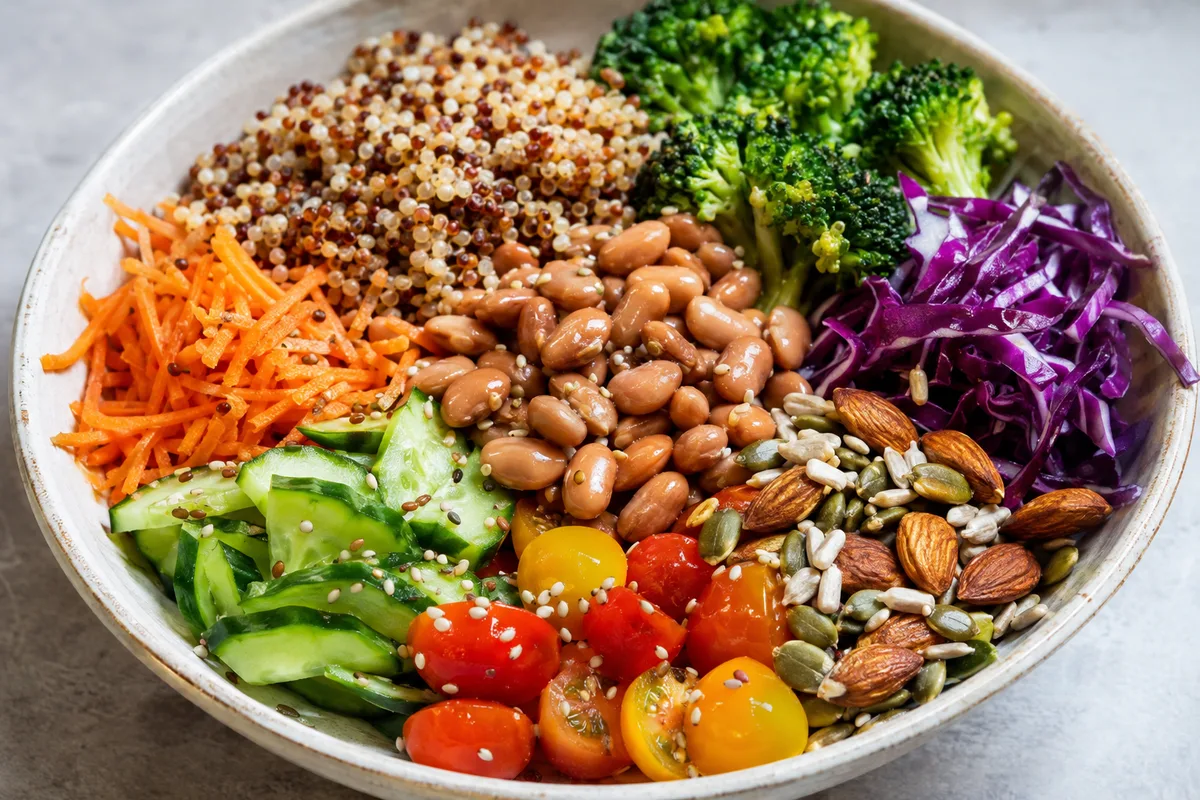
A meat-based plate does not have to centre on a large piece of meat. Meat can form one part of a meal alongside vegetables, beans and a wholegrain or starchy food. Likewise, a balanced vegan plate needs more than vegetables alone and should include a useful protein source and enough energy.
If you increase fibre, make changes gradually and pay attention to how you feel. Fluids and regular movement also matter when eating more high-fibre foods. Your tracker can help you spot whether fibre comes from a varied range of foods rather than one repeated source.
- Build meals around several different plant foods
- Include a clear protein source rather than relying on vegetables alone
- Choose wholegrain versions when they suit the meal
- Rotate beans, lentils, vegetables, fruit, nuts and seeds
How to compare the two fairly in your tracker
Start with meals that serve the same purpose. Compare a bean chilli with a meat chilli, for example, rather than comparing fruit with a cooked dinner. Log each full recipe, divide it by the portions actually served and include any sides or toppings.
Look beyond a single calorie total. Review protein, fibre, key nutrients, portion size and how satisfying the meal was for you. A lower number is not automatically the better choice if the meal leaves you hungry soon afterwards or lacks variety.
The best pattern is one that meets your needs and works in everyday life. Vegan and meat-based eating can both involve thoughtful planning, home cooking and varied ingredients, while either can rely heavily on highly processed foods. Use your records to adjust the pattern you follow rather than treating the diet label as a result in itself.
- Compare similar meals and realistic portions
- Review patterns across several days rather than one meal
- Check protein, fibre and nutrient variety alongside calories
- Note hunger, satisfaction and practical preparation time
- Adjust ingredients that repeatedly push the meal away from your aims