
Mushrooms vs meat: how their protein content compares
Mushrooms and meat can share a plate, but they do not make equal contributions to your protein total. This guide explains the difference and how to record both foods accurately.
The main difference is protein concentration
Meat is generally a concentrated source of protein, while mushrooms contain a modest amount. For the same cooked weight, meat will usually add considerably more protein to your food diary. The exact amount depends on the type, cut and cooking method.
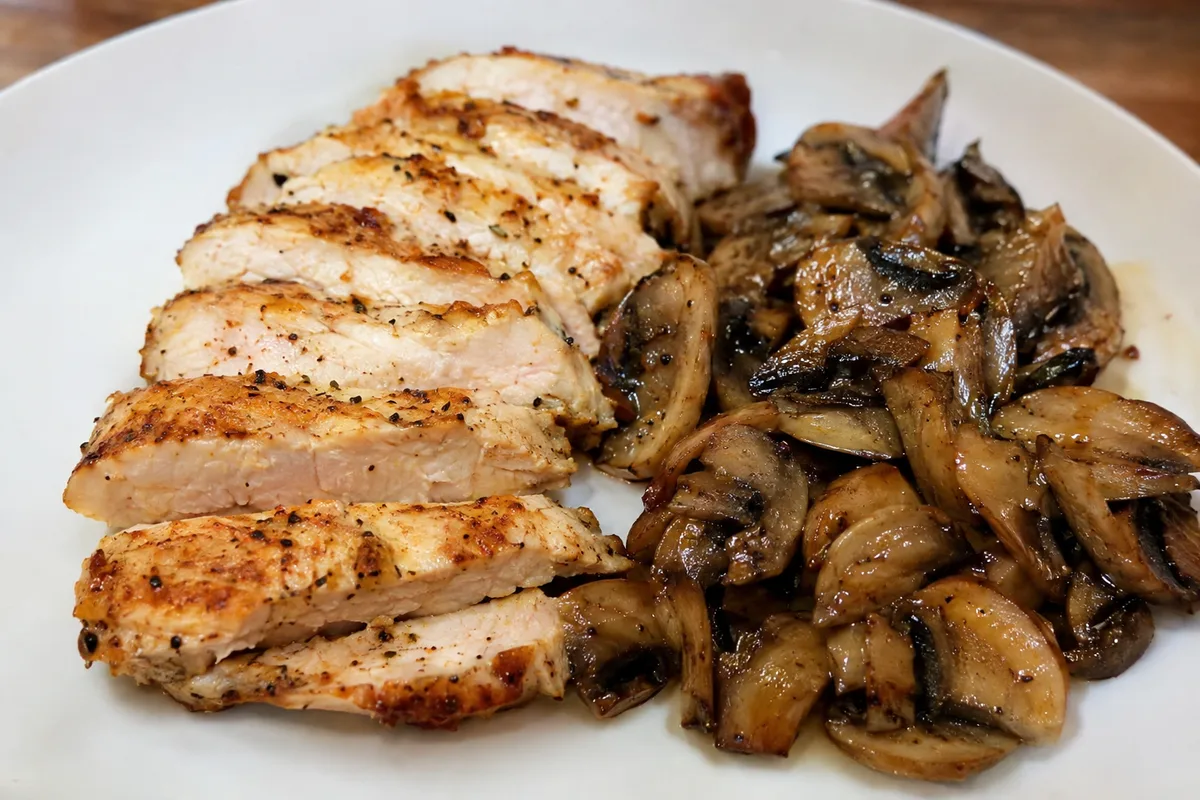
Fresh mushrooms contain a lot of water, so protein makes up only a small part of their weight. They can still contribute to your daily total, especially when you eat a generous portion. However, replacing meat with the same weight of mushrooms will usually reduce the meal’s protein content.
- Meat usually acts as the main protein source in a meal.
- Mushrooms usually make a smaller contribution to the protein total.
- Portion size and water content affect any direct comparison.
Why weight can give a misleading comparison
A gram-for-gram comparison does not always reflect what ends up on your plate. Mushrooms may shrink as they cook because they release water, while meat can also lose water and fat. This means cooked and raw weights should not be mixed when you compare food diary entries.
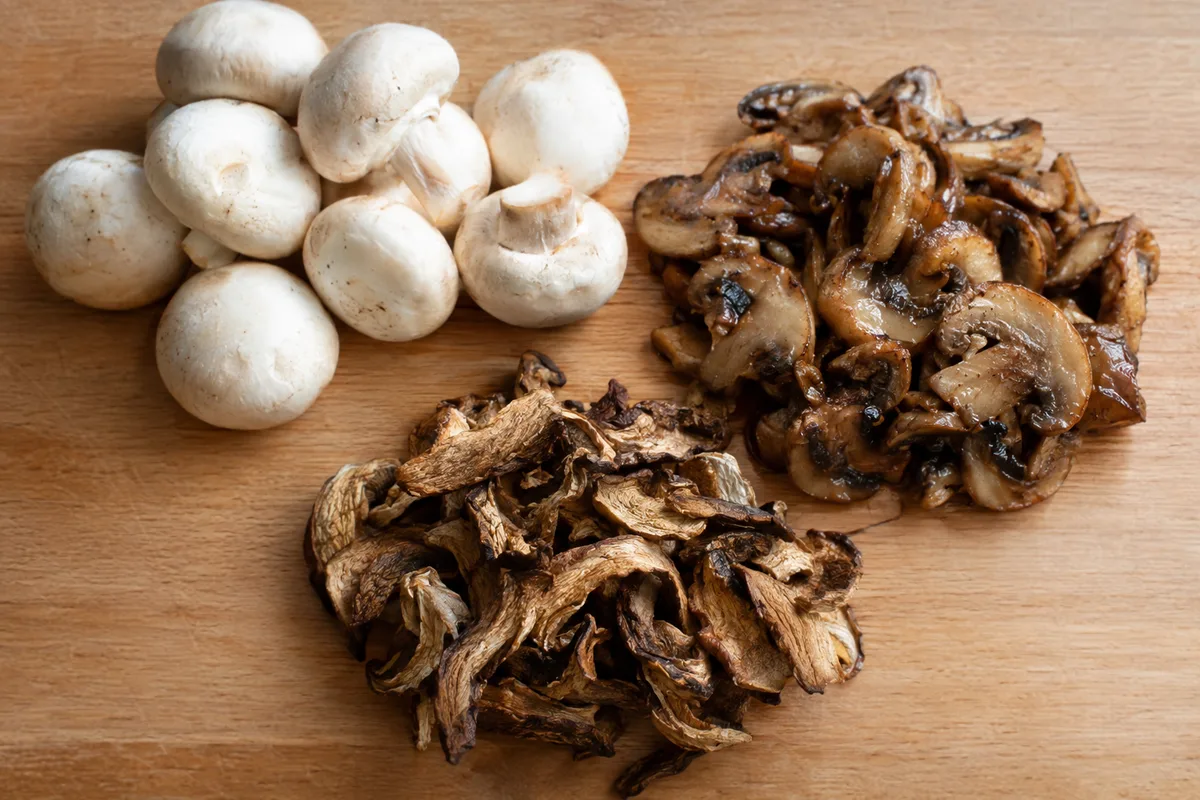
Dried mushrooms appear richer in protein by weight because much of their water has been removed. In practice, they are often used in smaller amounts and may be soaked before cooking. A concentrated value does not necessarily mean the serving provides more protein.
- Compare raw food with raw food, or cooked food with cooked food.
- Match the diary entry to the mushroom variety or meat cut when possible.
- Use the weight actually eaten rather than the weight of the whole packet.
- Check whether a dried mushroom entry refers to the dry or rehydrated weight.
Protein quality matters as well as quantity
Protein is made from amino acids, which the body uses for everyday maintenance and repair. Meat provides all the essential amino acids in useful proportions and is generally easy to use as a concentrated protein source. Mushrooms contain a range of amino acids, but the smaller total amount of protein remains the main practical difference.
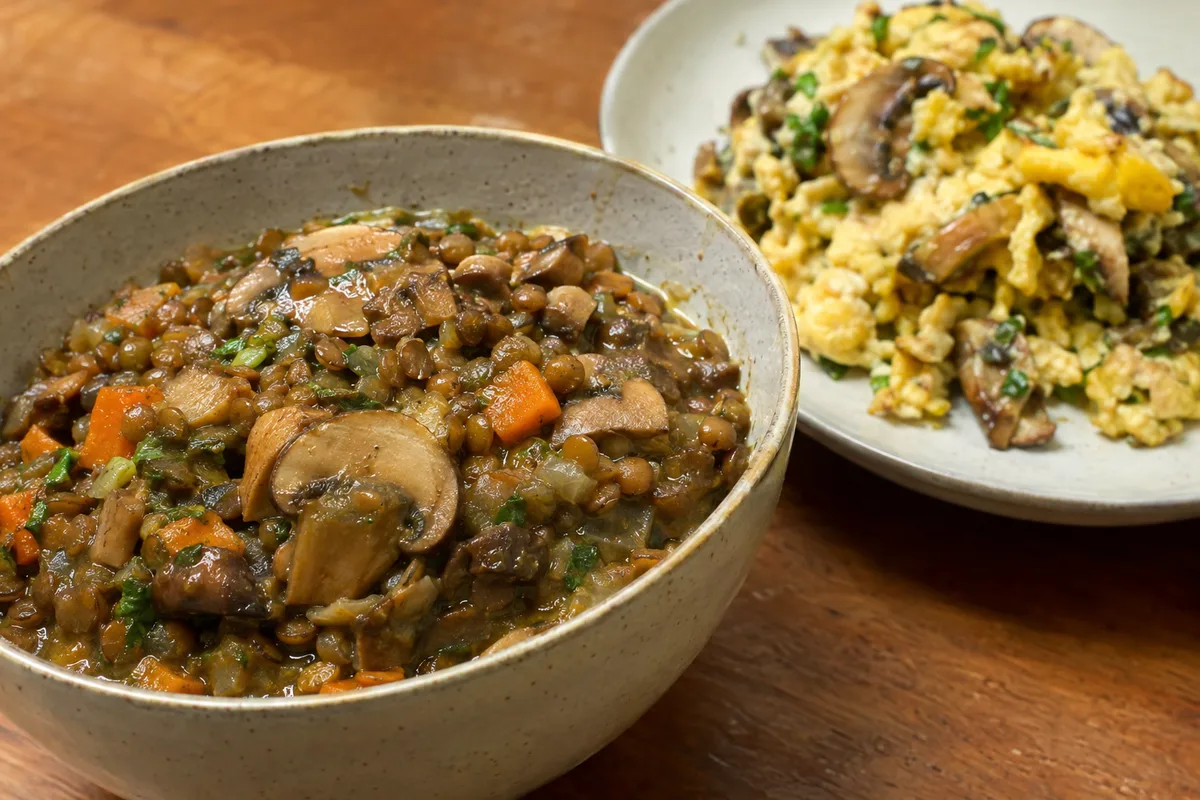
You do not need to judge a meal by one ingredient alone. Mushrooms can sit alongside beans, lentils, tofu, eggs, yoghurt, fish or meat, depending on how you eat. The combined meal may provide more protein than mushrooms would supply by themselves.
- Add beans or lentils to a mushroom stew.
- Serve mushrooms with eggs in a breakfast or light meal.
- Combine mushrooms and tofu in a stir-fry.
- Use mushrooms alongside meat when you want both flavour and protein.
Mushrooms bring more than protein
Protein is only one reason to choose a food. Mushrooms can add fibre, texture and a savoury flavour, and they can help make a meal feel substantial. Different varieties also bring slightly different nutrients and cooking qualities.
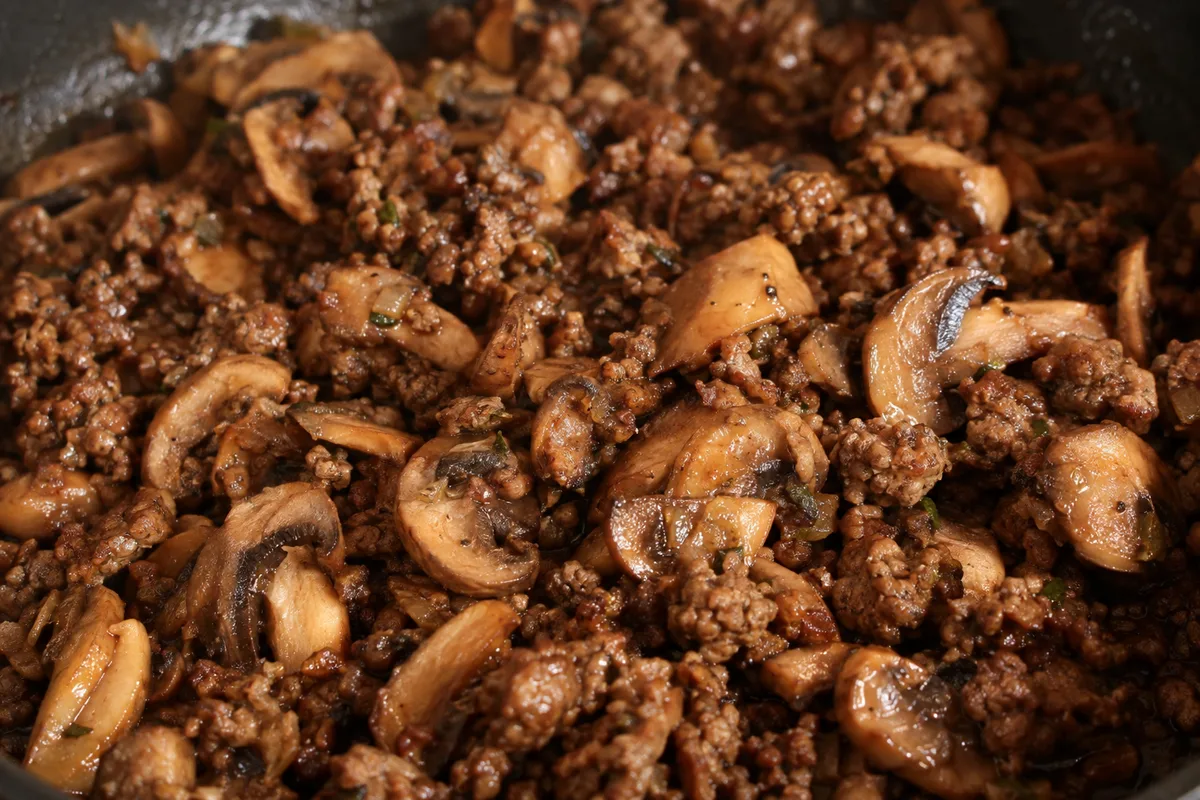
Meat can provide protein alongside nutrients such as iron and vitamin B12, although the amounts vary by type and cut. Mushrooms should not be treated as a like-for-like nutritional copy of meat simply because they have a savoury taste. It is more useful to see them as a distinct ingredient with their own role on the plate.
- Use mushrooms to add volume and texture to sauces.
- Mix chopped mushrooms with minced meat for a blended dish.
- Pair mushrooms with a separate protein food when building a meat-free meal.
How to track mushrooms and meat accurately
Choose a diary entry that matches the food as closely as possible. Look for the correct mushroom variety, meat cut and cooking method, because frying, roasting, grilling and boiling can change the finished weight. Added oil, butter, sauces and coatings should usually be recorded separately unless the entry clearly includes them.
If you cook a mixed dish, record each ingredient before dividing the finished meal into portions. Keep your method consistent so that comparisons over time are more useful. When a database offers several values, favour a verified label or a reliable generic entry that matches the state in which you weighed the food.
The practical takeaway is simple: count mushrooms as a small protein contributor rather than as an equal-weight substitute for meat. If protein is a priority for the meal, include another clear protein source or adjust the portion to suit your own target. The right amount depends on your overall intake, preferences and eating pattern.
- Record the edible portion rather than trimmings or discarded liquid.
- Keep raw and cooked entries separate.
- Log cooking fats and sauces where relevant.
- Save frequently used entries to improve consistency.