
Simple Ways to Add More Protein to Oatmeal
Oatmeal is easy to adapt, but many popular toppings add flavour without contributing much protein. These upgrades show how to change the base, choose useful additions and keep your food log accurate.
Start by upgrading the oatmeal base
Oats contain some protein, but the cooking liquid can make a meaningful difference to the finished bowl. Replacing water with dairy milk or a higher-protein plant drink adds protein without requiring another topping. Check the label, as protein and energy vary between products.
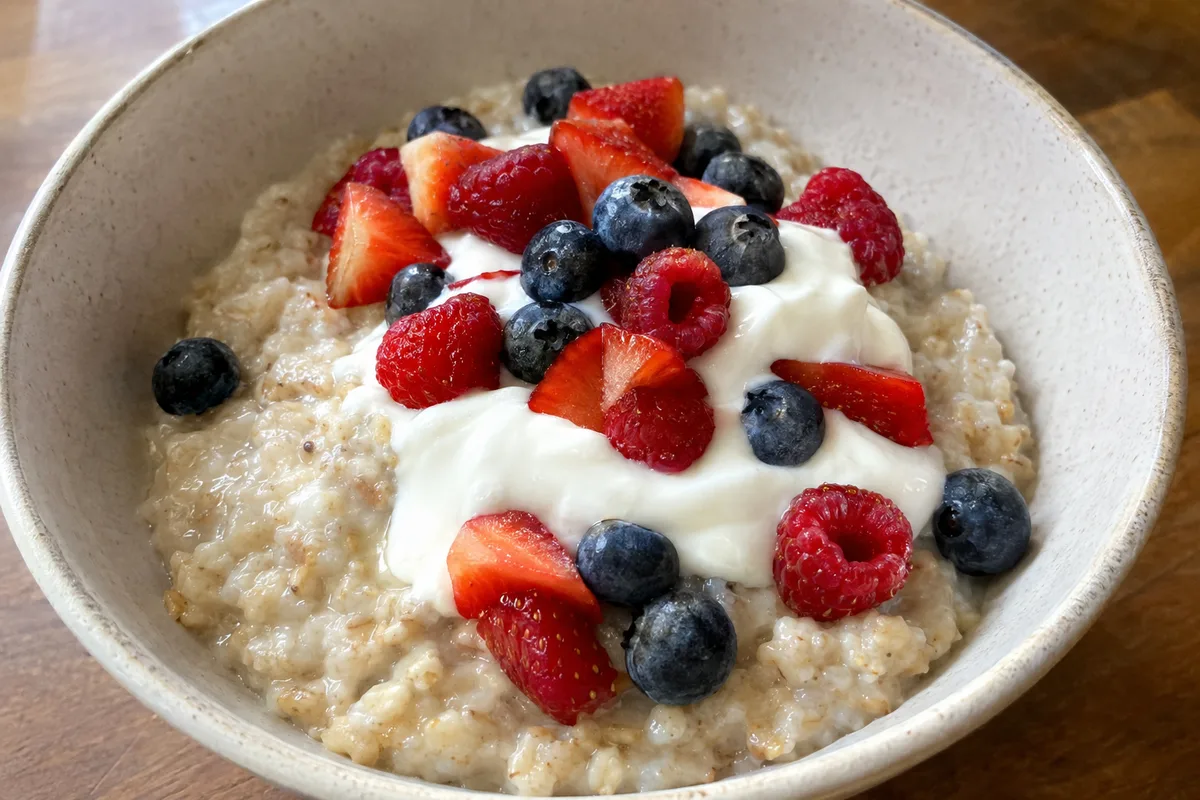
You can also stir thick yoghurt into cooked oatmeal after it has cooled slightly. This gives the bowl a creamier texture and adds protein without making the oats dry. If the mixture becomes too thick, loosen it with a small amount of milk or water.
- Cook the oats with dairy milk instead of water
- Use a plant drink that lists a useful amount of protein on its label
- Stir plain Greek-style yoghurt into warm oatmeal
- Add cottage cheese and blend or stir until smooth
Use eggs for warm, creamy oats
Eggs can be mixed into oatmeal, but they need to cook fully and evenly. Beat an egg before stirring it gradually into hot oats over a low heat. Keep stirring so it blends into the mixture rather than forming large pieces.
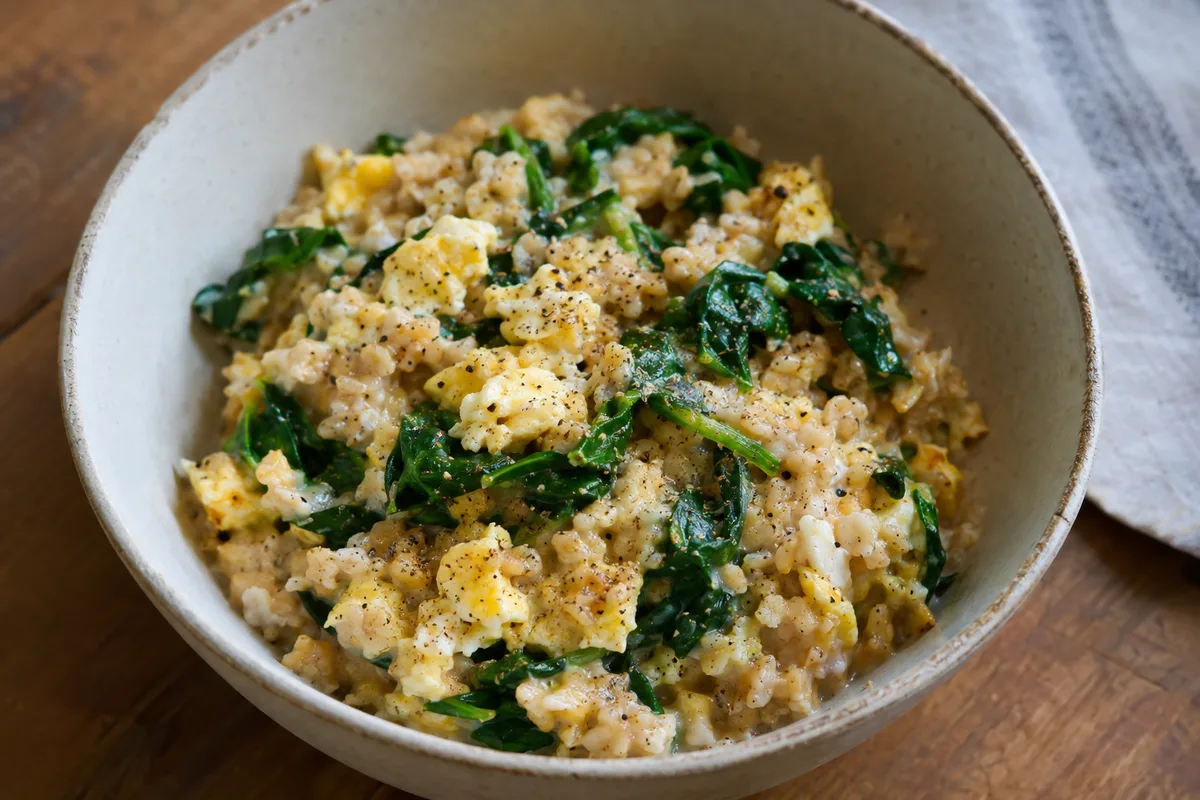
Egg whites are milder in flavour and can increase protein without changing the taste much. A whole egg adds more richness and gives the oats a custard-like texture. Log the type and amount you use because whole eggs and egg whites have different nutritional values.
- Whisk egg whites into simmering oats
- Stir in a beaten whole egg over a low heat
- Pair egg-enriched oats with cinnamon and cooked apple
- Make savoury oats with egg, spinach and black pepper
Add protein powder without making the oats chalky
Protein powder is convenient, but stirring it straight into very hot, thick oats can create lumps. Mix it with a little cool liquid first, then stir the smooth paste into the cooked oatmeal. Add more liquid as needed because the powder may thicken the bowl.
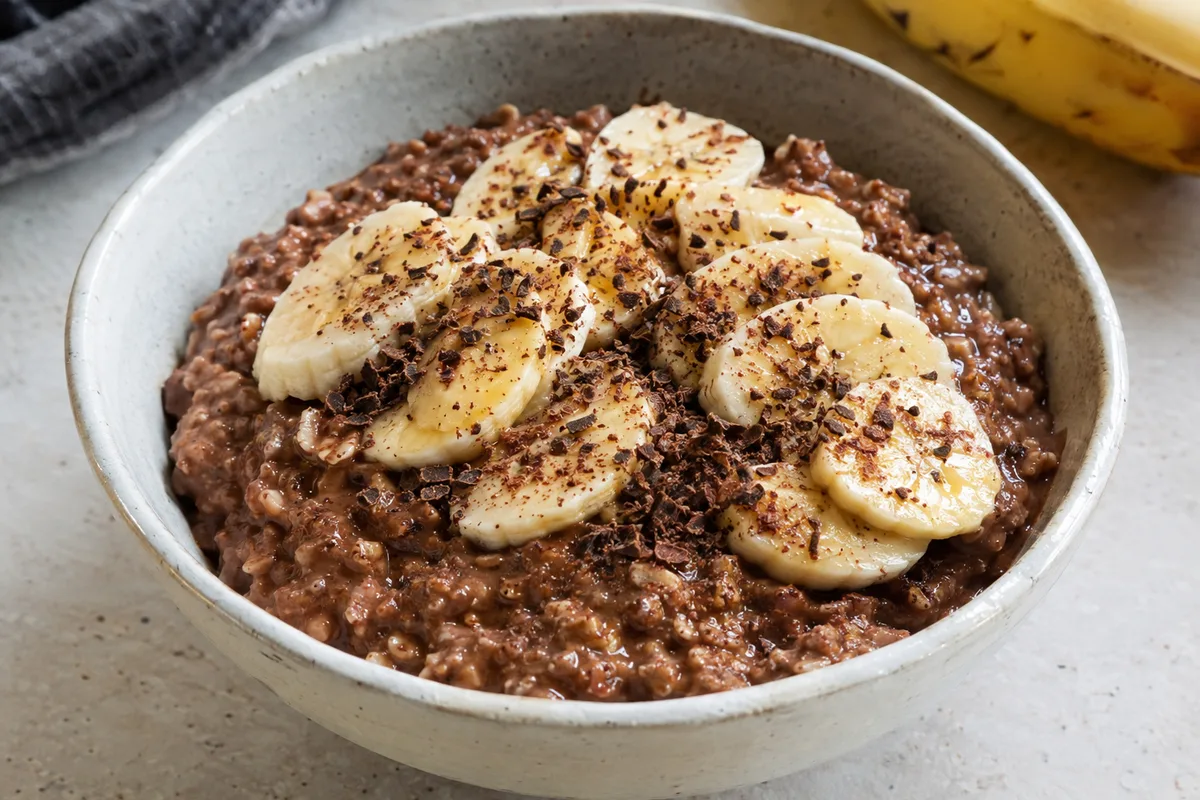
Flavoured powders can also change how much sweetener or seasoning you need. Taste the oatmeal before adding honey, syrup or sugar. Nutrition values differ, so use the serving information from the particular label when logging it.
- Mix vanilla powder with berries and cinnamon
- Combine chocolate powder with sliced banana
- Use an unflavoured powder in savoury oatmeal
- Stir the powder in after cooking rather than boiling it for a long time
Try beans, seeds and soya-based additions
Plant-based protein additions can work in both sweet and savoury oatmeal. Silken tofu blends into warm oats with little effect on flavour, while firmer tofu suits a savoury bowl. Mashed beans can also add body, although their flavour is easier to balance with herbs and spices.
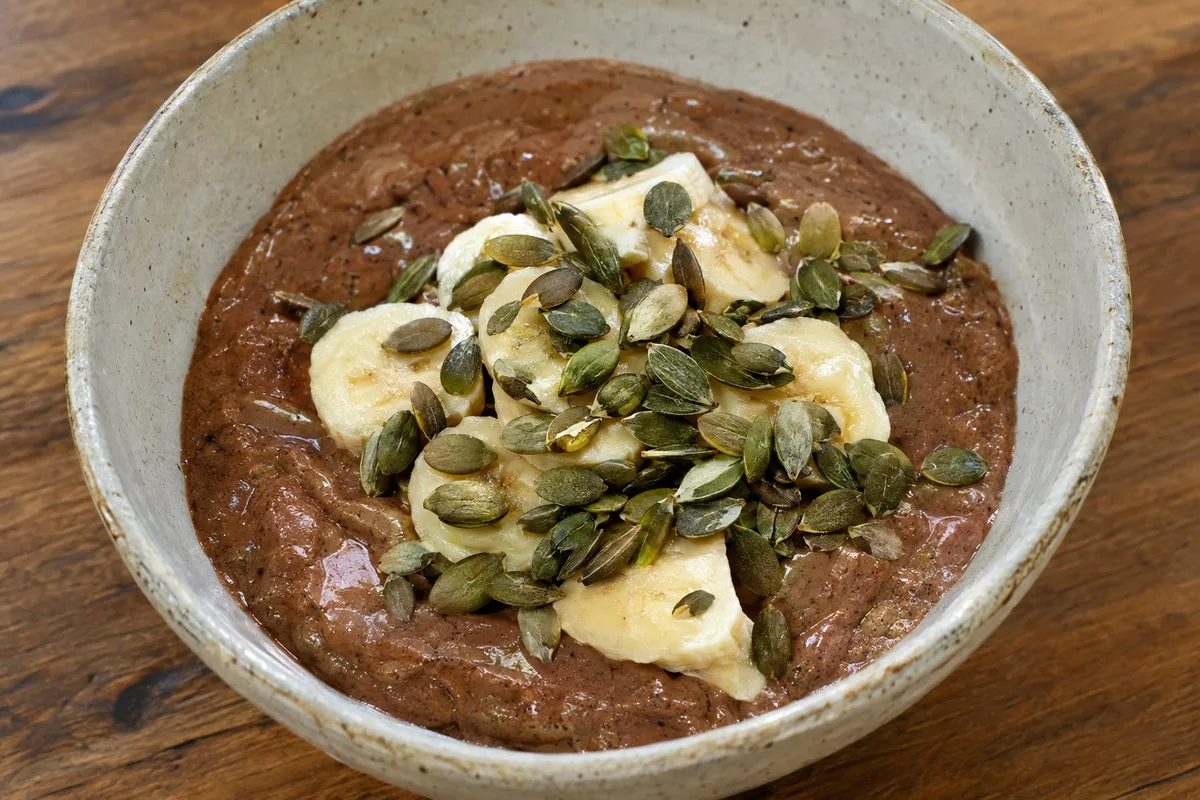
Seeds and nut butters contribute some protein, but they also contain a substantial amount of fat. That is not a reason to avoid them, but it does mean a casual spoonful can change the logged energy more than expected. Measure or estimate consistently if accurate tracking matters to you.
- Blend silken tofu into oats with cocoa and banana
- Top savoury oats with crisp tofu pieces
- Stir mashed white beans into oats with herbs
- Add chia, hemp or pumpkin seeds
- Use a measured spoonful of peanut or almond butter
Build flavour around the protein source
Choose the main protein addition first, then add flavours that suit it. Fruit, spices and cocoa work well with yoghurt, milk, tofu or protein powder. Eggs, cottage cheese and beans can move the bowl in a savoury direction with vegetables and herbs.
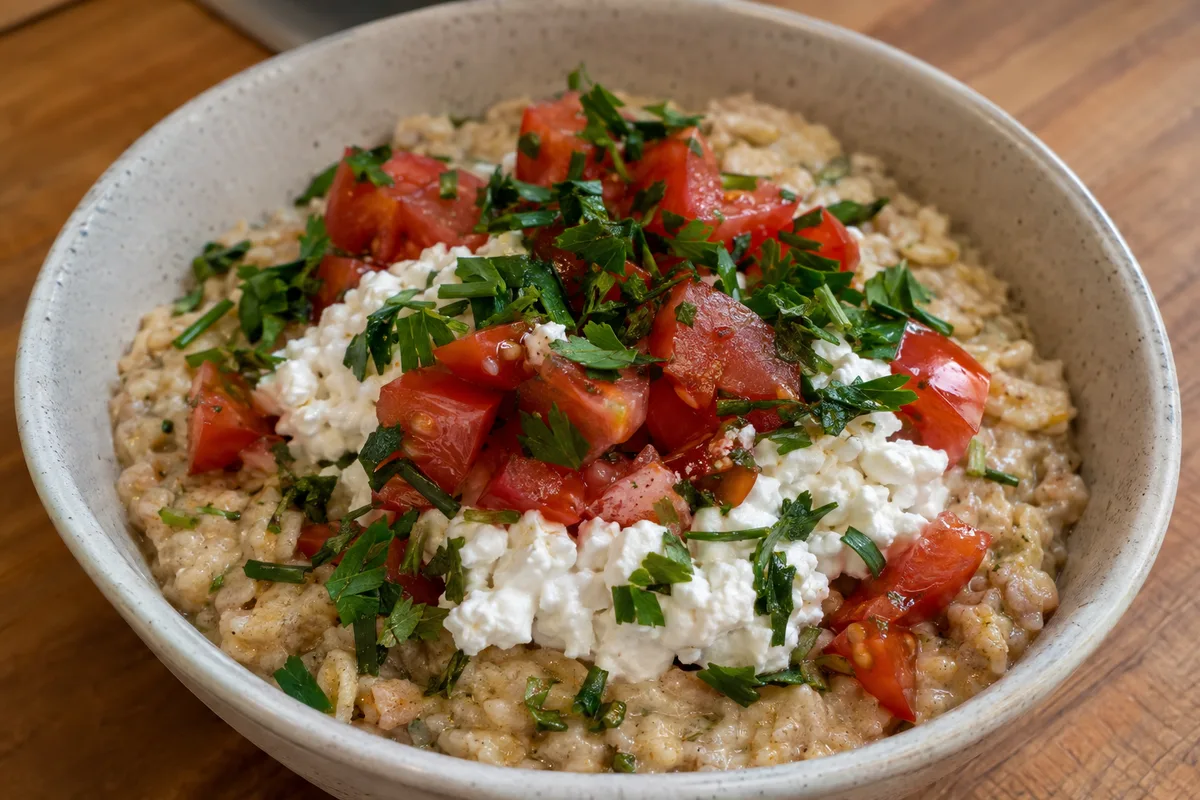
Crunchy toppings make soft oatmeal more interesting, but they do not all serve the same purpose. Nuts, seeds and granola may add some protein alongside fat and carbohydrate, while fruit mainly adds sweetness, colour and fibre. Think of these as flavour and texture choices rather than relying on them as the main protein upgrade.
- Yoghurt, berries and toasted seeds
- Cottage cheese, pear and cinnamon
- Egg, spinach and chopped tomatoes
- Tofu, cocoa and sliced banana
- White beans, mushrooms and fresh herbs
Log the bowl ingredient by ingredient
A homemade bowl is easiest to track when each main ingredient has its own entry. Log the dry oats, cooking liquid, protein addition and toppings separately. This is usually more accurate than selecting a generic oatmeal entry that may not match your recipe.
Pay particular attention to ingredients poured or spooned without measuring, such as milk, yoghurt, seeds, nut butter and syrup. You do not need to make the same bowl every day, but using a repeatable method can make comparisons clearer. Save the finished combination as a recipe if your tracker allows it, then adjust the portions when they change.
- Record oats in the form you measured them, usually dry
- Use label information for milk, yoghurt and protein powder
- Include cooking fats, sweeteners and finishing toppings
- Edit saved recipes when ingredients or portions change