
Pulled Pork vs Chicken: What Changes Nutritionally?
Pulled pork and chicken can both provide plenty of protein, but the cut and preparation often matter more than the animal. This guide explains what to compare and how to log each meal more accurately.
Start with a fair comparison
Pulled pork is a prepared dish, while chicken can mean anything from skinless breast to a roasted thigh. A useful comparison needs similar portions and cooking styles. Pulled pork in a rich sauce is not directly comparable with plain grilled chicken breast.
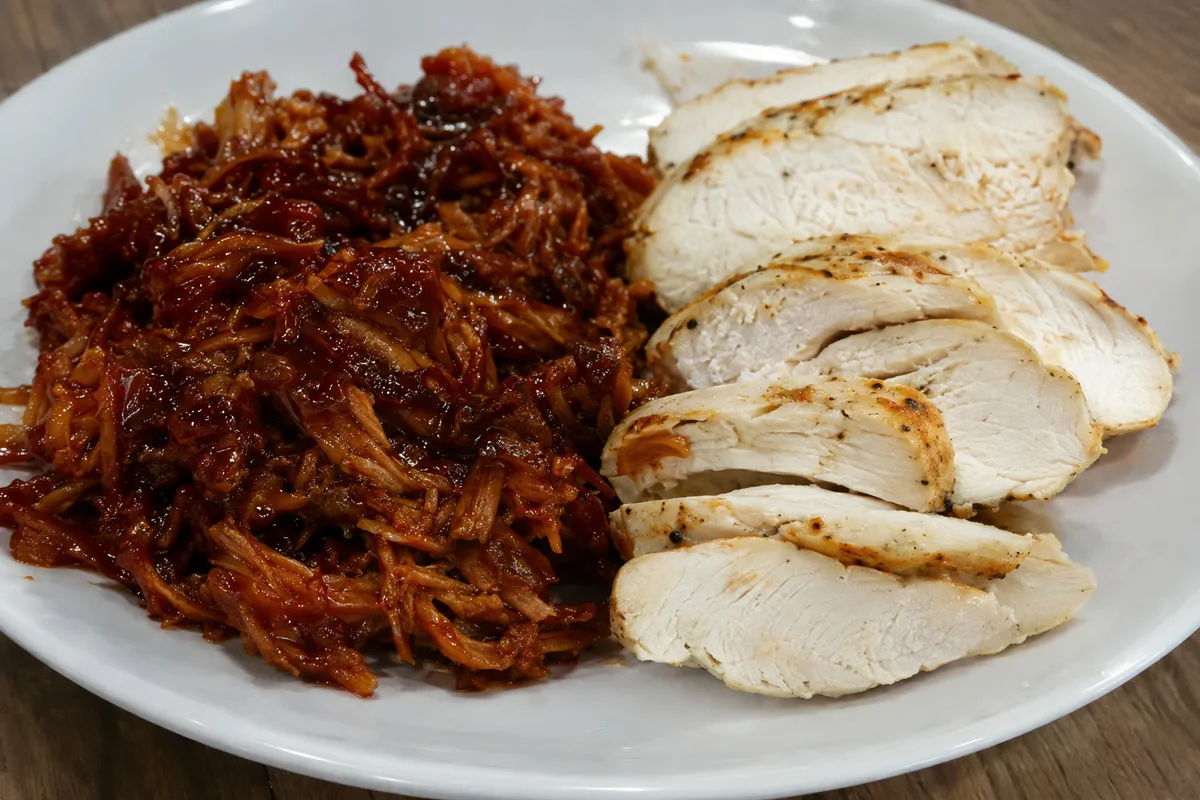
Both meats provide complete protein and a range of vitamins and minerals. Their fat, carbohydrate and salt content can vary considerably once skin, cooking fat, seasoning and sauce are included. The recipe or food label therefore gives you more useful information than the meat's name alone.
- Compare the same cooked portion size
- Check whether the chicken has skin
- Identify the pork cut where possible
- Include sauces, glazes and cooking fat
- Compare cooked food with cooked food
Protein and fullness
Both pulled pork and chicken can make a meal protein-rich. Lean chicken breast often provides more protein relative to its fat content, while fattier chicken cuts and pulled pork may supply more energy in the same serving. The exact amount depends on the cut, recipe and portion.
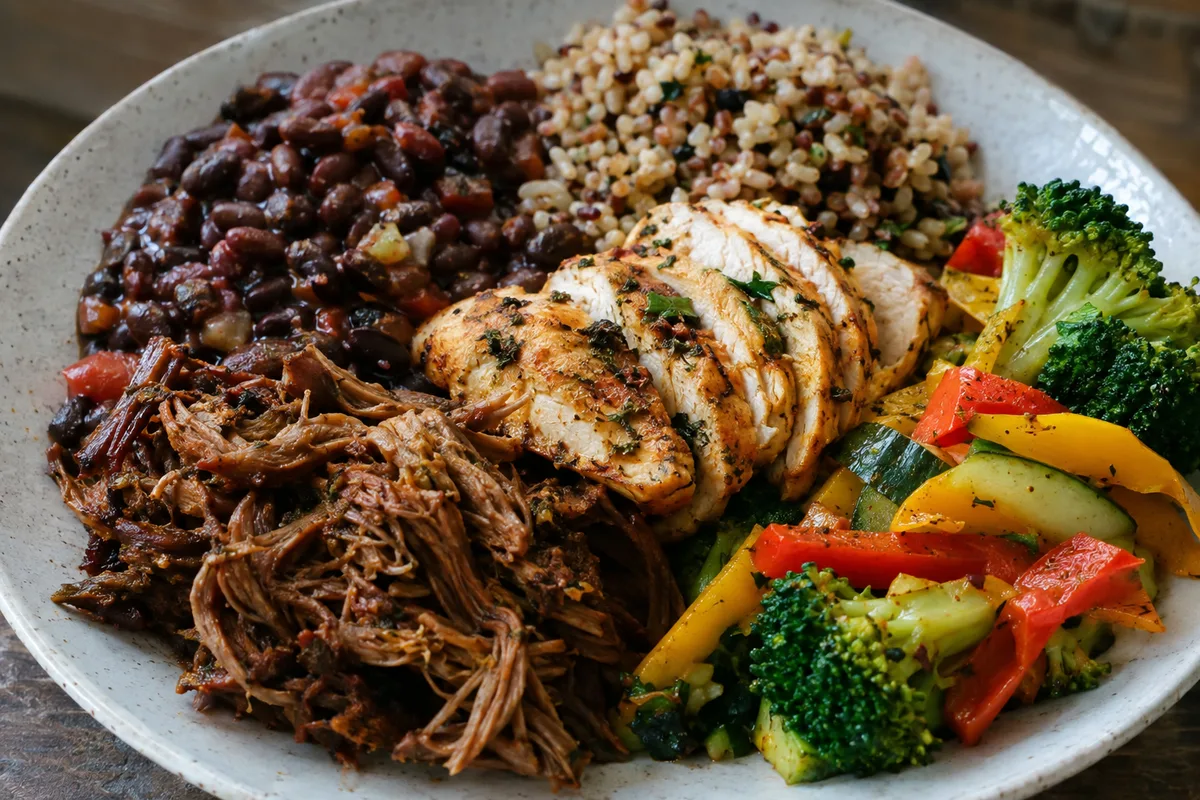
Protein can help a meal feel substantial, but the rest of the plate still matters. Vegetables, beans, wholegrains and potatoes can add fibre and volume. A meat-heavy plate is not automatically more satisfying than a balanced one.
- Add cabbage slaw with a lighter dressing
- Serve the meat with beans or lentils
- Include roasted or steamed vegetables
- Choose a wholegrain roll, rice or another filling carbohydrate
Fat depends on the cut and preparation
Pork shoulder is commonly used for pulled pork because its fat and connective tissue help it become tender during slow cooking. Chicken breast is usually leaner, especially without skin. Chicken thighs, wings and skin-on pieces generally contain more fat than skinless breast.
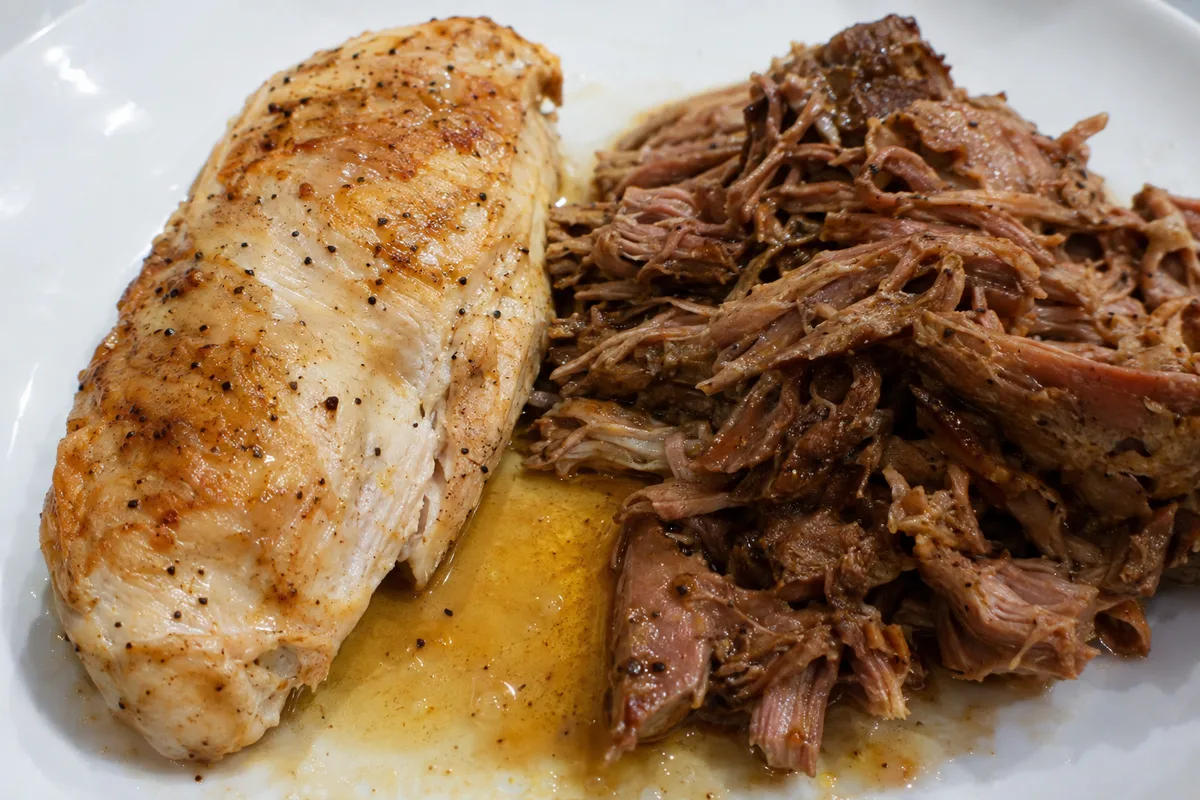
Visible fat may melt into the cooking liquid rather than disappearing. If that liquid is mixed back into the shredded meat, much of the fat remains in the finished dish. Oil, butter and creamy dressings can also change the total for either meat.
Fat contains about 9 kcal per gram, compared with about 4 kcal per gram for protein or carbohydrate. This means a fattier preparation can be more energy-dense even when the serving looks similar. That is useful to remember when your logged entry seems unexpectedly low.
- Trim obvious fat before or after cooking
- Remove chicken skin if you prefer a leaner serving
- Measure added oil rather than estimating it
- Log cooking juices when they are mixed back into the meat
Sauce can change the comparison
Pulled pork is often mixed with barbecue-style sauce, whereas chicken may be served plain or lightly seasoned. Sauce can add carbohydrate, salt and energy, depending on its ingredients. A thick coating can make a meaningful difference to the entry you choose in your tracker.
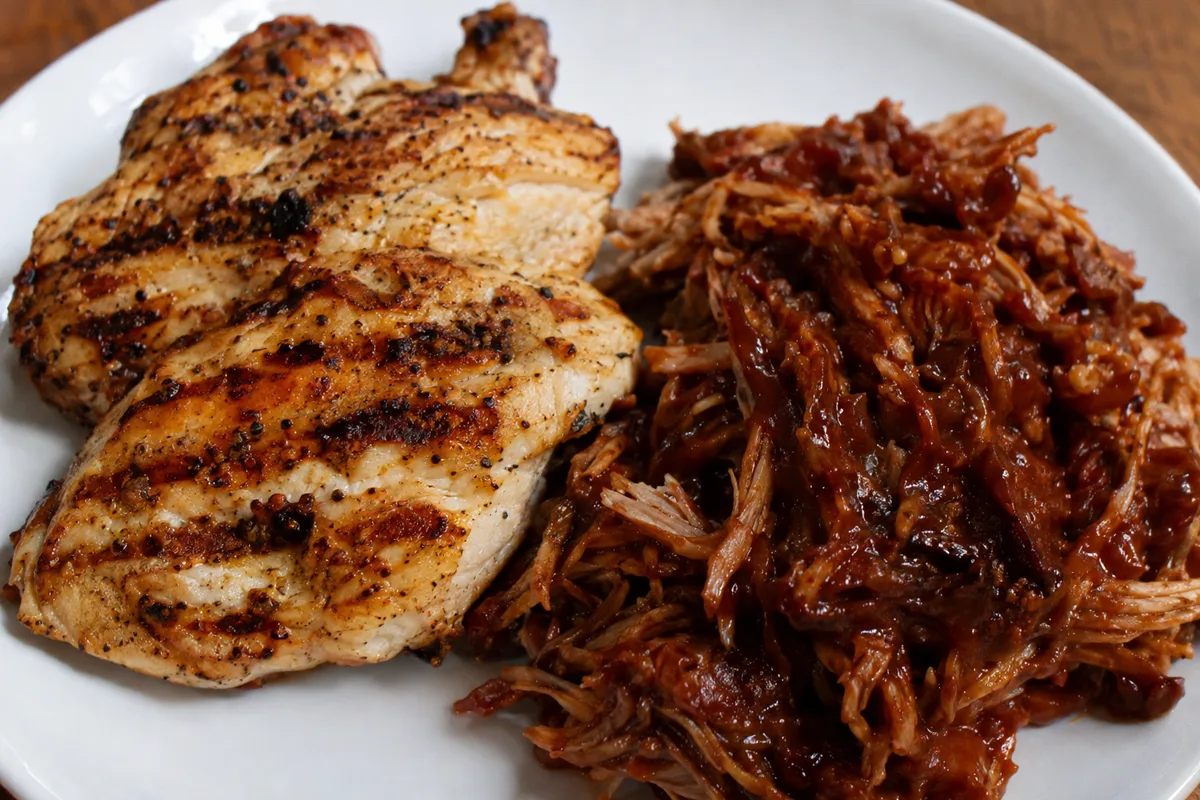
Chicken dishes can carry the same hidden extras. Sticky glazes, mayonnaise, creamy marinades and frying coatings may contribute as much to the nutritional difference as the meat itself. Compare the complete dish rather than assuming chicken is always the lighter option.
When cooking at home, log the whole sauce recipe and divide it by the number of portions served. For food prepared elsewhere, choose a database entry that describes the cooking method and sauce as closely as possible. Treat the result as a practical estimate rather than an exact measurement.
- Plain roasted or grilled meat
- Dry spice rubs
- Tomato-based sauces
- Sweet or sticky glazes
- Creamy dressings and mayonnaise
Micronutrients and salt
Pork and chicken both provide B vitamins and minerals, but their exact profiles differ by cut. Pork is particularly associated with thiamin, while both meats can contribute selenium and other nutrients. A varied diet matters more than choosing one meat for a single micronutrient.
Salt is often more relevant when comparing prepared versions. Seasoning blends, stock, brines and bottled sauces can all raise the amount, and restaurant recipes may be difficult to judge. Food labels are the clearest guide when they are available.
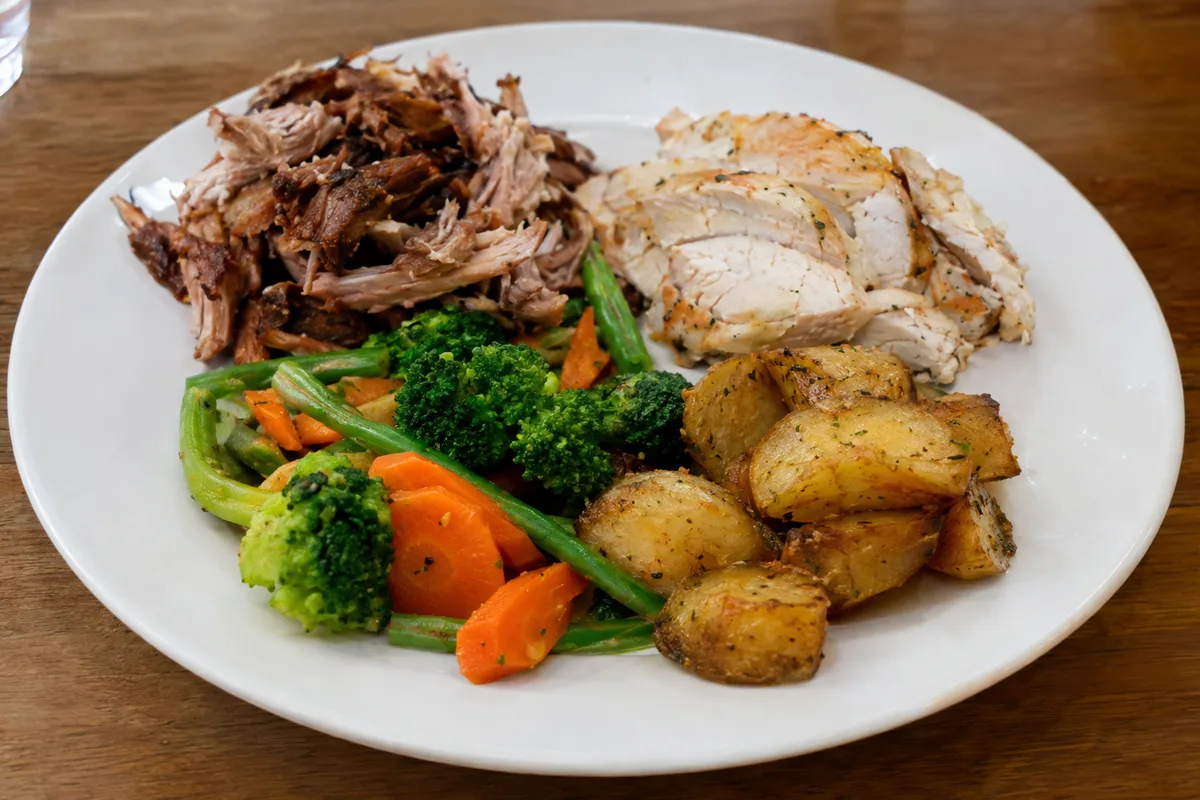
The side dishes can shift the overall balance of the meal. Chips, heavily dressed slaw and large bread portions create a different meal from meat served with vegetables and a simple grain or potato. Track the whole plate if you want the comparison to reflect what you actually ate.
- Check salt per serving on packaged foods
- Include stock, seasoning and sauce in homemade recipes
- Notice whether the chicken was brined or pre-seasoned
- Log sides and dressings separately when needed
Which should you choose?
There is no single winner for every meal. Skinless chicken breast is often the easier choice when you want a lean, protein-focused option, while pulled pork may suit you when you prefer richer flavour and a slower-cooked texture. A modest portion of either can fit into a varied eating pattern.
Your usual recipe is more important than a broad pork-versus-chicken rule. Pulled pork with a light sauce may compare differently from fried chicken with skin, just as plain chicken breast differs from chicken in a creamy sauce. Use the closest matching entry rather than relying on the meat name.
For consistent tracking, save your homemade recipes with all ingredients included. Use the cooked yield or the actual number of servings, and apply the same method each time you prepare the dish. Consistency will make your records more useful even when an exact restaurant recipe is unavailable.
- Choose by cut as well as animal
- Match the database entry to the cooking method
- Include skin, sauce, coating and cooking fat
- Keep portions comparable when reviewing past meals