
The Complete Guide to Pinto Beans
Pinto beans are a versatile source of carbohydrate, fibre and plant protein. This guide explains how to prepare them, use them in meals and record them accurately in your food log.
What pinto beans are and what they offer
Pinto beans are small, speckled beans that turn a soft pinkish-brown when cooked. They have a mild, earthy flavour and a creamy centre, so they work well with bold spices as well as simple seasonings. You can buy them dried or already cooked in tins and pouches.
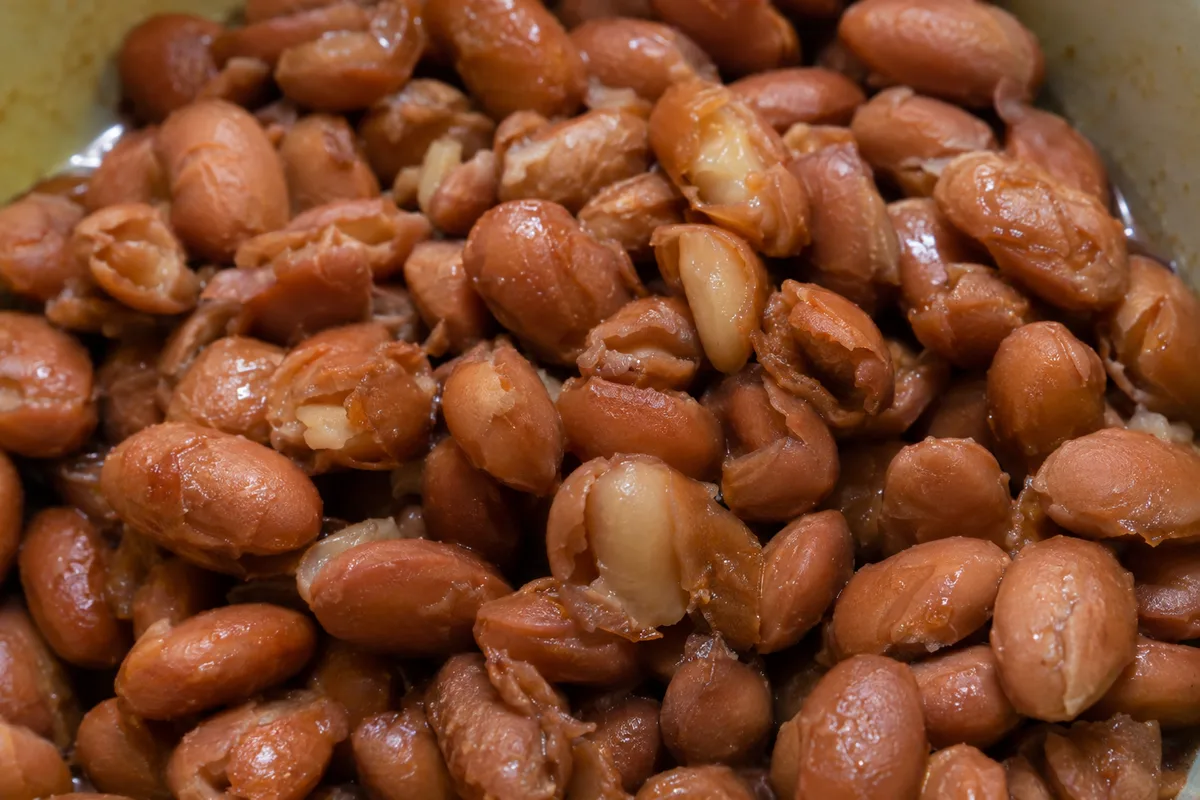
Most of their energy comes from carbohydrate, while they also provide fibre and plant protein. They contain very little fat unless oil, cheese, cream or another fatty ingredient is added. Their mix of carbohydrate, protein and fibre can make them a useful base for a filling meal.
- Use them as the main ingredient in soups, stews and bean bowls.
- Add them to salads, wraps or rice dishes.
- Mash them for a dip, spread or taco filling.
- Mix them with meat, grains or other beans to extend a dish.
Choosing between dried and ready-cooked beans
Dried pinto beans take more planning, but they let you control the texture and seasoning from the start. Ready-cooked beans are quicker because they only need draining, rinsing if preferred, and heating. Both forms can fit the same eating pattern.
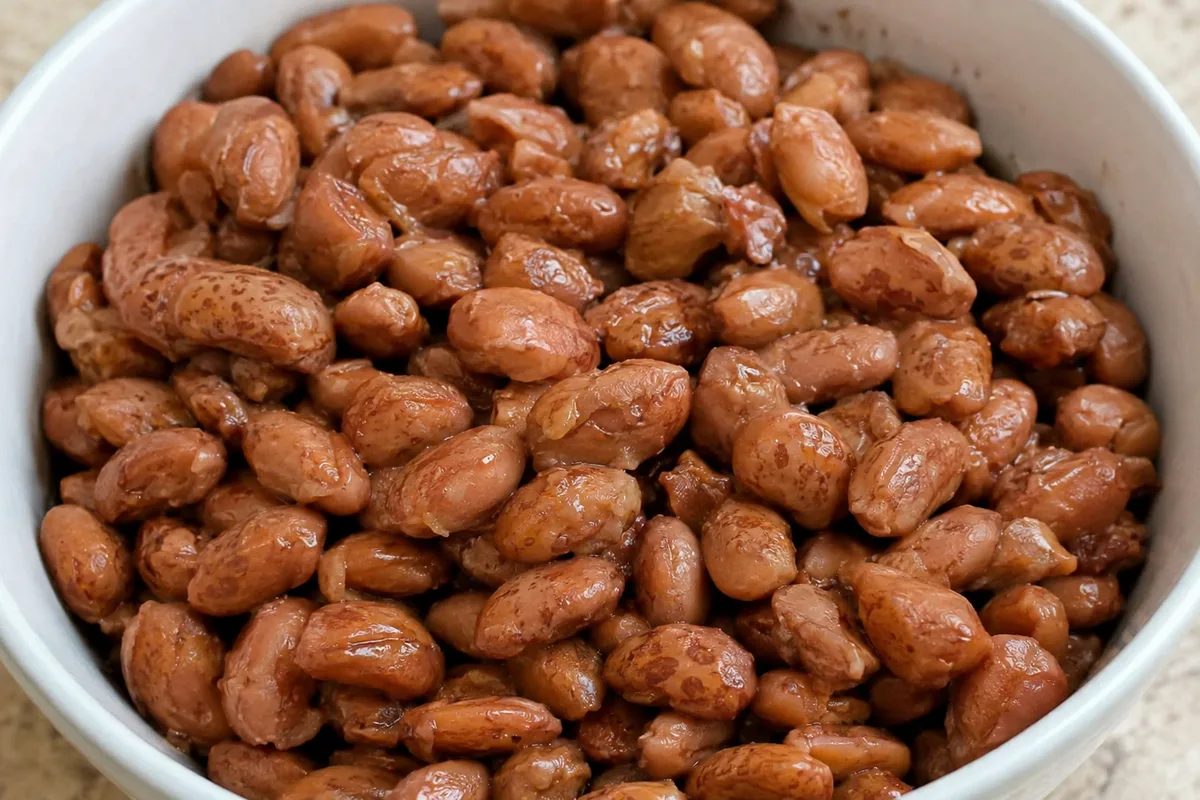
When choosing ready-cooked beans, check whether the label gives nutrition information for the beans as sold or after draining. Beans in a flavoured sauce may contain added oil, sugar or other ingredients, so they should not be logged as plain beans. If salt matters to your tracking, compare labels because the amount varies between products.
- Choose dried beans when you want control over softness and seasoning.
- Choose plain ready-cooked beans when time is limited.
- Choose beans in sauce when the sauce suits the meal, but log the full product.
- Check whether the listed serving includes or excludes the packing liquid.
How to cook dried pinto beans
First, spread the dried beans out and remove any small stones or damaged beans, then rinse them well. Soaking is optional, although it can shorten cooking and help the beans cook more evenly. If you soak them, discard the soaking water and add fresh water before cooking.
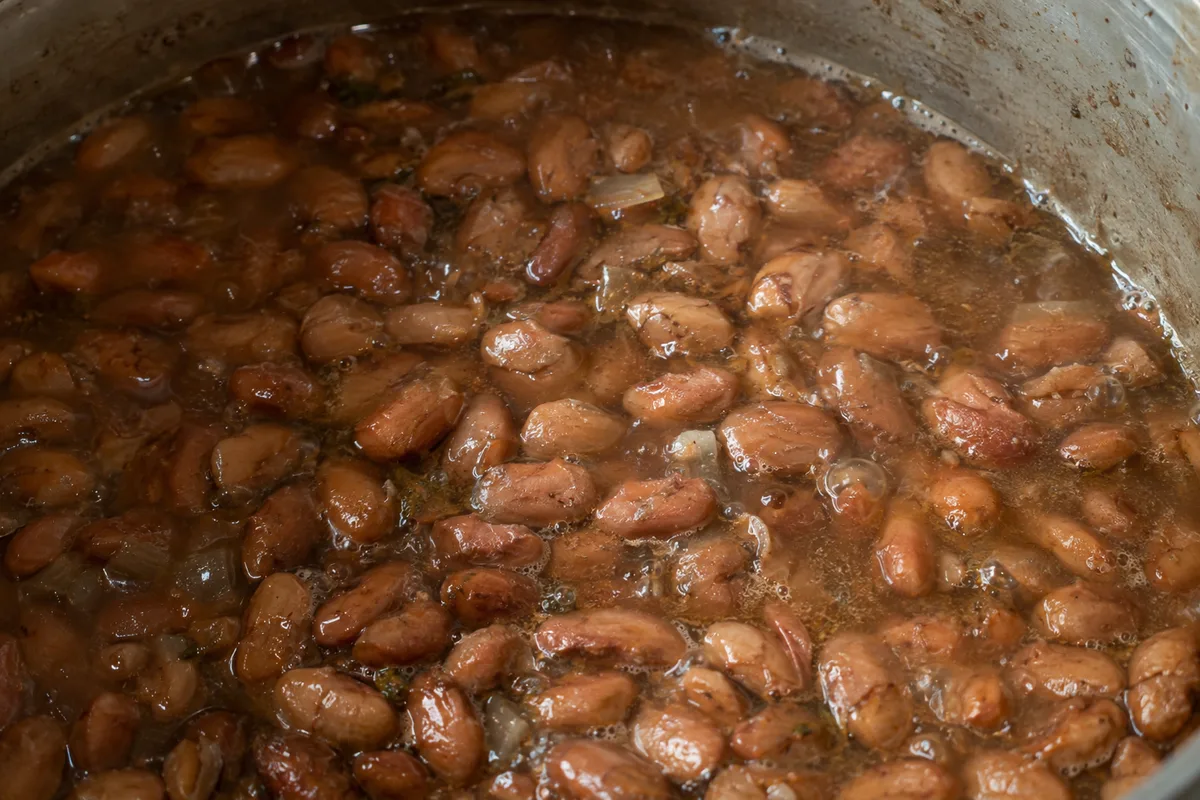
Bring the beans and water to a boil, then reduce the heat and cook gently until the centres are tender. Cooking time depends on the age of the beans, whether they were soaked and how soft you want them. Keep the beans covered with water and test a few from different parts of the pan rather than relying only on the clock.
Salt can be added during cooking for evenly seasoned beans. Strongly acidic ingredients, such as tomatoes or citrus juice, are usually better added after the beans have softened because they can slow softening. Once cooked, let the beans sit briefly in their cooking liquid if you want a creamier result.
- Sort and rinse the dried beans.
- Soak if preferred, then drain and add fresh water.
- Simmer gently rather than boiling hard.
- Check several beans for a soft, creamy centre.
- Add acidic ingredients once the beans are tender.
Seasoning pinto beans without losing track
Pinto beans readily absorb the flavours around them. Onion, garlic, dried herbs, chilli, cumin, smoked spices and citrus can add plenty of character. Most of these additions make only a small difference to the energy total when used in modest amounts, but the exact contribution depends on the quantity.
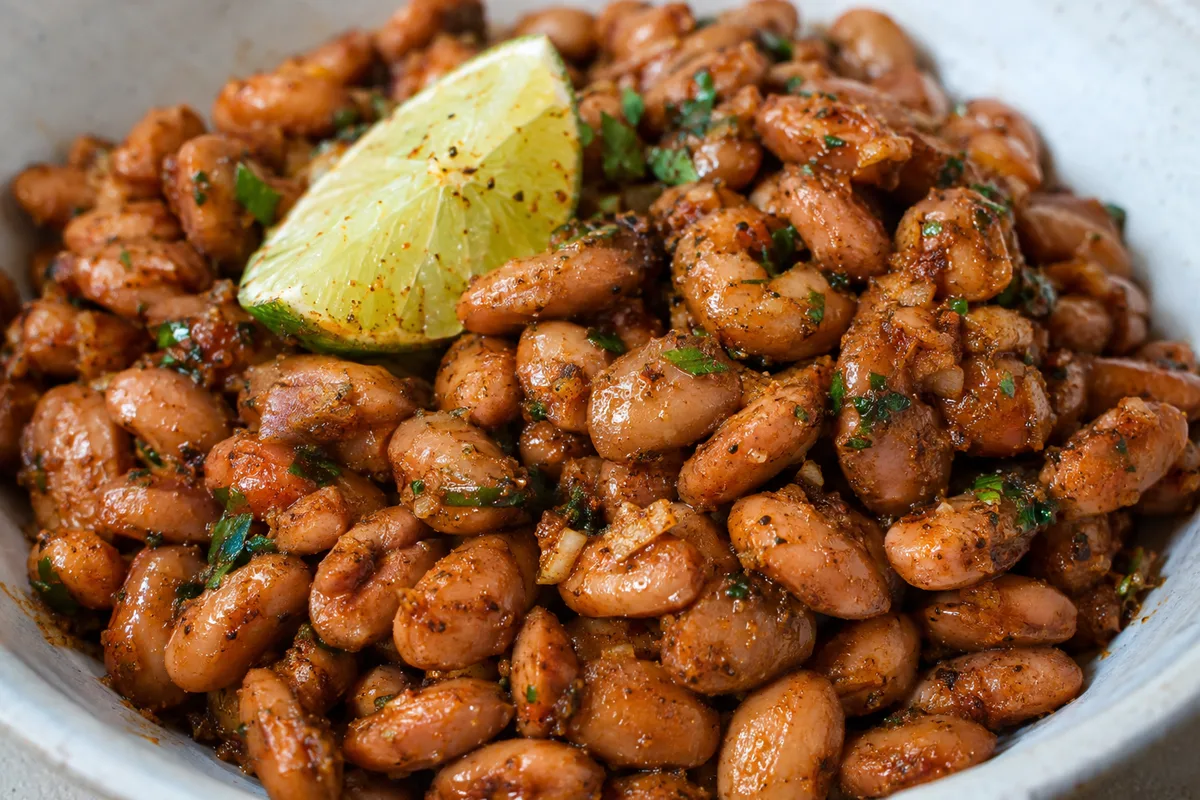
Oil, cheese, avocado, soured cream and rich sauces can change the energy and fat content more noticeably. There is no need to avoid them, but it is worth recording them separately when you track the meal. Measuring what goes into the whole recipe makes it easier to divide the finished dish into portions.
- For a smoky bowl, use cumin, smoked paprika, garlic and lime.
- For a fresh salad, use tomatoes, spring onion, coriander and citrus juice.
- For a simple side, use onion, black pepper and herbs.
- For mashed beans, add cooking liquid gradually before adding extra oil.
- For a stew, combine the beans with vegetables, tomatoes and warm spices.
Building balanced meals with pinto beans
Because pinto beans provide both carbohydrate and protein, their role on the plate can vary. They might replace part of the meat in a mixed dish, act as the main protein ingredient, or sit alongside rice or another grain. Your preferred portion depends on your appetite, goals and the rest of the meal.
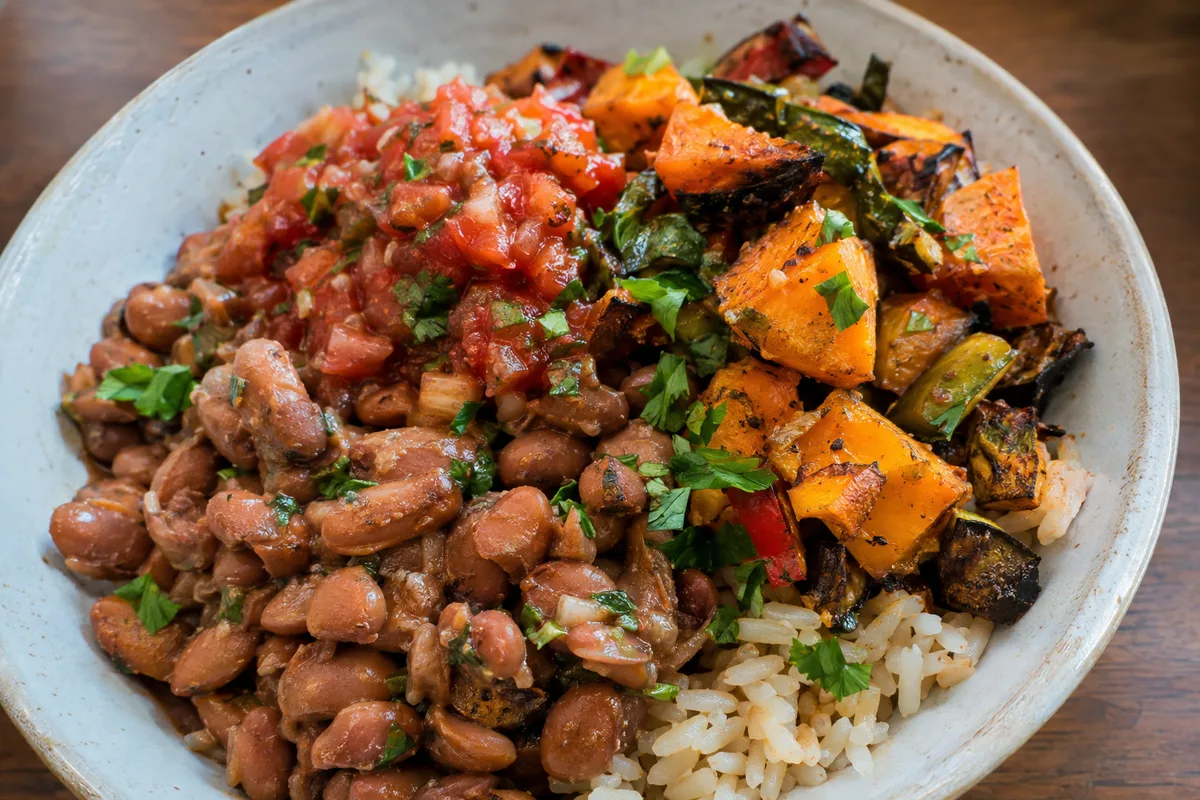
Vegetables can add colour, texture and volume, while herbs, salsa or citrus bring freshness. Rice, bread, tortillas and potatoes add more carbohydrate, so include and log them according to the meal you want. Oils, cheese and creamy toppings can add richness and should also be counted when used.
- Bean bowl: pinto beans, roasted vegetables, salsa and rice.
- Wrap: mashed pinto beans, shredded vegetables, herbs and cheese.
- Salad: chilled beans, tomatoes, sweetcorn, leaves and citrus dressing.
- Soup: pinto beans, vegetables, tomatoes and stock.
- Breakfast plate: warm beans, eggs, tomatoes and toast.
Logging, storing and reheating them accurately
Dried and cooked beans do not weigh the same because beans absorb water during cooking. For accurate logging, match the database entry to the form you weighed: dry beans with a dry entry, or cooked and drained beans with a cooked entry. Do not use the dry weight with nutrition information intended for cooked beans.
For a batch recipe, record every ingredient before cooking, then weigh or portion the finished food consistently. Divide the total nutrition by the number of portions you actually made rather than the number you expected to make. If some cooking liquid is discarded, use a cooked and drained entry where possible.
Cool leftover beans promptly and keep them covered in the fridge, or freeze them in useful portions. Reheat only the amount you plan to eat and heat it thoroughly. Storage time depends on how the beans were prepared and kept, so follow the guidance supplied with ready-cooked products and use normal food-safety checks for homemade batches.
- Confirm whether your entry is for dry, cooked or drained beans.
- Log sauces, oils and toppings separately when needed.
- Use the recipe function in your tracker for mixed dishes.
- Divide a batch by its actual finished portions.
- Label stored portions with their contents and preparation date.