
Farro or quinoa: which fits your plate better?
Farro and quinoa can both add satisfying texture and useful nutrients to a meal, but they are not interchangeable in every respect. This guide compares their key differences and shows how to choose and track them according to your needs.
First, they are different kinds of food
Farro is a type of wheat with a firm, chewy texture and a nutty flavour. The name may refer to several related wheat varieties, and it is sold as whole, semi-pearled or pearled grain. The amount of outer bran removed affects its cooking time, texture and fibre content.
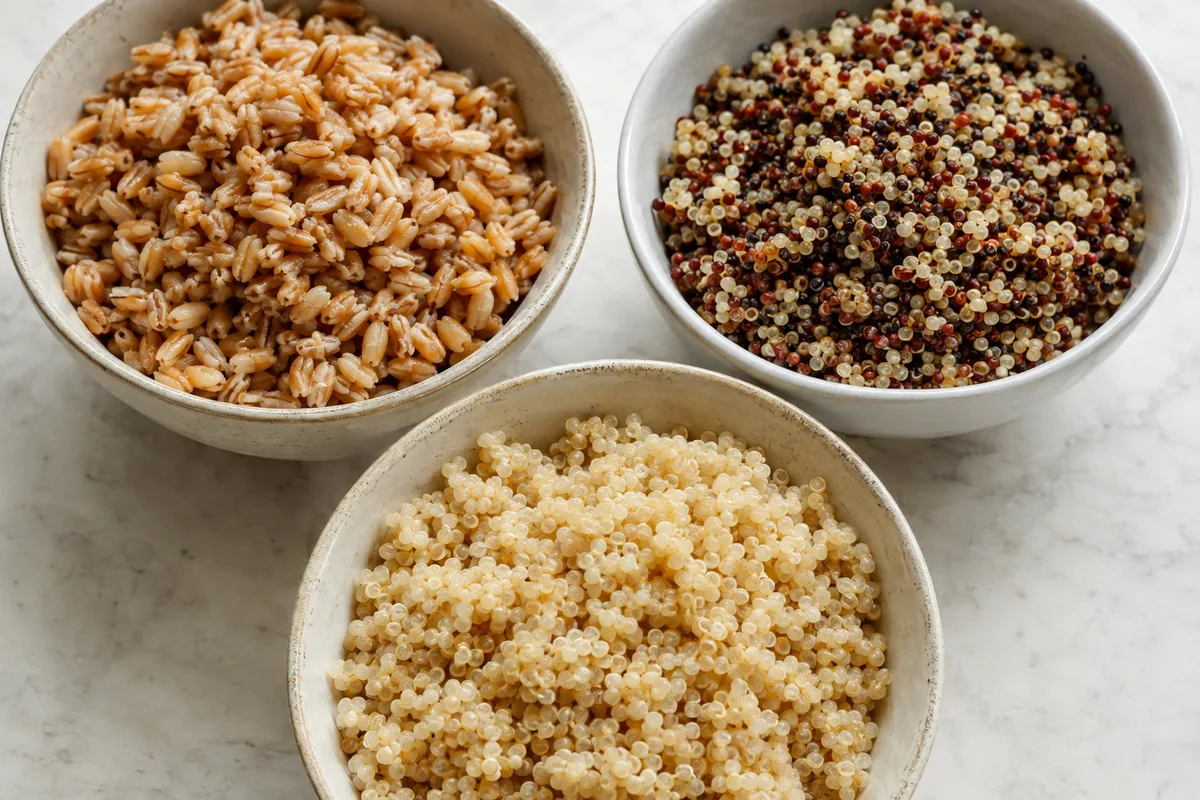
Quinoa is a seed, although it is cooked and served much like a grain. Once cooked, it is light and slightly fluffy, with a mild earthy flavour. White quinoa is usually softer, while red and black varieties tend to keep more bite.
From a dietitian’s point of view, neither food is automatically the better choice. The useful question is which one suits the meal, your eating preferences and any ingredients you need to avoid. Portion size and the rest of the plate also shape the overall nutritional picture.
- Choose farro for a hearty, chewy base
- Choose quinoa for a lighter, softer base
- Check whether farro is whole, semi-pearled or pearled
- Rinse quinoa before cooking unless the packet says it is pre-rinsed
How their nutrition compares
Both farro and quinoa provide carbohydrate, some protein and a range of vitamins and minerals. They can also contribute fibre, although the amount varies with the type, processing, cooked portion and product. Whole farro generally retains more of its outer layers than pearled farro.
Quinoa supplies all the essential amino acids, meaning the protein building blocks the body must get from food. Farro also contributes protein, but it has a different amino acid balance. In a varied diet, protein can come from several foods eaten across the day.
The choice does not need to rest on one nutrient. A bowl containing either option can be made more balanced by adding vegetables, a clear protein source and some fat for flavour and satisfaction. Your tracked totals will depend more on the actual portion and additions than on the grain or seed alone.
- Carbohydrate for energy
- Protein in modest amounts
- Fibre, depending on processing and portion
- Vitamins and minerals in different proportions
The main ingredient difference
Farro is wheat and contains gluten. It is therefore unsuitable for anyone who has been advised to avoid gluten completely. Labels still matter because products sold under the name farro can differ in variety and processing.
Quinoa does not naturally contain gluten. However, handling and packing can introduce other grains, so anyone needing strict avoidance should check the label for suitable production information. A product’s ingredient and allergen statements are more reliable than assumptions based on the food name.
If gluten is not a concern, the decision can come down to taste, texture and the role of the food in the meal. Farro holds its shape well in robust dishes, while quinoa blends easily into softer mixtures. Both can be eaten warm or chilled.
- Farro: wheat-based and chewy
- Quinoa: seed-based and naturally gluten-free
- For strict avoidance: check the packet’s ingredient and allergen information
Flavour, texture and cooking
Farro has a firm bite that works well in soups, grain bowls and substantial salads. Whole versions usually take longer to soften than pearled versions, so follow the packet rather than relying on one standard cooking time. It can be simmered until tender and drained like pasta.
Quinoa cooks into small, tender grains with a slight curl around each seed. Rinsing can remove naturally occurring compounds that may taste bitter. It absorbs seasoning well, making it useful with herbs, roasted vegetables or a simple dressing.
Both foods can be cooked in water or an unsalted stock, then cooled for later meals. Their final weight changes as they absorb water, and the amount absorbed depends on the method. This matters when logging a serving.
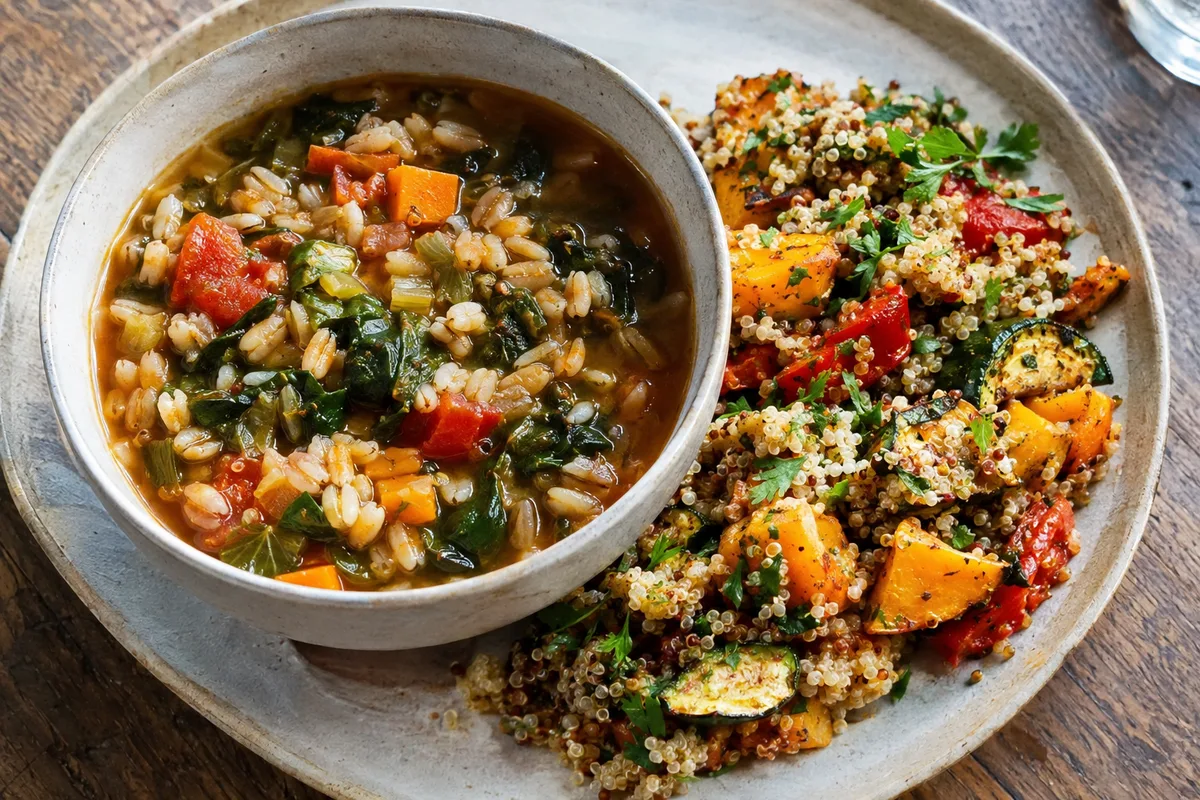
- Use farro in tomato-based soups or roasted vegetable salads
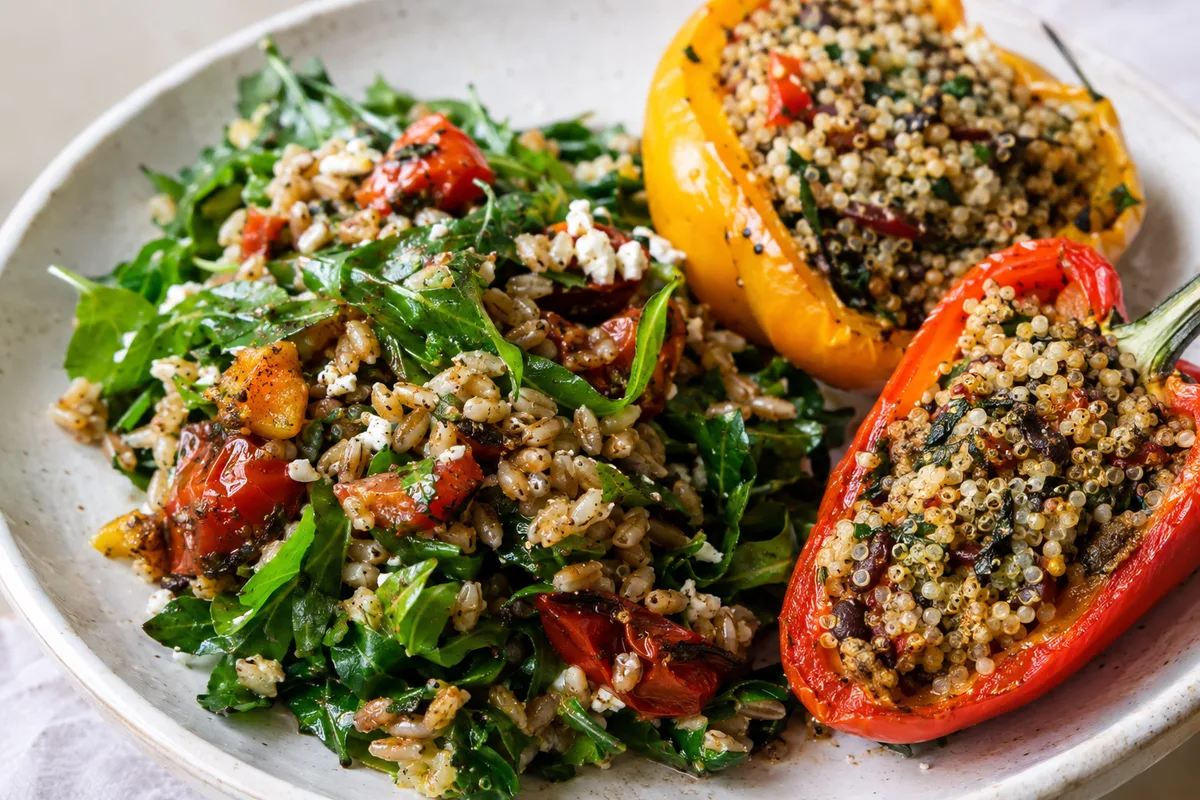
- Use quinoa in herb salads or stuffed vegetables
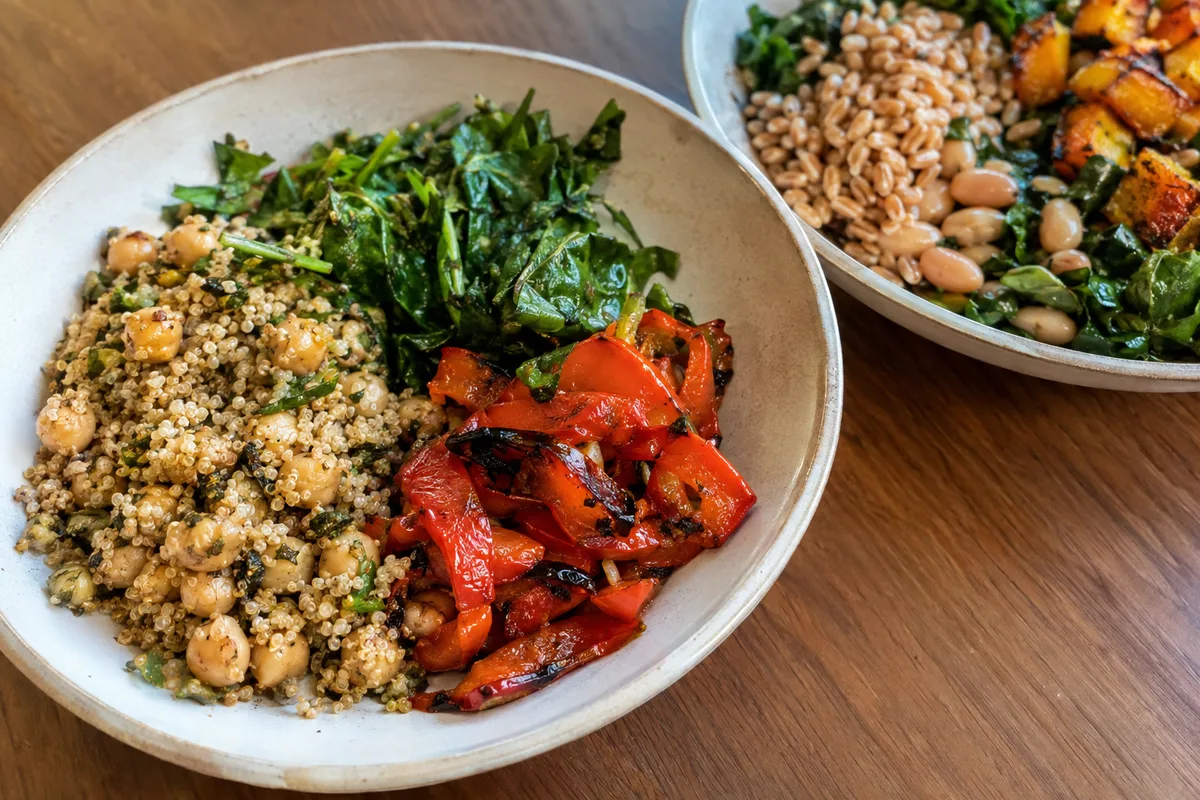
- Add either to a bowl with beans, greens and dressing
- Cool cooked farro or quinoa promptly and store it according to food-safety guidance
How to track them accurately
The most important tracking detail is whether your entry refers to dry or cooked food. Water increases weight during cooking without adding energy, so the same weight of dry and cooked farro or quinoa represents very different portions. Match your logged entry to the state in which you measured it.
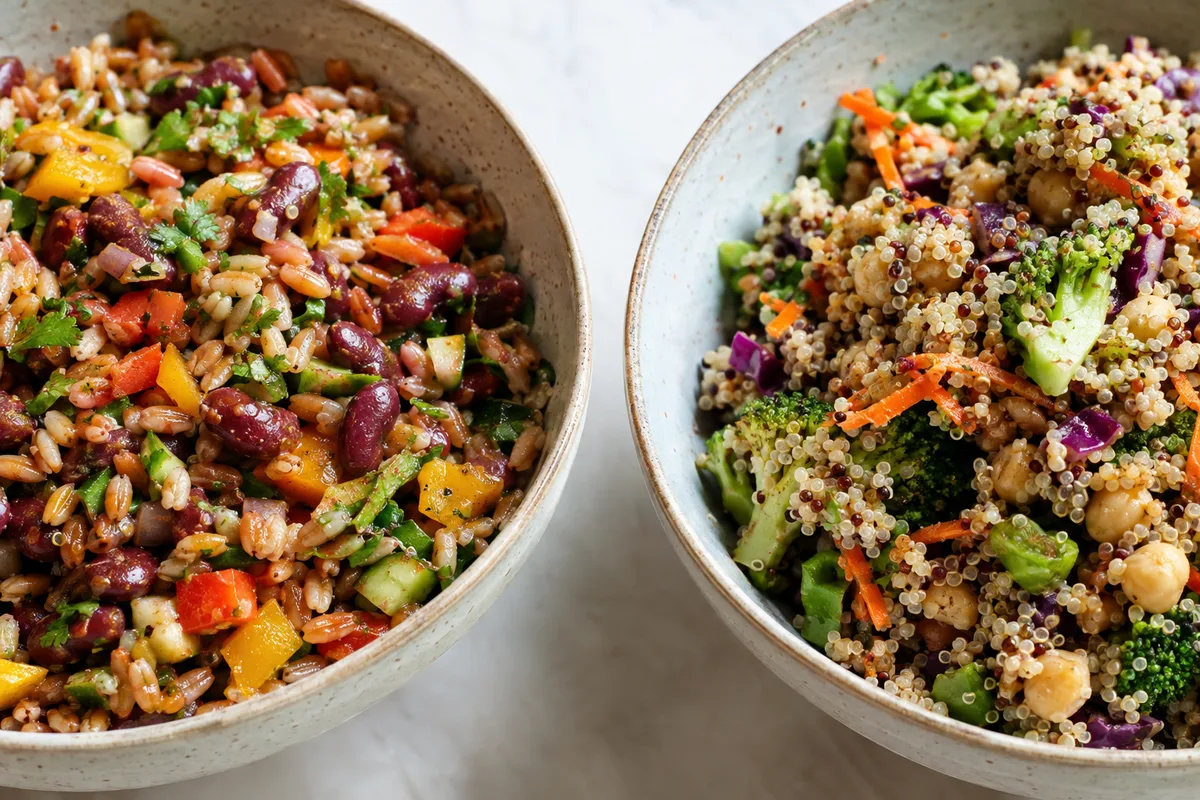
If you cook a batch, log the dry ingredients and any oil, stock or dressing used. After cooking, divide the finished batch into the number of portions you actually serve. This approach is often easier than trying to find a database entry that exactly matches your cooking method.
Packaged products can vary, particularly when grains are pre-seasoned or mixed with other ingredients. Use the packet information when it is available and select the correct preparation description. Consistency in your method is usually more useful than chasing a supposedly perfect generic entry.
- Confirm whether the entry says dry, uncooked or cooked
- Include oil, butter, dressing and other additions
- Use the packet information for a specific packaged product
- Divide batch ingredients by the portions actually served
- Save a regular recipe if you prepare it the same way often
Which one should you choose?
Choose farro when you want a substantial chew, a wheat-based grain and a base that stays firm in soups or salads. Choose quinoa when you prefer a lighter texture, need a naturally gluten-free ingredient or want a seed that cooks like a grain. Enjoyment matters because a food must work in meals you genuinely want to eat.
There is also no need to choose only one. You can use farro in one meal and quinoa in another, gaining variety in flavour, texture and nutrients. What accompanies them may make a bigger practical difference than the choice between them.
A dietitian would usually consider your full eating pattern rather than declaring a universal winner. Look at your tracked intake, the portion that satisfies you and the other foods on the plate. The better option is the one that suits your needs and helps you build a varied meal.
- For chewy salads and soups: farro
- For softer bowls and fillings: quinoa
- For variety: alternate between them
- For a fuller meal: add vegetables, a protein source and a suitable dressing