
Is It Bad to Eat Beans and Brown Rice Every Day?
Beans and brown rice provide carbohydrate, fibre, plant protein and several useful nutrients. This guide explains when the combination works well, what it may leave out and how to keep everyday meals varied.
The short answer
Eating beans and brown rice every day is not automatically bad for you. They are filling, versatile foods that can form the base of a balanced meal. Whether the habit suits you depends on the portions, the rest of your diet and how your body responds.
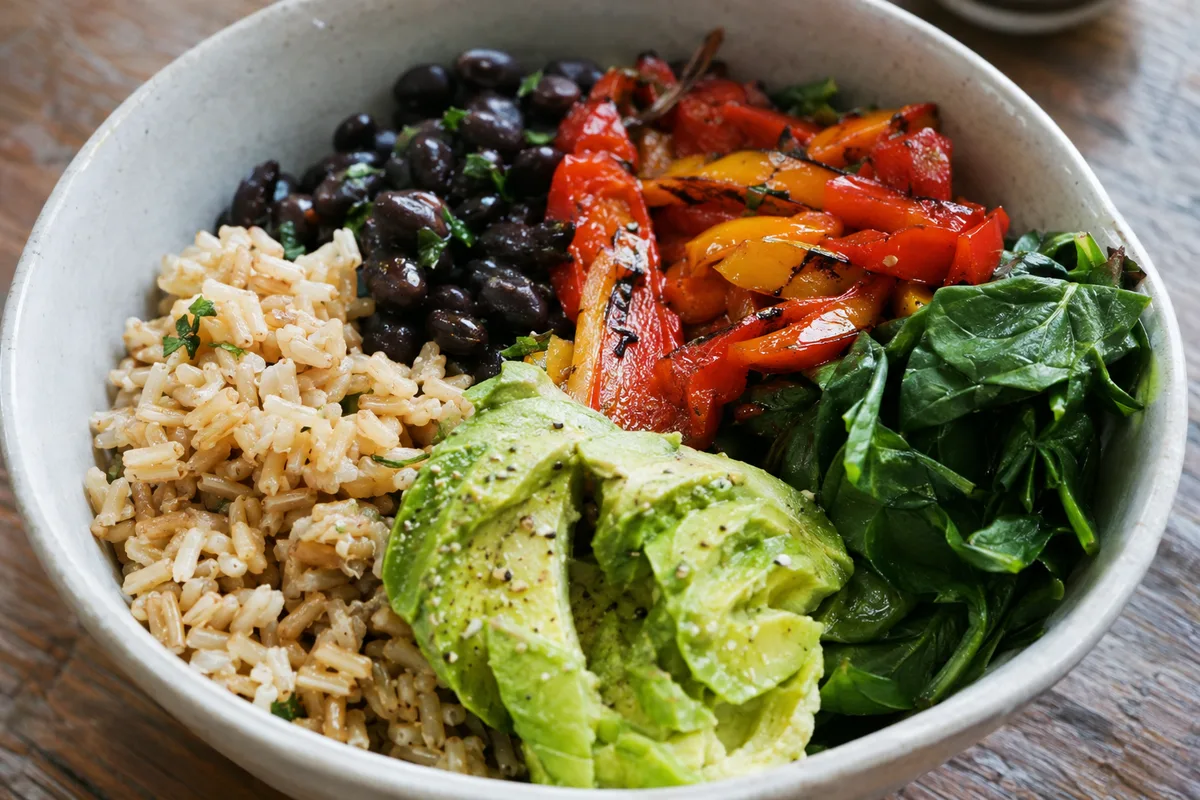
The combination gives you carbohydrate for energy, plant protein and plenty of fibre. Beans also contribute nutrients such as iron and folate, while brown rice provides nutrients including manganese and magnesium. Exact amounts vary with the type of bean, the rice and the serving size.
The main concern is not that these foods are harmful, but that repeating the same meal can narrow your overall food range. A bowl containing only beans and rice may also be short on vegetables and sources of some fats and vitamins. Think of them as a foundation rather than the whole meal.
- Add at least one colourful vegetable
- Include a suitable source of fat, such as avocado, seeds or olive oil
- Change the bean variety from time to time
- Swap the rice for another grain or starchy food on some days
Why beans and rice work well together
Protein is made from smaller parts called amino acids. Beans and rice have different amino acid profiles, so eating both helps provide a broader mix. You do not need to combine them in exact proportions or even eat them at the same sitting if your meals are varied across the day.
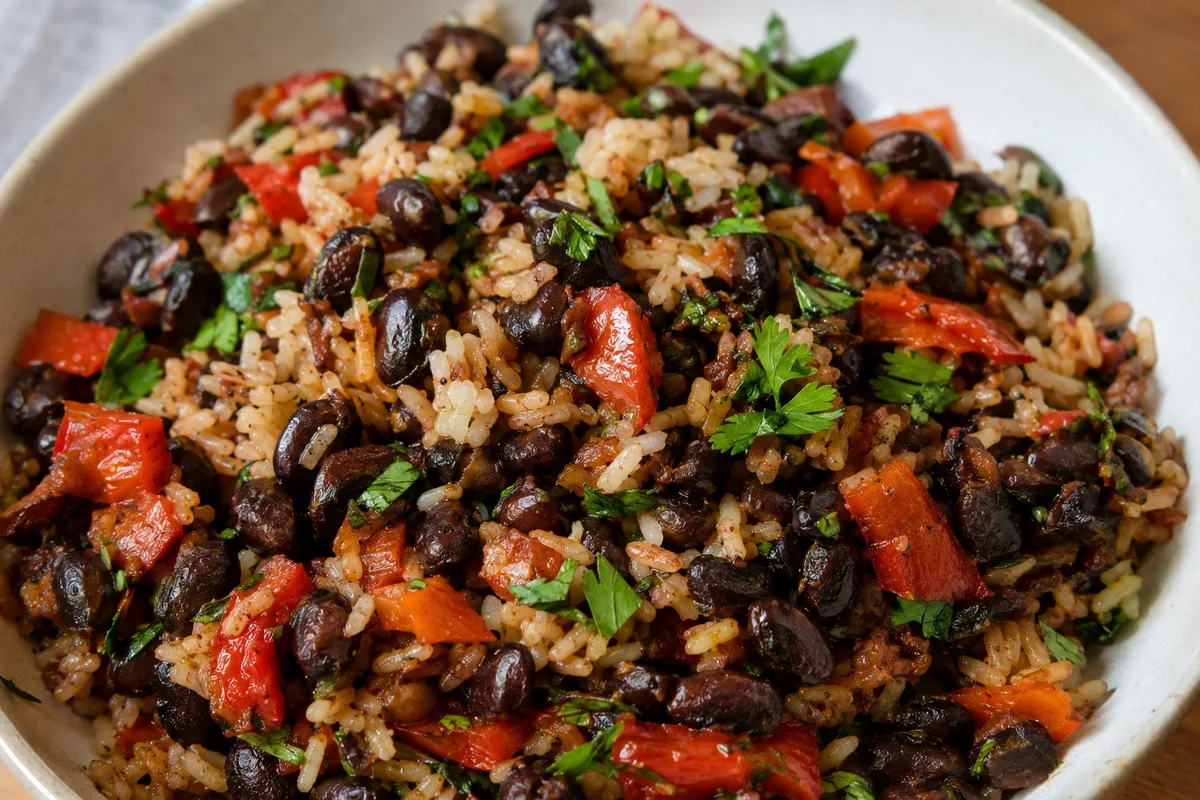
Both foods also contain carbohydrate, so the serving can become quite carbohydrate-heavy when each portion is large. That is not necessarily a problem, especially when it fits your appetite and activity. However, tracking the beans, rice, cooking oil and toppings separately gives a clearer picture of the meal.
Fibre can help a meal feel satisfying, but a sudden increase may cause wind, bloating or a change in bowel habits. Increasing the amount gradually and drinking regularly may make the adjustment easier. If a particular portion repeatedly feels uncomfortable, reduce it and build up slowly if desired.
- Black beans with brown rice and roasted peppers
- Chickpeas with brown rice, spinach and lemon
- Kidney beans with brown rice, tomatoes and avocado
- Lentils with brown rice, carrots and herbs
What an everyday bowl may be missing
Beans and brown rice cover several nutritional bases, but they do not provide everything in ideal amounts. If most meals use the same two foods, there may be less room for fruit, vegetables, nuts, seeds and other protein sources. Variety makes it easier to obtain a wider range of nutrients without trying to perfect one bowl.
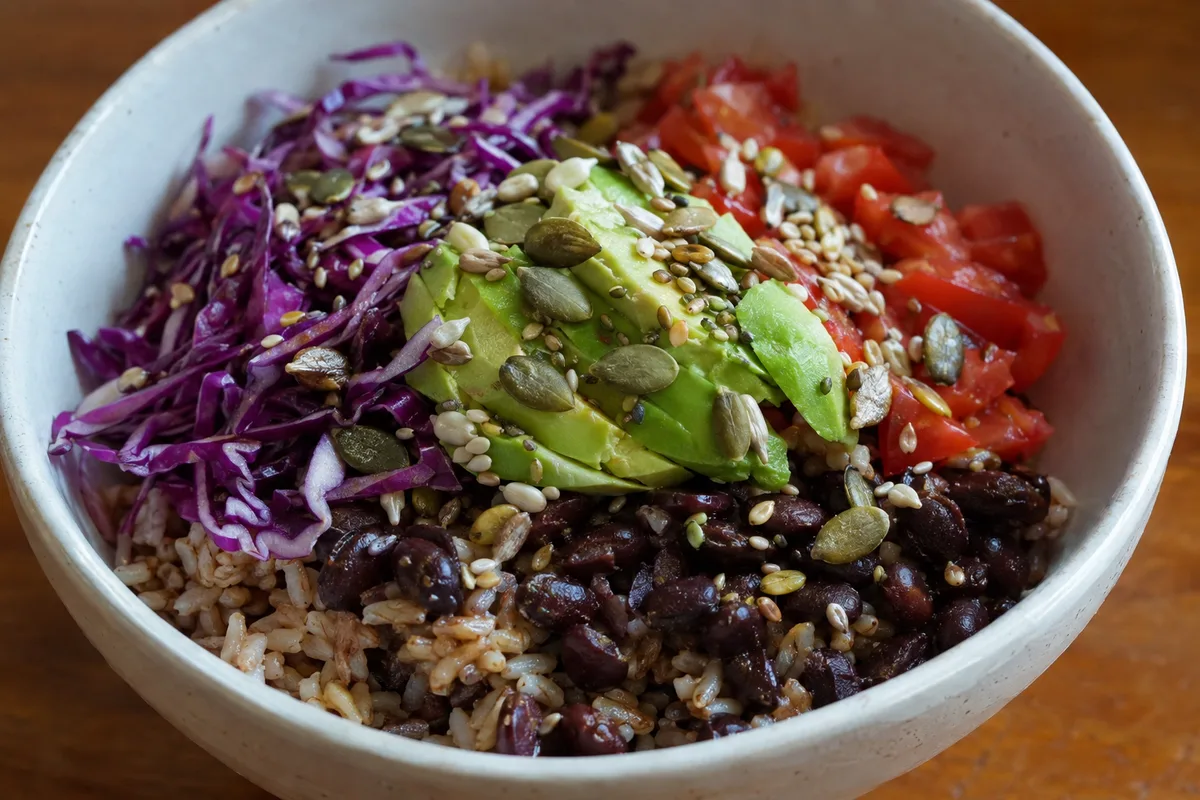
Vegetables add colour, texture and nutrients that are not as plentiful in a plain serving of beans and rice. Dark green leaves, peppers, tomatoes, carrots, mushrooms and cabbage can all work. Fresh, frozen and tinned options can be useful, provided the tinned versions fit your preferences for salt and added ingredients.
A little fat can improve flavour and make the meal more satisfying. Options include olive oil, tahini, avocado, nuts or seeds. The appropriate amount depends on your overall intake and goals, so record these additions if you track what you eat.
- Leafy greens or cabbage for bulk and colour
- Peppers or tomatoes for freshness and acidity
- Seeds or nuts for crunch and fat
- Herbs, spices, garlic or citrus for flavour
How portions and preparation change the meal
There is no single correct ratio of beans to brown rice. Someone wanting a more protein- and fibre-focused bowl might use more beans and less rice, while someone with greater energy needs might prefer more rice. Your usual intake, hunger, activity and digestive comfort all affect the right portion.
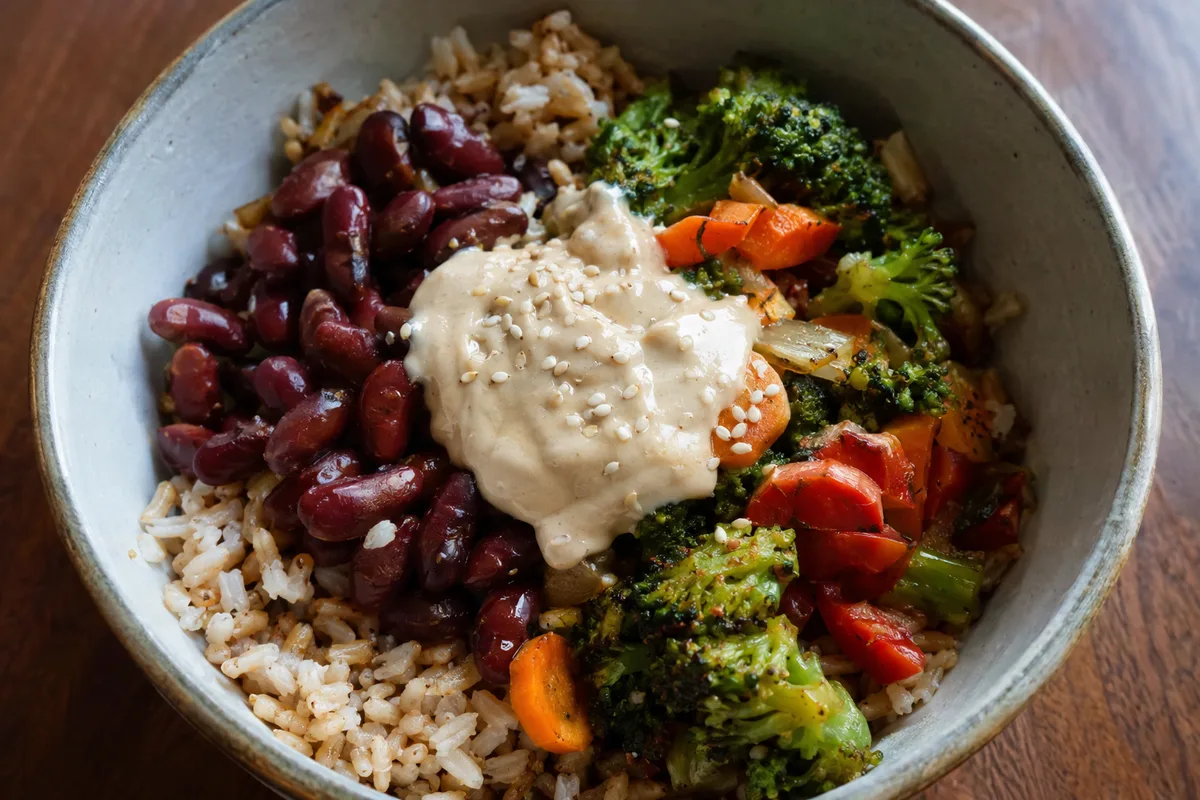
Cooking method matters too. Oil, creamy sauces, cheese and other toppings can change the energy content more than the beans or rice themselves. This does not make those additions bad, but they should be included in your food record rather than treated as invisible extras.
Tinned beans are convenient and can be rinsed before use if you want to reduce some of the salty liquid. Dried beans need soaking or cooking according to the packet instructions, and some types should never be eaten undercooked. Brown rice should also be cooked as directed so it is tender and pleasant to eat.
- Track cooked portions consistently
- Record oils, dressings and toppings
- Use hunger and fullness to review serving size
- Follow the packet instructions for dried beans and rice
Food storage matters when you eat it often
Cooked rice needs careful handling because leaving it warm for too long can make it unsafe to eat. Cool leftovers promptly, place them in the fridge and follow reliable storage guidance for how soon to use them. When reheating, make sure the rice is steaming hot throughout and avoid reheating it repeatedly.
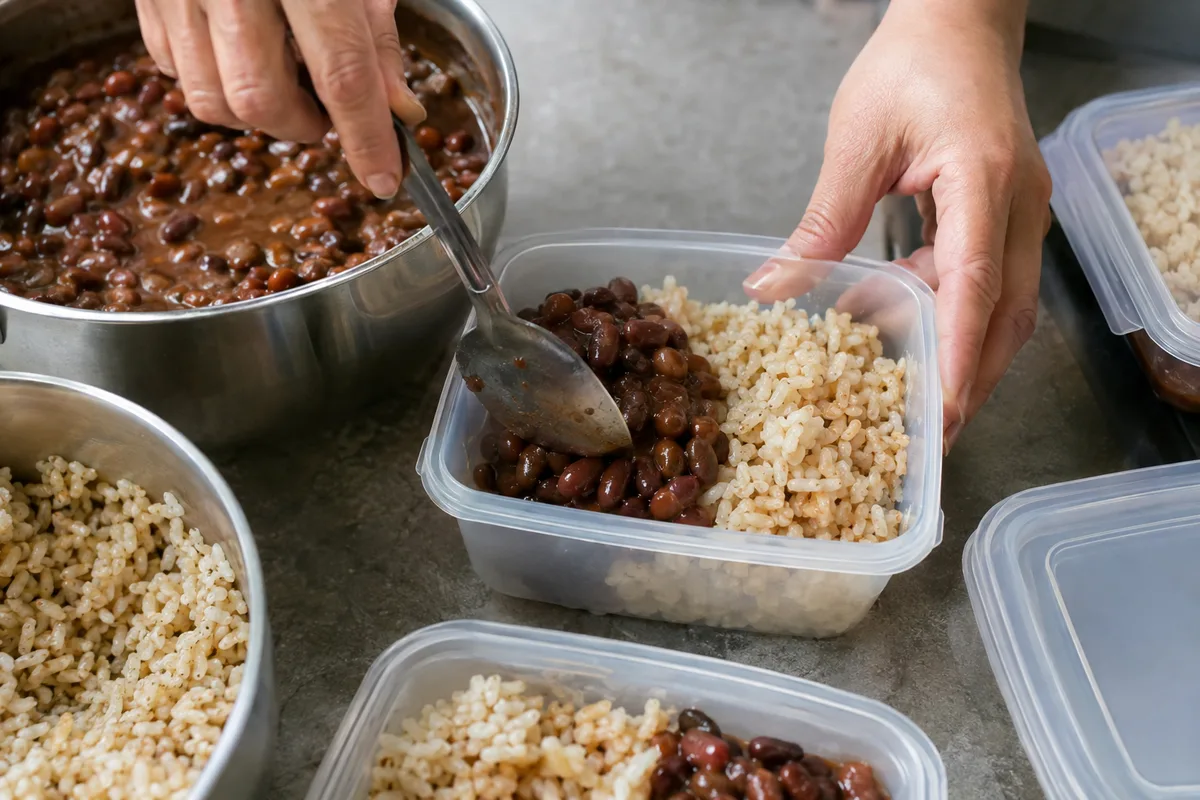
Cooked beans should also be cooled and refrigerated promptly. Keep leftovers in a clean, covered container and discard food that has been stored incorrectly, even if it looks normal. If you batch-cook, portioning the food before chilling can help it cool more quickly.
Do not rely only on smell to judge whether cooked rice or beans are safe. Good routines are more dependable than checking at the last moment. Prepare only what you can store and use safely.
- Cool leftovers promptly
- Refrigerate in clean, covered containers
- Reheat until steaming hot throughout
- Avoid repeated reheating
- Discard food left out for too long
How to keep the habit balanced
You can eat beans and brown rice regularly while changing the vegetables, seasonings and side foods. This keeps the familiar base but prevents every meal from being nutritionally and practically identical. It can also make the routine more enjoyable.
On some days, replace brown rice with oats, potatoes, wholegrain pasta, quinoa or another grain you enjoy. Change between beans, chickpeas, peas and lentils, and include other protein sources elsewhere in your diet if they suit you. No individual swap is compulsory; the aim is a broader pattern over time.
Your food log can help you notice whether the meal is satisfying and varied rather than merely repetitive. Look at your whole day or week, not just one bowl. If beans and rice crowd out most other foods or repeatedly cause discomfort, adjust the frequency, ingredients or portion.
- Rotate the bean or pulse
- Vary the grain or starchy base
- Choose different vegetables through the week
- Change herbs, spices and dressings
- Review the balance of your whole food record