
Is Gatorade Good or Bad for You?
Gatorade is designed to provide fluid, carbohydrate and electrolytes around exercise. Whether it suits you depends on your activity, diet and the type and amount you drink.
What Gatorade provides
Gatorade is a sports drink containing water, electrolytes and, in many versions, carbohydrate from sugar. Electrolytes such as sodium are lost in sweat, while carbohydrate can provide energy during sustained activity.
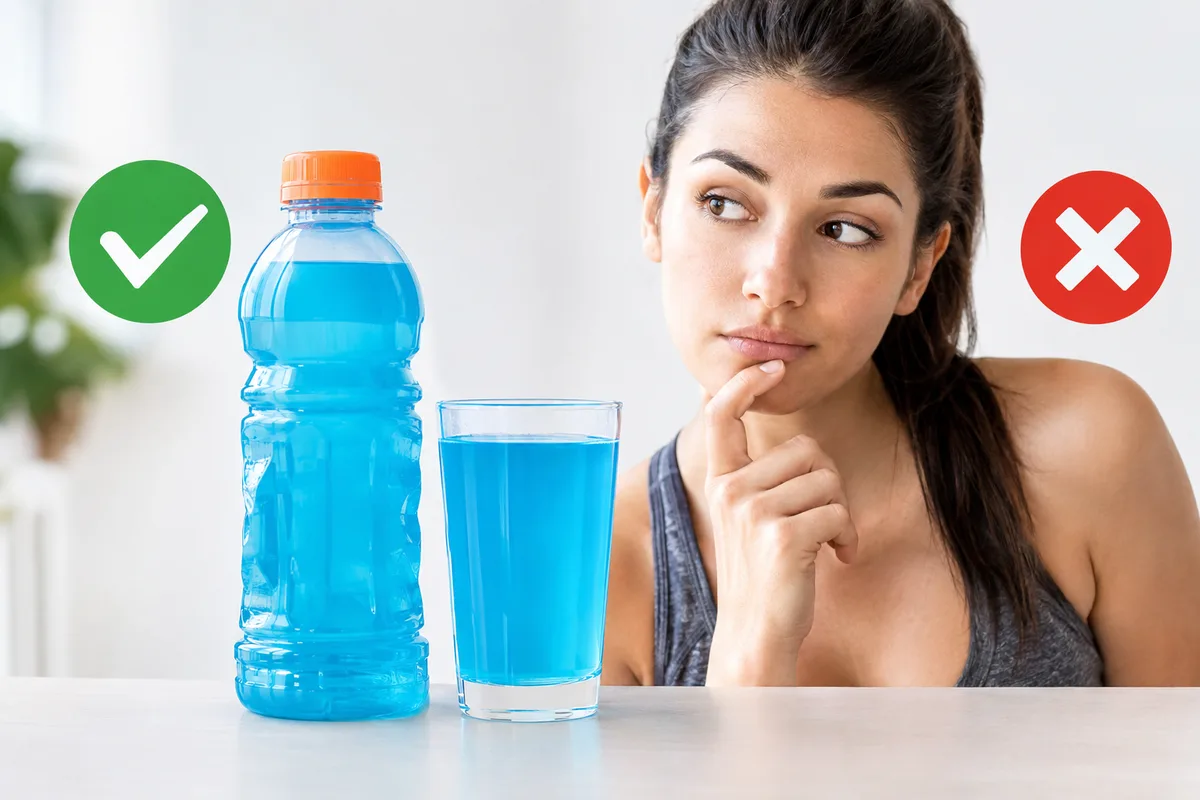
The exact ingredients and nutrition vary between products, so check the label of the version you are tracking. Log the serving you actually drink rather than assuming one bottle equals one serving.
When it may be useful
A sports drink can be practical during long, demanding exercise, especially when you sweat heavily or train in hot conditions. It combines fluid with carbohydrate and electrolytes in a form that is easy to consume while moving.
The amount you need depends on the person, the session, the conditions and what you have eaten beforehand. For shorter or easier activity, ordinary water and regular meals may already cover your needs.
When it may add more than you need
If you drink regular Gatorade while sitting, working or doing light activity, its added sugar may contribute energy without being especially filling. Its sodium may also be unnecessary when your usual food already provides enough salt.
Sugar-free versions reduce the carbohydrate and calorie contribution, but they do not provide the same exercise fuel. Flavoured drinks can also be easy to sip without noticing the total amount, so include every refill in your food record.
How to decide if it fits
Think about the job you want the drink to do. For hydration during an ordinary day, water is usually the simpler choice; for prolonged, strenuous exercise, a sports drink may serve a clearer purpose.
Use the nutrition label to compare sugar, carbohydrate, sodium and serving size with your daily log. Gatorade is not automatically good or bad: its value depends on timing, quantity, activity and the rest of your diet.