
Is It Bad to Eat Cereal Every Day?
Eating cereal every day is not automatically bad, especially when it helps you make a practical and satisfying meal. This guide explains what to look for, how to improve your bowl and how to track it accurately.
The short answer
Cereal can be part of your daily routine without being a problem. What matters is the cereal you choose, how much you serve and what else you eat across the day. A bowl containing fibre, protein and fruit will usually be more filling than a small serving of sweetened cereal on its own.
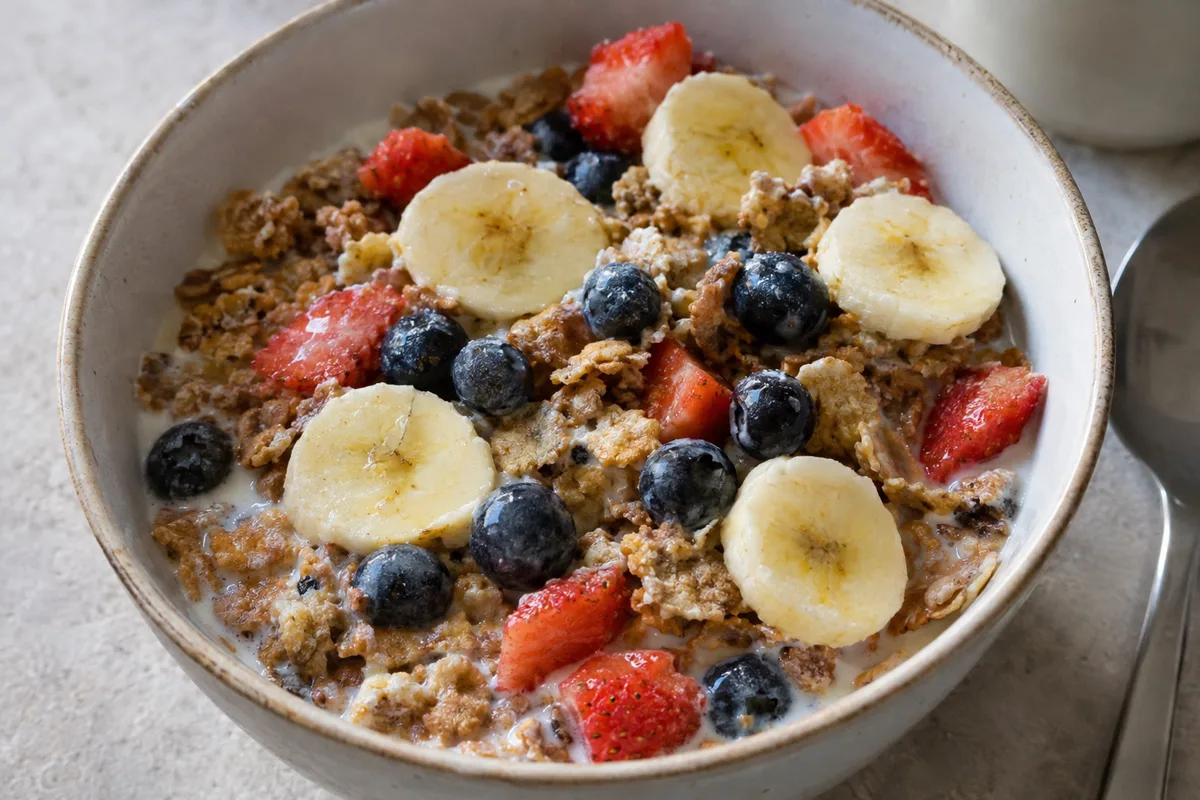
It is also worth considering why you eat it every day. A familiar breakfast can save time and make food tracking easier, but repeating the same meal may limit variety. You do not have to stop eating cereal; you can change the cereal, toppings or accompanying foods instead.
- Choose a cereal with whole grains or plenty of fibre
- Include a source of protein
- Add fresh, frozen or dried fruit
- Keep other meals varied
Check what the cereal provides
The front of a cereal box may focus on one appealing feature, but the full nutrition label gives a clearer picture. Compare the fibre, sugars, protein and salt, and read the ingredients list to see what makes up most of the product. Ingredients are generally listed in order by weight.
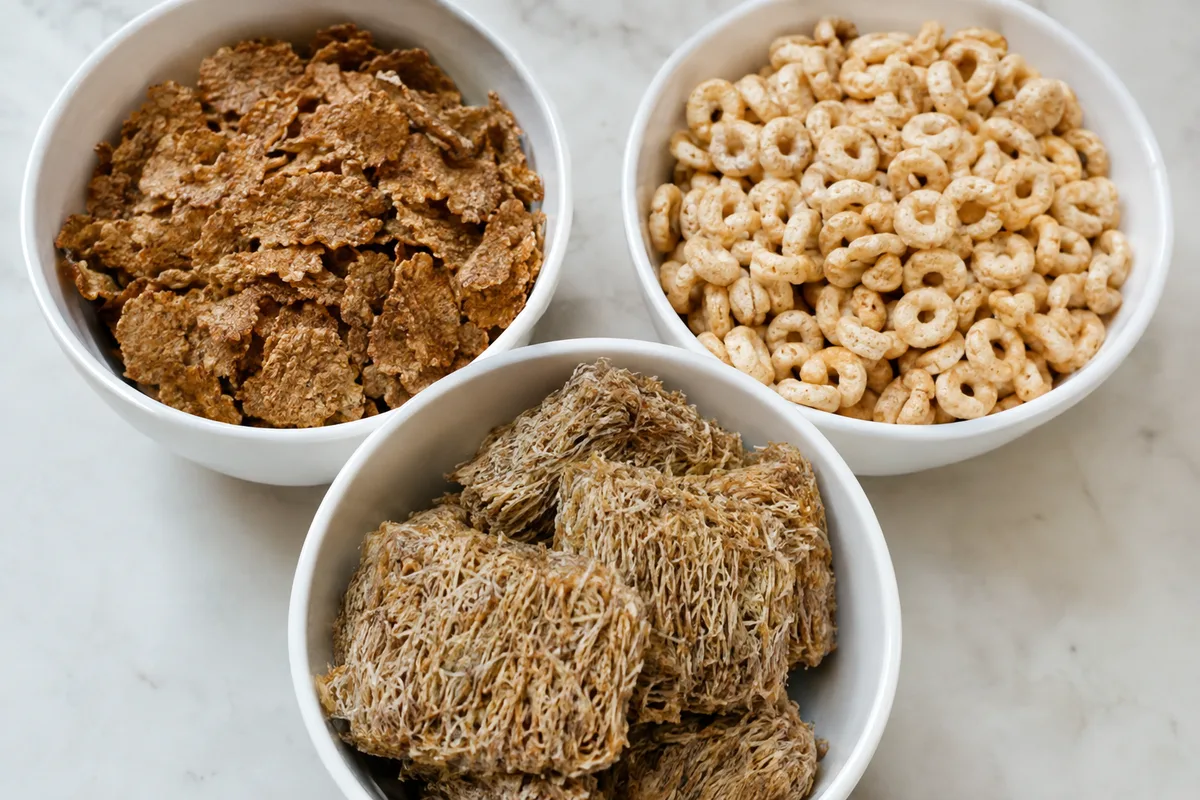
Wholegrain wheat, oats and bran can provide more fibre than heavily refined grains. Fibre adds bulk and may help a meal feel more substantial, while protein can support fullness. Some cereals also have added vitamins and minerals, although the amounts vary by product.
Sugar does not make a cereal forbidden, but it can be easy to overlook when cereal tastes light or crisp. Compare similar cereals rather than judging one figure without context. If your favourite is sweet, mixing it with a less sweet cereal is one way to keep the flavour while changing the overall bowl.
- Look for whole grains near the start of the ingredients list
- Compare fibre between similar products
- Notice added sugars and sweet coatings
- Check salt as well as sweetness
Build a more balanced bowl
Cereal alone may not keep you satisfied for long, particularly if it is low in fibre and protein. Milk or a suitable alternative can add protein, while yoghurt, nuts and seeds can make the meal more substantial. The exact combination depends on your preferences and what fits the rest of your food intake.
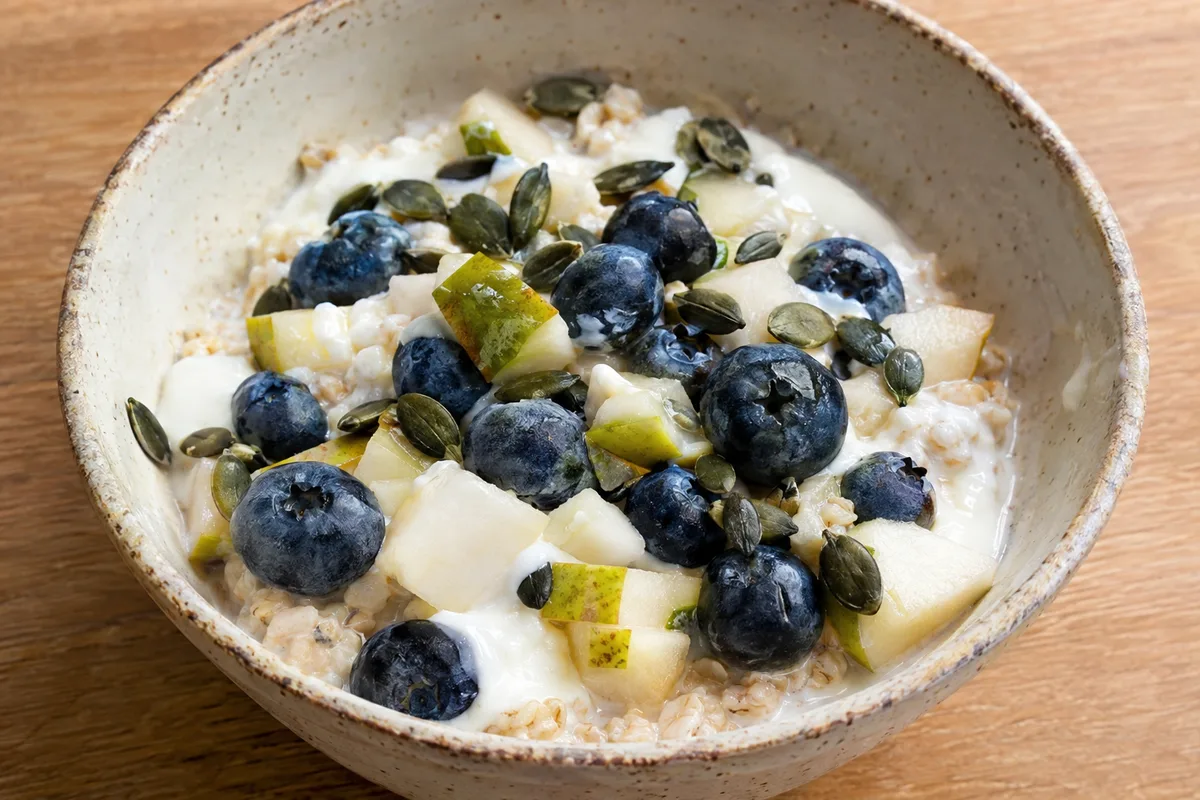
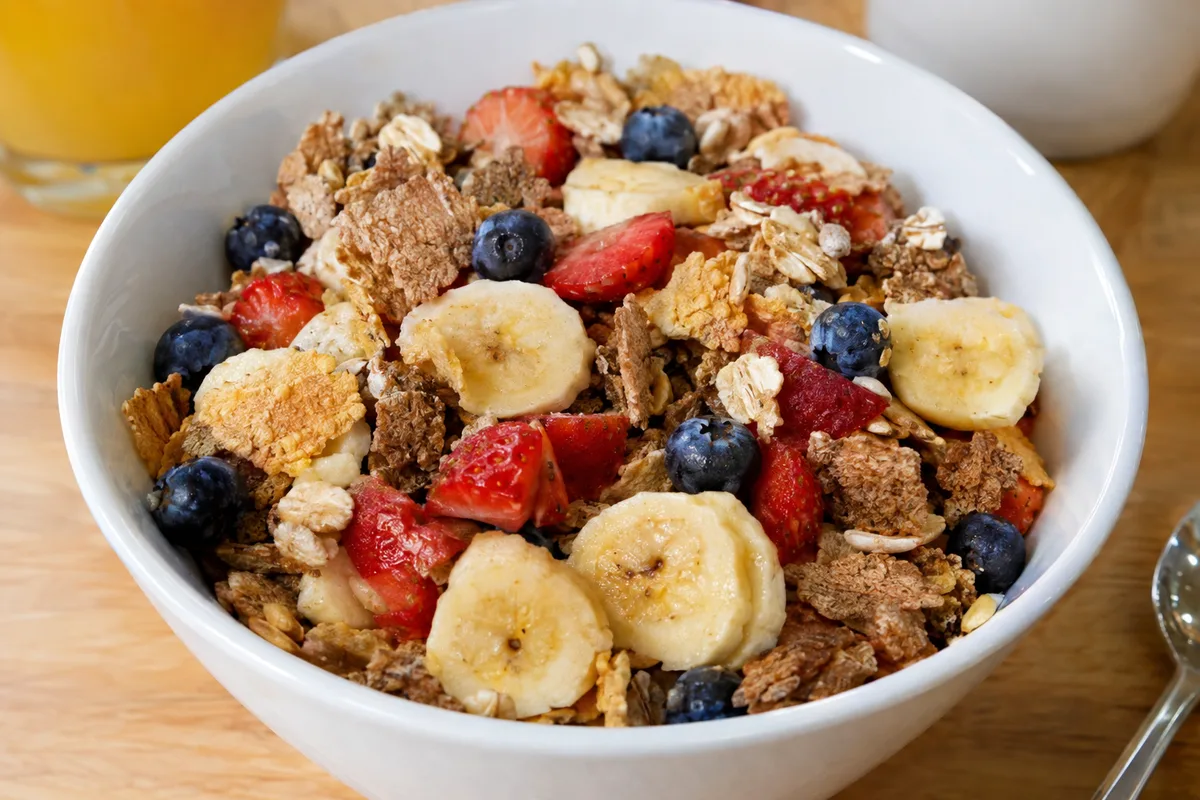
Fruit adds flavour, texture and variety without requiring a different breakfast. Berries, sliced banana, grated apple, pear or chopped stone fruit all work well. Frozen fruit is also useful, especially when fresh choices are limited.
Toppings still count towards your tracked intake. Nuts, seeds, dried fruit and nut butter are nutritious, but small-looking servings can contain more energy than expected. Log each part of the bowl separately until you know what your usual combination provides.
- Oat cereal, milk and sliced banana
- Bran cereal, yoghurt and berries
- Wheat biscuits, milk and grated apple
- Unsweetened muesli, yoghurt and chopped pear
Pay attention to the portion
Cereal is easy to pour, and the amount in your bowl may be different from the serving shown on the packet. Bowl size, cereal shape and how densely it settles all affect what a portion looks like. Your suitable amount depends on your appetite, goals and the rest of the meal.
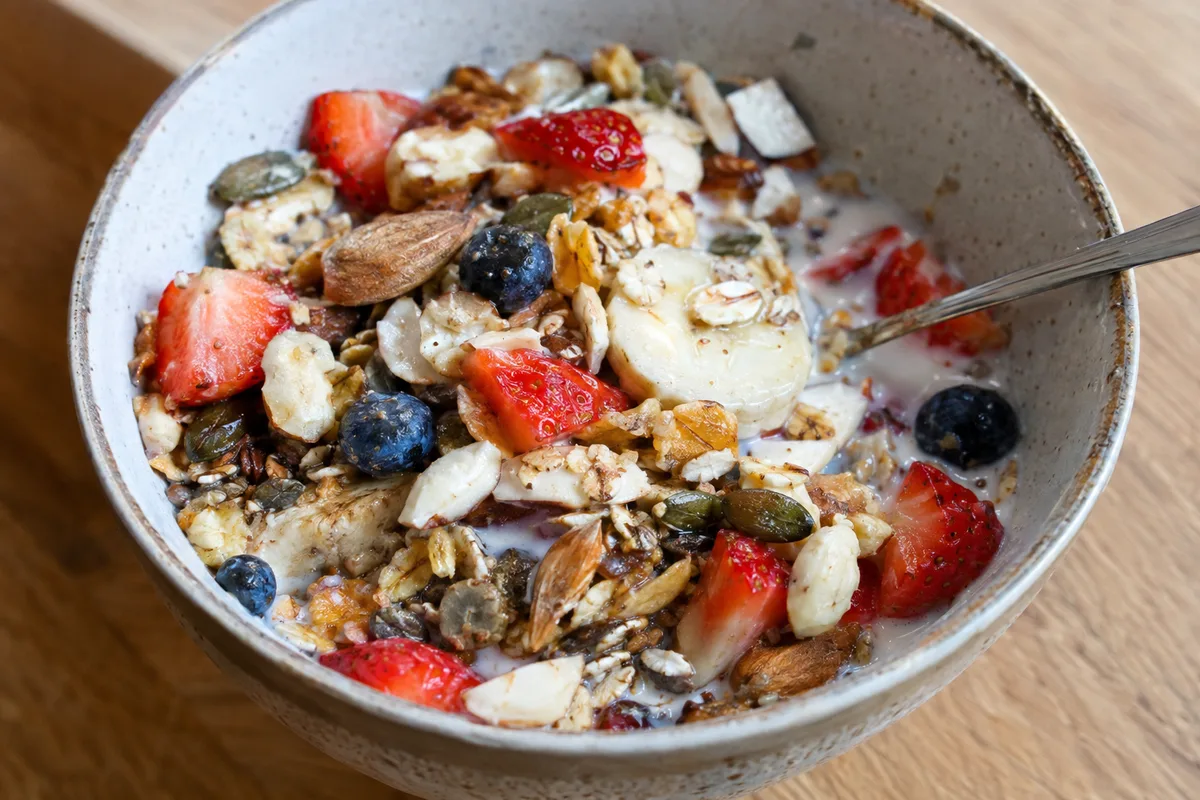
Since you already track your food, record the amount you genuinely eat rather than automatically using the packet serving. Include milk, yoghurt and toppings as separate entries where needed. This gives you a more useful picture without labelling the meal as good or bad.
A larger portion is not automatically wrong, and a smaller one is not automatically better. If you feel hungry soon afterwards, the answer may be more food, more protein or more fibre rather than simply more cereal. Use your tracking notes alongside your hunger and energy levels.
- Enter the cereal amount you actually serve
- Track milk or yoghurt separately
- Include fruit, nuts, seeds and sweeteners
- Review whether the meal keeps you satisfied
Variety still matters
Eating the same cereal every day can be convenient, but small changes can broaden the range of nutrients and textures in your diet. You might rotate between oats, wheat, bran and mixed-grain cereals. You can also keep the cereal and vary the fruit, dairy food or alternative served with it.
Breakfast does not need to change constantly if the rest of your meals are varied. Look at your overall pattern rather than expecting one bowl to provide everything. Vegetables, fruit, pulses, grains, protein foods and sources of fat can all appear elsewhere in the day.
If cereal has become your default because nothing else feels practical, prepare a few equally simple alternatives. Overnight oats, yoghurt with fruit, or toast with eggs can provide a change without creating a complicated morning routine. Choose options that you enjoy and can track consistently.
- Rotate between oat, wheat, bran and mixed-grain cereals
- Change the fruit with the season
- Alternate milk, yoghurt or a suitable alternative
- Occasionally swap cereal for another simple breakfast
When a daily bowl may need adjusting
Your cereal habit may need attention if the meal regularly leaves you hungry, crowds out more varied foods or makes your tracked intake harder to manage. The same applies if most of the bowl consists of a highly sweetened cereal with little fibre or protein. These are reasons to adjust the meal, not necessarily to remove cereal completely.
Start with one practical change and see how it affects the meal. You could mix cereals, add yoghurt, include fruit or alter the portion. The best daily breakfast is one that fits your needs, tastes good and works as part of your wider eating pattern.
There is no single cereal or portion that suits everyone. Your appetite, activity, preferences and overall intake all influence what works. Review the full day in your food log before deciding that cereal itself is the issue.
- Adjust the cereal if hunger returns quickly
- Add fibre or protein before removing the meal
- Consider how the bowl fits the full day
- Keep the routine if it remains balanced and enjoyable