
How to Tell Whether Ricotta Cheese Has Spoiled
Ricotta is naturally soft, moist and mildly scented, so normal changes can sometimes look suspicious. This guide explains which signs matter, how storage affects freshness and when not to taste it.
Start with the label and storage history
Before opening the tub, check its use-by date and follow any storage instructions on the packaging. A use-by date is about safety, so ricotta should not be eaten after it has passed. Do not rely on smell or appearance to overrule that date.
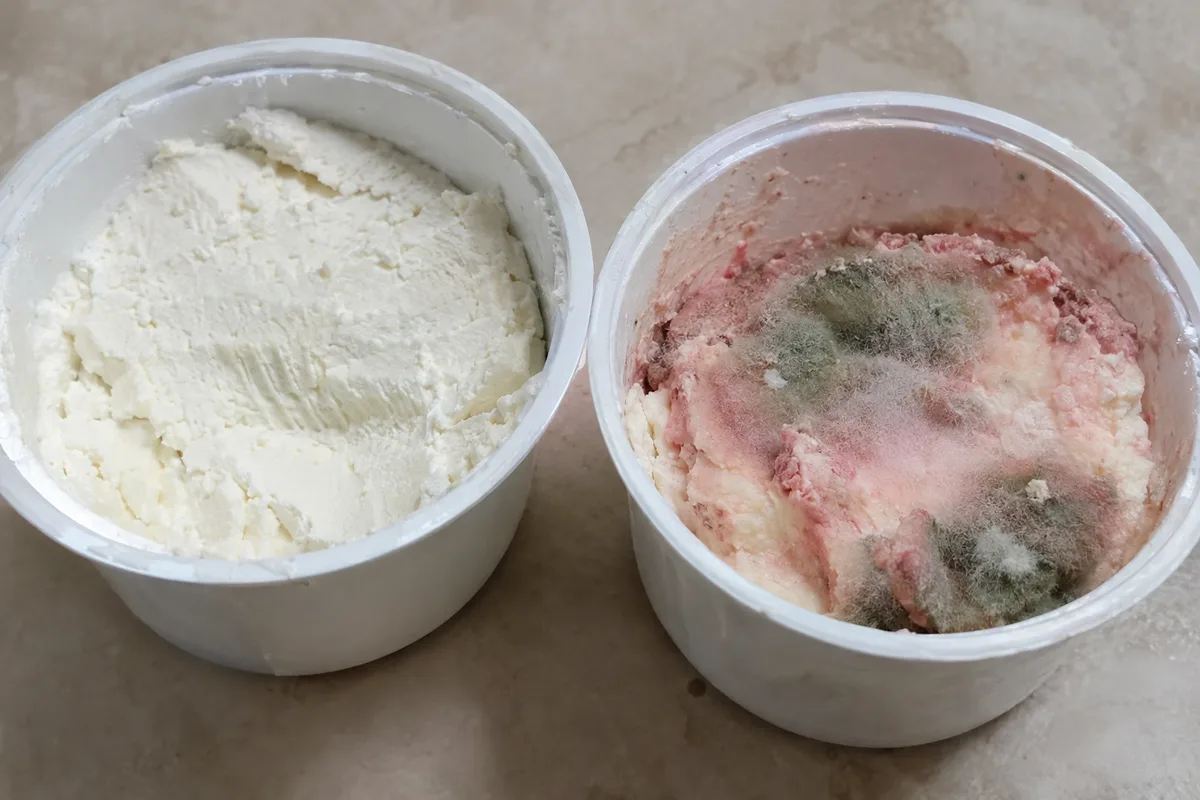
Once opened, ricotta is exposed to air, utensils and temperature changes. Think about whether it has stayed properly chilled and whether clean utensils were used each time. If you cannot tell how it was stored, throwing it away is the safer choice.
A tub that is swollen, leaking or damaged should also be discarded. Do not taste ricotta from a damaged package to decide whether it is acceptable. The condition of the packaging is part of the check, not just the cheese inside.
- Check the use-by date before opening the tub
- Follow the storage instructions on the packaging
- Discard a swollen, leaking or damaged container
- Consider whether the ricotta has remained properly chilled
Look for changes in colour and surface
Fresh ricotta is usually white or creamy, although its exact colour varies with the milk and recipe. Any new patches of pink, green, blue, grey or dark colour are warning signs. Fuzzy growth or distinct spots also mean the whole tub should be discarded.
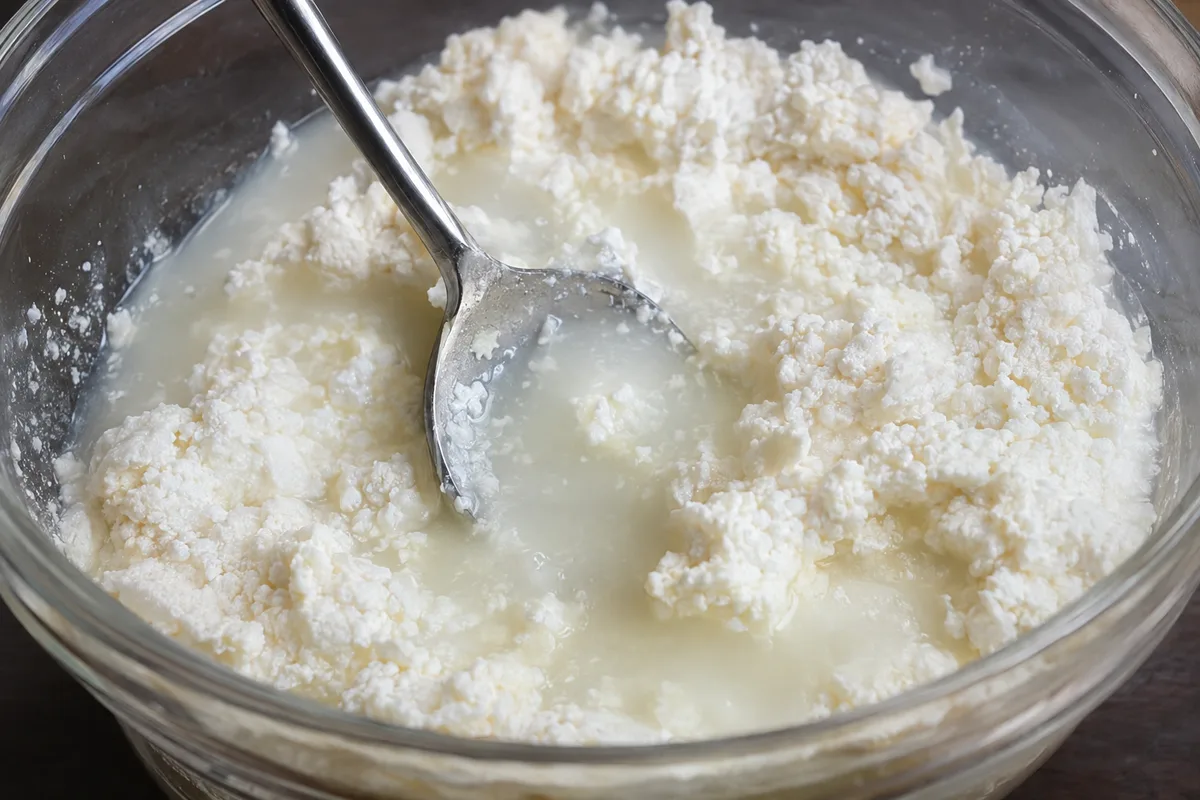
Do not scrape mould from ricotta and eat what remains. Because ricotta is soft and moist, unwanted growth may extend beyond the part you can see. Throw away the entire contents rather than trying to rescue a clean-looking area.
A little clear liquid on top is not automatically a sign of spoilage. Ricotta can release whey while it sits, and this may be stirred back in if everything else seems normal. Liquid that is unusually cloudy, discoloured or accompanied by other warning signs is a reason to discard it.
- Normal: white or creamy ricotta with a little clear whey
- Discard: coloured spots or patches
- Discard: fuzzy growth anywhere in the tub
- Discard: unusual darkening or discoloured liquid
Check the smell without tasting
Ricotta normally has a mild, milky smell. A strong sour, fermented, yeasty or unpleasant odour suggests that it is no longer suitable to eat. Compare the smell with what you noticed when the tub was first opened, if you remember it.
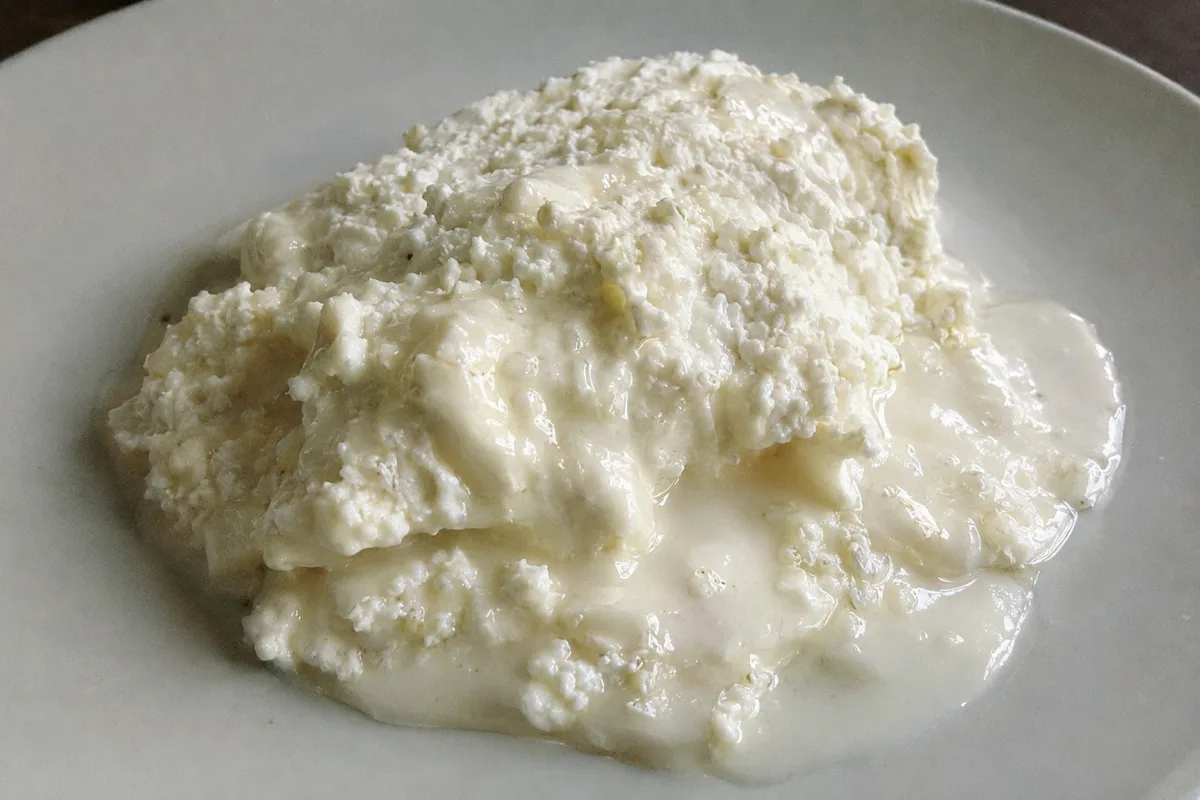
Open the container and smell it gently rather than placing your face close to the cheese. If the odour immediately seems wrong, close the tub and discard it. Cooking will not turn spoiled ricotta back into fresh ricotta.
Do not taste ricotta when its date, packaging, appearance or smell has already raised concern. A small taste is not a reliable safety test. When the signs conflict or you remain unsure, choose not to eat it.
- Expect a mild, milky scent
- Treat a strong sour or yeasty smell as a warning
- Do not taste cheese that already seems questionable
- Discard it if uncertainty remains after the checks
Notice unusual texture changes
Ricotta is naturally grainy, soft and moist, so a slightly uneven texture can be normal. Different varieties may also be smoother, firmer or wetter than others. Judge it against how that particular ricotta looked when fresh rather than expecting every tub to match.
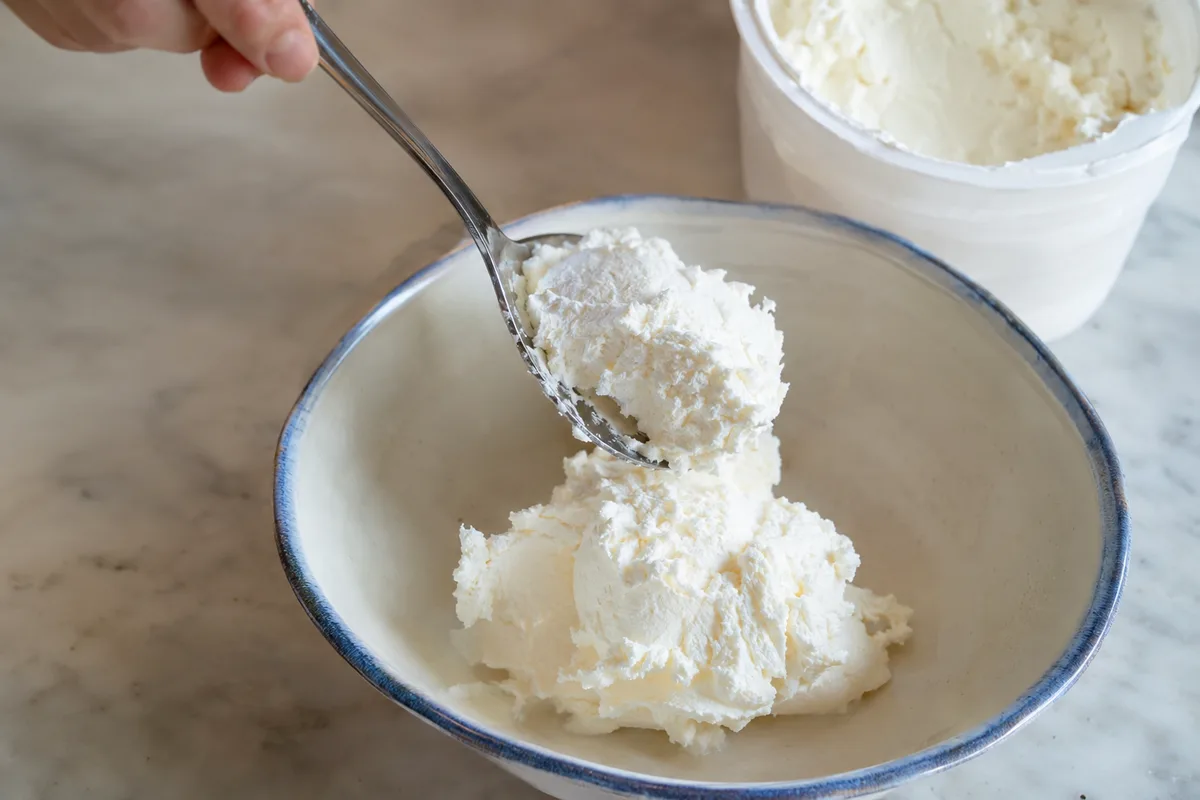
Spoiled ricotta may become slimy, sticky or unusually runny. It may also develop a dried, crusty surface alongside an unpleasant smell or colour change. One strong warning sign is enough to discard it, even if the other features appear normal.
Separation alone does not always mean spoilage because whey can collect around the curds. Stirring can restore the usual consistency when the date, smell and colour are all acceptable. If the texture remains strange or the liquid looks abnormal, do not use it.
- Normal: soft curds with a grainy or creamy texture
- Often normal: a small amount of separated whey
- Discard: a slimy or sticky surface
- Discard: unusual runniness with an off smell or colour
Handle opened ricotta carefully
Keep ricotta chilled and return it promptly after serving. Leaving the tub out repeatedly can shorten the time it stays suitable to eat. The safe storage period depends on the product, its packaging and how it has been handled, so follow the label rather than guessing.
Use a clean utensil each time you take ricotta from the container. Crumbs, sauce or food left on a used spoon can contaminate the remaining cheese. It is better to transfer the amount you need to a separate bowl than to eat directly from the tub.
Keep the container properly closed and store it as directed on the packaging. If ricotta has been left somewhere warm for an uncertain period, do not rely on chilling it again. When storage history is unclear, discarding it is the cautious option.
- Return ricotta to chilled storage promptly
- Use a clean utensil every time
- Keep the container properly closed
- Follow the package instructions after opening
Make a simple final decision
Check ricotta in the same order each time: date and packaging, storage history, appearance, smell and texture. This avoids relying on one feature, such as a little whey on the surface. It also makes the decision easier when you are preparing a meal or logging ingredients.
Discard the ricotta if it is past its use-by date, has damaged packaging, shows unusual growth or colour, smells wrong or feels slimy. Do the same when you do not know whether it has been stored correctly. Do not use cooking, baking or blending as a way to hide warning signs.
If the ricotta passes every check, log the amount you actually use as usual. Drained ricotta may weigh differently from ricotta with its whey mixed in, so choose the closest matching entry in your food tracker. The spoilage check should always come before measuring or logging it.
- Check the date and container
- Review how it has been stored
- Inspect the colour and surface
- Smell it, then assess the texture
- Discard it if any clear warning sign appears