
How to Set a Daily Water Target While Losing Weight
There is no single water formula that suits every body or every day. This guide explains how to build a personal target, track it and adjust it without treating water as a weight-loss shortcut.
Why one water formula does not fit everyone
Your water needs depend on your body, activity, surroundings and food choices. A warm day or an active afternoon may increase your needs, while soups, fruit and other water-rich foods also contribute fluid. This is why a fixed target based only on body weight can give a misleading sense of precision.
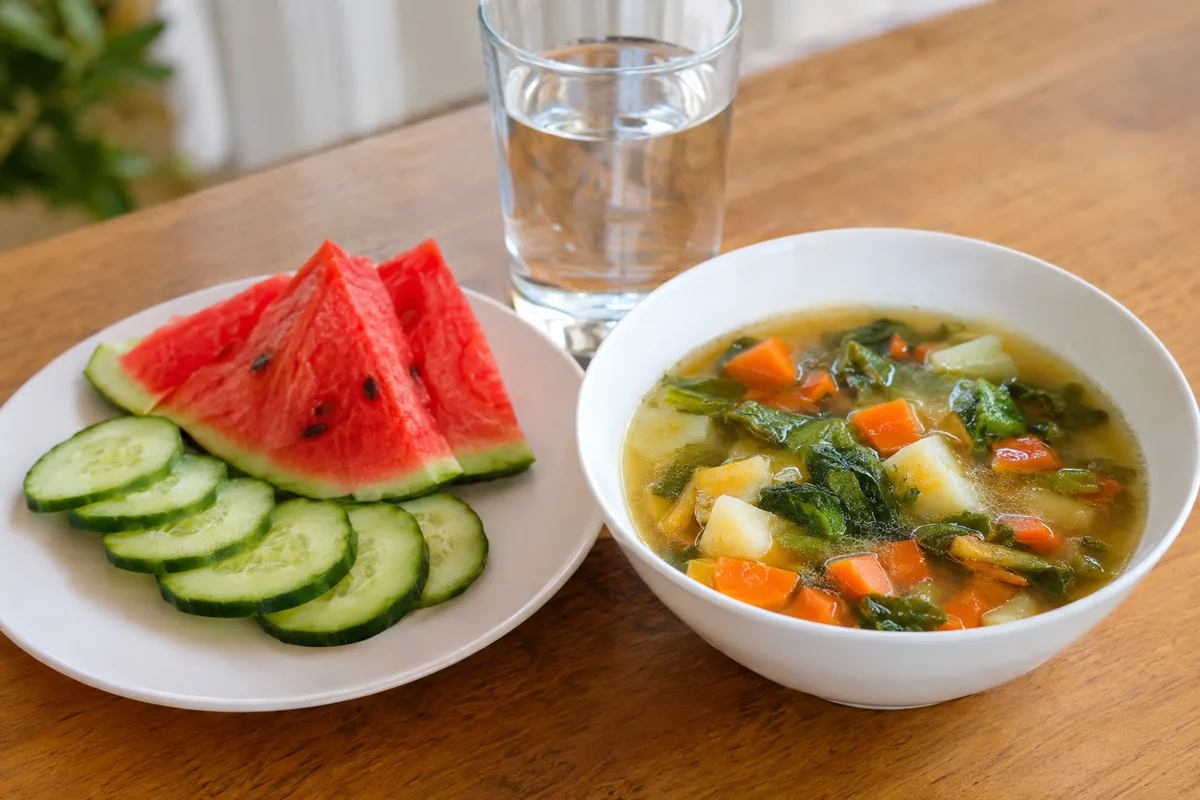
Water supports normal body functions, but drinking more does not directly make body fat disappear. It may support your weight-loss plan when it replaces drinks that contain calories or helps you notice whether you are genuinely hungry. Think of hydration as part of a steady routine rather than a way to force faster results.
- Body size and individual needs
- Length and intensity of activity
- Heat, humidity and time spent outdoors
- The amount of fluid in your usual food
- How much you sweat
Calculate your current baseline
Start by adding drinks to the food log you already keep. Record the volume of each serving and include water, tea, coffee, milk and other drinks rather than counting plain water alone. If you refill the same glass or bottle, multiply its known capacity by the number of servings.
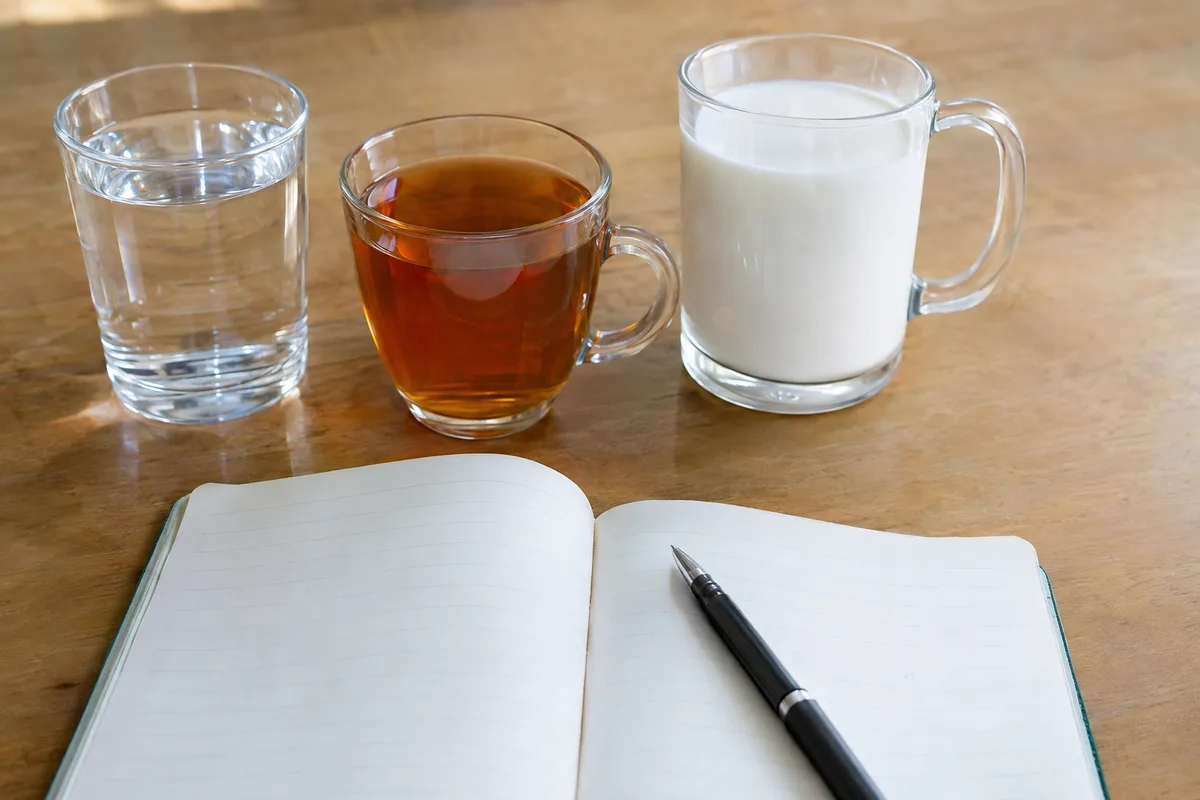
Review several ordinary days rather than choosing an unusually active or quiet one. Add the drinks for each day, then divide the total by the number of days recorded to find your average daily fluid intake. This average is your baseline, not automatically your final target.
- Write down each drink when you have it
- Record the serving volume from the container or measure it once
- Add all drinks at the end of each day
- Add the daily totals together
- Divide by the number of logged days
Turn your baseline into a personal target
Use your baseline alongside thirst, urine colour and how your mouth feels. Pale straw-coloured urine generally suggests adequate hydration, while consistently darker urine can mean you may need more fluid. Colour can also vary because of foods and supplements, so do not use it as the only measure.
If you often feel thirsty or your urine is regularly dark, raise your target gradually and review your log again. If you feel comfortable, drink regularly and usually see a pale colour, your baseline may already be close to a sensible target. The exact adjustment depends on the person, so avoid adding a large arbitrary amount simply because a formula says so.
- Start with your logged daily average
- Check thirst and urine colour across the day
- Increase the target gradually if signs suggest you need more
- Reassess after changes in routine or weather
Adjust the target for active and warm days
Your target does not need to stay identical every day. Activity, warm conditions and heavy sweating can increase fluid losses, so plan extra drinks around those periods. The amount required depends on the person, the conditions and how much they sweat.
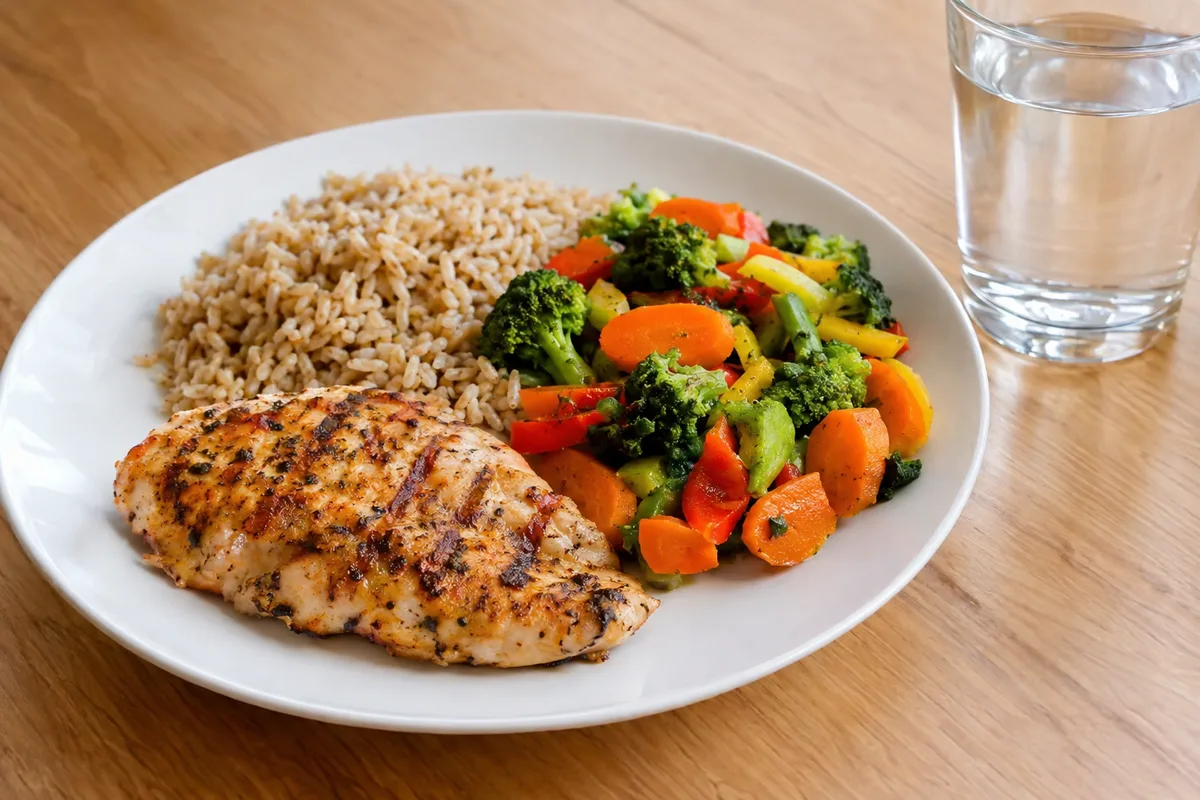
Drink at intervals rather than trying to catch up with a very large volume at once. For longer or more demanding activity, note what you drink before, during and afterwards so you can compare similar sessions. If you have been given personalised advice about limiting fluids, follow that advice instead of using a general calculation.
- Carry forward your usual baseline
- Log extra drinks taken around activity
- Note heat, humidity and heavy sweating
- Compare similar active days
- Adjust future targets from what you observe
Use water to support, not drive, weight loss
Plain water contains no calories, so replacing a calorific drink with water can reduce the energy recorded in your daily log. The difference depends on what you replace and how often you make the swap. Water added on top of your usual drinks does not create the same change.
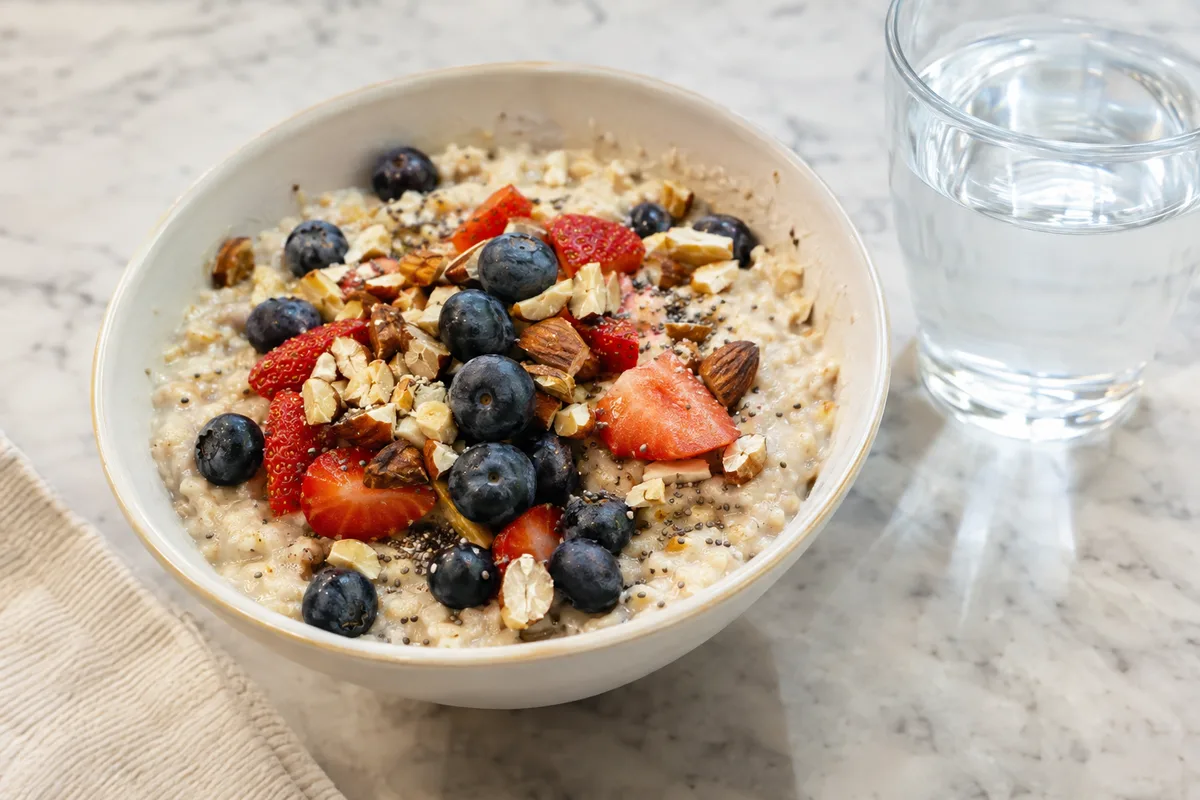
Thirst and hunger can sometimes feel similar, but drinking water is not a substitute for a balanced meal. If you are unsure, have a drink, pause and then check whether you still feel hungry. Continue to base meals on filling foods that provide protein, fibre and other nutrients.
- Choose water instead of a calorific drink when that suits you
- Keep water available with meals and snacks
- Check thirst before adding an unplanned snack
- Do not use water to delay needed meals
Make the target easy to follow
Turn your daily target into smaller drinking points linked to your routine. You might drink after waking, with meals, during breaks and around activity. This is often easier than leaving most of the total until late in the day.
Keep logging long enough to notice patterns rather than judging one missed target. Review your average when your activity, weather or eating pattern changes, and adjust it using the same baseline method. A useful target is one that supports steady hydration without discomfort or constant forced drinking.
- Divide the target across your usual waking hours
- Link drinks to meals, breaks and activity
- Keep a reusable glass or bottle nearby
- Review the weekly pattern rather than one day
- Update the target when your routine changes