
How to Burn More Calories While Cleaning Your Home
Cleaning already uses energy, and changing how you approach each task can make it more active. This guide explains how pace, movement, task choice and duration affect the calories you burn.
Why cleaning can count as active movement
Your body uses energy whenever you move, whether you are walking outdoors or cleaning the kitchen. Tasks that keep you standing, reaching, carrying and moving between rooms generally require more effort than light tidying. The exact number of calories burned depends on your body, the task, your pace and how long you continue.
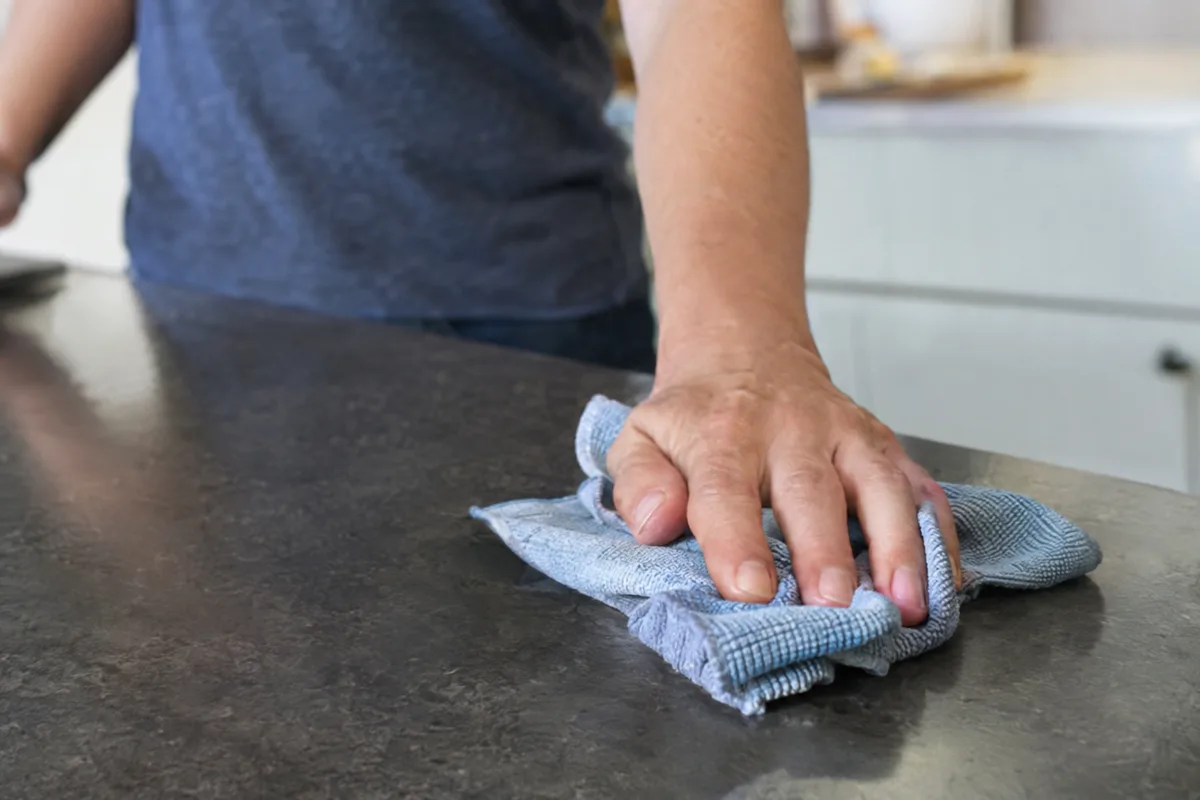
The aim is not to make every chore exhausting. It is to reduce long periods of standing still and make useful movements more continuous. A purposeful cleaning session can add activity to a day without needing a separate workout.
You may notice that some jobs raise your breathing rate while others barely change it. Vacuuming a large area, scrubbing and carrying laundry tend to involve more of the body than dusting a small surface. Use how the task feels as a practical guide rather than chasing an exact calorie figure.
Choose tasks that involve more of your body
The more muscles a task involves, the more energy it is likely to require. Cleaning jobs with walking, bending, reaching and steady arm movement are usually more active than jobs performed while sitting. Moving through a room also keeps the effort going instead of breaking it into tiny bursts.
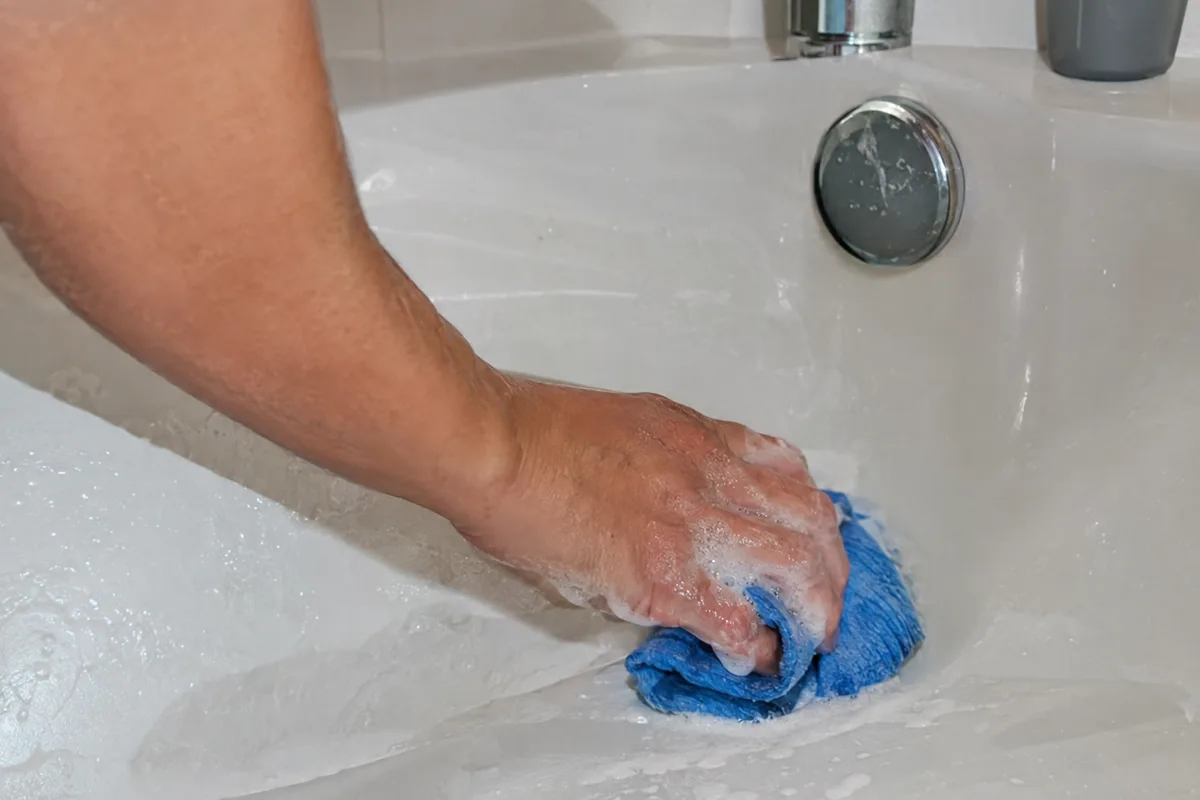
Good options include vacuuming, mopping, changing bedding and cleaning a bath or shower. Outdoor jobs such as sweeping a path can also provide continuous movement. Choose tasks that suit your space and your current ability.
- Vacuum or sweep the full floor rather than cleaning only visible patches
- Mop using controlled movements from your legs and upper body
- Change bedding and carry the used linen to the washing area
- Scrub surfaces with steady pressure while keeping your shoulders relaxed
- Put items away room by room instead of making one large pile
Keep the pace purposeful
A quicker but controlled pace can make the same cleaning task more demanding. Try to move directly from one part of the job to the next, rather than stopping after every small action. You should still be able to use good technique and stay aware of wet floors, steps and objects around you.
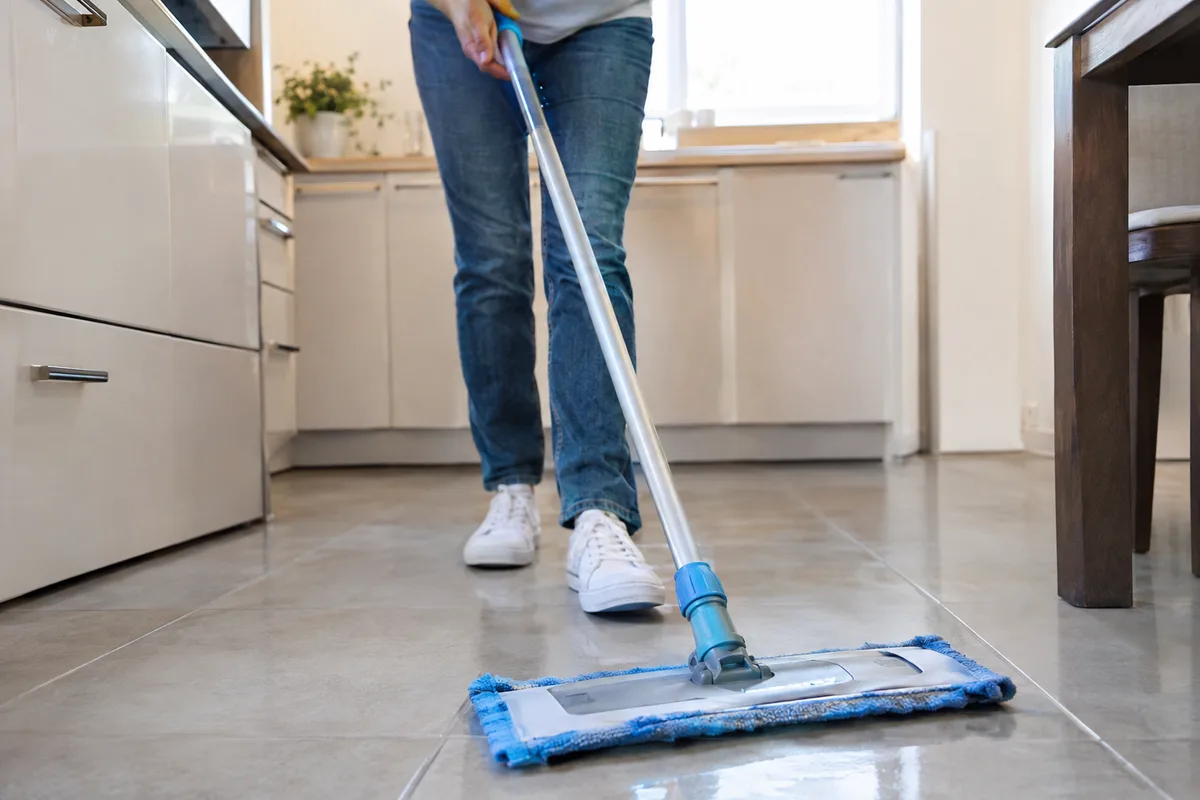
Music can help you settle into a steady rhythm, but speed is not the only goal. Large, smooth movements are often more useful than rushed, shallow ones. If your form becomes careless, slow down and regain control.
You can also group tasks so that you remain on your feet. For example, clear a room, wipe its surfaces and then clean its floor before sitting down. This reduces idle gaps while leaving the room fully finished.
- Gather the basic cleaning supplies before starting
- Work around one room in a clear direction
- Move straight to the next planned task
- Take a break when your movement becomes unsteady
Turn chores into a simple cleaning circuit
A circuit means alternating tasks so that different parts of your body share the work. You might follow floor cleaning with wiping, then carry laundry before returning to another room. This can make a session feel less repetitive while keeping you moving.
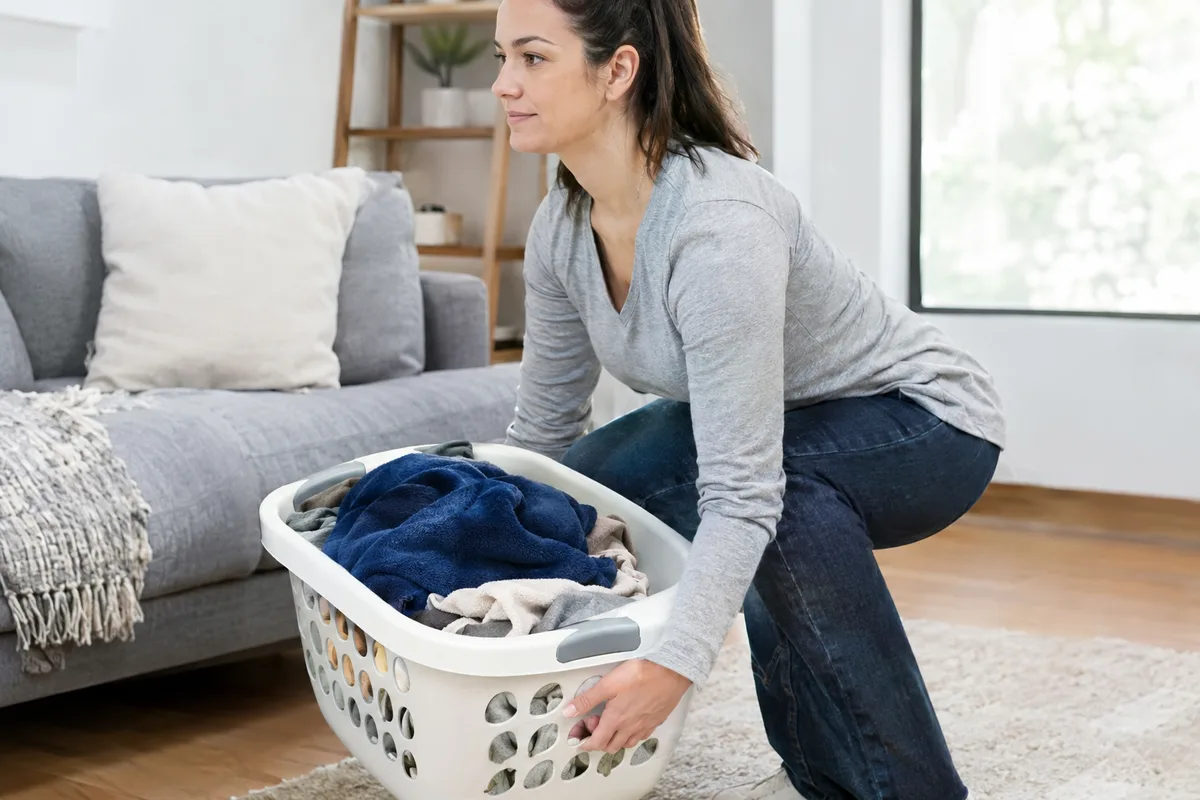
Plan the circuit around jobs that genuinely need doing. There is no benefit in creating unnecessary mess or repeating a task simply to burn more calories. Useful activity is easier to maintain when it leaves your home cleaner.
The length of each circuit depends on your time, space and energy. A small home may call for fewer tasks, while a larger home may naturally involve more walking. You can finish one circuit or repeat selected tasks only when they are still needed.
- Clear loose items from the floor
- Wipe reachable surfaces
- Vacuum or sweep the room
- Carry laundry or rubbish to the correct place
- Move to the next room and repeat the useful steps
Add effort without making cleaning unsafe
You can increase effort by using a comfortable range of movement and carrying sensible loads. Bend through your hips and knees when reaching low areas rather than folding sharply at the waist. Keep loads close to your body and split anything awkward into smaller trips.
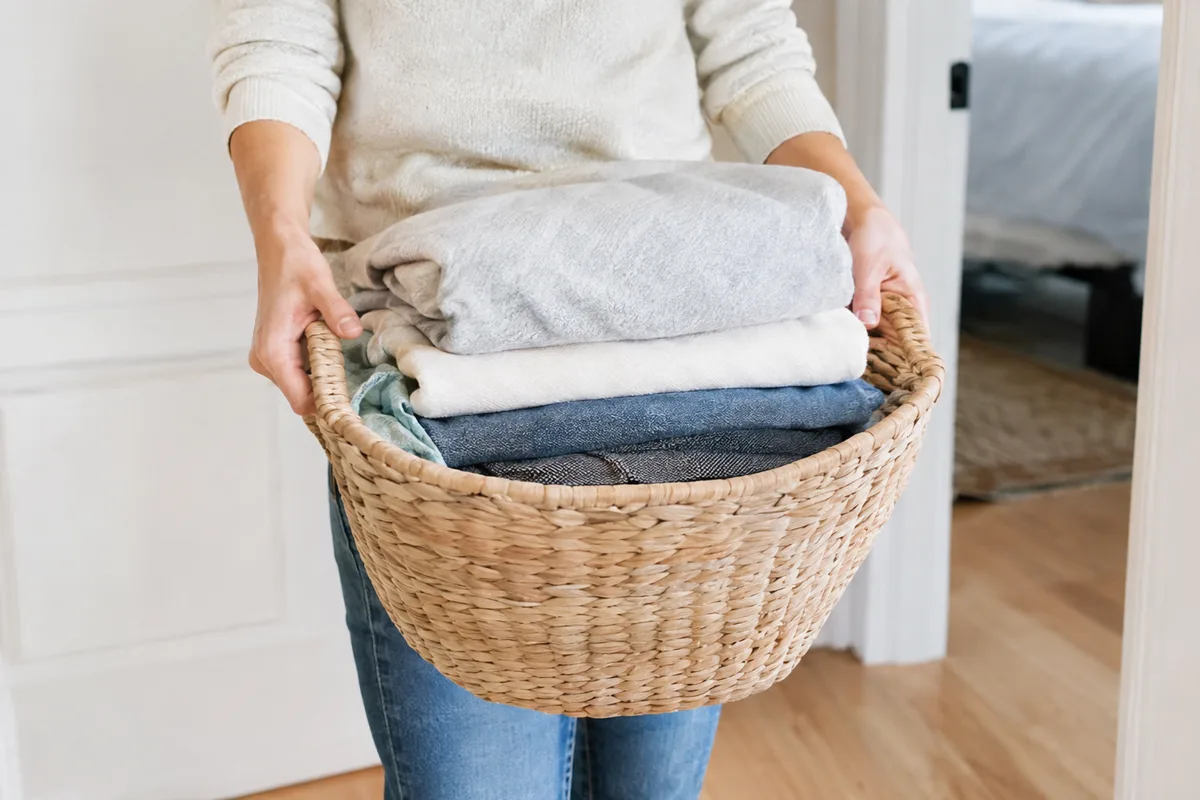
Changing direction and switching hands can help distribute the work. When wiping or scrubbing, alternate sides where practical instead of relying entirely on your favourite arm. Keep your grip relaxed enough to avoid unnecessary tension.
More effort should not mean slippery rushing, overloaded baskets or unstable reaching. Use proper steps for higher areas rather than stretching beyond a secure position. Stop the task if you cannot continue with controlled movement.
- Use steady knee and hip bending for low cupboards or skirting boards
- Carry smaller, balanced loads between rooms
- Alternate hands during suitable wiping tasks
- Walk carefully rather than rushing on stairs or wet floors
Record cleaning calories with caution
If you track activity as well as food, treat cleaning calorie estimates as rough guides. Different trackers and activity lists can give different results because they cannot fully measure your pace, movement quality or effort. The true figure depends on the person and the details of the cleaning session.
Log the task honestly rather than selecting the hardest available category. Note what you did, how long you were active and whether the pace felt light, moderate or brisk. This creates a more useful record than relying on a precise-looking number.
Avoid counting the same movement twice if it is already included in a daily activity total. It can also help to view housework as part of your overall movement pattern rather than a reason to make an immediate change to your food log. Consistent records are more informative than trying to maximise a single session.
- Name the main cleaning task
- Record the actual active time
- Describe the pace in simple terms
- Check that the activity has not already been counted