
How many calories do 100 push-ups burn?
A set of 100 push-ups does not burn the same number of calories for everyone. This guide explains what changes the estimate and how to record the activity alongside your food intake.
Why there is no single calorie number
Push-ups use energy, but counting repetitions alone cannot reveal exactly how many calories you burn. One person may complete 100 quickly, while another spreads them across several sets with longer rests. Those sessions involve different amounts of working time and effort.

Body size also matters because moving a larger mass generally requires more energy. Technique, range of movement and training experience can change the demand further. Any calorie figure attached to 100 push-ups is therefore an estimate rather than a fixed result.
What affects the estimate
The main factors are your body size, how long the session lasts and how hard it feels. Fast repetitions may raise the effort while you are moving, but a short session also gives you less total exercise time. Slower, controlled repetitions can extend the working time without necessarily feeling easier.

Rest periods count as part of the session, although they usually demand less energy than the push-ups themselves. Your hand position and the version you perform can also alter which muscles work and how demanding each repetition feels. This is why two logs showing 100 push-ups may represent quite different sessions.
- Your body size
- The time spent actively performing push-ups
- The length and number of rest periods
- Your pace, range of movement and technique
- Whether you use a standard, modified or more demanding variation
A practical way to track the session
Instead of logging only the repetition total, record how long the full session takes. Note when you begin, when you finish and whether the rests are included. This gives you a more useful basis for an activity estimate than the number 100 on its own.
You can also record the effort in simple terms, such as light, moderate or hard. Use the same method each time so that your entries remain comparable. If an app provides a calorie estimate, treat it as an approximation rather than calories you have definitely burned.
- Record the total session duration
- Note whether the time includes rests
- Add the push-up variation used
- Describe the effort consistently
- Keep repetitions as a separate training measure
Form changes what each repetition involves
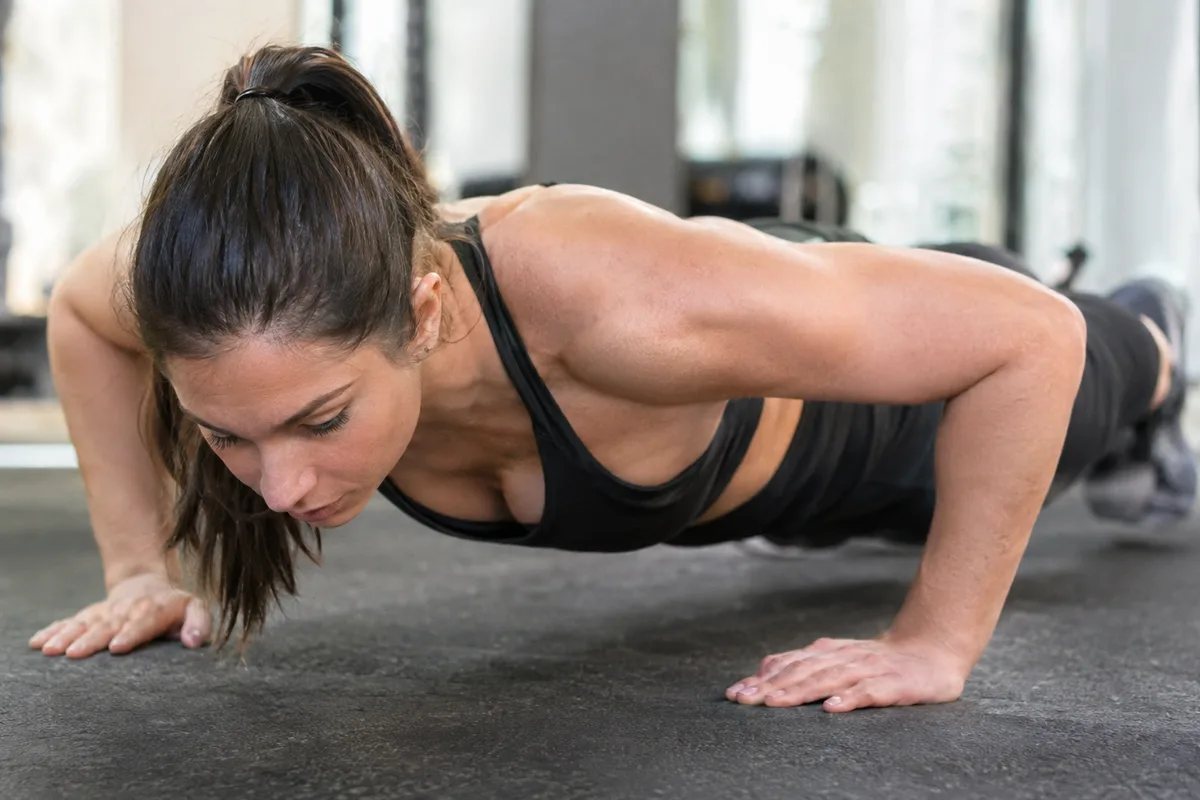
A standard push-up usually starts with the hands on the floor and the body held in a straight line. The chest moves towards the floor before the arms press the body back up. A controlled range of movement generally requires more work than very short, hurried repetitions.

Modified versions can make the movement more manageable, while harder variations can increase the demand. Neither option gives a universal calorie figure because pace, duration and body size still matter. Choose a version that lets you keep steady control rather than chasing the total with collapsing form.
- Keep the head, back and hips aligned
- Place the hands in a stable position
- Lower and press with control
- Use a suitable range of movement
- Break the total into sets when needed
How push-ups fit into your calorie log
Food entries and exercise estimates are not equally precise. A food label or weighed portion gives you a defined amount to record, while exercise calories are inferred from general information about the activity. It is sensible to keep that difference in mind when reviewing your daily totals.
Avoid treating an estimated push-up burn as an exact allowance for extra food. The number may be higher or lower than your actual energy use, especially if the entry does not reflect your rests or variation. Look for consistency across your records rather than trying to make every daily figure perfectly exact.
- Log the activity in the same way each time
- Keep estimated exercise calories separate from measured food entries
- Avoid changing the estimate simply to match a desired daily total
- Review patterns over time rather than one isolated session
Focus on what 100 push-ups can measure well
A target of 100 push-ups is better at measuring training volume than calorie expenditure. It tells you how many repetitions you completed, and your notes can show how the sets, control and rest periods changed. Those details are useful even when the calorie estimate remains uncertain.
If the target causes your technique to deteriorate, use fewer repetitions per set or a more manageable variation. Stop the session if the movement causes sharp or unusual pain. The most honest answer is that the calories burned by 100 push-ups depend on the individual and the way the session is performed.