
How many calories do you burn while sleeping?
Your body continues to use energy throughout the night, even though you are lying still. This guide explains why the amount varies, how to estimate it and how to avoid counting it twice.
Why sleeping burns calories
Sleep is a period of rest, but your body does not switch off. It still needs energy to breathe, circulate blood, regulate temperature and maintain cells. Your brain also remains active while you sleep. The calories used for these basic tasks make up your sleeping calorie burn.
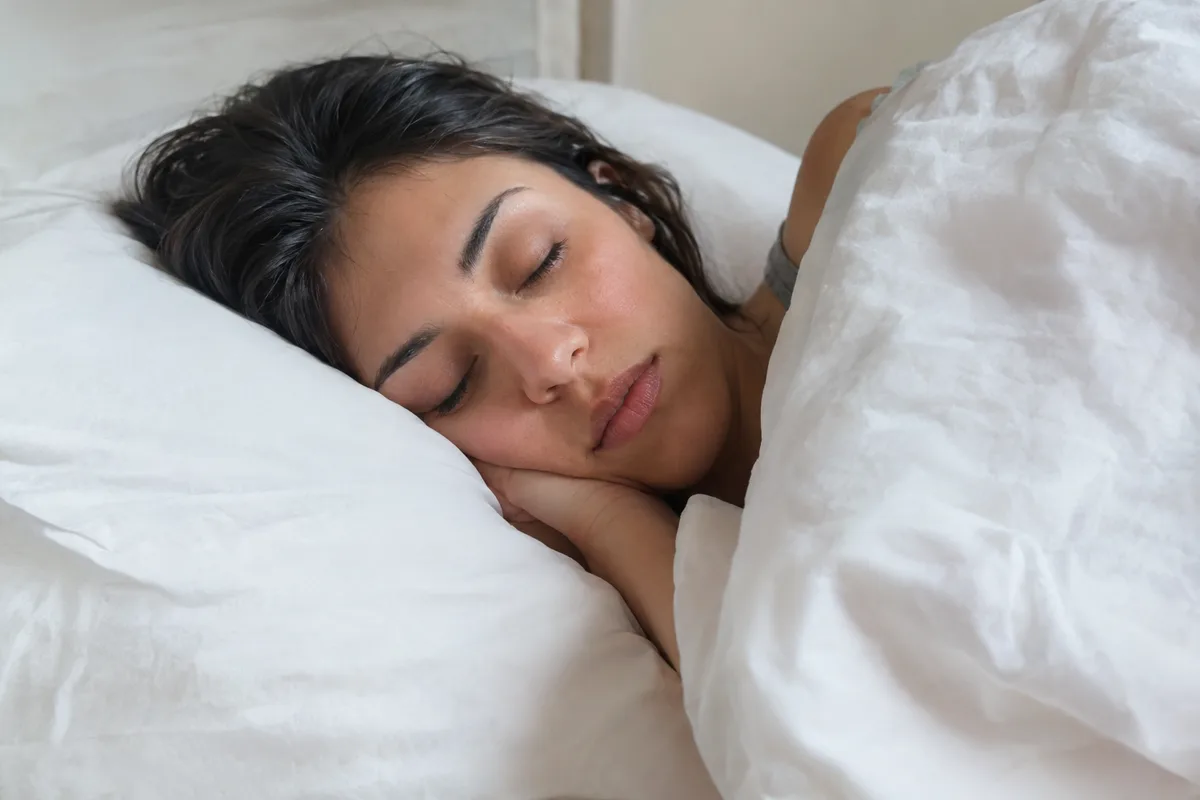
This energy use is part of your resting needs rather than extra activity. You would use calories during the same hours even if you were resting quietly while awake. Sleep may change the rate slightly during different parts of the night, but there is no single amount that applies to everyone.
- Breathing and circulation
- Maintaining body temperature
- Brain and nervous system activity
- Cell maintenance and repair
Why there is no single calorie figure
The number of calories burned during sleep depends on the person and the length of the night. A larger body generally needs more energy to maintain than a smaller one. Body composition, age and individual metabolism can also affect resting energy use.

Your sleeping environment and recent activity may influence the estimate too. For example, your body may use energy differently after a very active day or in a room where it must work harder to stay comfortable. These effects are difficult to separate accurately in everyday tracking.
- Body size and composition
- Age and individual metabolism
- Time spent asleep
- Room temperature and bedding
- Activity before sleep
How to make a rough estimate
If your tracking method provides a daily resting-energy estimate, you can use it to make a simple overnight calculation. Divide that daily figure by 24, then multiply the result by the number of hours you slept. This gives a broad estimate based on an even hourly rate. It is not a precise measurement of what happened during the night.
Resting-energy estimates are based on personal details and general equations, so their accuracy varies. Sleep also changes across the night, while the simple calculation treats every hour as identical. Use the result as a consistent tracking estimate rather than an exact reading.
- Find your estimated daily resting energy
- Divide it by 24 to get an hourly estimate
- Multiply by the hours you slept
- Use the same method each time for consistency
Calorie burn changes through the night
Sleep is not one unchanging state. Your brain activity, breathing, heart rate and temperature regulation shift as you move through different parts of sleep. Energy use can therefore rise or fall slightly during the night. A single nightly estimate smooths out these changes.
Waking briefly, changing position or getting out of bed also uses some energy. These small movements are different from the basic energy needed to remain asleep. Unless you are examining detailed activity records, there is usually little value in trying to separate every change.
Avoid counting sleep twice
Most daily calorie targets already include resting energy across the full day and night. If your target is based on total daily energy use, sleeping calories are already part of that total. Adding them again as a separate activity would increase your estimate twice. The same issue can occur when combining figures from different tracking methods.
Check whether the number you follow represents resting energy, active energy or total energy. Resting energy covers essential body functions, while active energy comes from movement beyond rest. Total energy combines the two. Keeping these categories clear makes your food and activity records easier to interpret.
- Check what your daily target already includes
- Keep resting and active energy separate
- Do not add overnight energy to a total that includes it
- Avoid mixing estimates from several methods
Use the estimate in context
Sleeping calorie burn is useful for understanding where daily energy goes, but it is not usually a separate goal to maximise. Staying in bed longer does not turn sleep into an exercise session. The main value of a sleep estimate is that it completes the picture of energy use across the day.
Treat the result with the same caution as any calculated calorie figure. Look for consistency in how you record food, rest and activity rather than reacting to small day-to-day changes. If your sleep duration varies, update the estimate using the hours slept while keeping the rest of your method unchanged.
- Record sleep duration in the same way each day
- Use one resting-energy estimate consistently
- Focus on broader patterns rather than tiny differences
- Review your method before changing your food target