
How Many Calories Does Muscle Really Burn?
Muscle burns calories around the clock, although its resting demand is often overstated. This guide explains what changes as you gain muscle and how to reflect that in your food tracking.
Muscle is always using energy
Muscle needs energy even when you are sitting still. It uses that energy to maintain its tissue, support posture and stay ready for movement. However, resting muscle does not burn calories at the dramatic rate sometimes suggested online.

There is no single accurate daily figure for everyone. The amount depends on how much muscle you have, your body size, age, activity and individual biology. Estimates for one kilogram of muscle also cannot tell you exactly how your whole body uses energy.
- Muscle uses some energy while you rest
- Working muscle needs more energy than resting muscle
- A larger body generally requires more energy to maintain
- Your total daily burn includes far more than muscle alone
Why a simple muscle formula falls short
Your body does not divide its energy use into neat, separately measured parts. Organs, the brain, digestion, temperature control and everyday movement all contribute. Muscle is one part of a connected system rather than an independent calorie-burning engine.

Body-composition estimates also have a margin of error. Lean mass includes more than skeletal muscle, so treating the two as identical can distort a calculation. This is why a precise-looking formula may still give an uncertain answer.
- Muscle mass and lean mass are not the same thing
- Body-composition readings can vary between methods
- Daily movement changes from one day to another
- Food tracking and energy-burn estimates both involve some uncertainty
Movement makes the bigger difference
Muscle requires much more energy when it contracts than when it rests. Walking, lifting, carrying, climbing and household tasks all ask muscles to work. The total effect depends on how hard you move, how long you continue and how much of your body is involved.
Strength training also uses energy during the session and while the body returns to its usual state afterwards. That later rise is variable and should not be treated as a large guaranteed calorie bonus. The main value for energy use comes from the work itself and from supporting an active routine.
- Walk for part of a journey
- Carry shopping with good control
- Use stairs when practical
- Include regular resistance exercises
- Break up long periods of sitting with movement
What changes when you gain muscle
Adding muscle can raise resting energy use because there is more active tissue to maintain. The change is usually gradual rather than a sudden jump in your daily calorie allowance. How much it changes depends on the amount gained and the rest of your body composition.
More muscle may also help you perform more work during exercise and everyday tasks. You might lift heavier loads, complete more repetitions or move with greater ease. That extra activity can matter more to total energy use than the resting cost of the new tissue.
- Resting energy use may rise modestly
- Training capacity may improve over time
- Heavier or longer sessions may use more energy
- Everyday physical tasks may become easier
How to handle it in your calorie tracking
Do not automatically add a large block of calories because you have started strength training or noticed more muscle definition. Keep logging food in your usual way and compare your intake with longer-term changes in body weight, measurements, training and hunger. Short-term shifts can reflect water, stored carbohydrate and food still being digested.
Treat any calorie-burn figure from an activity estimate as a rough guide. If your aim or routine changes, adjust your food log gradually using your own trend rather than one workout reading. The appropriate amount depends on the person, their activity and their goal.
- Use consistent portions and logging methods
- Review trends over several weeks rather than one day
- Avoid eating back every estimated exercise calorie automatically
- Adjust intake in small, practical steps
- Consider energy, hunger and training performance alongside weight
Food still provides the energy
Muscle growth and movement require energy and building material from food. Protein and carbohydrate provide about 4 kcal per gram, while fat provides about 9 kcal per gram. Those factors explain the calories in your log, but they do not mean one nutrient automatically becomes muscle or body fat.
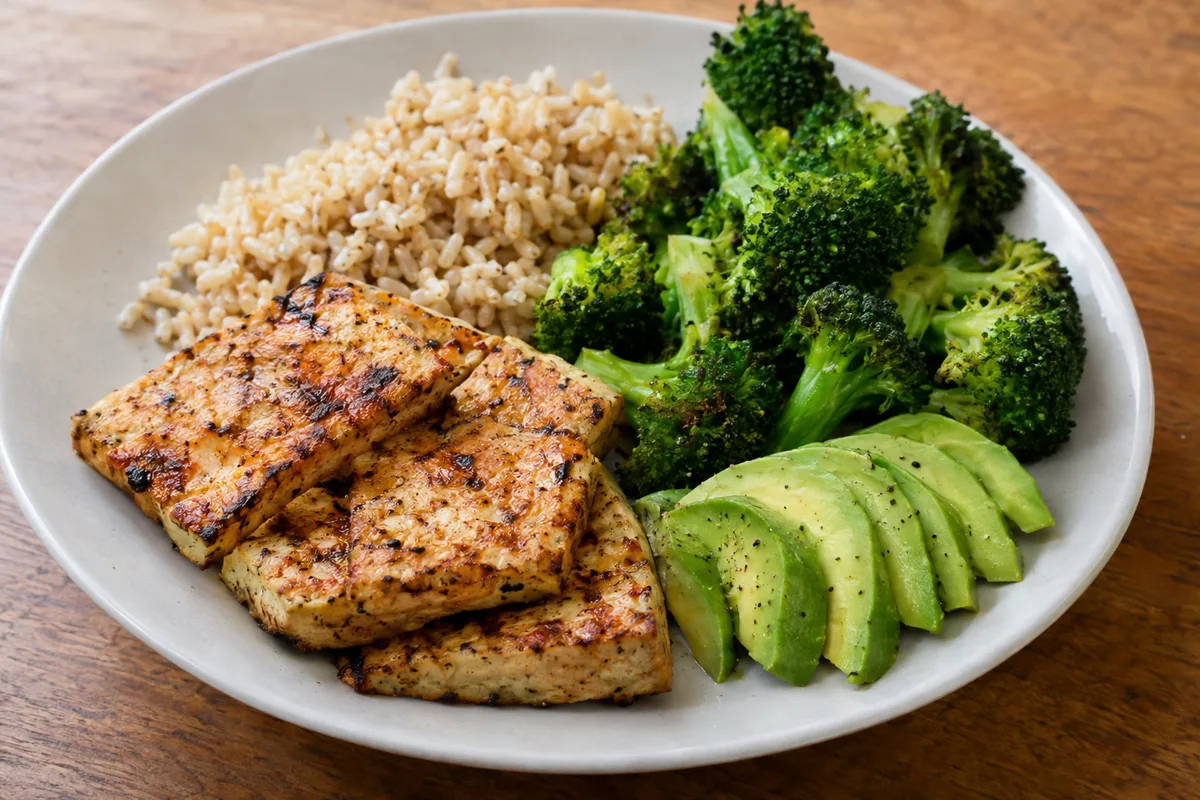
A balanced plate can support training without relying on an imagined muscle-burning bonus. Include a protein source, carbohydrate-rich food, vegetables or fruit, and some fat according to your preferences. Portion needs depend on your body, routine and aim.
- Protein foods such as eggs, yoghurt, beans, fish or tofu
- Carbohydrate foods such as oats, rice, potatoes or bread
- Vegetables and fruit for fibre and variety
- Fat sources such as nuts, seeds, olive oil or avocado