
Could a Protein Shake Before Bed Help Your Routine?
A protein shake before bed can be useful when it helps you meet your protein needs without disrupting sleep or digestion. This guide explains the possible benefits, what to include and how to decide whether the timing suits you.
The main benefit is filling a protein gap
A shake before bed is not automatically better than protein eaten earlier in the day. Its clearest benefit is that it gives you another opportunity to reach the protein amount you have planned. If your food log shows that you regularly finish the evening short, a shake can close that gap in a simple, measurable way.
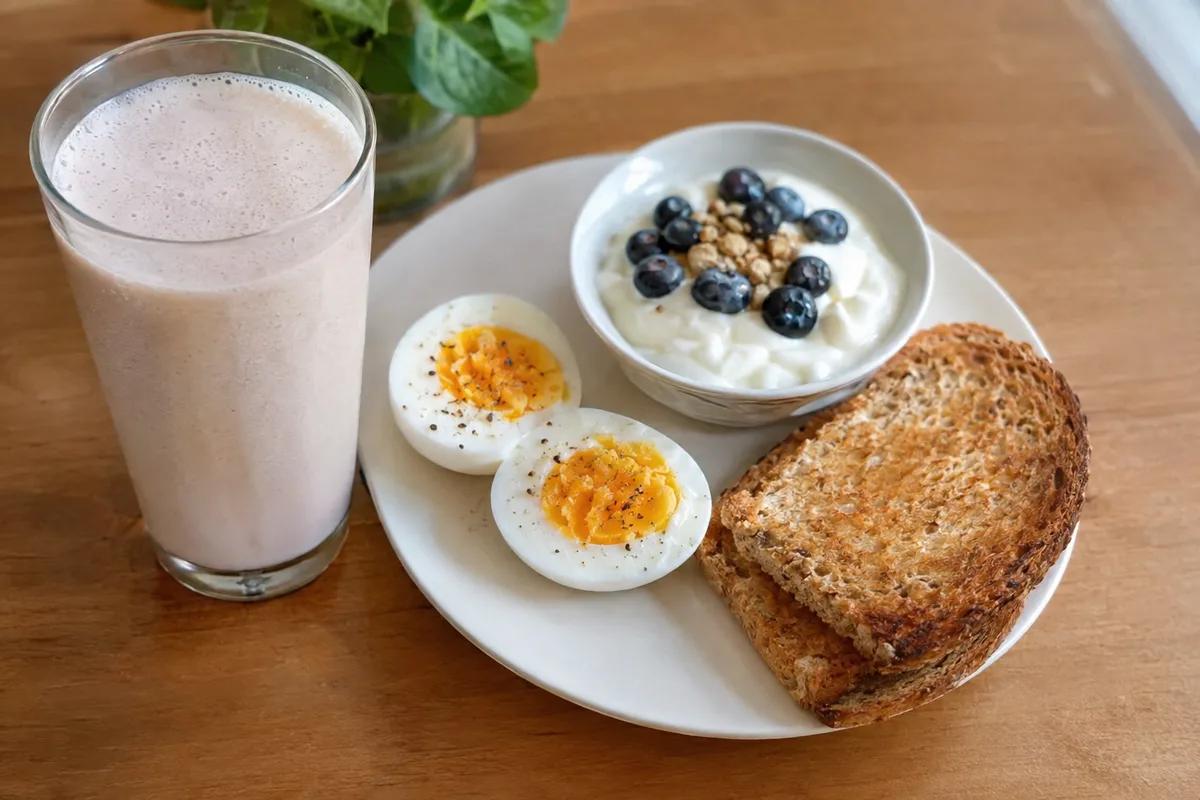
Your overall food intake still matters more than one drink or one particular time. A bedtime shake may be less useful if you already eat enough protein across balanced meals and snacks. Treat it as one possible part of your routine rather than an essential step.
- Check your food log before adding anything
- Compare your recorded protein with your personal target
- Count the shake within your daily energy intake
- Look at your weekly pattern, not just one unusual day
It can support recovery after training
Training gives your muscles work to recover from, and protein supplies amino acids that the body uses during that process. Recovery continues after you leave the gym and while you sleep. Having protein before bed can therefore be a practical choice when your evening meal was light or your training session finished late.

The shake does not replace enough food, rest or a suitable training programme. It also does not need to follow exercise immediately to be worthwhile. Regular protein intake spread through the day usually gives you more useful context than focusing on a narrow timing window.
- An evening session followed by a small dinner
- A long gap between dinner and bedtime
- A low-protein evening meal
- A day when planned meals were disrupted
A shake can be convenient and predictable
A shake requires little preparation and can provide a consistent amount of protein when the serving is measured. That can make food logging easier than estimating an unplanned snack made from several ingredients. It may also suit evenings when you do not want another full meal.

Convenience is only a benefit when the shake fits your wider eating pattern. A larger or more elaborate drink may contain more energy than you expected once milk, fruit, nut butter or other additions are included. Record every ingredient rather than logging only the protein component.
- Water for a lighter drink
- Milk or a suitable alternative for a creamier texture
- Fruit for flavour and carbohydrate
- Nut or seed butter when extra energy is intentional
- Plain yoghurt for a thicker consistency
It may help settle evening hunger
Protein can make a drink feel more substantial than a sweet drink with little protein. For some readers, a planned shake may reduce the urge to keep searching for snacks later in the evening. The effect varies, so use your own hunger notes rather than assuming it will work in a particular way.
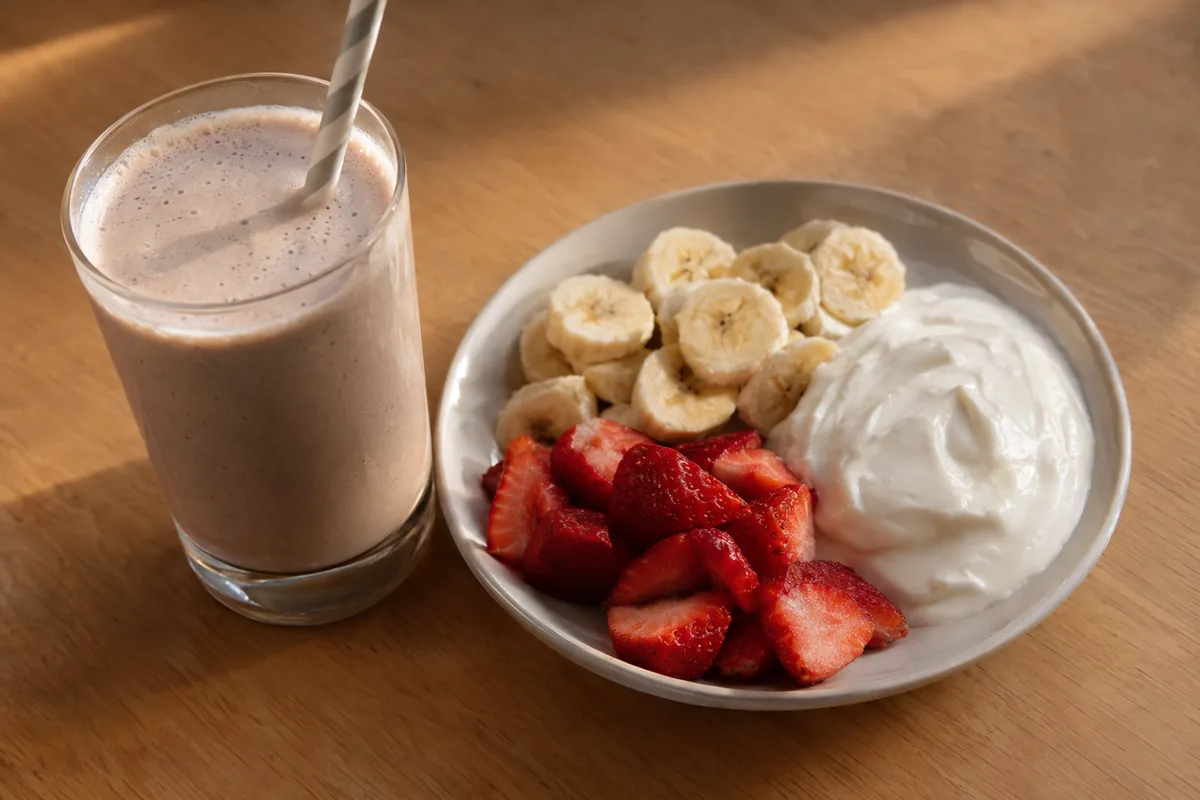
A shake should not be used to ignore strong hunger caused by eating too little during the day. If you remain hungry after drinking it, a balanced snack with texture and fibre may feel more satisfying. Your log can help you compare the shake with options such as yoghurt and fruit or eggs on toast.
- Note your hunger before and after the shake
- Record any snacks eaten afterwards
- Compare liquid protein with a solid snack
- Check whether earlier meals were filling enough
Comfort and sleep still come first
Drinking a large shake just before lying down can feel uncomfortable, especially if it is thick, rich or quickly consumed. It may also lead to an unwanted trip to the toilet during the night. A smaller serving taken earlier in the evening may suit you better, although the ideal timing depends on the person.

Ingredients matter as much as timing. Caffeinated additions, a very sweet mixture or ingredients that you already know feel heavy may not belong in a bedtime drink. Keep the recipe simple at first so that you can tell how it affects comfort and sleep.
- Choose a portion that feels comfortable
- Drink it slowly rather than rushing
- Leave some time before lying down
- Avoid ingredients that usually disturb your evening
- Track sleep quality alongside food intake
Decide from your own food log
A bedtime protein shake is most useful when it solves a clear problem, such as a repeated protein shortfall or an awkward gap after evening training. It offers convenience and may support recovery, but the timing itself is not a shortcut. If it simply adds energy beyond what you intended, its benefit may be limited.
Try assessing it as you would any other planned change. Keep the rest of your routine broadly consistent, record the full drink and note hunger, comfort and sleep. After a run of typical days, you can decide whether the shake earns a regular place in your evening.
- Did it help you reach your planned protein intake
- Did it fit your daily energy target
- Did you feel comfortably satisfied
- Did it affect sleep or digestion
- Was it easier than a food-based snack