
A Practical Weight Training Programme for Baseball
Baseball strength training should support throwing, hitting, sprinting and quick changes of direction. A general programme can provide structure while leaving room for your position, experience and playing schedule.
Train for the demands of baseball
Weight training for baseball is not simply about lifting the heaviest load possible. The aim is to build useful strength through the legs, hips, trunk and upper body while keeping movement controlled and comfortable.

Baseball combines short bursts of speed with throwing, swinging and repeated periods of waiting. Your programme should therefore include basic strength work, explosive movements and exercises that help you control rotation rather than focusing on one body part.
Build sessions around key movement patterns
A balanced session can include a squat or split-stance movement, a hip hinge, an upper-body push, an upper-body pull and a loaded carry. Trunk exercises can cover bracing, controlled rotation and resisting rotation, all of which can support force transfer during a throw or swing.

Start each session with a gradual warm-up that prepares the joints and muscles you will use. The right number of exercises, sets and repetitions depends on your training history, position, technique and current baseball workload, so keep the plan manageable and prioritise good form.
Adjust the programme through the season
During the off-season, you may have more space to develop general strength and gradually increase training difficulty. As practice and games become more frequent, gym work can shift towards maintaining strength and power without leaving you too tired to throw, hit or run well.

Increase load, repetitions or movement difficulty only when your technique remains steady. Record each session in a notebook or training app, then use those notes alongside how you feel at practice to decide whether to progress, maintain or reduce the workload.
Support training with food and recovery
Because you already track what you eat, compare your intake with your training schedule rather than judging each day in isolation. Protein supports muscle repair, carbohydrate helps fuel demanding sessions, and dietary fat contributes energy and supports normal body functions.
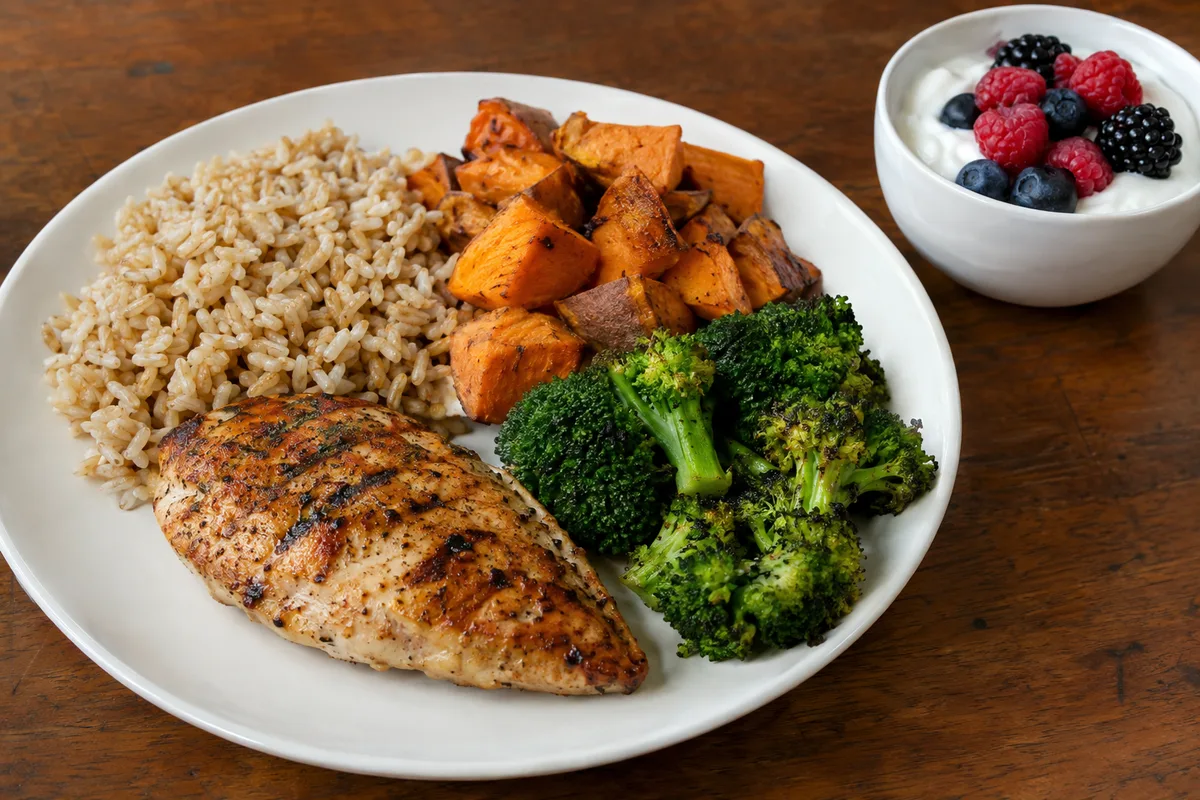
Harder training periods may change your appetite and energy needs, but the amount depends on the person. Regular meals, adequate fluid, sleep and easier training days all help you arrive at baseball practice ready to perform rather than carrying fatigue from the gym.