
Will Eating Only Chicken, Vegetables and Fruit Help You Lose Weight?
Eating only chicken, vegetables and fruit may reduce your calorie intake, but those foods do not guarantee weight loss. Here is how to assess the idea using the food and portion information you already track.
Weight loss depends on your overall intake
Body weight tends to fall when you regularly take in less energy than your body uses. Chicken, vegetables and fruit can fit that pattern, but the food labels alone do not decide the result. Portions, cooking methods, sauces, drinks and snacks all contribute to your total intake.
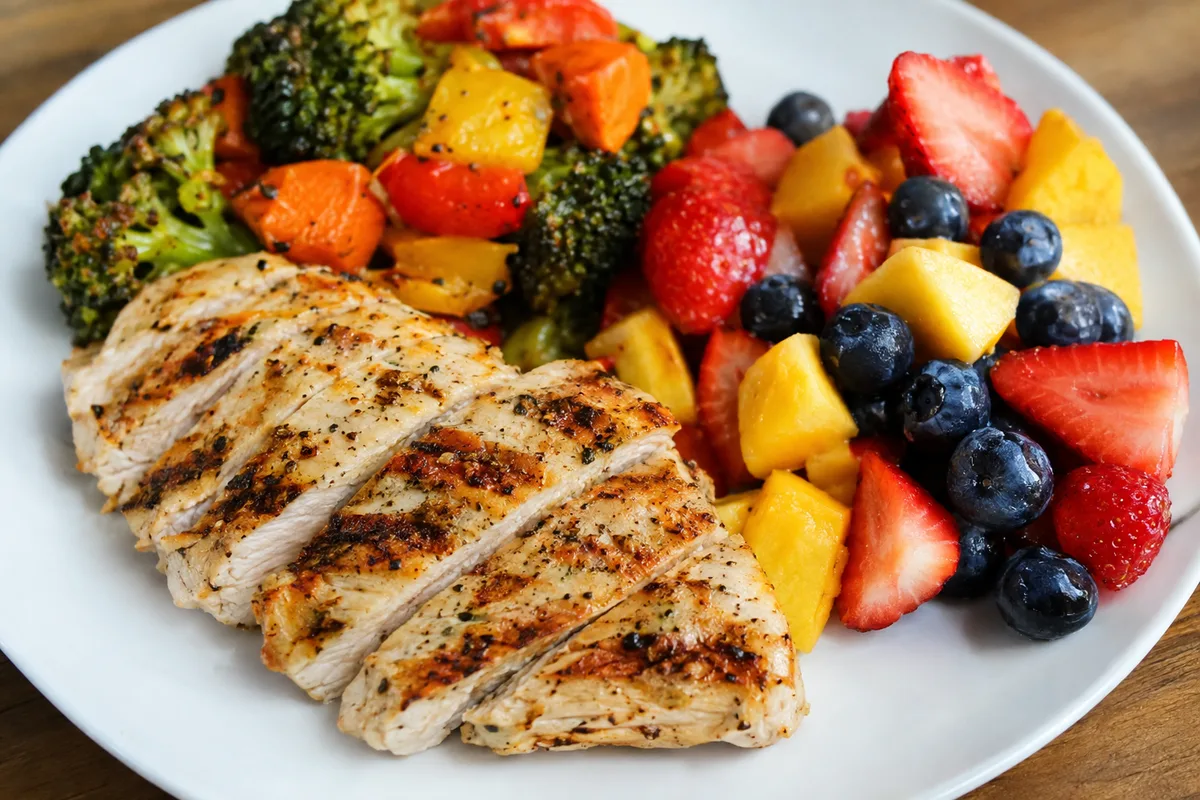
Your energy needs depend on factors such as your body size, daily movement and routine, so there is no single calorie target that suits everyone. Use your existing food log to look at your average intake rather than judging one meal or one day. Short-term changes on the scales can also reflect water and the amount of food being digested, not just changes in body fat.
- Track cooking oil, dressings, dips and sauces as well as the main foods.
- Record drinks and small bites that are easy to overlook.
- Compare similar stretches of time rather than reacting to one day.
- Keep portions consistent enough to spot useful patterns.
Why these foods can make meals filling
Chicken provides protein, while fruit and vegetables provide fibre, water and a range of nutrients. Protein and fibre can help a meal feel satisfying, which may make it easier to manage portions later. The effect still depends on how much you eat and what else is included.
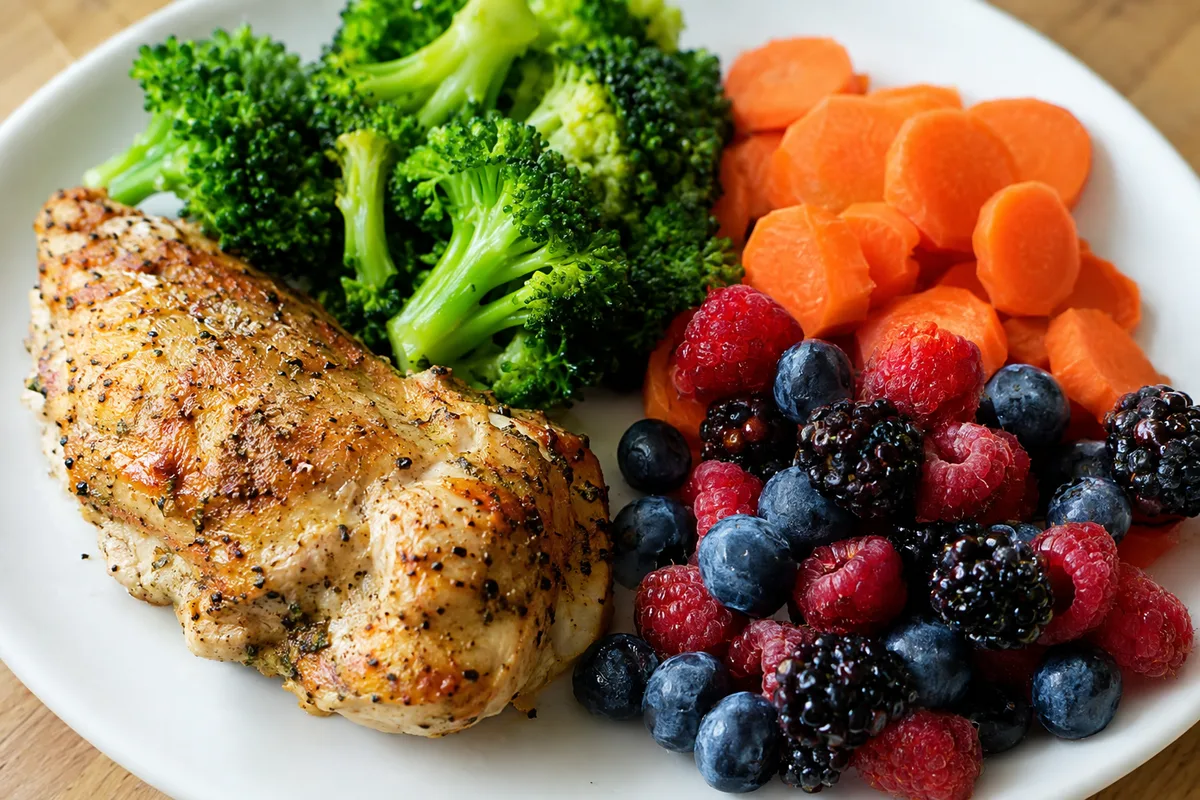
Different cuts and cooking methods change the calorie content of chicken. Steamed vegetables and vegetables cooked generously in oil will also produce different totals. Whole fruit is usually more filling than a drink made from fruit because chewing and fibre remain part of the eating experience.
- Choose grilled, baked or poached chicken when you want cooking methods that use little added fat.
- Include several colours and types of vegetables across the week.
- Use whole fruit as part of a meal or snack.
- Measure added oils and sauces if they regularly appear in your food log.
Eating only three food groups is unnecessarily restrictive
Chicken, vegetables and fruit do not provide the easiest route to every nutrient your body needs. Leaving out all other foods can reduce dietary variety and may make meals repetitive. A plan that feels rigid can also be harder to continue through social meals, busy days and changes in appetite.
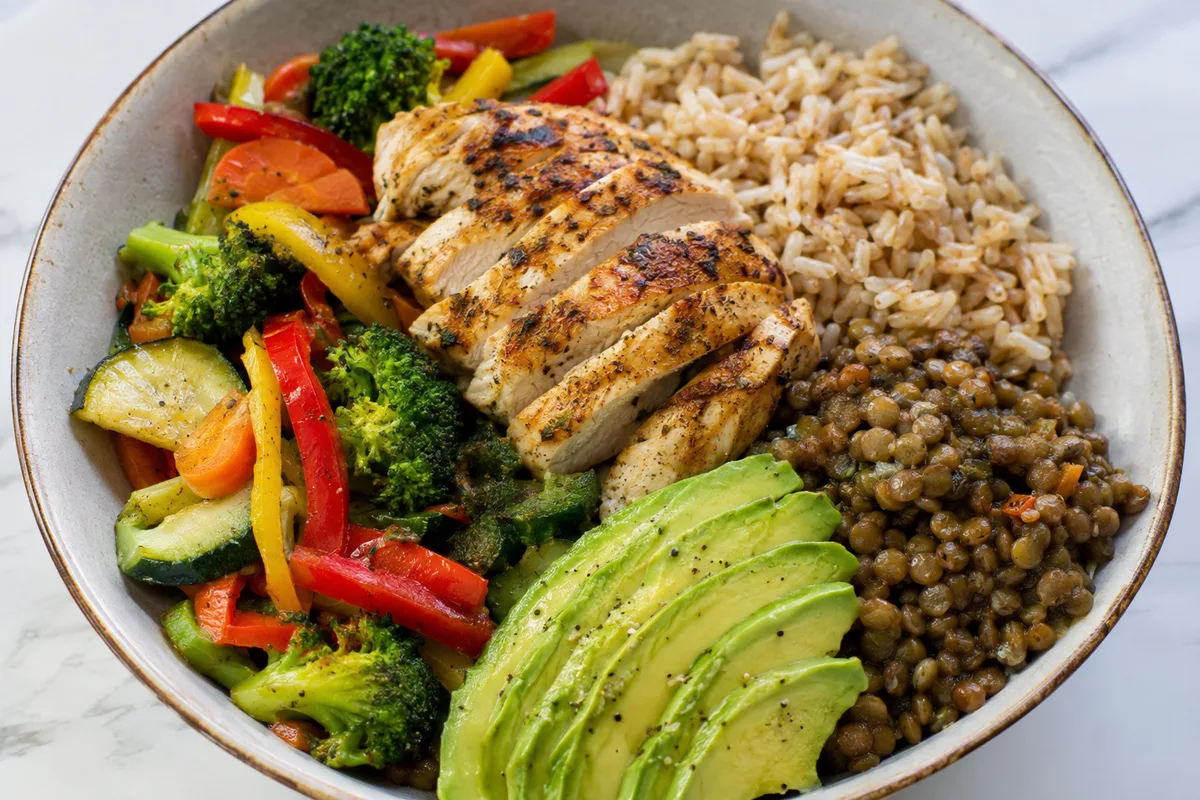
Some dietary fat is useful for normal body functions and helps the body absorb certain nutrients. Foods such as beans, lentils, eggs, yoghurt, nuts, seeds, wholegrains and oily fish can add nutrients, texture and flavour. You do not need to eat every option, but a broader selection generally makes balanced eating simpler.
- Add beans or lentils to soups, salads and vegetable dishes.
- Include a suitable source of dietary fat, such as nuts, seeds, avocado or olive oil.
- Choose wholegrain bread, rice, oats or potatoes when they suit your meal and calorie budget.
- Vary protein sources rather than relying on chicken at every meal.
Portions and preparation can change the outcome
A meal can contain chicken and vegetables yet still be high in calories if it includes large portions of oil, creamy dressing, batter or rich sauce. Fruit also contributes calories, even though it offers fibre and useful nutrients. None of these foods needs to be avoided, but they should be recorded accurately.
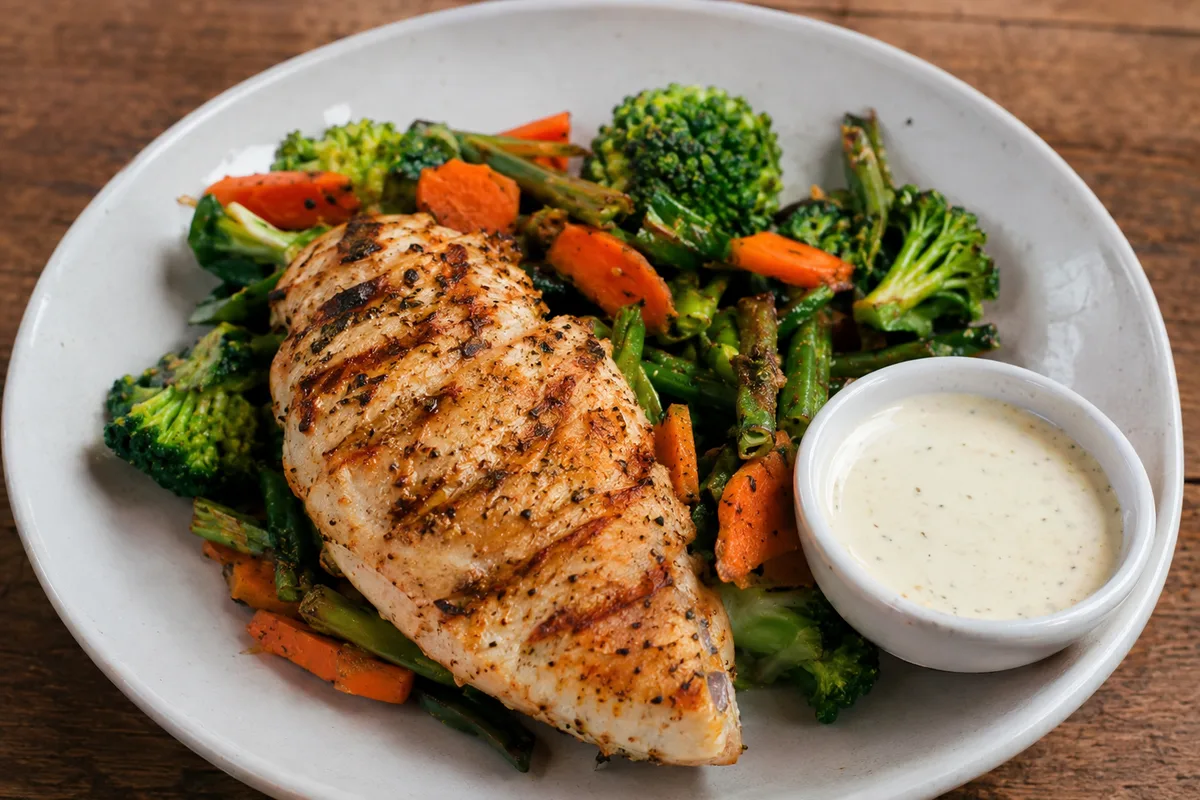
Start by checking the portions you already log. If progress is not matching your aim over time, look for repeated additions or serving sizes that raise the total without adding much satisfaction. Make small, practical adjustments rather than removing entire food groups.
- Use less oil where it does not noticeably improve the meal.
- Serve sauces or dressings in a measured amount.
- Keep chicken portions appropriate for your appetite and overall intake.
- Pair fruit with a balanced meal rather than treating it as calorie-free.
- Adjust one repeated habit at a time so your food log remains easy to interpret.
Build a more balanced approach
Chicken, vegetables and fruit can form the base of many weight-conscious meals, but they do not need to be your entire diet. A useful plate might combine a protein source, plenty of vegetables, a carbohydrate food and some dietary fat. The exact portions depend on your appetite, activity and personal calorie needs.
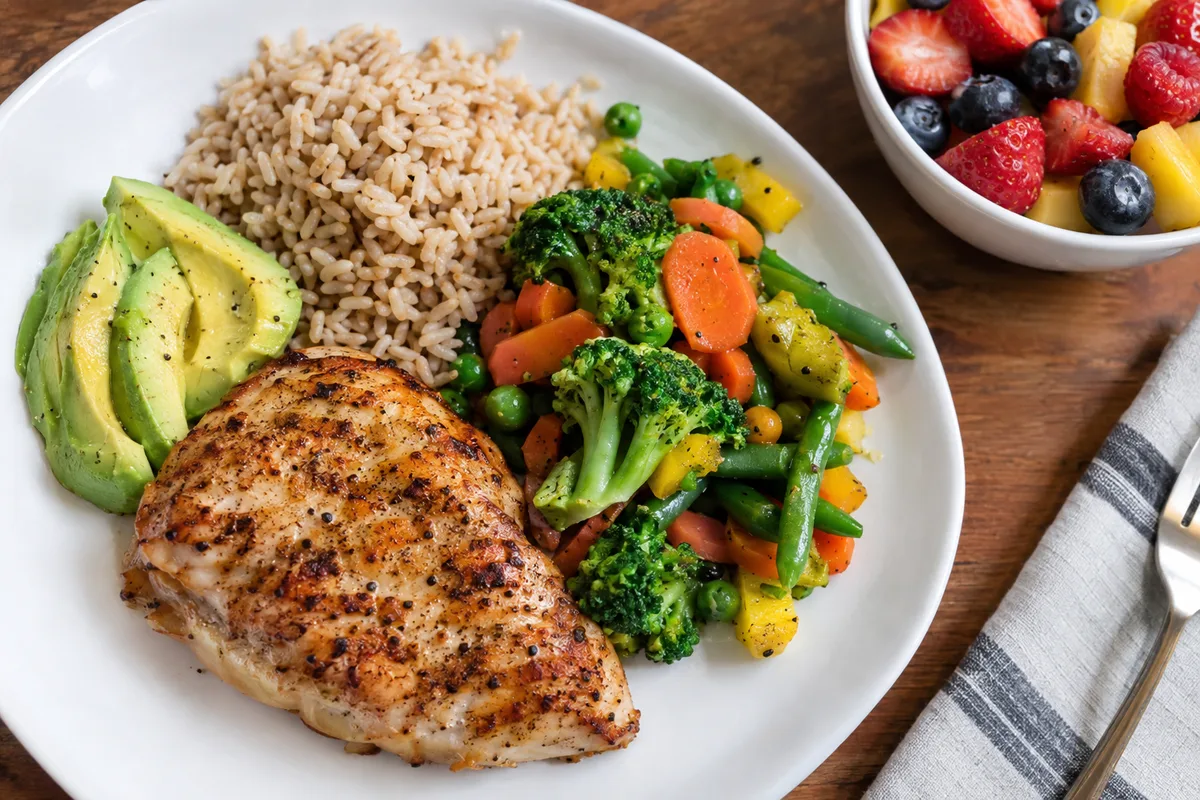
Review your tracking for hunger, energy, enjoyment and variety as well as calories. If a plan leaves you constantly hungry, tired or preoccupied with food, it may be too restrictive for your needs. The most useful approach is one you can follow consistently while eating a varied range of foods.
- Keep chicken meals you enjoy, but rotate other protein sources.
- Plan vegetables for volume, colour and flavour.
- Include fruit in portions that fit your daily intake.
- Add carbohydrate and fat sources deliberately rather than cutting them out automatically.
- Use your food log to refine a varied routine instead of chasing a short list of permitted foods.