
How Long Do Frozen Fruit and Vegetables Last?
Frozen fruit and vegetables can stay usable for a long time when kept consistently frozen, but their texture and flavour gradually decline. This guide explains how to judge quality, store produce well and handle it safely after thawing.
There is no single use-by period
Frozen fruit and vegetables do not suddenly become unsafe on a particular day when stored at about -18°C and kept continuously frozen. The date on the packet is mainly a guide to expected quality under the stated storage conditions. How long the food remains enjoyable depends on the produce, its packaging and whether the freezer temperature has stayed steady.
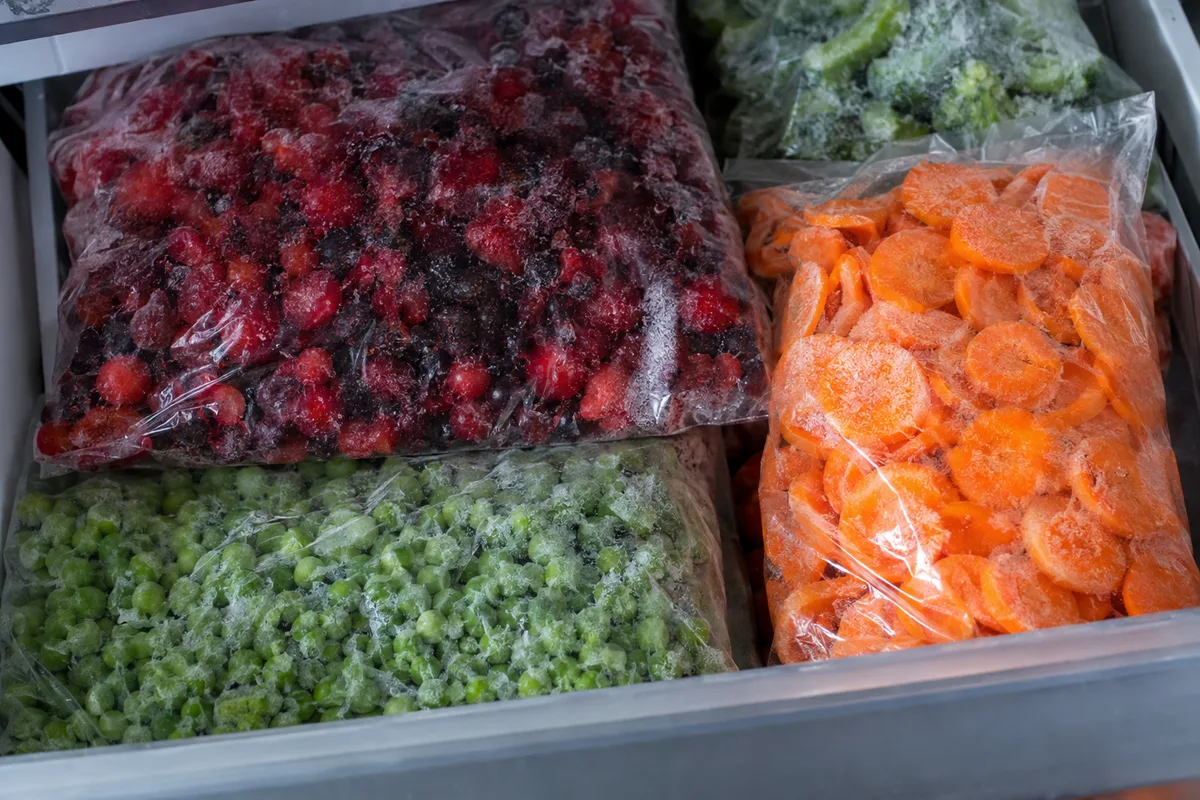
Over time, frozen produce can lose flavour, colour and texture even though it remains frozen. Delicate berries may soften, while peas, carrots and similar vegetables may become drier or less colourful. Use the packet date as your first reference, then check the food itself when you open it.
- Check the best-before date and storage instructions on the packet
- Write the freezing date on home-frozen produce
- Use older packets before recently frozen ones
- Consider both storage history and condition, not the date alone
What changes while produce is frozen
Freezing slows the changes that spoil fresh food, but it does not preserve quality perfectly. Moisture can move from the food into the surrounding air, leaving dry, pale patches known as freezer burn. Air in a loose or damaged packet can also dull flavour and colour.
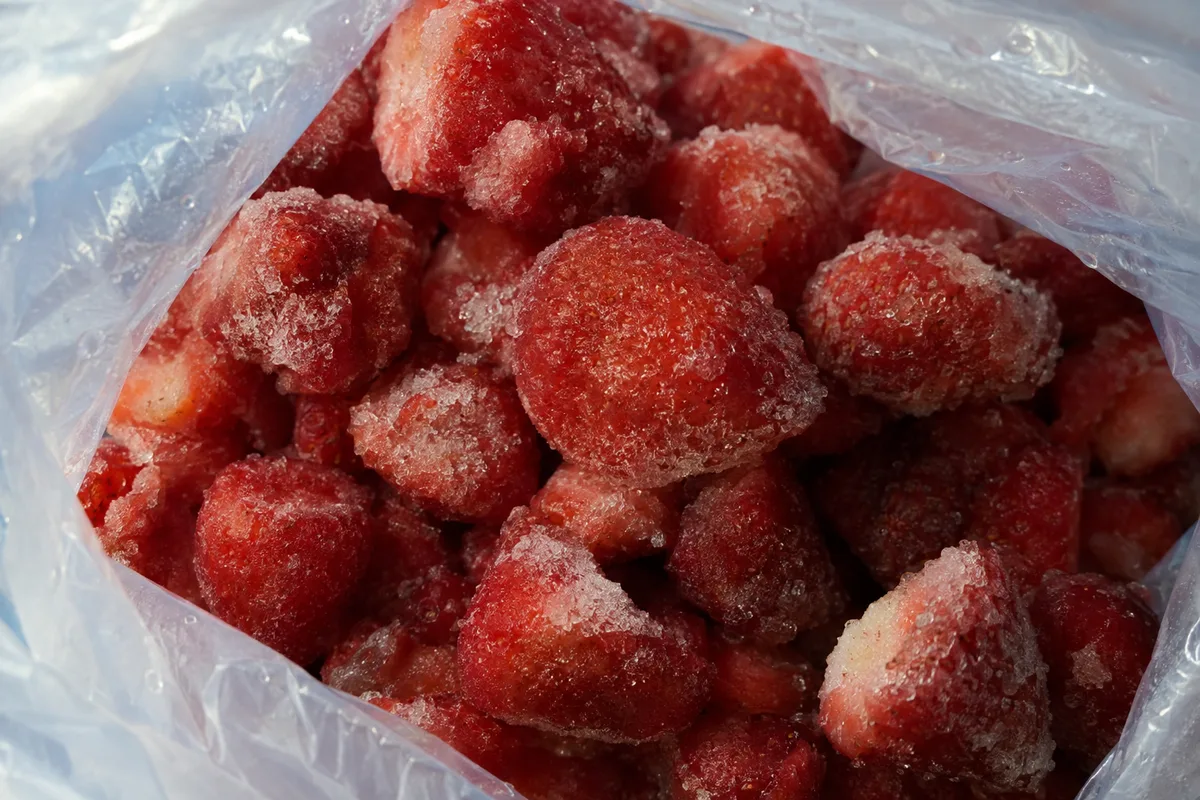
Ice crystals may grow when produce warms slightly and freezes again. Large crystals damage the structure of fruit and vegetables, so they may release more water and feel soft after thawing. These quality changes do not automatically mean the food is unsafe, but they can make it less pleasant to eat.
- Dry or faded patches from freezer burn
- A large amount of loose ice inside the packet
- Fruit pieces frozen into a solid block
- Dull colour or weaker flavour after cooking
Pack and organise frozen produce well
Good packaging reduces contact with air and helps prevent moisture loss. Keep shop-bought produce sealed in its original packet, or close an opened packet firmly after pressing out excess air. Put home-frozen fruit and vegetables into suitable freezer bags or sealed freezer-safe containers.
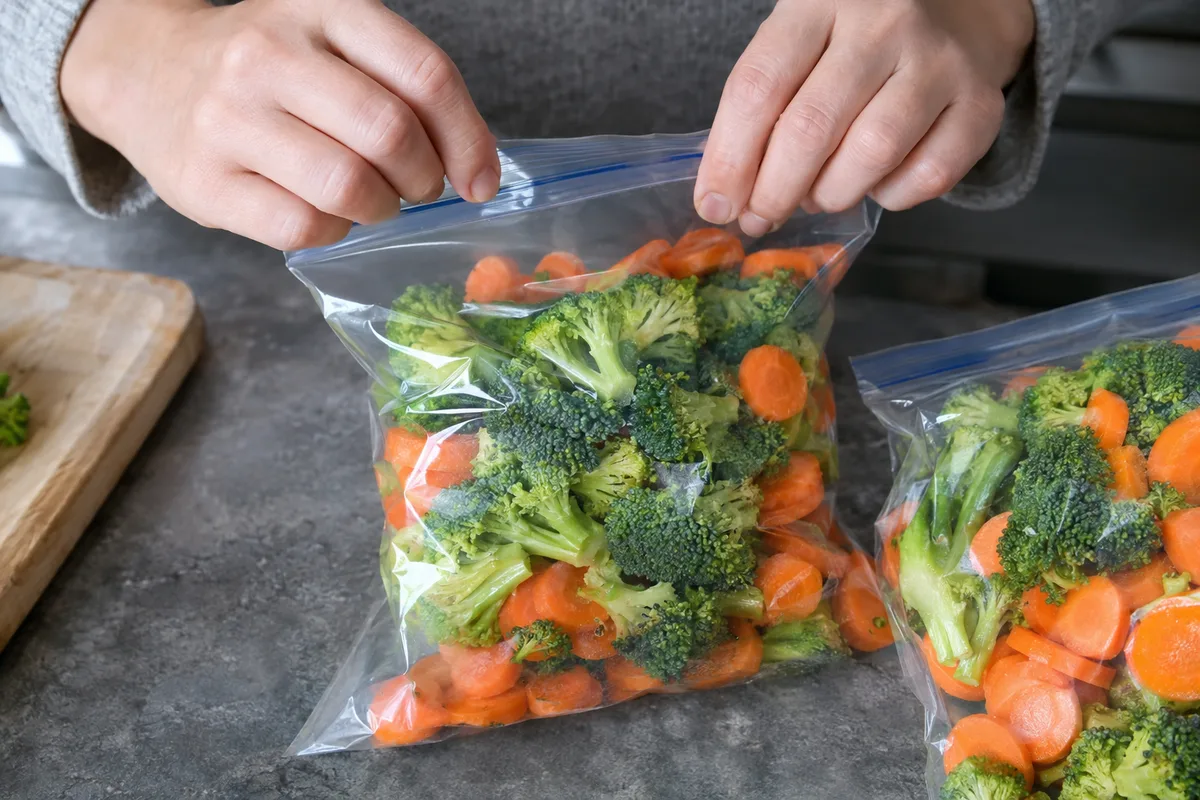
Freeze fresh produce while it is still in good condition, as freezing cannot restore lost freshness. Divide it into portions that you are likely to use at one time, so the rest stays frozen. Label each pack clearly with the food name and freezing date.
- Remove as much excess air as practical before sealing
- Keep packets closed and protected from tears
- Label home-frozen food clearly
- Place older produce where it is easy to reach
- Avoid repeatedly taking a packet out and returning it to the freezer
Prepare fruit and vegetables before freezing
Many fruits can be frozen raw after washing, drying and removing any stones, cores or damaged parts. Spreading pieces apart for the initial freeze can stop them sticking together, after which they can be transferred to a sealed pack. Soft fruit will usually lose some firmness, so it often works better in porridge, baking, sauces or blended dishes.
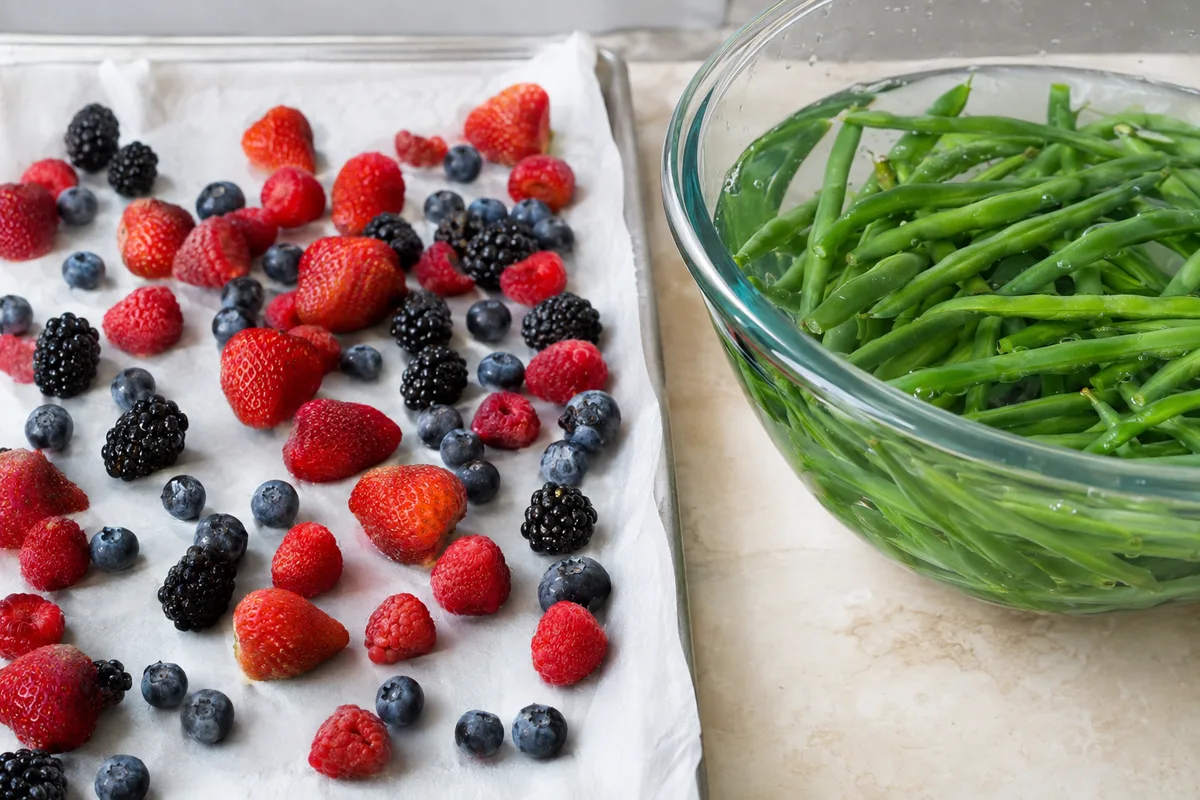
Many vegetables keep their colour and texture better if briefly blanched before freezing. This means placing prepared vegetables in boiling water for a short period, then cooling and drying them promptly before packing. The exact blanching time depends on the vegetable and the size of the pieces, so follow reliable instructions for that particular food.
- Wash and dry produce before preparing it
- Remove bruised, damaged or inedible parts
- Cut pieces into useful portions
- Blanch vegetables when appropriate
- Cool and dry prepared food before packing
Know when to keep or discard it
Freezer burn, clumped pieces and faded colour are usually quality issues rather than clear signs that food is unsafe. You can trim dry areas or use softened produce in a cooked dish if its storage history is known. A strange appearance matters more when the food has thawed or when you do not know how long it was warm.
Discard produce if its packaging has leaked, the food has an unpleasant smell after thawing, or there are signs of mould. Do not taste food to decide whether it is safe. If a freezer has stopped working, how to handle the contents depends on whether the food still contains ice crystals and how warm it became.
- Keep food that is still solidly frozen and in sound packaging
- Use freezer-burned produce in soups, sauces or blended dishes if otherwise suitable
- Discard thawed food with mould, leakage or an unpleasant smell
- Throw food away when its temperature history is uncertain
Use thawed produce promptly
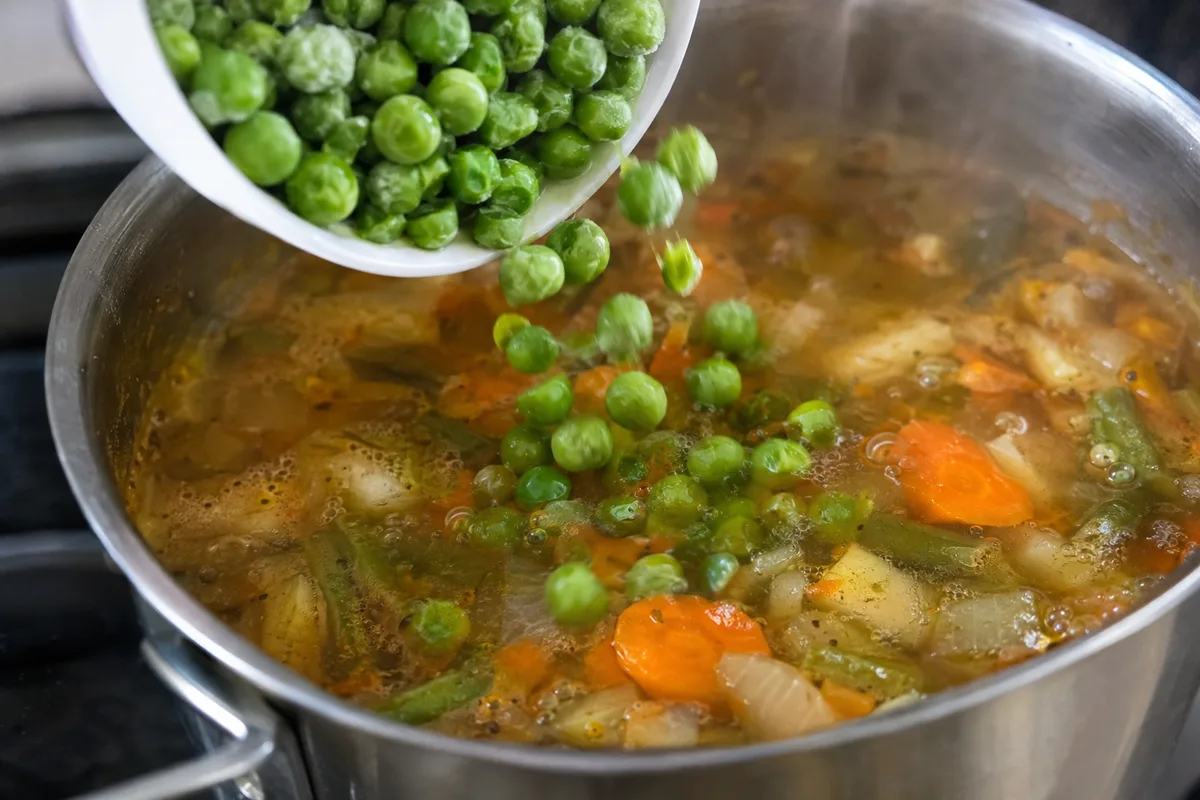
Many frozen vegetables can be cooked straight from frozen, following the packet instructions. Frozen fruit can also be added directly to cooked dishes or thawed in the fridge when a softer texture is suitable. Keeping it chilled while it thaws limits the time it spends at warmer temperatures.
Only remove the amount you need and return the rest to the freezer straight away. Refreezing can further damage texture because more ice crystals form, and it is not appropriate when the food has been left warm. If you plan to refreeze thawed produce, follow official food safety guidance based on how it was thawed and handled.
- Cook frozen vegetables according to their packet directions
- Thaw fruit in the fridge in a covered container
- Use thawed produce promptly
- Keep juices from thawing fruit away from other foods
- Do not refreeze produce that has been left warm